Beginner vs Expert Portable Power: Beyond the Latest Tech Gadgets 2025
Compare beginner and expert portable power setups. Learn USB-C PD 3.1, LiFePO4 chemistry, MPPT solar, and car inverter wiring for 2026.
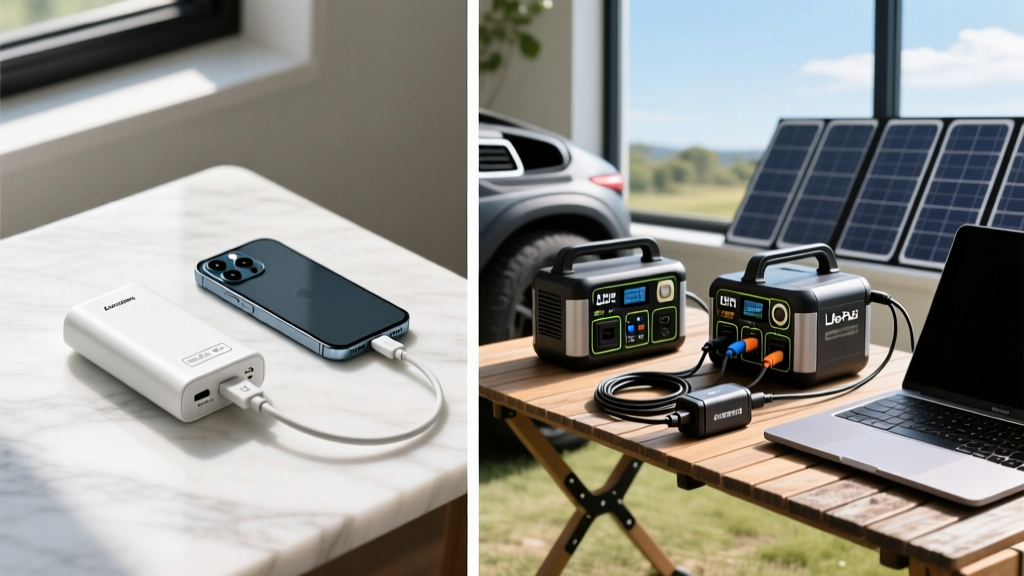
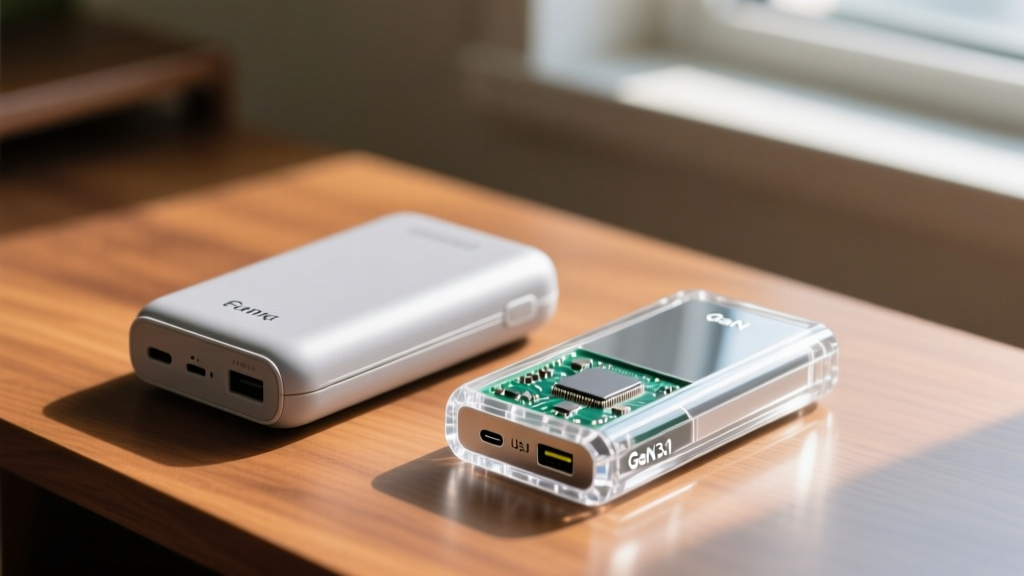
The portable power market is flooded with misleading specifications. While casual consumers chasing the latest tech gadgets 2025 often prioritize inflated milliamp-hour (mAh) claims and low price points, power enthusiasts focus on watt-hour (Wh) density, thermal management, and protocol negotiation. Bridging the gap between a beginner's dead-on-arrival power bank and an expert's resilient off-grid ecosystem requires understanding the physics of energy conversion.
The Capacity Illusion: mAh vs. Watt-Hours
Beginners shop for power banks based on mAh, often purchasing a '$25 50,000mAh' brick that fails to charge a smartphone more than three times. Experts shop by Watt-hours (Wh) and understand internal cell voltage.
Furthermore, beginners accept Nickel Manganese Cobalt (NMC) chemistry for its high energy density, ignoring its 500-800 cycle lifespan. Experts building long-term setups specify Lithium Iron Phosphate (LiFePO4) batteries. According to Battery University, LiFePO4 cells offer lower energy density but sustain over 3,000 charge cycles before degrading to 80% capacity, making them the mandatory choice for high-cycling power stations like the EcoFlow River 2 Max.
Charging Protocols: The USB-A Dead End vs. PD 3.1
Beginners rely on USB-A ports and generic 18W Quick Charge adapters, resulting in slow charge times and excessive thermal throttling on modern flagship devices. Experts demand Gallium Nitride (GaN) architecture and dynamic protocol negotiation.
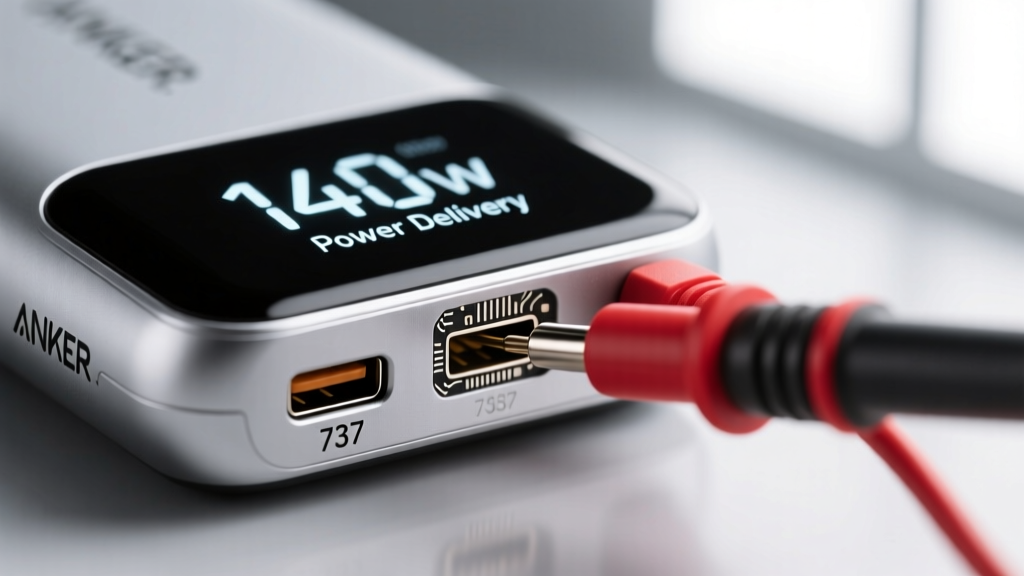
The critical differentiator in 2026 is Programmable Power Supply (PPS), an extension of the USB-C Power Delivery standard. While standard PD 3.0 steps voltage in fixed increments (5V, 9V, 15V, 20V), PPS allows the power bank to adjust voltage in 20mV increments in real-time. This perfectly matches the internal charge curve of devices like the Samsung Galaxy S24 Ultra, reducing internal heat generation by up to 15% and preserving long-term battery health. The USB Implementers Forum (USB-IF) formalized these dynamic adjustments to push the boundaries of the PD 3.1 specification, which now supports up to 240W for high-performance laptops.
| Protocol Standard | Max Wattage | Voltage Negotiation | Expert Use Case |
|---|---|---|---|
| USB-A (BC 1.2) | 12W - 18W | Fixed (5V) | Legacy peripherals, low-draw IoT sensors |
| USB-C PD 2.0/3.0 | 100W | Fixed Steps (5V-20V) | Standard laptop charging (MacBook Air M2) |
| USB-C PD 3.0 (PPS) | 45W - 100W | Dynamic (20mV steps) | Thermal-sensitive flagship smartphones |
| USB-C PD 3.1 (EPR) | 240W | Dynamic (up to 48V) | Gaming laptops, mobile workstations |
Solar Yield: PWM Controllers vs. MPPT Tracking
When integrating solar into a portable setup, beginners purchase foldable 28W panels with built-in Pulse Width Modulation (PWM) charge controllers. They quickly discover that in partial shade or high temperatures, the panel's voltage drops below the battery's charging threshold, halting energy harvest entirely.
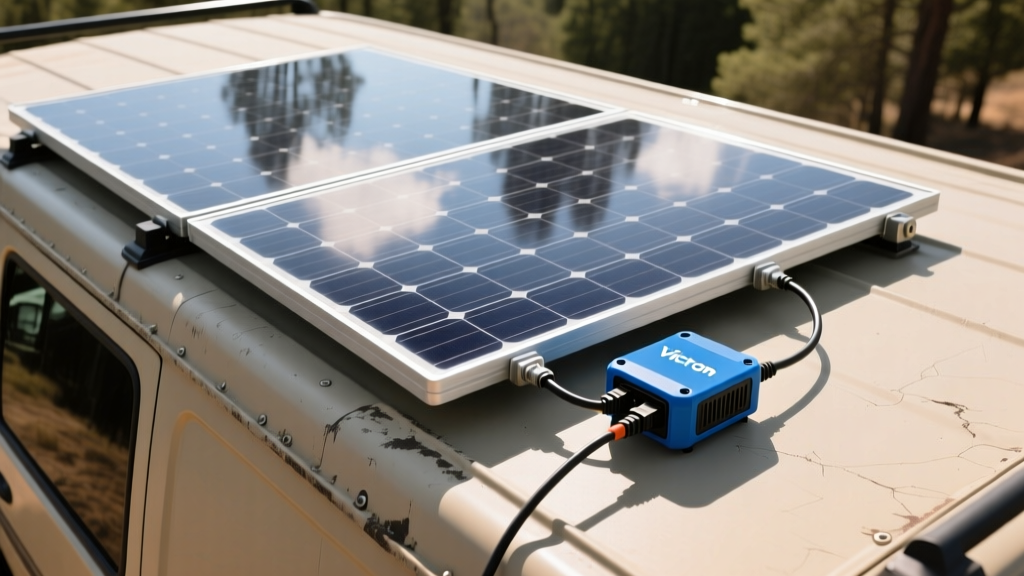
Experts bypass integrated controllers and utilize rigid or semi-flexible monocrystalline panels paired with an external Maximum Power Point Tracking (MPPT) controller. Victron Energy notes that MPPT controllers continuously scan the solar panel's voltage and current output to find the exact 'sweet spot' (Maximum Power Point). If a 100W panel's voltage drops due to cloud cover, the MPPT controller converts that excess voltage into amperage, yielding up to 30% more energy than a PWM controller under identical sub-optimal conditions.
Vehicle Power: The 12V Socket Bottleneck
For car camping and overlanding, beginners plug 300W power inverters directly into the vehicle's 12V cigarette lighter socket. This is a critical failure point. Most automotive 12V accessory sockets are wired with 18 AWG or 16 AWG wire and protected by a 10A or 15A fuse. This limits continuous safe draw to roughly 120W to 180W. Attempting to pull 300W will blow the fuse, melt the socket wiring, or trigger a vehicle CAN-bus shutdown.
Experts hardwire pure sine wave inverters directly to the auxiliary battery block. For a 1000W inverter (which can pull up to 85A from a 12V system under load), experts run 4 AWG or 2 AWG oxygen-free copper wire, fused within 18 inches of the battery terminal, ensuring safe, high-amperage delivery for running induction cooktops or medical devices off-grid.
The 2026 Expert Loadout Matrix
Transitioning from a beginner to an expert requires investing in modular, protocol-aware hardware. Below is the benchmark loadout for high-demand mobile professionals and overlanders.
- Daily Carry (EDC): Anker Prime 27,650mAh (250W total output, PD 3.0 PPS, smart digital display for real-time voltage telemetry).
- Basecamp Power Station: EcoFlow River 2 Max (512Wh LiFePO4 chemistry, 500W pure sine wave inverter, 40-minute turbo charge via AC).
- Solar Harvesting: BioLite SolarPanel 5+ (integrated kickstand with sundial alignment tool, MPPT-optimized internal circuitry).
- Vehicle Integration: Renogy 1000W Pure Sine Wave Inverter with built-in 60A MPPT charge controller, hardwired to a secondary LiFePO4 starter battery.
Mastering portable power is not about buying the largest plastic brick on the shelf; it is about managing thermals, understanding electrical bottlenecks, and deploying the correct chemistry for the specific discharge profile. By upgrading your knowledge base alongside your hardware, you ensure your devices remain powered regardless of the grid's status.
Written by
Lena ChenLena Chen earned her M.S. in Human-Computer Interaction from Carnegie Mellon University and a B.S. in Electrical Engineering from the University of Washington. She has spent the past decade specializing in smart home architecture and IoT ecosystems, helping over 200 homeowners design fully connected living spaces. Lena is a certified Matter protocol consultant and has published peer-reviewed research on voice-first interface design in the ACM Digital Library. Her reviews of smart home products combine deep technical analysis with real-world usability testing, evaluating everything from Zigbee mesh stability to Alexa skill responsiveness. She regularly speaks at CEDIA Expo and CES smart home panels.