Beginner vs Expert Spy Gadget Tactics for Women's Safety
Discover how beginner and expert spy gadget setups differ for women's safety. Compare covert trackers, hidden cameras, and counter-surveillance tools.
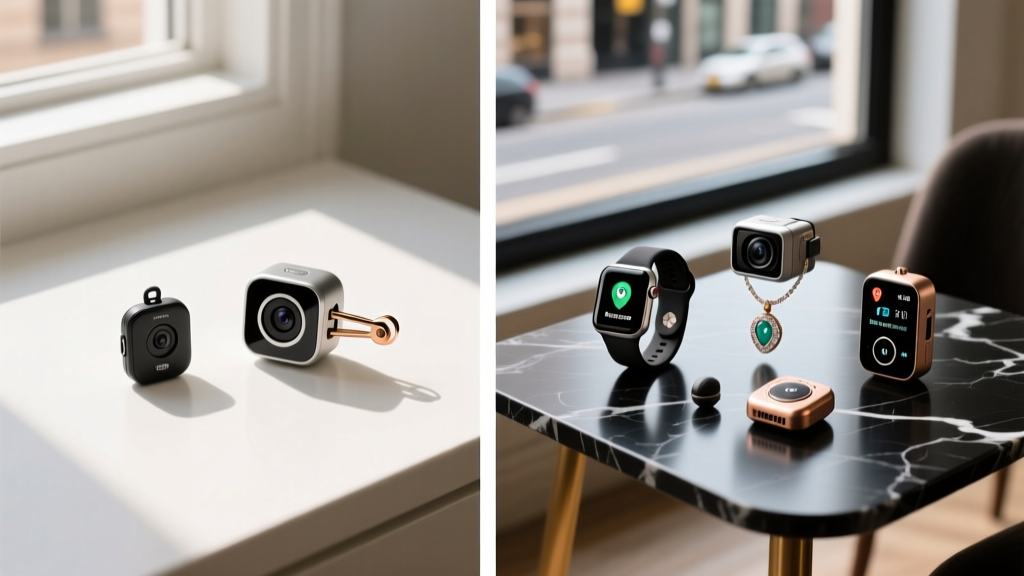
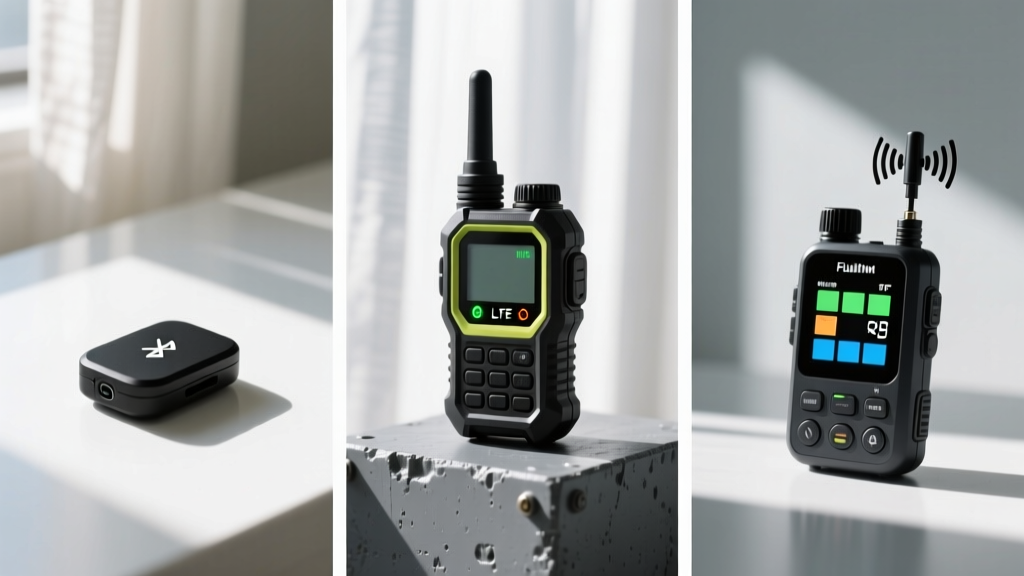
The Core Philosophy: Reactive vs. Proactive Surveillance
When discussing a spy gadget in the context of women's safety, the general public often envisions James Bond-style pen cameras or novelty keychain recorders. However, in the real world of personal security, surveillance technology is divided into two distinct categories: tools you deploy to protect yourself, and tools used by malicious actors to track you. Understanding how to leverage covert technology for self-defense—and how to detect when it is being used against you—is what separates a novice from a security expert.
As of 2026, the democratization of micro-electronics means that high-definition hidden cameras and ultra-compact GPS trackers are available to anyone for under $40. This reality demands a sophisticated approach to personal safety. A beginner typically relies on reactive, consumer-grade gadgets that offer a false sense of security. An expert, conversely, builds a proactive ecosystem combining cellular-enabled tracking, offline satellite communication, and active counter-surveillance sweeps. Below, we break down the exact hardware, methodologies, and limitations of both approaches.
The Beginner's Toolkit: Accessible but Vulnerable
Most women entering the personal safety space start with easily accessible, low-cost consumer electronics. These devices are heavily marketed for "finding lost keys" or "nanny cam monitoring," but they are frequently repurposed for personal safety and covert recording.
Typical Entry-Level Gear
- Bluetooth Mesh Trackers (e.g., Apple AirTag 2nd Gen, Tile Pro): Priced around $29, these rely on crowdsourced smartphone networks to update location. They are excellent for recovering stolen luggage but highly vulnerable to deliberate Bluetooth jamming or being left in areas with low smartphone density (like rural hiking trails or underground parking garages).
- Wi-Fi Dependent "Nanny Cams": Often disguised as alarm clocks or USB chargers ($30-$50 on e-commerce sites). Beginners often use these to monitor their own homes or hotel rooms. The critical flaw? They require a stable 2.4GHz Wi-Fi connection and local power. If the Wi-Fi drops or the device is unplugged, the feed dies instantly.
- Basic Audio Recorders: Disguised as pens or flash drives. While covert, they lack real-time transmission capabilities, meaning the user must physically retrieve the device to review evidence of harassment or threats.
The Beginner's Blind Spot: Novices often assume that because a gadget is hidden, it is secure. In reality, cheap spy gadgets emit unencrypted RF signals that can be easily intercepted or detected by basic apps on a smartphone, inadvertently revealing the user's own security measures to a stalker.
The Expert's Arsenal: Covert, Cellular, and Counter-Surveillance
Security professionals and high-risk individuals do not rely on Bluetooth mesh networks or local Wi-Fi. They utilize independent cellular networks, satellite uplinks, and military-grade counter-surveillance equipment to maintain situational awareness and gather actionable evidence.
Tactical Gear Breakdown
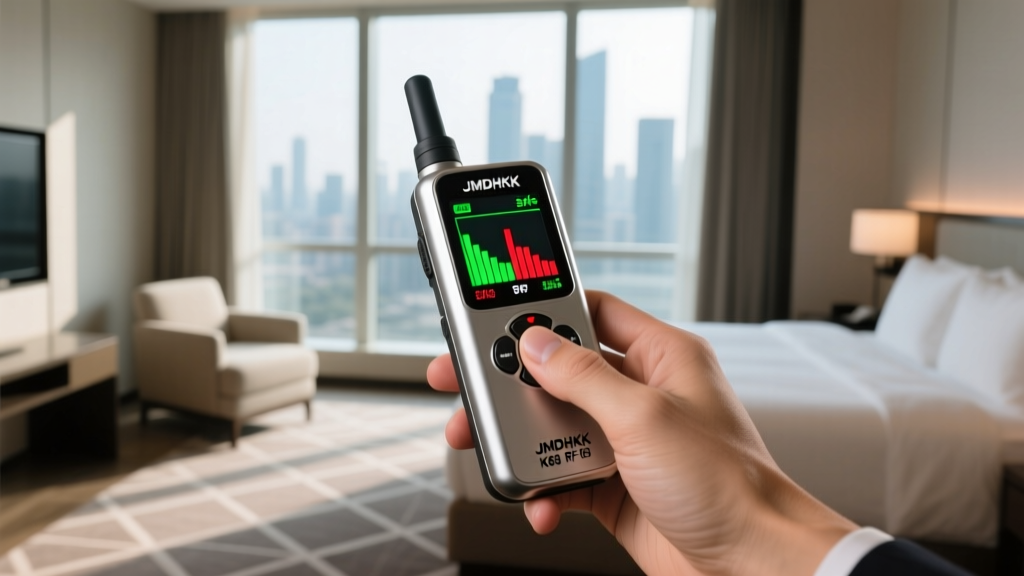
1. LTE-Enabled Micro Trackers (e.g., Tracki Mini 4G)
Unlike Bluetooth tags, the Tracki Mini ($16.88 plus a $19.95/month cellular subscription) utilizes global 4G LTE, 3G, and 2G bands. It offers real-time ping capabilities with a margin of error of just 15 feet. An expert will sew this into the lining of a daily commute bag or hide it in a vehicle to establish a geofenced perimeter. If the bag is moved or the user fails to check in, an automated SMS alert is triggered to emergency contacts.
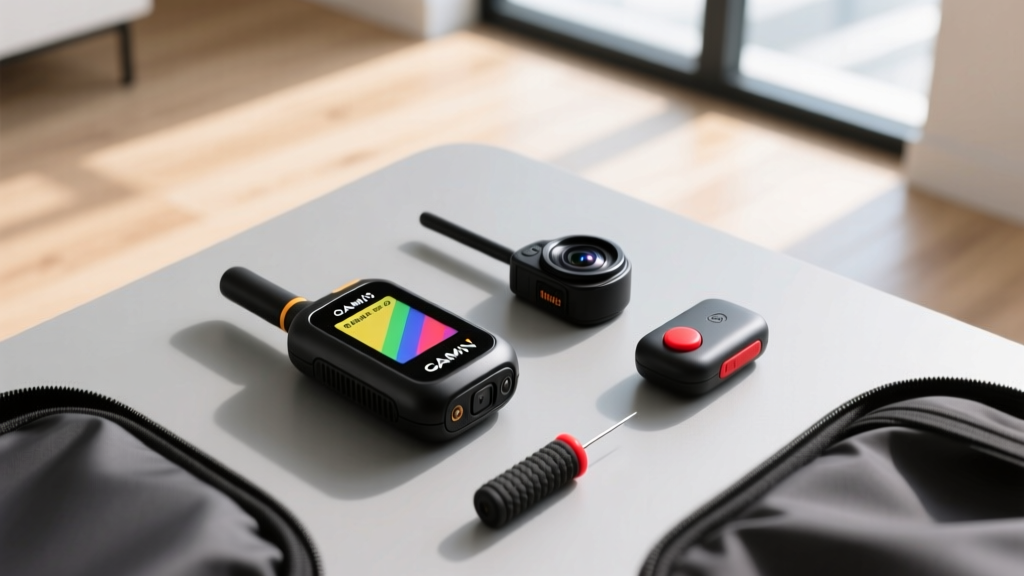
2. Active Counter-Surveillance RF Detectors (e.g., JMDHKK K68 or KJB Security DD1206)
An expert knows that the best defense against a malicious spy gadget is finding it before it records you. The JMDHKK K68 ($45) scans frequencies from 1MHz to 8GHz. When entering an Airbnb or hotel room, an expert will sweep the space, looking for the RF emissions of hidden Wi-Fi cameras or active cellular GPS bugs planted by an abuser or stalker.
3. Satellite SOS Messengers (e.g., Garmin inReach Mini 2)
For $399 (plus satellite subscription), this device bypasses terrestrial cell towers entirely, connecting to the Iridium satellite network. It allows for two-way text messaging and a hardwired SOS button that dispatches local law enforcement or search and rescue to exact GPS coordinates, regardless of how remote the location is.
Head-to-Head: Beginner vs. Expert Gear Matrix
| Feature | Beginner Setup | Expert Setup |
|---|---|---|
| Tracking Tech | Bluetooth Mesh (Crowdsourced) | Multi-band 4G LTE & Iridium Satellite |
| Range | Dependent on nearby smartphones | Global (including oceans and remote trails) |
| Covert Cameras | Wi-Fi dependent, easily jammed | Local encrypted SD + Burst Wi-Fi upload |
| Counter-Surveillance | Visual inspection / Flashlight test | Active RF & Magnetic Field Sweeping |
| Avg. Annual Cost | $30 - $60 (One-time hardware) | $300+ (Hardware + Cellular/Satellite Subs) |
| Vulnerability | High (Signal dropping, easy to spoof) | Low (Redundant networks, encrypted) |
Scenario Analysis: The Ride-Share and Hotel Sweep
To understand the practical difference between these two mindsets, consider a common safety scenario: traveling alone to a new city, taking a ride-share to a boutique hotel.
The Beginner's Approach
The beginner shares their ride-share license plate and driver name with a friend via text. Upon arriving at the hotel, they might do a quick visual check behind the mirrors and smoke detectors for hidden cameras. They place their Bluetooth tracker in their suitcase and go to sleep. If an abuser has slipped a magnetic GPS tracker under their rental car, or if a hidden camera in the room utilizes a 5GHz Wi-Fi band, the beginner remains entirely unaware.
The Expert's Protocol
- The Ride-Share: The expert has a Garmin inReach Mini 2 clipped to their belt. They trigger a custom preset message that sends their live satellite GPS link to a designated security contact. If the car deviates from the route, the contact can trigger an SOS without needing cellular service.
- The Vehicle Sweep: Before entering a rental car, the expert runs a magnetic field detector wand (built into many advanced RF detectors) along the wheel wells and undercarriage to detect magnetically mounted GPS spy gadgets.
- The Hotel Sweep: Upon entering the room, the expert turns off all lights and activates the JMDHKK K68 RF detector. They sweep the perimeter, specifically targeting the smoke detector, alarm clock, and HVAC vents. They then use a specialized infrared laser scanner to catch the reflection of camera lenses that are powered off but still recording to local SD cards.
Legal Realities of Covert Recording and Tracking
Deploying a spy gadget for self-defense intersects heavily with privacy laws. According to Consumer Reports' personal safety guidelines, understanding the legal boundaries of surveillance is just as critical as the hardware itself.
- One-Party vs. Two-Party Consent: In many jurisdictions, you can legally record audio of a conversation if you are a participant (one-party consent). However, placing a hidden audio recorder in a room where you are not present to capture a stalker or abusive partner can violate federal wiretapping laws.
- GPS Tracking: As highlighted by RAINN's resources on stalking and surveillance, placing a GPS tracker on a vehicle you do not own or co-own is a criminal offense in most states, even if you suspect infidelity or believe it is for "safety." Conversely, if you suspect you are being tracked, WIRED's investigation on tracker stalking provides excellent protocols for safely disabling rogue AirTags without destroying the evidence needed by law enforcement.
Frequently Asked Questions (FAQ)
Can a smartphone app replace a dedicated RF spy gadget detector?
No. While there are dozens of "hidden camera detector" apps on iOS and Android, they rely on the phone's built-in magnetometer or Wi-Fi scanning. These are vastly inferior to dedicated hardware like the KJB Security DD1206, which can detect burst-transmitting cameras and 2G/3G cellular bugs that apps cannot see.
What is the best spy gadget for recording workplace harassment?
For discreet audio recording in a professional environment, experts recommend the Olympus VP-10 or similar ultra-slim digital voice recorders. They can be slipped into a shirt pocket or lanyard, feature one-touch recording, and do not emit Wi-Fi or Bluetooth signals that could be detected by corporate IT security sweeps.
How do I know if my car has a malicious GPS tracker on it?
Malicious GPS spy gadgets are typically magnetic and placed in wheel wells, under the bumper, or inside the OBD-II port under the dashboard. A physical inspection with a flashlight and mirror is the first step. For thorough verification, an active RF detector swept around the vehicle's exterior while the car is parked in a low-signal area (like a concrete garage) will highlight transmitting cellular trackers.
Final Thoughts on Upgrading Your Safety Ecosystem
The transition from a beginner to an expert in personal safety technology requires a shift in mindset. It is no longer just about buying a gadget and hoping it works in an emergency; it is about understanding signal propagation, network redundancy, and counter-surveillance. By investing in LTE-independent trackers, satellite SOS beacons, and professional-grade RF detectors, women can take back control of their digital and physical privacy in an increasingly monitored world.
Written by
Emma LarssonEmma Larsson holds an M.A. in International Relations from Sciences Po Paris and a B.A. in Communications from Stockholm University. A digital nomad since 2017, she has worked from over 45 countries across six continents, building deep expertise in portable power solutions, travel routers, compact computing, and connectivity gadgets that survive international travel. Emma is a certified member of the Travel Technology Association and has advised three travel gear startups on product-market fit for remote workers. Her reviews evaluate products against real travel scenarios — TSA compliance, voltage compatibility across 200+ countries, durability through 50+ checked bag cycles, and battery life under airplane mode vs. active use. She has been featured in Condé Nast Traveler's "Tech-Savvy Traveler" series and speaks at Remote Work Summit events.