5 Cool DIY Spy Gadgets to Boost Your Personal Safety
Discover 5 cool DIY spy gadgets for women's safety. Learn to build discreet ESP32 cameras, smart trackers, and audio alarms for everyday security.
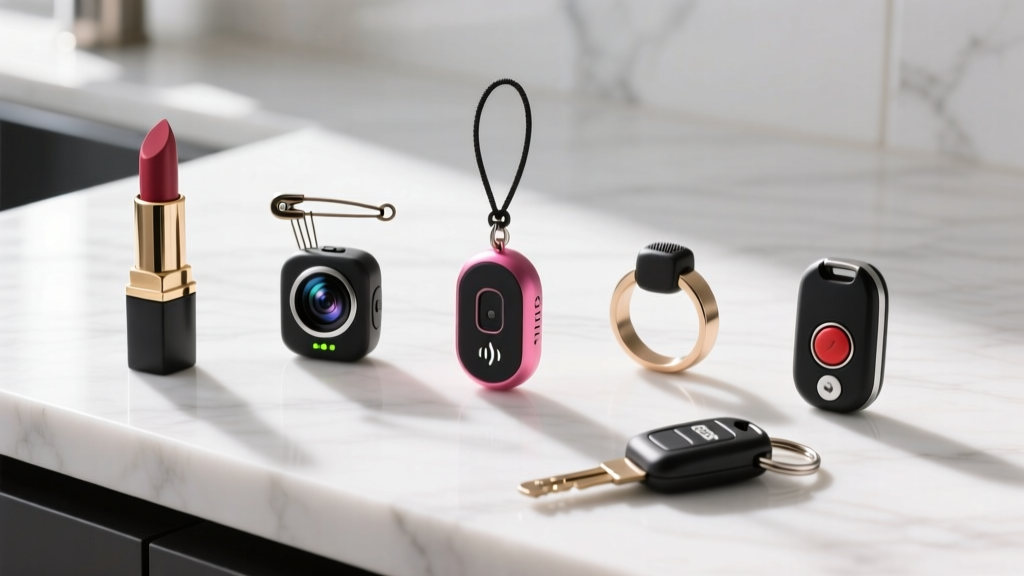

The intersection of maker culture and personal security has birthed a new wave of empowerment for women. While commercial safety gadgets like smart jewelry and Bluetooth trackers are fantastic, they often lack customization, suffer from planned obsolescence, or broadcast their presence to potential threats. Enter the world of cool DIY spy gadgets—defensive, discreet, and highly personalized tech builds that put you in total control of your situational awareness.
As of 2026, microcontrollers have become exponentially more powerful, cheaper, and smaller. You no longer need an engineering degree to build a localized security network or a concealed panic trigger. Below, we explore four highly actionable, discreet DIY safety projects designed specifically for women's everyday security, complete with exact component models, power draws, and build logic.
The ESP32-S3 Edge-AI Discreet Apartment Monitor
Commercial Wi-Fi cameras often have glaring LEDs, predictable shapes, and rely on cloud servers that can be hacked. By building your own discreet monitor using the ESP32-S3-WROOM-1 CAM module (featuring 8MB PSRAM), you gain local-only, AI-assisted monitoring that fits inside everyday objects like a hollowed-out book spine or a fake HVAC vent.
Technical Specifications & Build Logic
- Core Board: AI-Thinker ESP32-S3 CAM ($14 - $18)
- Sensor: OV2640 (2MP) or OV5640 (5MP) with a custom 90-degree flex cable for right-angle mounting.
- Power Draw: ~240mA during active Wi-Fi streaming; drops to 10µA in deep sleep.
- Edge AI: The ESP32-S3 supports TensorFlow Lite Micro. You can flash a model to detect human silhouettes locally, meaning the camera only saves power and sends an MQTT alert to your phone when a person is actually in the frame, ignoring pets or shadows.
To flash the initial firmware, you will need an FTDI USB-to-TTL serial adapter. Connect the GPIO0 pin to GND during boot to enter download mode. For a comprehensive, step-by-step wiring guide and web-server code, the Random Nerd Tutorials ESP32-CAM guide remains the gold standard for maker documentation.
Stealth Wearables: Modifying Trackers for 2026 Privacy Standards
Apple AirTags and Tile Pros are incredible for finding lost keys, but their default audio alerts and glossy finishes make them poor choices for concealed personal safety tracking (e.g., sewn into a running vest or a commuter bag). Note: Modifying trackers to track other people without consent is illegal and highly unethical. This build is strictly for concealing your own emergency tracker on your person or property.
The Silent Buckle Mod
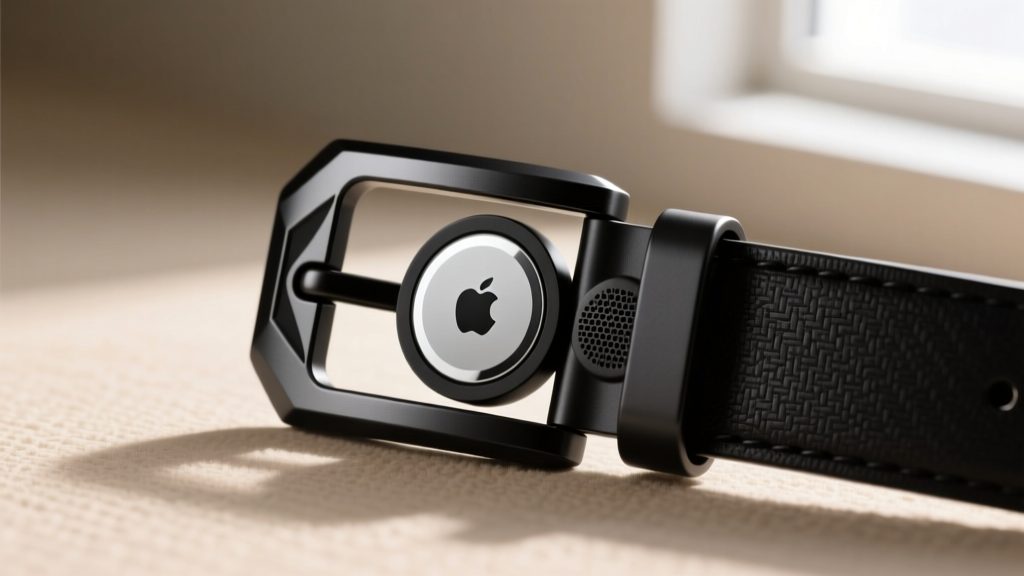
With Apple's aggressive anti-stalking firmware updates in iOS 17 through iOS 19, simply removing the speaker coil will trigger a 'Tag Disabled' error on the network. The 2026 workaround for your own safety gear involves utilizing the Family Sharing protocol.
- Pair the AirTag to your primary Apple ID.
- Share the AirTag with a trusted emergency contact (partner, parent, or roommate) via the 'Find My' app.
- Use a 3D printer (resin SLA printers like the Elegoo Mars 4 offer the necessary 0.05mm precision) to print a matte-black, textured belt buckle or hair claw clip that houses the AirTag's internal logic board and battery, leaving the speaker coil connected but muffled by acoustic dampening foam.
- Because the tracker is shared, it will not trigger 'Unknown Tag' alerts on your own phone or your trusted contact's phone, but remains completely invisible to strangers.
The Raspberry Pi Zero 2 W Audio Tripwire
For solo travelers, rideshare passengers, or those living in ground-floor apartments, an audio tripwire is a game-changer. This device listens for specific acoustic signatures—like glass breaking, aggressive shouting, or a specific safe-word—and silently sends an SMS with GPS coordinates to your emergency contacts.
Hardware Stack
| Component | Model | Cost (Approx.) | Function |
|---|---|---|---|
| Microcomputer | Raspberry Pi Zero 2 W | $15.00 | Processing & Wi-Fi |
| Microphone | Adafruit I2S MEMS (SPH0645LM4H) | $5.95 | 24-bit Audio Capture |
| Power | Pimoroni LiPo SHIM | $12.00 | Battery Management |
| Battery | 1200mAh 3.7V LiPo | $8.50 | ~14 hours runtime |
Using Python's pyaudio and numpy libraries, you can write a script that performs a Fast Fourier Transform (FFT) on the audio stream. By setting a decibel threshold (e.g., 85dB) and isolating the frequency range of human distress (300Hz - 3400Hz), the Pi can filter out low-frequency traffic noise and high-frequency AC hum. When triggered, a simple Twilio API script dispatches a silent text.
The Digispark ATtiny85 'Dummy' USB Panic Button
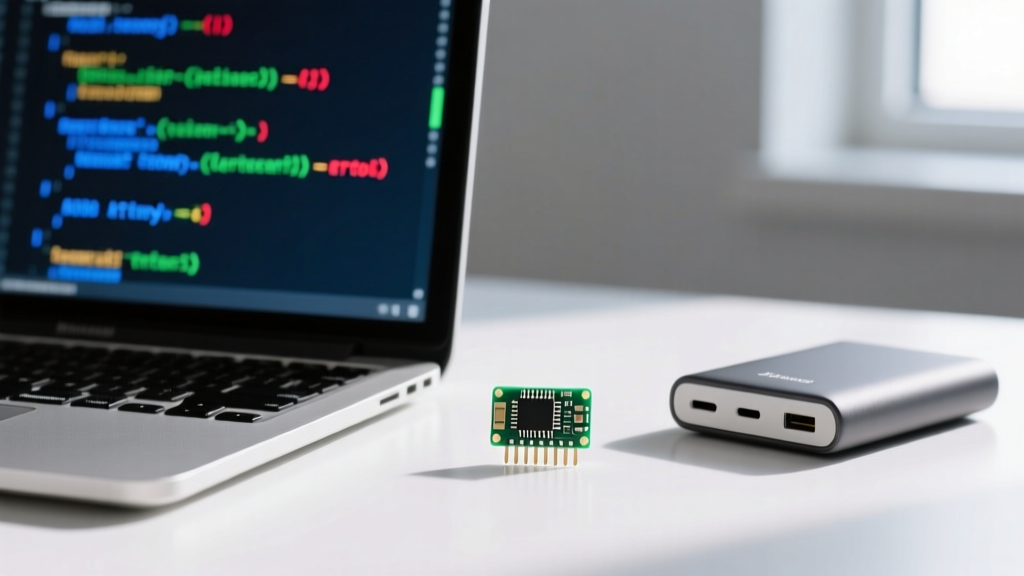
Sometimes, the best safety gadget is one that looks entirely mundane. The Digispark ATtiny85 is a $3.50 microcontroller that fits inside a standard USB-A thumb drive enclosure. When plugged into any USB port (a laptop, a smart TV, or a USB power bank), it emulates a Human Interface Device (HID) keyboard.
Execution Scenarios
- The Power Bank Strobe: When plugged into a standard 5V power bank, the ATtiny85 draws power and triggers a connected GPIO pin hooked to a 120dB piezo siren hidden in your bag, disorienting an attacker.
- The Laptop Silent Alarm: If you are working in a cafe or library and feel threatened, plugging the 'dummy' drive into your laptop executes a 400-millisecond script. It opens a hidden terminal window, sends a pre-written distress SMS via an API, and immediately locks your screen, all without you touching the keyboard.
Programming the ATtiny85 requires the Arduino IDE and the Digistump board manager package. The code utilizes the DigiKeyboard.h library to send keystrokes at superhuman speeds.
The Ethics of Defensive Maker Tech
Building your own spy and safety gadgets comes with a profound responsibility. The maker community operates on a strict ethical framework regarding surveillance technology. As highlighted by the Electronic Frontier Foundation (EFF), the line between defensive situational awareness and invasive surveillance is defined by consent and ownership.
The Golden Rule of DIY Safety Tech: Never deploy audio recording, GPS tracking, or optical monitoring on property you do not own, or in spaces where others have a reasonable expectation of privacy. Your gadgets should act as a digital shield, not a sword.
Always ensure your DIY cameras are strictly pointed at your own entryways or private property lines, and comply with local two-party consent wiretapping laws when deploying audio tripwires in shared spaces like vehicles.
DIY vs. Commercial Off-The-Shelf (COTS) Matrix
How do these cool DIY spy gadgets stack up against mainstream women's safety products available in 2026?
| Feature | DIY ESP32/Pi Builds | Commercial COTS (e.g., Wyze, Birdie) |
|---|---|---|
| Upfront Cost | $15 - $45 (per node) | $35 - $120 |
| Cloud Dependency | None (100% Local / LAN) | High (Requires proprietary servers) |
| Discretion / Stealth | Ultimate (Custom 3D housings) | Low (Recognizable shapes & LEDs) |
| Setup Difficulty | High (Requires soldering/coding) | Low (Plug-and-play app pairing) |
| Data Ownership | You own all raw data | Vendor stores data on cloud |
Final Thoughts on Tech Literacy as Self-Defense
Learning to build cool DIY spy gadgets for personal safety does more than just provide you with a custom security net; it fundamentally shifts your relationship with technology. Understanding how sensors, networks, and HID protocols work demystifies the digital world, replacing anxiety with actionable competence. Whether you are flashing an ESP32-S3 for your apartment or coding a silent panic trigger on an ATtiny85, the ultimate safety gadget you are building is your own technical empowerment.
Written by
Emma LarssonEmma Larsson holds an M.A. in International Relations from Sciences Po Paris and a B.A. in Communications from Stockholm University. A digital nomad since 2017, she has worked from over 45 countries across six continents, building deep expertise in portable power solutions, travel routers, compact computing, and connectivity gadgets that survive international travel. Emma is a certified member of the Travel Technology Association and has advised three travel gear startups on product-market fit for remote workers. Her reviews evaluate products against real travel scenarios — TSA compliance, voltage compatibility across 200+ countries, durability through 50+ checked bag cycles, and battery life under airplane mode vs. active use. She has been featured in Condé Nast Traveler's "Tech-Savvy Traveler" series and speaks at Remote Work Summit events.