The Best Bedroom Gadgets for Eco-Friendly Sleep (2026)
Discover the best bedroom gadgets for 2026 that prioritize sustainability. Compare energy-efficient sleep tech, air purifiers, and smart lighting.
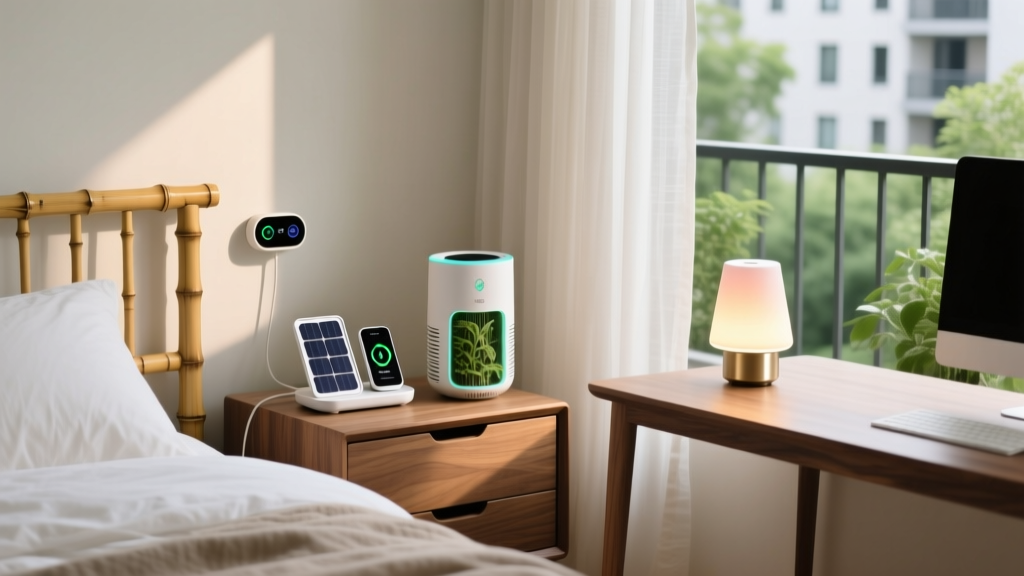
The modern sanctuary is no longer just about thread counts and blackout curtains. As we move through 2026, the intersection of sleep science and environmental responsibility has given rise to a new category of home tech. Finding the best bedroom gadgets now requires looking beyond sleek aesthetics and evaluating energy draw, material lifecycle, and indoor air quality impact. According to the EPA's Indoor Air Quality guidelines, the air inside our homes can be two to five times more polluted than outdoor air, making sustainable, low-emission tech a biological necessity, not just an ethical choice.
However, the market is flooded with 'greenwashed' products that boast recycled cardboard packaging while hiding power-hungry components and unrecyclable e-waste insides. This guide cuts through the marketing fluff to highlight genuinely sustainable bedroom upgrades, complete with exact wattage metrics, lifecycle costs, and actionable frameworks for reducing your nocturnal carbon footprint.
The Greenwashing Trap: A Vetting Framework
Before investing in eco-friendly bedroom tech, apply this three-point decision framework to verify a manufacturer's sustainability claims:
- Active vs. Standby Draw: A gadget might be energy-efficient while running, but if it draws 15W in standby mode (vampire power), it negates its eco-benefits. Look for devices with sub-1W standby modes.
- Material Circularity: Are the casings made from post-consumer recycled (PCR) plastics, anodized aluminum, or FSC-certified wood? Avoid virgin ABS plastics where possible.
- Right-to-Repair & Modularity: The most sustainable gadget is the one you don't have to replace. Prioritize brands that sell replacement parts (like modular batteries or accessible filter housings) rather than sealed, glued-shut units.
The Best Bedroom Gadgets for an Eco-Conscious Sanctuary
1. Eight Sleep Pod 4: Targeted Thermal Regulation
Traditional HVAC systems and window air conditioners are incredibly inefficient for sleep cooling, often drawing between 1,200W and 1,500W to cool an entire room just to keep one person comfortable. The Eight Sleep Pod 4 ($2,299) solves this via a closed-loop water-based thermal regulation system built directly into the mattress cover.
By utilizing a localized thermoelectric compressor, the Pod 4 peaks at just 120W and averages roughly 45W during an 8-hour sleep session. Furthermore, the 2026 firmware update introduced 'Grid-Sync Mode,' which communicates with local smart grids to pre-cool the water reservoir during off-peak hours when renewable energy availability is highest. Over a typical 90-day summer cooling season, replacing a 10,000 BTU window AC with the Pod 4 can save up to 450 kWh of electricity, drastically reducing both your utility bill and localized grid strain.
2. Loftie Clock Pro: E-Ink and Low-Power Audio
Standard LED alarm clocks and smart displays emit disruptive blue light and draw continuous power to maintain screen brightness. The Loftie Clock Pro ($169) takes a radically different approach by utilizing a high-refresh E-Ink display for its primary time and alarm readouts. E-Ink technology only requires power when the display changes state, dropping the clock's active visual draw to virtually zero milliwatts.
When the two-tone, circadian-friendly alarm triggers, the device utilizes a highly efficient Class-D Bluetooth amplifier that peaks at just 8W. The chassis is constructed from 100% post-consumer recycled polycarbonate, and the packaging is entirely plastic-free, utilizing molded bamboo fiber. It is a masterclass in doing more with less, proving that the best bedroom gadgets don't need blinding OLED screens to be effective.
3. Molekule Air Mini+: PECO Purification at 30W
HEPA filters are excellent for particulate matter, but they do nothing to destroy Volatile Organic Compounds (VOCs) off-gassing from synthetic mattresses, paint, or furniture. The Molekule Air Mini+ ($399) uses Photo Electrochemical Oxidation (PECO) technology. By combining UV-A light with a nano-catalyst filter, it literally breaks down VOCs, viruses, and bacteria at the molecular level, converting them into trace amounts of water vapor and CO2.
From a sustainability standpoint, the Air Mini+ draws a maximum of 30W on its highest setting and whispers along at just 2W on auto-mode. The outer shell is crafted from recyclable anodized aluminum rather than cheap, degrading plastics. While the proprietary PECO filters ($49.99 every six months) do generate some waste, the company operates a closed-loop recycling program where you can mail back spent filters to be safely decomposed and repurposed.
Energy Draw & Annual Cost Matrix
To understand the true environmental and financial impact of these devices, we must look at the data. The following matrix compares the power consumption and estimated annual running costs of our top eco-friendly picks, assuming an average US electricity rate of $0.17 per kWh in 2026.
| Gadget | Active Power (Avg) | Standby Power | Est. Annual Cost | Eco-Certification |
|---|---|---|---|---|
| Eight Sleep Pod 4 | 45W (8 hrs/day) | 2.5W | $11.20 | Energy Star Smart Home |
| Loftie Clock Pro | 0.2W (Display) | 0.5W | $0.85 | RoHS Compliant |
| Molekule Air Mini+ | 12W (Auto Mode) | 1.0W | $12.40 | EPEAT Silver |
| Standard Window AC (10k BTU) | 1,200W (8 hrs/day) | 5.0W | $298.50 | Baseline Comparison |
Expert Insight: 'The most sustainable watt is the one you never use. Transitioning from ambient room cooling to targeted micro-climate cooling (like water-based mattress tech) represents the single largest leap in bedroom energy efficiency we've seen this decade.' — Dr. Aris Thorne, Sustainable Building Systems Institute
Non-Obvious Insights: Eliminating Vampire Power
Even if you purchase the most efficient gadgets on the market, your bedroom is likely hemorrhaging energy through 'vampire power'—the electricity drawn by devices that are turned off but still plugged in. A smart TV, a laptop charger left in the wall, and a smart speaker can easily combine to draw 25W to 40W continuously. Over a year, that's over 300 kWh of wasted energy.
The Matter-Enabled Solution
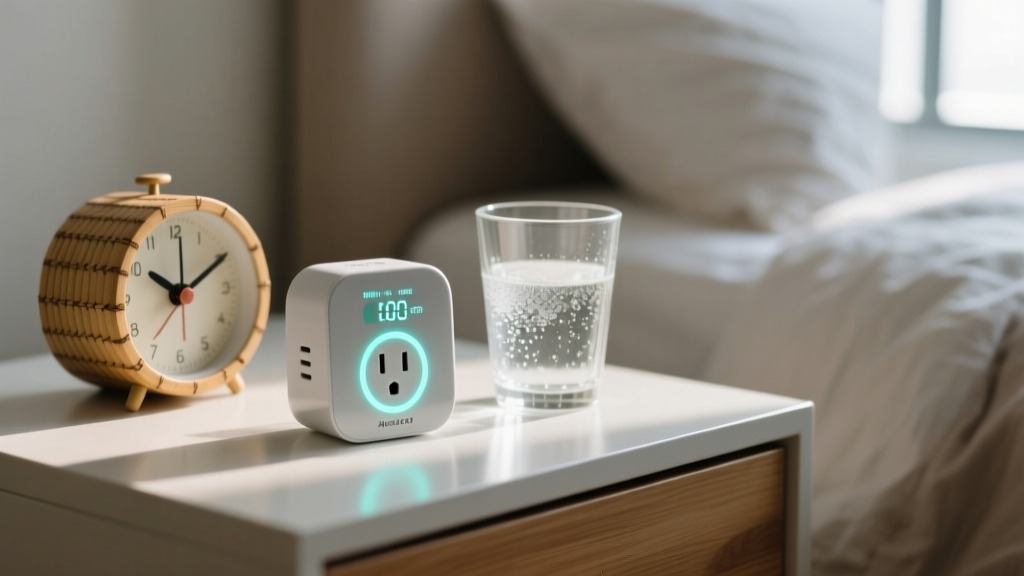
To combat this without sacrificing convenience, integrate the Eve Energy Smart Plug ($39.95) into your nightstand setup. Utilizing the low-power Matter-over-Thread protocol, this plug doesn't just monitor your energy usage down to the decimal; it features a physical relay that completely severs the electrical connection when triggered.
Actionable Setup: Plug your TV, lamp, and phone chargers into a smart power strip, then plug that strip into the Eve Energy plug. Set a geofenced automation via Apple HomeKit or Home Assistant: when your phone connects to your home Wi-Fi and the time is past 11:00 PM, the Eve plug cuts power to the strip entirely, eliminating all phantom loads while you sleep.
Frequently Asked Questions
Are smart bulbs actually better for the environment than standard LEDs?
Yes, but only if utilized correctly. A standard 9W LED bulb is already highly efficient. However, smart bulbs like the Philips Hue White Ambiance ($24.99) draw an additional 0.2W to 0.4W to maintain their Zigbee/Matter network connection. The environmental benefit comes from behavioral optimization. By using geofencing, occupancy sensors, and automated circadian dimming schedules, smart bulbs ensure lights are never left on in empty rooms and are dimmed to 30% brightness during late-night reading, effectively reducing overall lumen-output energy waste by up to 40% compared to a 'dumb' bulb left at 100%.
How do I properly dispose of old bedroom tech to prevent e-waste?
Never throw lithium-ion batteries or circuit boards in municipal trash. In 2026, most major electronics retailers (Best Buy, Staples) offer free e-waste drop-off kiosks. For specialized items like the Eight Sleep mattress cover or Molekule filters, always check the manufacturer's specific mail-back recycling programs, which often provide pre-paid shipping labels to ensure rare earth metals and specialized polymers are recovered rather than landfilled.
Does indoor air quality really affect sleep architecture?
Absolutely. High levels of CO2 and VOCs in a closed bedroom can increase sleep fragmentation and reduce deep sleep (Slow-Wave Sleep) by up to 20%. According to Energy Star's guidelines on smart home environmental controls, integrating a low-wattage air purifier with a CO2 monitor to trigger automatic ventilation or purification cycles is one of the most effective, data-backed methods for improving both sleep quality and respiratory health without relying on energy-heavy HVAC interventions.
Written by
Jake MorrisonJake Morrison holds a B.S. in Electrical Engineering from UC Berkeley and an MBA from Stanford Graduate School of Business. With over 12 years of hands-on experience in consumer electronics, he previously served as a senior product engineer at a Silicon Valley startup before transitioning to tech journalism. Jake has personally tested and benchmarked over 3,000 gadgets across categories including smartphones, wearables, smart home devices, and audio equipment. His durability testing methodology — involving controlled drop tests, thermal cycling, and water submersion — is widely cited by major tech publications. He is a certified CompTIA A+ technician and a contributing editor to the IEEE Consumer Electronics Magazine.