Best Kitchen Gadgets for Men: Top Sustainable Picks 2026
Discover the best kitchen gadgets for men who want sustainable, high-performance gear. Expert picks for eco-friendly prep, cooking, and food preservation.
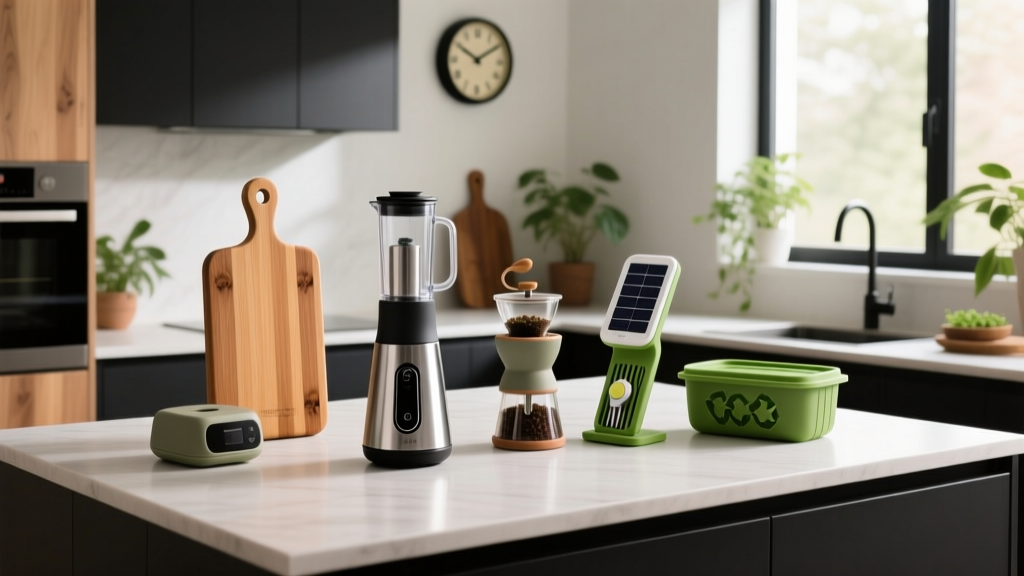
The modern culinary workspace demands high performance without the ecological hangover. For years, the market was flooded with cheap, single-use plastic appliances and energy-hogging gimmicks that ended up in landfills within three years. Today, the intersection of masculine culinary tech and sustainability is defined by Buy-It-For-Life (BIFL) durability, precision energy management, and waste-diverting engineering. When evaluating the best kitchen gadgets for men who prioritize sustainability, the focus shifts from novelty to measurable ecological ROI: wattage efficiency, material lifecycle, and food waste reduction.
Heavy-Duty Sustainable Prep & Thermal Tech
The foundation of an eco-friendly kitchen isn't a solar-powered blender; it is the optimization of thermal transfer and material longevity. Upgrading your primary heat source and cookware yields the highest immediate carbon footprint reduction.
The Induction Synergy: Duxtop 9600LS & Made In Carbon Steel
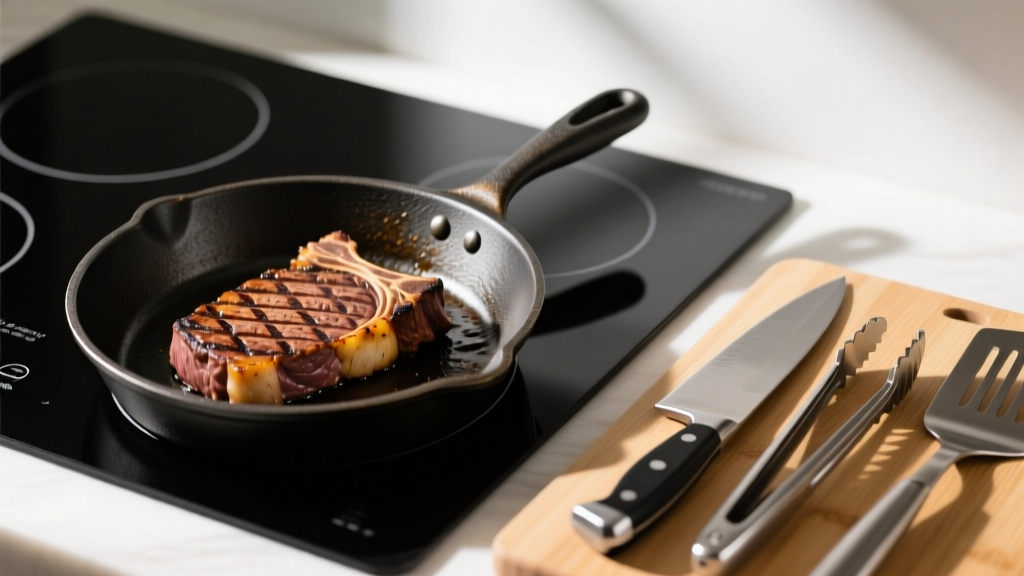
Induction cooking uses electromagnetic fields to heat the cookware directly, achieving 85% to 90% thermal efficiency compared to the 40% efficiency of gas burners. The Duxtop 9600LS Portable Induction Cooktop ($115) utilizes an 1800-watt polyimide film coil that delivers rapid, precise heat with zero ambient thermal bleed. Pair this with the Made In 12-Inch Carbon Steel Skillet ($89). Unlike PTFE-coated non-stick pans that degrade and require replacement every two years, this 2.5mm thick carbon steel pan is entirely PFOA-free, naturally non-stick when properly seasoned, and engineered to last multiple generations. The combination reduces cooking energy consumption by over 50% while eliminating toxic coating waste.
Closing the Loop: Countertop Composting Tech
Food scraps in anaerobic landfill environments generate methane, a greenhouse gas significantly more potent than CO2. Traditional outdoor composting requires space, time, and physical labor that isn't feasible for urban dwellers.
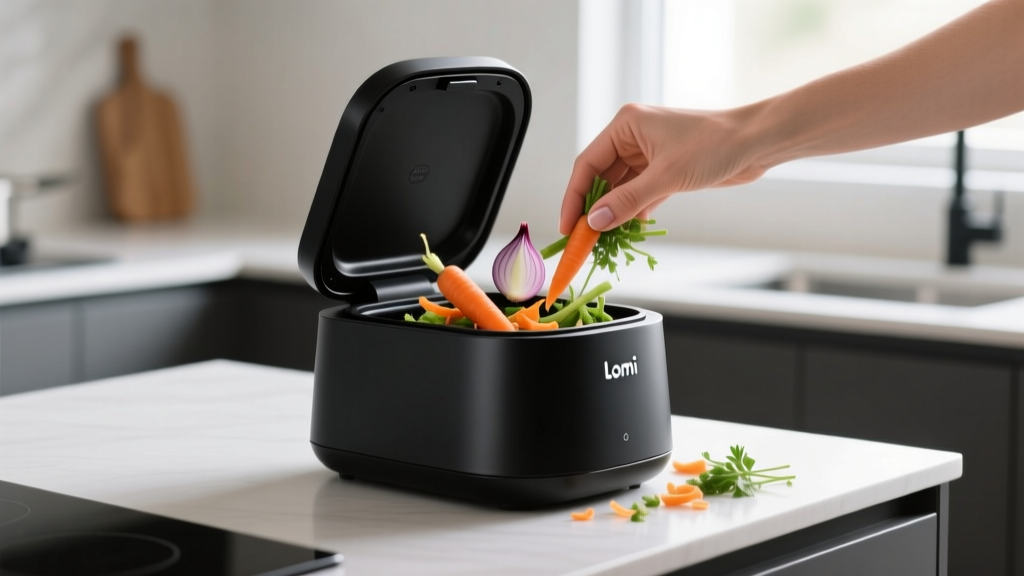
Lomi Classic Smart Composter
Pela’s Lomi Classic ($499) is a high-torque, heated grinding system that accelerates the decomposition of organic matter. It utilizes a combination of heat (up to 160°F), abrasion, and oxygenation to break down food waste—including small bones, coffee grounds, and bioplastics—into a nutrient-rich dirt amendment in just 4 to 10 hours.
- Energy Draw: Averages 0.6 kWh per standard cycle, costing roughly $0.08 per use based on the 2026 national average electricity rate.
- Volume Reduction: Shrinks food waste volume by up to 80%.
- Odor Management: Dual activated carbon filters trap volatile organic compounds (VOCs), requiring replacement only every 3 to 4 months.
Precision Preservation & Zero-Waste Storage
Sustainable cooking is only half the equation; preserving what you buy prevents the upstream agricultural emissions associated with wasted food. The USDA's Food Safety Guidelines emphasize that proper atmospheric control drastically extends the safe consumption window of perishables.
Zwilling Fresh & Save Vacuum Pump System
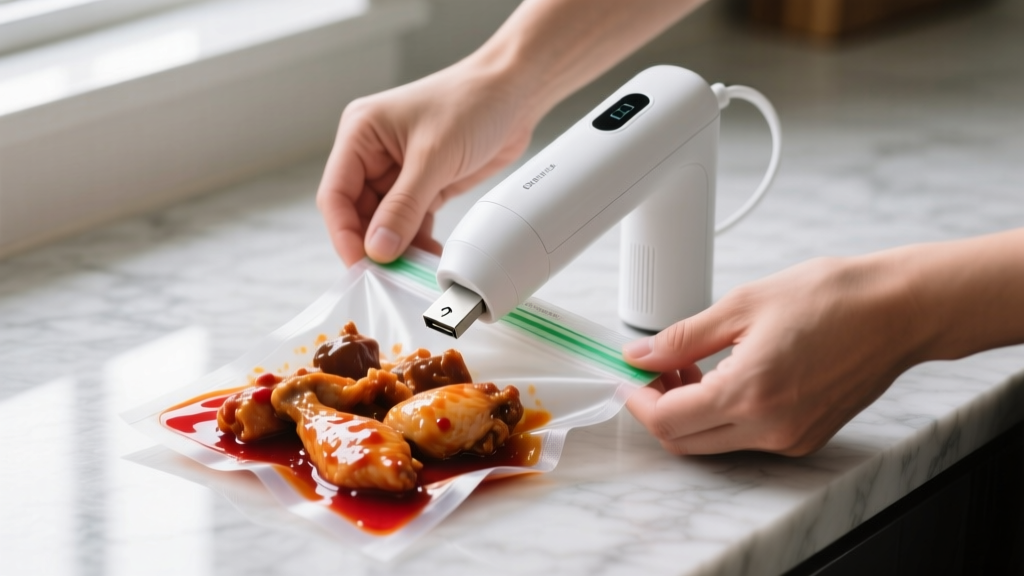
Unlike bulky, single-use plastic bag sealers, the Zwilling Fresh & Save system ($150 for the starter set) utilizes a sleek, USB-C rechargeable handheld vacuum pump paired with durable borosilicate glass and BPA-free Tritan plastic containers. The pump extracts air until the internal pressure drops, creating a vacuum seal that slows oxidation and bacterial growth.
Efficient Hydration: The Fellow Stagg EKG Pro
Boiling more water than necessary is a hidden energy drain in most kitchens. The Fellow Stagg EKG Pro Electric Pour-Over Kettle ($195) solves this with a 1200-watt heating element governed by a PID (Proportional-Integral-Derivative) temperature controller. Instead of blindly rolling to a 212°F boil, you can dial in exact temperatures (e.g., 205°F for light roast pour-overs) and engage the 60-minute hold mode. The 304-grade stainless steel interior contains no plastic contact points, and the modular base design means internal components can be serviced or replaced rather than discarding the entire unit if a sensor fails.
The Eco-ROI Comparison Matrix
Not all sustainable gadgets offer the same return on investment. Here is how the top picks compare regarding energy usage, material lifespan, and primary ecological benefit.
| Gadget | Energy / Cycle | Expected Lifespan | Primary Eco-Benefit |
|---|---|---|---|
| Duxtop 9600LS + Carbon Steel | ~0.45 kWh / meal | 10+ Years / Lifetime | 50% less cooking energy vs. gas |
| Lomi Classic Composter | 0.60 kWh / cycle | 7-10 Years | Diverts methane-producing organics |
| Zwilling Fresh & Save Pump | < 0.01 kWh / use | 5+ Years | Extends food life by 5x |
| Fellow Stagg EKG Pro | 0.15 kWh / boil | 10+ Years | Eliminates excess water boiling |
The BIFL Gadget Evaluation Framework
Before purchasing any new kitchen technology, run it through this three-point sustainability stress test to ensure it meets the standard for long-term ecological viability.
- The Material Teardown: Inspect the primary contact surfaces. Avoid PTFE (Teflon), PVC, and mixed-resin plastics that cannot be recycled. Demand 304-grade (18/8) stainless steel, borosilicate glass, or seasoned carbon/cast iron. If a gadget relies on a proprietary plastic gear that cannot be replaced, reject it.
- The Repairability Index: Check if the manufacturer sells replacement parts. A $200 appliance with a $15 replaceable thermal fuse is infinitely more sustainable than a $50 sealed unit that becomes e-waste when a single component shorts out.
- Standby Power Draw (Vampire Load): Smart gadgets with Wi-Fi connectivity often draw 2 to 5 watts continuously. Ensure the device features a physical hard-switch or a low-power sleep mode that drops standby consumption below 0.5 watts to meet modern Energy Star criteria.
Frequently Asked Questions
Are portable induction cooktops powerful enough to replace a gas range?
Yes, for 90% of culinary tasks. An 1800-watt induction burner generates a magnetic field that heats a carbon steel or cast iron pan faster than a standard 15,000 BTU gas burner. The limitation only arises when attempting to use woks that require intense, multi-directional flame licking (though specialized induction woks exist) or when cooking during a grid power outage.
Do countertop composters like Lomi actually produce usable soil?
They produce a dehydrated, ground organic amendment, not fully matured compost. To use it effectively on houseplants or garden beds, you should mix the Lomi output into existing soil at a 1:10 ratio and let it cure for a few weeks, allowing natural microbes to finish the breakdown process without burning plant roots.
How do I maintain the vacuum seal on reusable silicone or glass containers?
>The most common failure point is the silicone gasket on the lid. To maintain the seal, remove the gasket monthly, wash it in warm soapy water to remove microscopic food oils that cause slippage, and lightly rub it with food-grade mineral oil to prevent the silicone from drying out and cracking over time.Written by
David OkaforDavid Okafor is an ASE (Automotive Service Excellence) Master Certified Technician with 15 years of professional experience in vehicle diagnostics, aftermarket electronics installation, and fleet management. He holds an Associate Degree in Automotive Technology from Universal Technical Institute and certifications in mobile electronics (MECP Certified Installer). David has installed and reviewed over 800 car tech products — from OBD2 scanners and dash cams to full infotainment system retrofits — in vehicles ranging from economy compacts to luxury SUVs. His popular YouTube channel "AutoTech David" has over 150,000 subscribers and features detailed installation tutorials and product teardowns. He is a regular contributor to the SEMA Show's aftermarket technology showcase and advises two automotive tech startups on product development.