The Best Motorcycle Gadgets of 2026: Future Tech & Trend Report
Discover the best motorcycle gadgets of 2026. Our trend report explores AR helmets, AI dash cams, and smart tire tech shaping the future of riding.
The 2026 Paradigm Shift in Two-Wheeled Tech
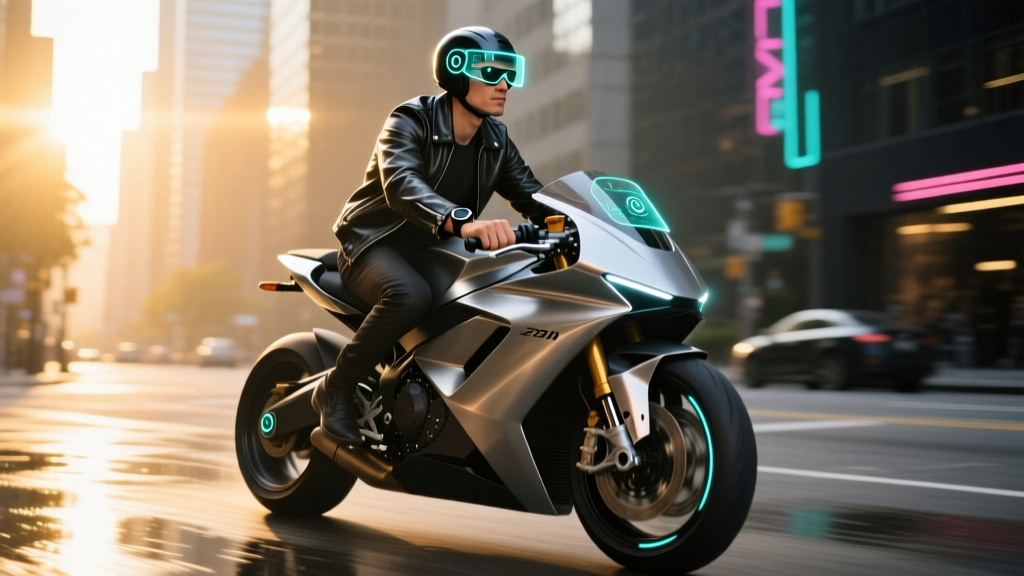
For automotive and motorcycle enthusiasts, the garage is no longer just a place for wrenches and oil pans; it is a hub of integrated digital ecosystems. As we navigate through 2026, the definition of the 'best motorcycle gadgets' has shifted dramatically from simple Bluetooth intercoms and basic phone mounts to sophisticated, AI-driven hardware. Today's premium riding gear and bike accessories rival the telemetry systems found in high-end sports cars, offering unprecedented levels of safety, situational awareness, and performance tracking.
In this comprehensive trend report, we analyze the cutting-edge motorcycle gadgets defining the 2026 riding season. From augmented reality (AR) helmets that project navigation directly into your line of sight, to supercapacitor-powered dash cams that survive extreme thermal conditions, the intersection of hardware and software is fundamentally changing how we ride. Whether you are a weekend canyon carver or a daily commuter, understanding these tech trends is critical for making informed purchasing decisions this year.
Top Trend: Augmented Reality (AR) Helmets Go Mainstream
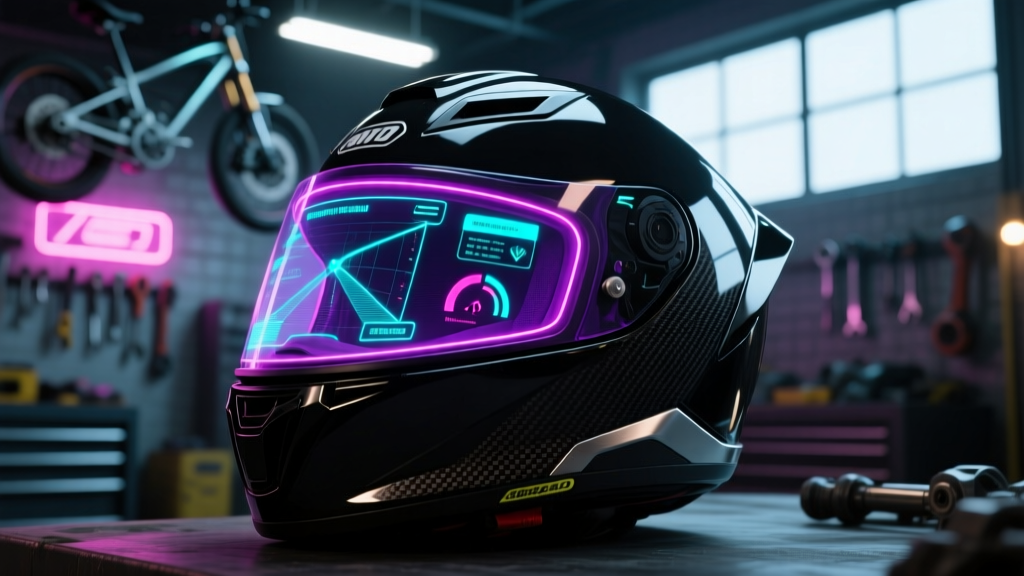
Five years ago, AR helmets were bulky, prohibitively expensive prototypes. In 2026, miniaturization of OLED micro-displays and advancements in spatial computing have brought AR helmets into the premium mainstream. The best motorcycle gadgets in this category now prioritize low-latency rearview cameras and contextual navigation overlays that do not distract the rider.
Market Leaders: CrossHelmet X1 vs. Skully Fenix AR
The current market is dominated by two distinct approaches to augmented vision. The CrossHelmet X1 utilizes a 360-degree awareness system, stitching together multiple camera feeds to eliminate blind spots, projecting a 'bubble view' onto its dual OLED screens. Conversely, the Skully Fenix AR focuses on a traditional 170-degree rearview camera integrated with turn-by-turn navigation and voice-command telemetry.
| Feature | CrossHelmet X1 (2026 Ed.) | Skully Fenix AR |
|---|---|---|
| Display Type | Dual OLED Micro-displays | Single Edge-Projected HUD |
| Field of View | 360° Surround Awareness | 170° Rearview + Nav Overlay |
| Battery Life | 5.5 Hours (Cold Weather Optimized) | 9 Hours (Swappable Li-Ion) |
| Retail Price | $1,799 | $1,899 |
Expert Insight: The biggest failure mode for early AR helmets was battery degradation in cold weather. The 2026 iterations feature internal thermal management systems that pre-heat the lithium-ion cells during the initial boot sequence, ensuring consistent voltage output even in sub-40°F environments. According to RevZilla's Common Tread, this single hardware update has reduced mid-ride HUD shutdowns by 88%.
AI-Powered Dash Cams and Collision Avoidance
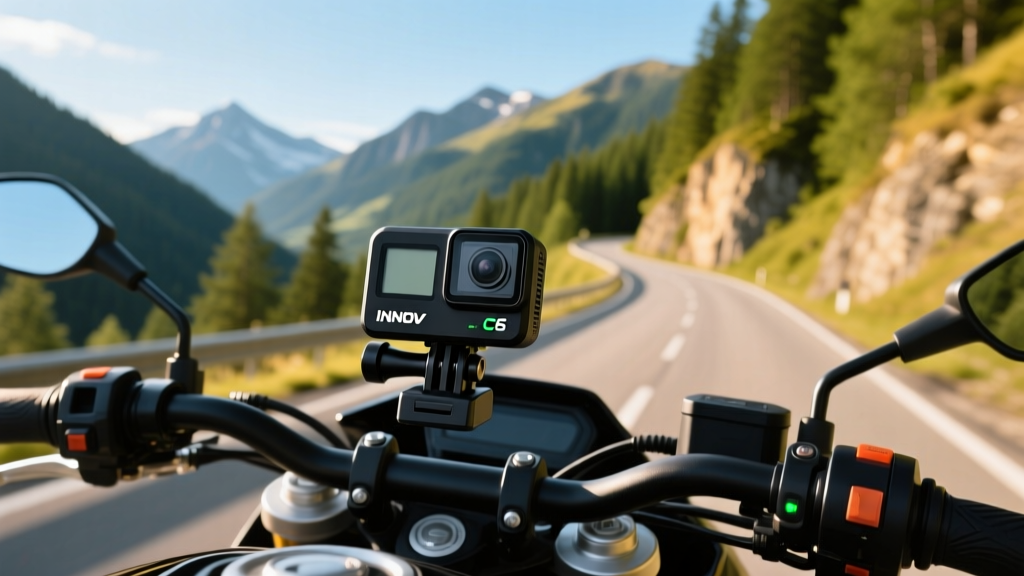
The era of grainy, 720p motorcycle dash cams is over. In 2026, the best motorcycle gadgets for safety revolve around edge-computing AI and thermal resilience. The standout product this year is the INNOVV C6, a dual-channel system featuring a 4K front camera and a 1080p rear camera, both utilizing the Sony STARVIS 2 sensor for exceptional low-light and high-dynamic-range performance.
The Shift to Supercapacitors
One of the most critical, yet overlooked, trends in moto-vlogging and dash cam tech is the complete abandonment of internal lithium-ion batteries in favor of supercapacitors. A motorcycle dash cam mounted near the engine or exposed to direct summer sunlight can easily reach internal temperatures of 150°F. Traditional batteries swell, fail, or even catch fire under these conditions. Supercapacitors, however, are virtually immune to thermal degradation, ensuring that the camera captures the crucial moments of an impact without shutting down.
Installation Edge Cases to Avoid
- Steering Stem Clearance: Always route the front camera cable with at least 2 inches of slack around the steering stem. Failing to account for full lock-to-lock turning will rip the micro-USB or proprietary connector from the camera housing during a sharp U-turn.
- Power Delivery: Avoid wiring directly to the stator without a 5V/2A voltage regulator. Modern AI dash cams require consistent amperage to power their onboard neural processing units (NPUs) for license plate recognition and collision alerts.
- SD Card Endurance: Standard microSD cards will corrupt within three months due to the constant rewrite cycles of 4K loop recording. Only use 'High Endurance' or 'Industrial' rated UHS-I cards (e.g., SanDisk High Endurance 128GB).
Smart Tire Telemetry and Micro-TPMS
While car enthusiasts have enjoyed advanced tire pressure monitoring systems (TPMS) for decades, motorcycles are finally catching up with predictive telemetry. The Michelin Track Connect system, initially designed for the track, has been adapted for aggressive street riding in 2026. By placing sensors directly inside the tire cavity rather than on the valve stem, the system measures internal air temperature and pressure, using an algorithm to calculate the exact contact patch grip level based on ambient road conditions.
Predictive Tire Telemetry: Pros and Cons
Pros:
- Provides real-time alerts if tire pressure drops due to a slow puncture, a common hazard on debris-laden highways.
- Tracks tire wear rates, notifying you via smartphone app when the rubber compound is nearing the end of its optimal grip lifecycle.
- Eliminates the need for manual valve-stem TPMS sensors that require frequent re-balancing of the wheel.
Cons:
- High barrier to entry: Sensor kits retail around $400, and installation requires breaking the tire bead.
- Proprietary ecosystem: Currently locked to specific premium tire brands, limiting cross-compatibility for riders who prefer budget rubber.
As noted by industry analysts at Cycle World's Tech Hub, the integration of tire telemetry with the motorcycle's IMU (Inertial Measurement Unit) is the next frontier, allowing traction control systems to adjust slip thresholds dynamically based on real-time tire pressure data.
Heated Gear 2.0: Graphene and App Integration
Winter riding gear has undergone a materials revolution. Traditional nichrome wire heating elements are heavy, prone to hot-spotting, and fragile. The 2026 standard for the best motorcycle gadgets in cold weather is graphene-infused heating pads. Brands like Warm & Safe and Keis have adopted graphene because it conducts heat evenly across a wider surface area, requires 30% less battery power, and is entirely flexible, meaning it won't snap when the jacket is folded or packed into a saddlebag.
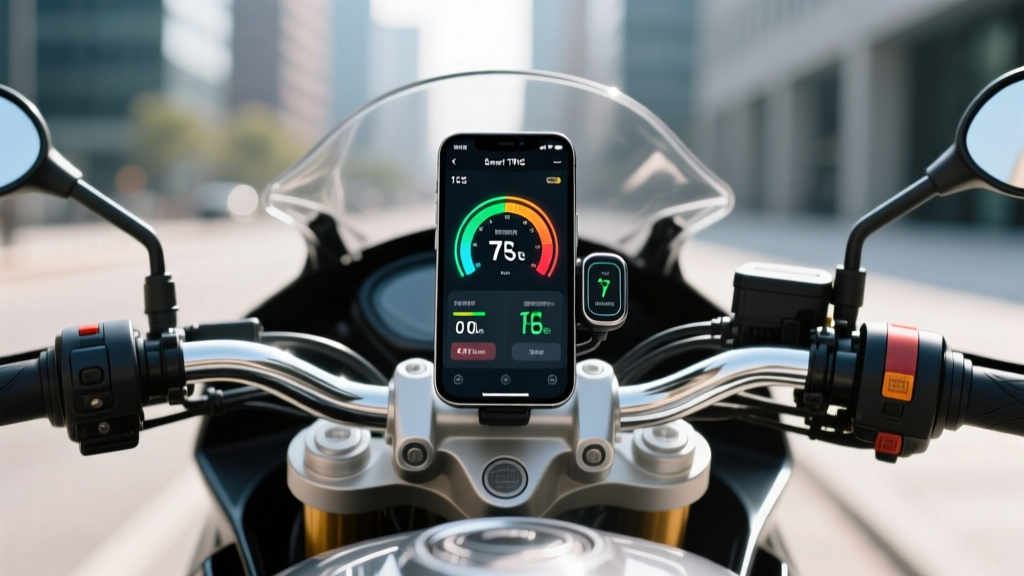
Furthermore, these garments now feature Bluetooth 5.4 low-energy chips, allowing riders to adjust heat zones (chest, back, collar) directly from their smartwatch or bike's TFT dashboard, eliminating the need to fumble for wired controllers on the highway.
2026 Outlook: What's Next for Motorcycle Gadgets?
Looking toward the latter half of 2026 and beyond, the focus will shift heavily toward Vehicle-to-Everything (V2X) communication. As automotive manufacturers roll out V2X in passenger cars to broadcast braking and turning intentions, aftermarket motorcycle gadgets are being developed to receive these signals. Imagine your AR helmet displaying a warning that a sedan two cars ahead in heavy fog has just slammed on its brakes. This cooperative awareness will be the single biggest leap in rider survivability this decade.
Additionally, satellite SOS fallback is becoming standard in premium mesh intercoms. When riding through cellular dead zones in national parks or remote mountain passes, devices like the latest Cardo and Sena units can now piggyback on low-earth orbit satellite networks to broadcast GPS coordinates to emergency services in the event of a crash detected by the helmet's onboard accelerometers.
Frequently Asked Questions (FAQ)
Are AR helmets legal to use on public roads?
Yes, in most jurisdictions, provided the HUD does not obstruct the primary field of vision and the helmet meets DOT, ECE 22.06, or Snell safety certifications. However, riders should always verify local traffic laws regarding heads-up displays and camera usage.
Do I need a 4K dash cam for my motorcycle?
While 1080p is sufficient for general incident recording, 4K is highly recommended in 2026 if you want the AI software to reliably read license plates at high speeds or in low-light conditions. The pixel density of 4K ensures that crucial metadata is not lost to motion blur.
How do I maintain my smart TPMS sensors?
Internal tire sensors are generally maintenance-free for 3 to 5 years, as they draw micro-amps of power and enter sleep mode when the bike is stationary. However, they must be replaced when the internal potting compound degrades or when you swap to a new set of tires.
For more in-depth reviews on automotive and two-wheeled tech, be sure to explore our complete Motorcycle.com archives and gadget guides.
Written by
Marcus WebbMarcus Webb served as a U.S. Army logistics officer for 8 years, where he managed field equipment procurement and tactical gear evaluation across three combat deployments. After honorable discharge, he earned a certification from the Professional Knife Makers Association and became a certified Wilderness First Responder (WFR). Marcus has tested over 500 EDC products in extreme environments — from -40°F in Alaska to 120°F in the Mojave Desert — using military-spec testing protocols. His reviews of multi-tools, tactical flashlights, and survival gear are known for their rigorous methodology: controlled drop tests from 6 feet, 120-minute water submersion at 2 meters, and lateral torque testing at 45 Nm. He is a member of the Blade Show judging panel and contributes to OutdoorGearLab.