Branded Tech Gadgets Take Flight: 2026 Drone Trend Report
Explore the 2026 drone market trend report. Discover how premium branded tech gadgets are transforming aerial photography, FPV racing, and AI autonomy.
The Evolution of Camera Drones as Essential Branded Tech Gadgets
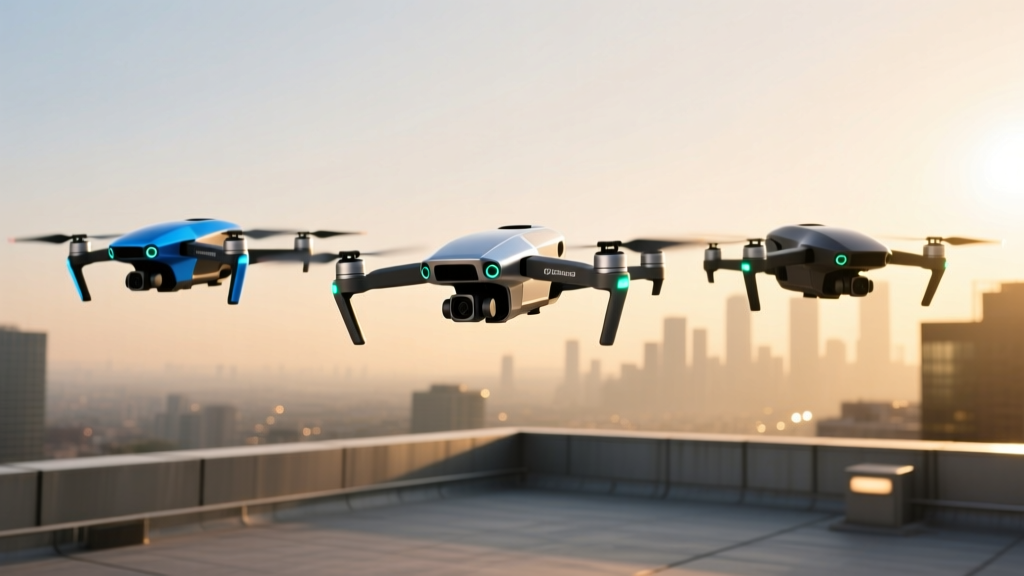
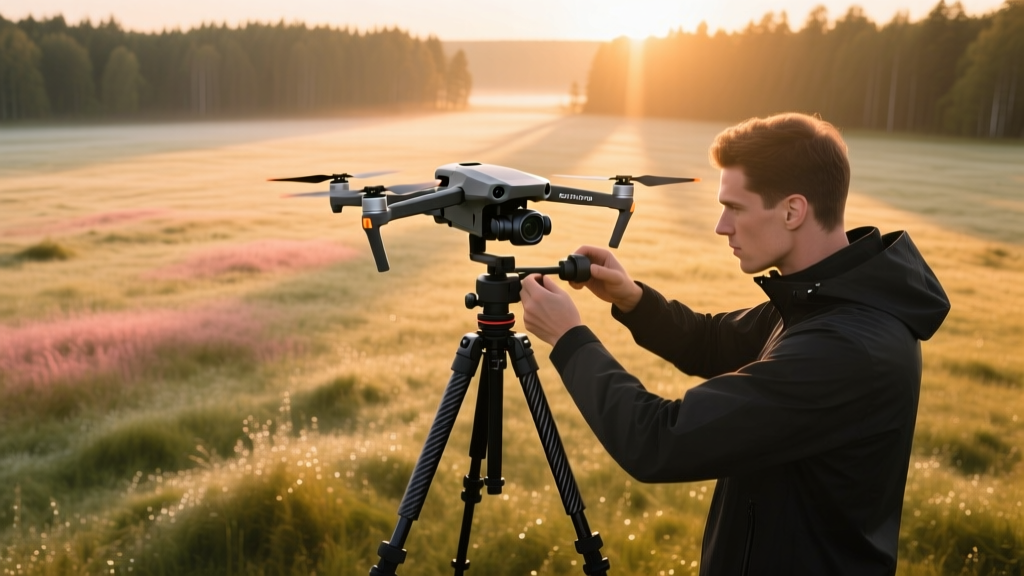
The consumer and prosumer drone market has fundamentally shifted over the last 24 months. No longer viewed as mere novelty toys, high-end aerial platforms have cemented their status as indispensable branded tech gadgets for creators, surveyors, and hobbyists. According to Drone Industry Insights (DRONEII), the global commercial and consumer drone market is projected to surpass $55 billion by the end of 2026, driven largely by the integration of advanced computational photography and miniaturized LiDAR sensors.
In the camera drone segment, the transition from 1/2-inch sensors to dual and triple 1-inch CMOS setups has become the baseline for premium models. The DJI Air 3S (retailing at $1,099) and the Autel Robotics EVO Lite+ ($1,149) dominate the mid-tier enthusiast space. These devices utilize advanced pixel-binning technology to deliver 48MP raw stills and 4K/120fps video with 14 stops of dynamic range. For professionals requiring focal length versatility without swapping lenses mid-flight, triple-camera arrays featuring 24mm, 70mm, and 166mm equivalents are now standard, effectively replacing heavy ground-based cinema rigs for establishing shots and parallax tracking.
2026 Market Data Highlight
Total Registered UAS (US): Over 850,000 active commercial and recreational registrations, per FAA UAS Data and Research.
Average Flight Time (Consumer Tier): Increased from 31 minutes (2022) to 46 minutes (2026) due to high-density silicon-carbon battery chemistry.
Obstacle Avoidance Efficacy: 98.4% success rate in dense foliage environments using omnidirectional binocular vision and dToF sensors.
FPV and Cinewhoops: Speed, Agility, and the Sub-250g Revolution
First-Person View (FPV) flying has evolved from a niche DIY hobby into a highly polished sector of branded tech gadgets. The most significant trend in 2026 is the aggressive push toward sub-250-gram FPV drones. Regulatory frameworks globally—including the FAA's Part 107 exemptions and EASA's Open Category A1 rules—grant lighter drones fewer operational restrictions, allowing pilots to fly closer to people and structures without heavy licensing burdens.
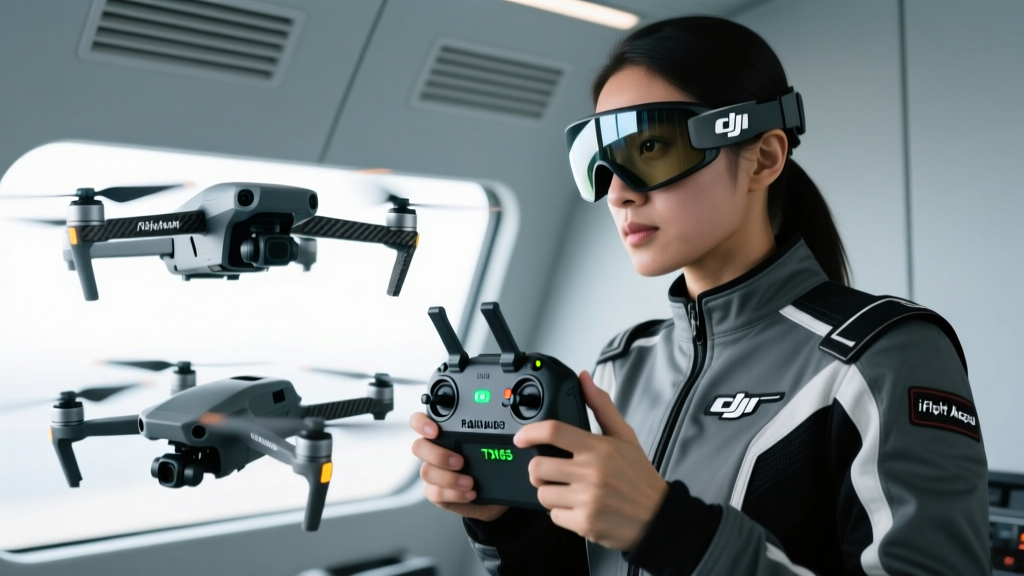
Manufacturers like BetaFPV, iFlight, and GEPRC have engineered 2-inch and 2.5-inch 'Cinewhoop' ducted drones that weigh under 249 grams but can still carry a naked GoPro Hero 13 Black Mini or a DJI O4 Air Unit. These ducted designs protect the propellers, making them safe for indoor real estate tours, tight warehouse inspections, and dynamic proximity flying around human subjects.
FPV Class Comparison Matrix
| Drone Class | Weight (w/ Battery) | Top Speed | Flight Time | Primary Use Case |
|---|---|---|---|---|
| 2.5" Cinewhoop (e.g., GEPRC Cinelog25) | ~235g | 45 mph | 6-8 mins | Indoor tours, proximity flying, sub-250g compliance |
| 5" Freestyle (e.g., iFlight Nazgul ECO V2) | ~680g | 100+ mph | 5-7 mins | Freestyle tricks, high-speed chases, open spaces |
| 7" Long Range (e.g., T-Motor Velox) | ~1,400g | 75 mph | 15-22 mins | Mountain surfing, cinematic long-range landscapes |
The Accessory Ecosystem: Power, Optics, and Protection
A drone is only as capable as the branded tech gadgets supporting it. The accessory market in 2026 is highly specialized, focusing on extending operational limits and ensuring optical fidelity.
Power Management: High C-Rate LiPo vs. Smart Li-ion
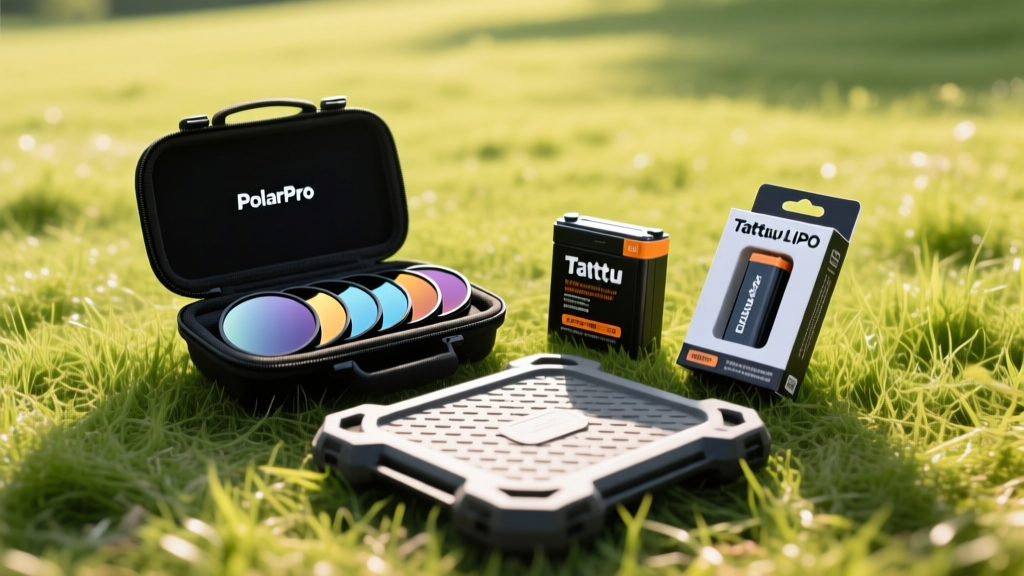
For FPV racers and freestyle pilots, battery chemistry dictates performance. Standard Li-ion cells suffer from severe voltage sag during high-throttle 'punch-outs.' Enthusiasts now exclusively use high-discharge Lithium Polymer (LiPo) or Lithium-Ion Graphene hybrids. The Tattu R-Line Version 5.0 1550mAh 6S battery ($45) boasts a 120C continuous discharge rate. This specific C-rating ensures the battery can deliver up to 186 Amps continuously without dropping below the 3.3V per-cell safety threshold, preventing mid-air brownouts during aggressive maneuvers.
Optical Precision: ND Filters and Shutter Control
To achieve the '180-degree shutter rule' for cinematic motion blur, the shutter speed must be double the frame rate (e.g., 1/100s for 50fps). In bright daylight, a fixed f/1.7 aperture will completely overexpose the image at 1/100s. High-quality Neutral Density (ND) filters are mandatory. The PolarPro Shutter Collection ($99) utilizes fused quartz glass rather than resin, preventing the subtle color shifting and corner softness that plagues cheaper alternatives. For 2026's ultra-bright environments, an ND32 (5-stop reduction) or ND64 (6-stop reduction) is required to maintain proper exposure without closing the aperture and introducing diffraction softness.
2026 and Beyond: AI Autonomy and LiDAR Integration
The future of drone gadgets lies in the decentralization of the pilot. While manual flight remains crucial for FPV and precise cinematic framing, autonomous tracking has reached near-human parity. Modern branded tech gadgets in the enterprise and prosumer space now incorporate solid-state LiDAR alongside optical sensors.
"The integration of lightweight dToF (direct Time-of-Flight) LiDAR into sub-900g consumer drones has eliminated the 'glass and water' blind spots that plagued purely vision-based obstacle avoidance systems in previous generations."
— 2026 Robotics and Autonomous Systems Report
This hardware leap allows drones like the Skydio 3 and DJI's latest Mavic iterations to map environments in total darkness or track subjects through dense, low-contrast forests where traditional stereoscopic cameras fail. Furthermore, on-device neural processing units (NPUs) now execute subject-recognition algorithms locally, meaning the drone can lock onto a specific mountain biker's helmet color and geometry without relying on cloud connectivity or GPS waypoint prediction.
Buyer’s Decision Framework: Matching Workflows to Hardware
Selecting the right aerial gadget requires aligning hardware specifications with your exact operational workflow. Use this decision matrix to guide your 2026 purchasing strategy:
- If your primary goal is travel vlogging and social media content: Prioritize sub-250g camera drones (e.g., DJI Mini series). The 249g weight bypasses heavy registration fees in the EU and UK, and the 1/1.3-inch sensors are more than adequate for heavily compressed Instagram and TikTok codecs.
- If you shoot independent films or commercial real estate: Invest in a dual-sensor prosumer drone with a 70mm telephoto equivalent (e.g., DJI Air 3S or Mavic 3 Pro). The telephoto lens allows for parallax compression shots without flying dangerously close to architecture or talent.
- If you need dynamic, high-speed action sports coverage: Bypass traditional camera drones entirely. Purchase a 2.5-inch Cinewhoop FPV drone paired with a digital VTX (Video Transmitter) system like the DJI O4 Air Unit. You will need to budget an additional $800-$1,200 for the goggles and radio controller, but the resulting immersive footage cannot be replicated by GPS-stabilized camera drones.
- If you conduct roof inspections or agricultural surveying: Look toward enterprise crossover gadgets equipped with thermal imaging and RTK (Real-Time Kinematic) GPS modules, such as the Autel EVO Max 4T, ensuring centimeter-level mapping accuracy and heat-leak detection.
Summary: The 2026 Drone Investment Strategy
The drone sector has matured from experimental hardware into a robust ecosystem of highly specialized branded tech gadgets. Whether you are exploiting the sub-250g regulatory loopholes with a Cinewhoop, leveraging LiDAR for autonomous tracking, or outfitting a prosumer camera drone with fused-quartz ND filters, success in 2026 relies on matching exact hardware specifications to your operational environment. Do not buy generalist gear for specialist workflows.
Written by
Sarah KimSarah Kim holds certifications from both NASM (National Academy of Sports Medicine) and ACE (American Council on Exercise), along with a B.S. in Kinesiology from UCLA. She has spent 7 years bridging the gap between exercise science and consumer technology, evaluating fitness trackers, smart scales, sleep monitors, and recovery devices with clinical precision. Sarah has tested over 200 health-focused wearables in controlled lab settings and real-world training environments, comparing device data against gold-standard medical equipment like ECG monitors and DEXA scans. She consults for three fitness app companies on data accuracy standards and has presented research on wearable reliability at the American College of Sports Medicine (ACSM) annual conference. Her reviews emphasize clinical validity over marketing claims.