Budget Kitchen Tools and Gadgets for Meal Prep 2026
Discover the best budget kitchen tools and gadgets for meal prep in 2026. Master portion control and batch cooking without breaking the bank.
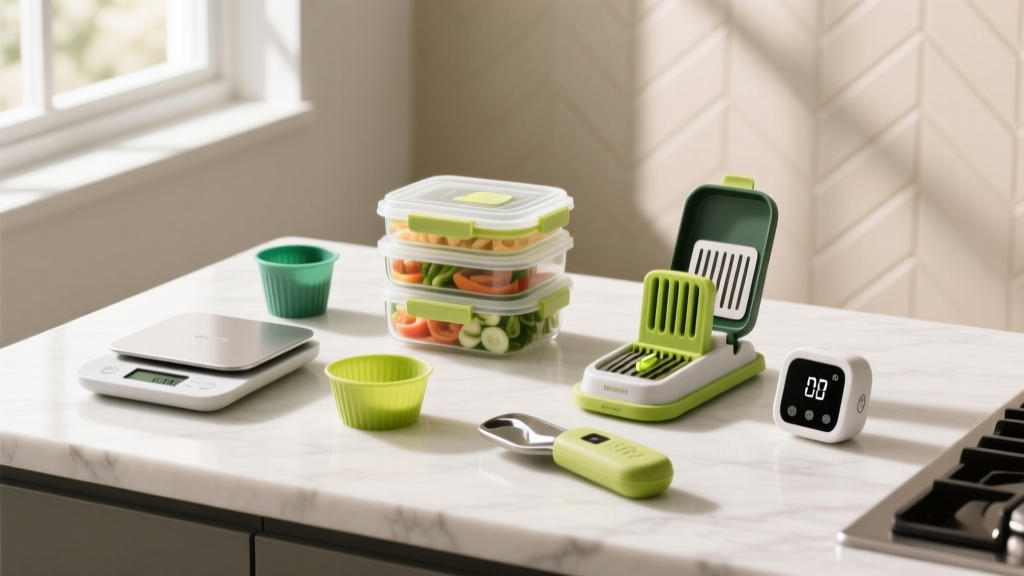
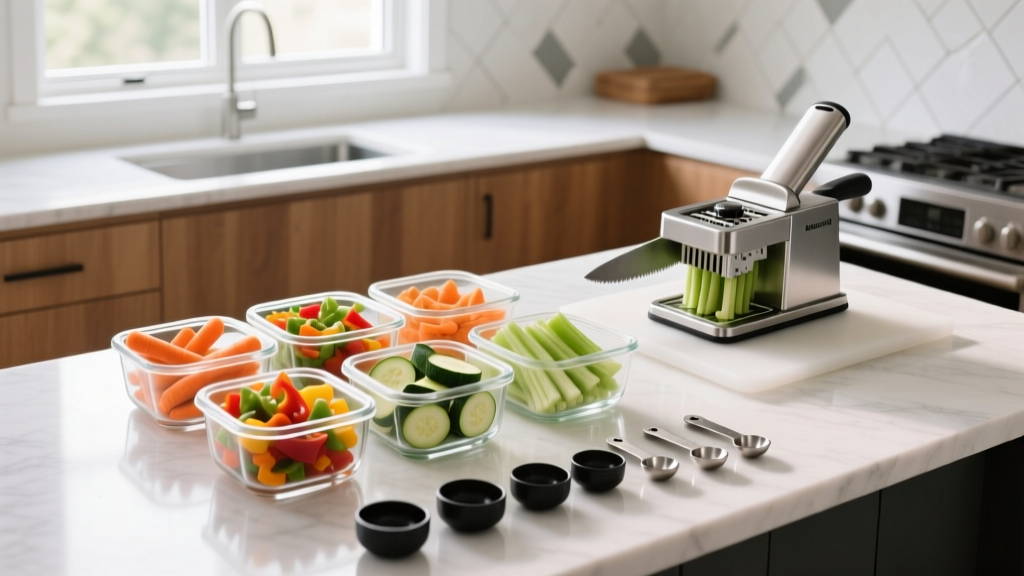
Grocery prices in 2026 demand a tactical approach to batch cooking. According to the USDA MyPlate budget guidelines, strategic meal planning and precise portioning can reduce household food waste by up to 30%, directly offsetting rising produce and protein costs. However, achieving this efficiency does not require a $300 food processor or premium branded storage sets. The most effective kitchen tools and gadgets for meal prep are often high-yield, low-cost unitaskers and precision instruments that solve specific friction points in the batch-cooking pipeline.
This guide bypasses generic utensil sets and focuses strictly on budget-friendly portioning tools and prep accelerators under $25 that offer professional-grade utility, detailing exact material compositions, failure modes, and cost-per-use metrics.
The Core Framework: Evaluating Budget Meal Prep Gear
When sourcing budget kitchen tools and gadgets, the primary metric is not the initial price tag, but the cost-per-use over a 12-month lifecycle. Cheap gadgets fail in three specific ways: thermal degradation, mechanical fatigue, and chemical leaching. To build a reliable meal prep arsenal, every tool must pass the following criteria:
- Thermal Resilience: Must withstand the transition from a 0°F freezer to a 212°F dishwasher cycle without warping or micro-fracturing.
- Geometric Efficiency: Storage and prep tools must feature rectangular or square footprints. Round containers waste approximately 20% of available refrigerator shelf space due to unutilized interstitial gaps.
- Material Transparency: Plastics must be explicitly marked as Tritan or Polypropylene #5. Avoid Polyvinyl Chloride (PVC) or unmarked plastics, which degrade when exposed to acidic foods like tomato-based sauces.
Precision Portioning: Tools Under $15
Accurate portioning is the cornerstone of macro-tracking and caloric control. Standard measuring cups often force the user to bend down to eye level, leading to inaccurate pours and spilled ingredients. The following tools eliminate this ergonomic flaw.
OXO Good Grips 2-Cup Angled Measuring Cup ($8.99)
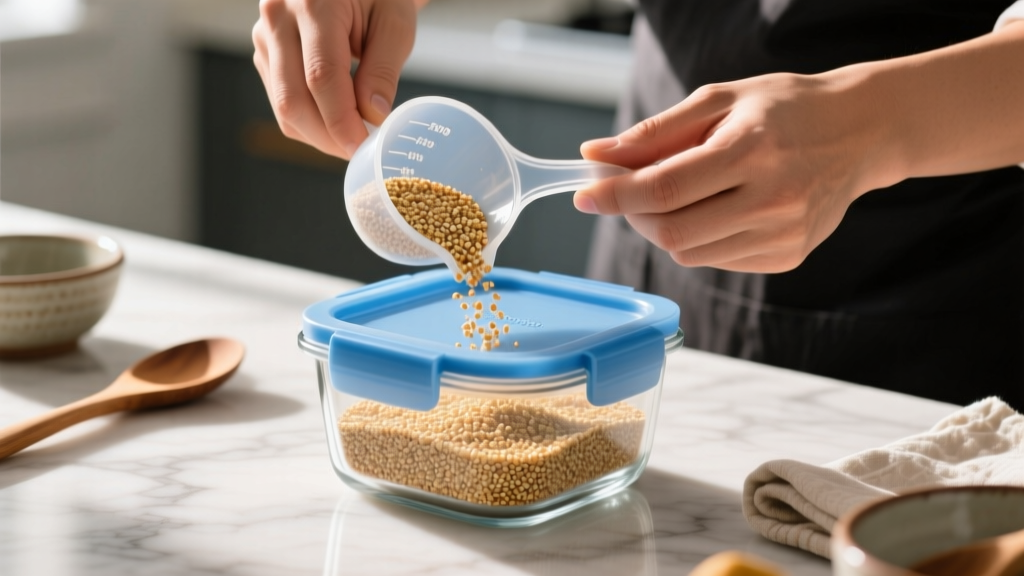
The patented angled scale on the OXO Good Grips 2-Cup cup allows for accurate liquid and dry grain measurement from a top-down perspective. Constructed from BPA-free Tritan copolyester, it resists cracking under impact. Failure Mode Warning: While dishwasher safe, the printed measurement gradients will fade if repeatedly exposed to the intense heat of the bottom rack. Always place this tool on the top rack to preserve the markings.
Spring Chef 18/8 Stainless Steel Magnetic Measuring Spoons ($12.97)
Most budget measuring spoons feature round bowls, which cannot fit into the narrow necks of standard spice jars. The Spring Chef set utilizes an 18/8 food-grade stainless steel construction with dual-sided heads: an oval end for deep spice jars and a round end for liquid extracts. The integrated magnetic strip keeps the set nested, preventing the drawer clutter that plagues traditional ring-bound sets. The heavy-gauge steel ensures the spoons will not bend when scooping dense, packed brown sugar or hardened coconut oil.
Batch Prep Accelerators: High-Yield Gadgets Under $25
Time is the hidden cost of meal prep. Reducing knife work from 45 minutes to 10 minutes ensures consistency in your weekly routine. These mechanical accelerators provide high-volume output without requiring electricity or massive counter footprints.
Mueller Austria Pro Quality Vegetable Chopper ($24.99)
The Mueller chopper utilizes interchangeable 4x4 and 5x5 stainless steel blade grids to dice onions, bell peppers, and root vegetables in a single downward motion. The 1.2-liter catch container is perfectly sized to hold the mirepoix base for a family of four's weekly soup or stew prep. Critical Edge Case: The catch container is made of standard ABS plastic, which becomes highly brittle at sub-zero temperatures. Never place the bottom catch bin directly into the freezer; transfer the diced vegetables to flexible silicone bags or glass containers first to prevent the ABS plastic from shattering.
Zulay Kitchen Original Milk Frother ($9.99)
While marketed for coffee, the Zulay frother's 13,000 RPM motor is a secret weapon for meal prep salad dressings. Standard vinaigrettes separate in the fridge, requiring vigorous shaking before use. By using the Zulay frother to emulsify olive oil, balsamic vinegar, and Dijon mustard for exactly 18 seconds, you create a stable emulsion that remains cohesive for up to 5 days in the refrigerator. It requires 2x AA batteries and is easily cleaned by submerging the wand in soapy water and turning it on for 3 seconds.
Cost-Per-Use Matrix: Budget vs. Premium Equivalents
To demonstrate the value of these specific kitchen tools and gadgets, we compared them against their premium, brand-name counterparts. The data reveals that budget options often match premium utility when material grades are equivalent.
| Category | Budget Pick (Price) | Premium Equivalent (Price) | Material Parity? | Cost Savings |
|---|---|---|---|---|
| Storage Containers | Prep Naturals Glass (Set of 5, $28) | Pyrex Snapware (Set of 5, $45) | Yes (Borosilicate) | 37% |
| Manual Dicer | Mueller Chopper ($24.99) | Breville Sous Chef (Food Processor, $199) | No (Manual vs Electric) | 87% |
| Emulsifier | Zulay Frother ($9.99) | Vitamix Immersion Blender ($149) | No (Whisk vs Blade) | 93% |
| Measuring Spoons | Spring Chef Steel ($12.97) | All-Clad Stainless ($29.95) | Yes (18/8 Steel) | 56% |
Critical Failure Modes: What to Avoid in Budget Gear
Not all budget kitchen tools and gadgets are worth the investment. When shopping for portioning and prep tools, actively avoid the following design flaws:
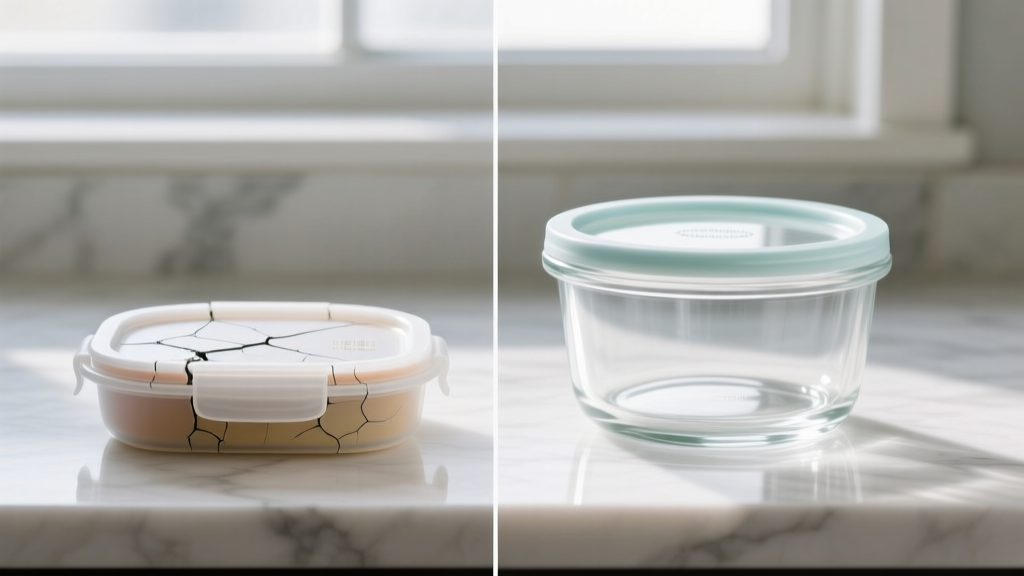
Many budget glass meal prep containers use soda-lime glass rather than borosilicate glass. While soda-lime is cheaper to manufacture, it cannot withstand rapid thermal shock. Transferring a soda-lime container from a 0°F freezer directly into a 400°F oven will cause catastrophic shattering. Always verify the packaging explicitly states 'borosilicate' or 'thermal shock resistant' before purchasing glass storage for meal prep.
- Hinged Plastic Lids: Avoid containers with permanently attached, living-hinge plastic lids. The hinge point experiences mechanical fatigue and typically snaps within 60 days of daily use. Opt for detachable snap-lock lids with removable silicone gaskets for thorough cleaning.
- Silicone-Tipped Tongs for Oily Foods: While silicone tips protect non-stick pans, they are highly porous and will permanently retain the odor and color of tomato sauces and curries during meal prep. For batch cooking, use solid 18/8 stainless steel tongs with a scalloped edge for better grip on slippery proteins.
- Non-Stackable Round Jars: As mentioned in the core framework, round mason jars are aesthetically pleasing but geometrically inefficient for refrigerator storage. If you must use jars for liquid meal prep (like overnight oats or soups), utilize square-sided glass jars to maximize shelf density.
Expert FAQs on Portioning and Storage
How do I prevent silicone sealing rings from retaining odors?
Silicone gaskets in meal prep lids easily absorb the sulfur compounds from onions and garlic. To neutralize these odors without degrading the silicone, bake the clean, dry gaskets on a foil-lined baking sheet at 250°F for 20 minutes. The heat opens the silicone pores and releases the trapped volatile organic compounds. This method is endorsed by material scientists and aligns with FDA Food Storage Guidelines for maintaining the integrity of food-contact surfaces.
What is the safest way to portion hot foods into budget containers?
Never pour boiling liquids directly into Polypropylene #5 plastic containers, even if they are labeled microwave-safe. High heat can cause microscopic pitting in the plastic, creating harborage points for bacteria. Allow soups and stews to cool to 140°F (using an instant-read thermometer) before portioning into plastic. If you must store food while it is still hot, use borosilicate glass containers, which are entirely non-reactive and impervious to thermal pitting.
Can I use the Mueller vegetable chopper for soft fruits?
The Mueller chopper's 5x5 blade grid is designed for firm vegetables like carrots, onions, and bell peppers. Attempting to dice soft fruits like tomatoes, peaches, or avocados will result in crushing and pureeing rather than clean dicing. For soft fruits, rely on a dedicated serrated paring knife to maintain structural integrity for your meal prep fruit salads.
Written by
Lena ChenLena Chen earned her M.S. in Human-Computer Interaction from Carnegie Mellon University and a B.S. in Electrical Engineering from the University of Washington. She has spent the past decade specializing in smart home architecture and IoT ecosystems, helping over 200 homeowners design fully connected living spaces. Lena is a certified Matter protocol consultant and has published peer-reviewed research on voice-first interface design in the ACM Digital Library. Her reviews of smart home products combine deep technical analysis with real-world usability testing, evaluating everything from Zigbee mesh stability to Alexa skill responsiveness. She regularly speaks at CEDIA Expo and CES smart home panels.