Best Budget Retro Sailing Gadgets 2026: Vintage Marine Tech
Discover the best budget retro sailing gadgets for 2026. We review vintage-inspired marine tech, brass compasses, and analog barometers under $150.
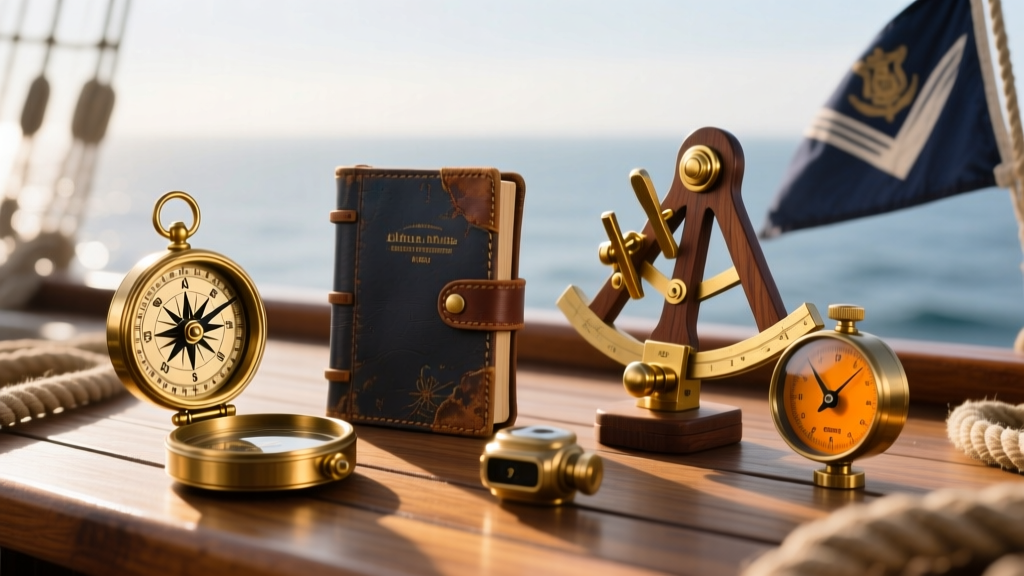
The Renaissance of Analog Marine Electronics
In an era dominated by glass cockpits, multi-function displays, and satellite-linked chartplotters, a fascinating counter-movement is gaining momentum among tech enthusiasts and mariners alike. The demand for retro sailing gadgets—vintage-inspired electronics and analog instruments that evoke the golden age of navigation—is surging in 2026. For the modern sailor, these devices offer more than just nostalgic aesthetics; they provide reliable, battery-free redundancy and a tactile connection to the marine environment that touchscreens simply cannot replicate.
As a tech enthusiast, you understand that true innovation sometimes means looking backward to move forward. Blending mid-century maritime design with modern metallurgical precision, today's vintage-inspired marine tech delivers exceptional functionality without the premium price tag of ultra-modern digital suites. In this budget-friendly roundup, we explore the best retro sailing gadgets under $150 that deserve a place on your bulkhead or in your duffel bag.
Why Tech Enthusiasts Are Choosing Retro Sailing Gadgets
Why integrate analog tech into a digital setup? The answer lies in system redundancy and sensor independence. Digital marine instruments rely on complex NMEA 2000 networks, transducers, and 12V DC power systems. When a voltage drop occurs or a digital sensor fails, analog retro sailing gadgets continue to operate flawlessly. Furthermore, reading a mechanical dial allows for instantaneous trend recognition—a falling barometer needle is often easier to parse at a glance than a digital readout buried in a menu.
"Analog instruments don't just measure the environment; they physically react to it. The mechanical linkage of a brass barometer provides a physical, undeniable truth about atmospheric pressure that digital sensors must interpret and translate."
Top Budget-Friendly Retro Sailing Gadgets for 2026
We have scoured the marine market to find instruments that perfectly balance vintage aesthetics, modern manufacturing tolerances, and budget-friendly pricing. Every item on this list retails for under $150.
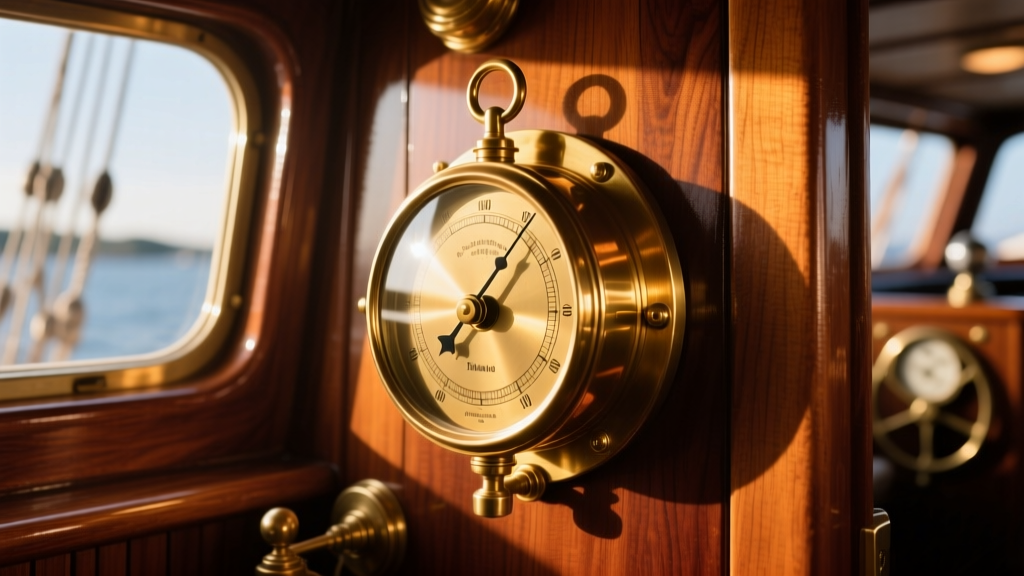
1. Weems & Plath 105C Solid Brass Barometer ($129)
The Weems & Plath 105C is a masterclass in traditional instrument making. Housed in a solid, lacquered brass case with a 4.5-inch diameter dial, this barometer uses a precision-calibrated aneroid capsule to measure atmospheric pressure. Unlike cheap aluminum replicas, the 105C features a true zero-adjustment screw on the back, allowing you to calibrate it to your local NOAA station.
- Build: Solid forged brass with a protective anti-tarnish lacquer.
- Dial Size: 4.5 inches (114mm) with dual scale (inches of Mercury and millibars).
- Best Feature: The included manual striking indicator needle, which allows you to track pressure tendency over a 12-hour period at a glance.
According to NOAA's Marine Weather Guidelines, tracking barometric tendency (the rate of pressure change) is one of the most reliable methods for predicting localized squalls, making this retro gadget a vital forecasting tool.
2. Ritchie Explorer F-50 Spherical Compass ($145)
While GPS provides your position over ground (COG), it cannot tell you your actual magnetic heading (HDG) if the satellite signal is jammed or the antenna fails. The Ritchie Explorer F-50 is a vintage-styled, bulkhead-mounted spherical compass that utilizes modern compass fluid and a sapphire jewel pivot for frictionless card movement.

- Card Size: 2.75-inch flat card with 15-degree graduations.
- Compensation: Built-in compensators allow you to adjust for the magnetic deviation caused by your vessel's steel hull or nearby electronics.
- Lighting: 12V green LED lighting hidden in a retro-fitted brass bezel, preserving the vintage look while offering modern night-vision compatibility.
3. Sun Company SeaTemp Brass Water Thermometer ($48)
Knowing the exact sea surface temperature is crucial for locating thermoclines where baitfish congregate. The Sun Company SeaTemp is a beautifully simple, retro-styled brass water thermometer designed to be mounted on the transom or dropped over the side on a lanyard. It contains no batteries and relies on a classic alcohol-based expansion tube.
- Material: Heavy-duty spun brass with a corrosion-resistant coating.
- Range: 20°F to 120°F (-5°C to 50°C).
- Use Case: Perfect for traditionalists who want to monitor engine cooling water intake temperatures or simply enjoy the tactile feel of a classic nautical instrument.
4. Plastimo Iris 50 Handbearing Compass ($95)
For taking visual bearings on lighthouses, daymarks, or other vessels to determine collision risk (CBDR), a handbearing compass is essential. The Plastimo Iris 50 features a retro, fluid-filled spherical design but incorporates a modern optical prism system. You look through the eyepiece and see the compass card superimposed directly over your target.
As noted in Practical Sailor's Compass Evaluation, the fluid-damped card of the Iris 50 settles up to 40% faster than older air-damped vintage models, giving you an accurate reading even in heavy, rolling sea states.
Comparison Matrix: Vintage Aesthetics vs. Modern Performance
| Gadget Model | Primary Function | Price (2026) | Retro Design Element | Modern Tech Integration |
|---|---|---|---|---|
| Weems & Plath 105C | Atmospheric Pressure | $129 | Solid brass casing, analog dial | Precision laser-calibrated aneroid capsule |
| Ritchie Explorer F-50 | Magnetic Heading | $145 | Spherical dome, classic bezel | Sapphire jewel pivot, 12V LED illumination |
| Sun Company SeaTemp | Water Temperature | $48 | Spun brass housing, analog tube | Shatterproof polycarbonate lens |
| Plastimo Iris 50 | Visual Bearings | $95 | Fluid-filled spherical body | Optical prism superimposition |
Essential Maintenance for Brass and Analog Instruments
Owning retro sailing gadgets requires a different maintenance mindset compared to sealing a plastic GPS unit in a dry bag. To keep your vintage-inspired tech functioning and looking pristine, follow these expert guidelines:
- Never Use Ammonia on Lacquered Brass: Most modern retro brass instruments (like the Weems & Plath) are coated in a clear polyurethane or epoxy lacquer to prevent oxidation at sea. Ammonia-based cleaners will cloud and strip this lacquer. Use only mild soap and water, followed by a microfiber buff.
- Protect from Magnetic Interference: When installing analog compasses, maintain a strict 3-foot minimum distance from modern tech gadgets like Bluetooth speakers, lithium battery banks, and electric bilge pumps to prevent permanent magnetization of the compass card.
- Manage Condensation: Analog dials can suffer from internal fogging if the O-ring seals degrade. If you notice condensation inside your barometer, place the instrument in a sealed desiccant chamber (using silica gel packets) for 48 hours to draw the moisture out before having the seal professionally replaced.
Frequently Asked Questions
Are analog barometers as accurate as digital marine sensors?
High-quality analog barometers like the Weems & Plath 105C are accurate to within 0.05 inches of Mercury (approx. 1.5 mb). While a high-end digital sensor might offer resolution to 0.1 mb, the analog dial provides superior trend visualization, which is far more valuable for marine weather forecasting than absolute precision.
Can I integrate these retro gadgets into my NMEA 2000 network?
By definition, these specific retro gadgets are standalone, analog instruments designed to operate independently of your boat's digital network. This is their primary advantage: they serve as a failsafe redundancy if your NMEA 2000 backbone experiences a short circuit or power failure.
How do I calibrate a brass barometer for my specific location?
Locate your current elevation and local sea-level pressure via a trusted source like NOAA or a local airport METAR report. Using a small flathead screwdriver, gently turn the calibration screw on the back of the brass housing until the indicator needle matches the reported local pressure. Allow 24 hours for the aneroid capsule to settle before making micro-adjustments.
Final Thoughts on Vintage Marine Tech
The integration of retro sailing gadgets into a modern tech enthusiast's arsenal is not about rejecting digital innovation; it is about embracing a layered approach to maritime safety and aesthetics. For under $150 per instrument, you can outfit your vessel with beautiful, tactile, and highly reliable analog tools that bridge the gap between 19th-century craftsmanship and 21st-century sailing. Whether you are navigating a coastal cruiser or simply outfitting a desk with nautical flair, these vintage-inspired devices prove that some technologies never truly go out of style.
Written by
Tom ReynoldsTom Reynolds holds a CFA (Chartered Financial Analyst) designation and a B.S. in Finance from the University of Texas at Austin. Before entering tech journalism, he spent 6 years as a quantitative analyst at a hedge fund, building cost-benefit models for consumer product investments. Tom has maintained a proprietary database of over 10,000 tech deals for the past 8 years, developing his signature "penny-per-feature" evaluation framework that calculates the true value proposition of every gadget. His budget gadget reviews are known for their financial rigor — he tracks price history across 15+ retailers, calculates cost-per-use over 3-year lifespans, and identifies the exact inflection point where premium features justify their markup. Tom's deal alerts have saved his readers an estimated .3 million since 2018.