Outdoor Knife Sets, Sharpeners, and Egg Gadgets for the Kitchen
Build the ultimate outdoor prep station with our guide to field knife sets, portable sharpeners, and compact egg gadgets for the kitchen and camp.
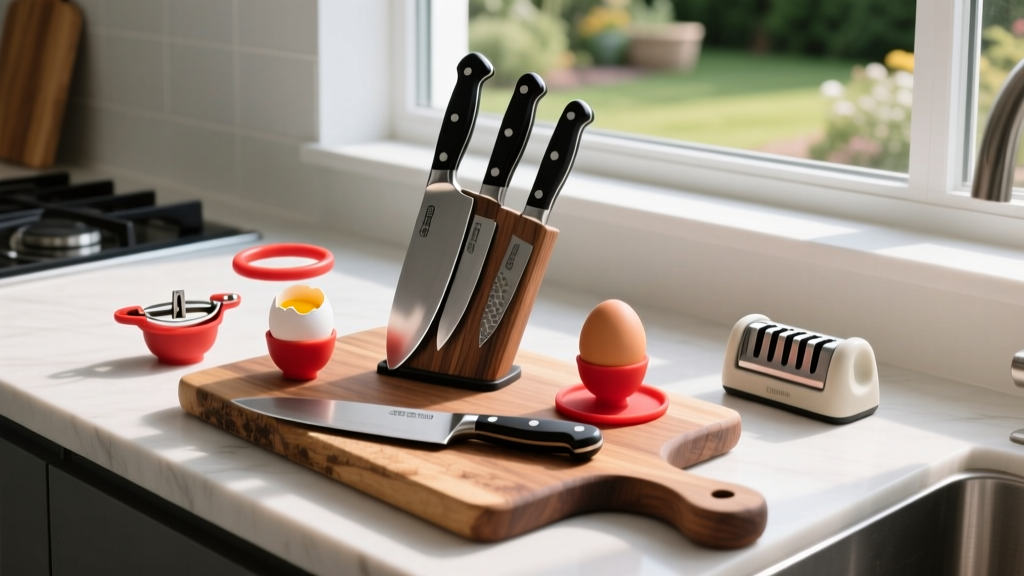
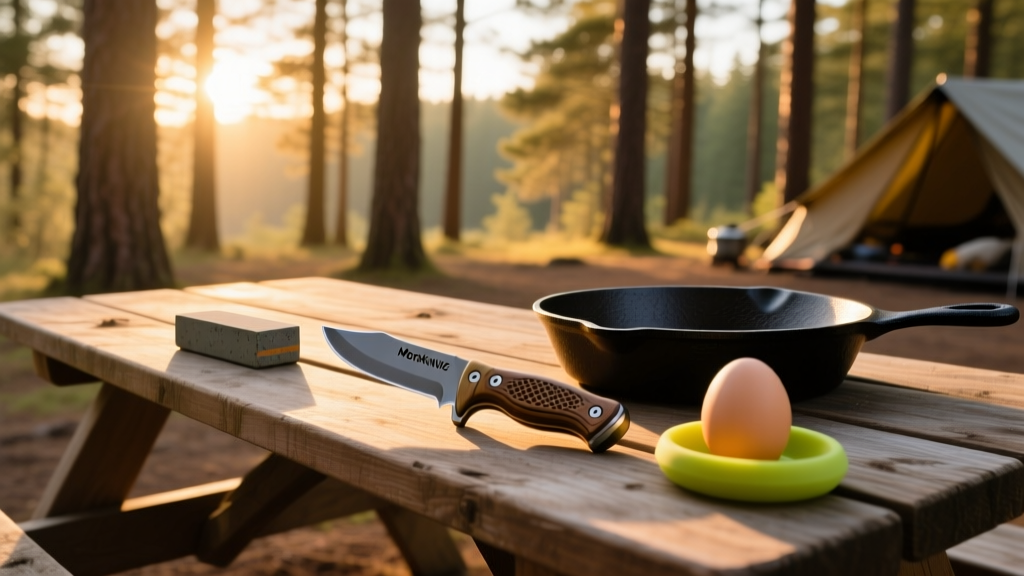
Building a functional outdoor kitchen for seasonal camping, tailgating, or RV living requires a bifurcated approach to gear. You need aggressive, durable cutting tools for breaking down proteins and processing kindling, yet you also need precision instruments for delicate morning meals. While standard indoor cutlery often fails in damp, high-impact environments, specialized field knives and portable sharpeners keep your prep station running smoothly. Furthermore, adapting specialized breakfast tools ensures you aren't sacrificing meal quality just because you are off the grid.
Selecting Field-Ready Knife Sets and Steel Alloys
Forget bringing your fragile, high-end Japanese chef knives to a campsite. Outdoor environments demand blades that can withstand lateral stress, bone strikes, and exposure to moisture. Fixed-blade knives with full tangs are the gold standard for basecamp kitchens, offering superior structural integrity over folding alternatives.
The Morakniv Garberg (approximately $95) remains a top-tier choice for outdoor cooks in 2026. Featuring a 3.2mm thick spine and a 90-degree ground edge, it can process firewood for the smoker and butterfly chicken breasts with equal efficiency. For those who prefer American-made heritage, the Buck Knives 119 Special offers a classic 6-inch clip point that excels at field dressing and heavy meat prep.
Camp Knife Steel Metallurgy Matrix
Choosing the right steel alloy dictates how often you will need to sharpen your blade in the field. Below is a comparison of the most common outdoor knife steels and their performance metrics.
| Steel Alloy | Hardness (HRC) | Corrosion Resistance | Edge Retention | Best Outdoor Use Case |
|---|---|---|---|---|
| 1095 Carbon | 58-60 | Low (Requires Oiling) | High | Heavy chopping, batoning, ferro rod striking |
| 420HC | 56-58 | High | Medium | General camp cooking, high-moisture environments |
| Sandvik 12C27 | 57-59 | Medium-High | Medium-High | Precision slicing, fish filleting, vegetable prep |
| CPM-S30V | 58-61 | High | Very High | Premium EDC camp knives, low-maintenance needs |
Portable Sharpeners: Maintaining Edges Off-Grid
A dull camp knife is a dangerous camp knife. When processing wild game or tough root vegetables at a picnic table, edge degradation happens rapidly. Traditional whetstones are too fragile and require water or oil, making them impractical for the trail.
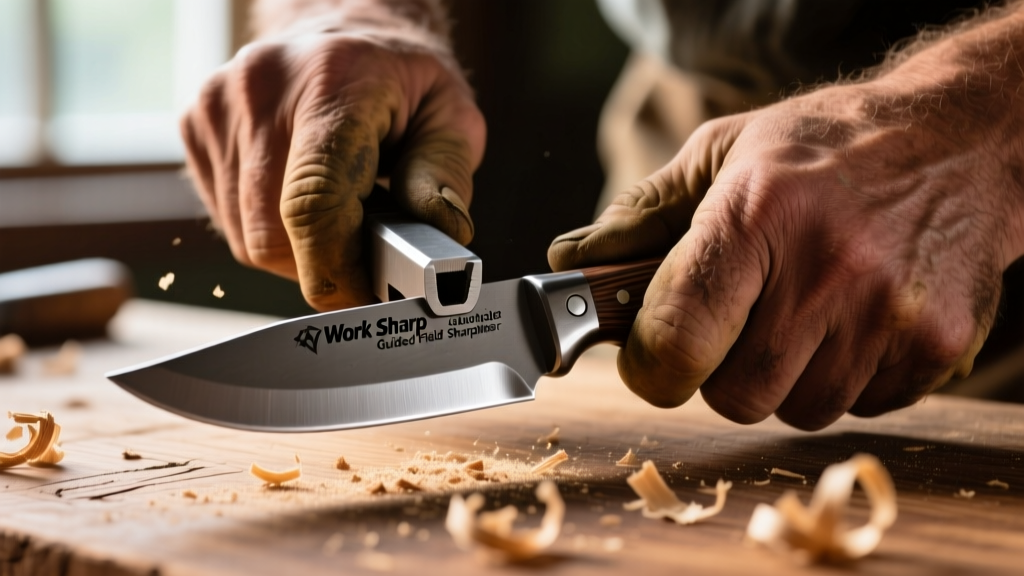
The Work Sharp Guided Field Sharpener ($35) is the definitive multi-stage tool for outdoor kitchens. It features a 220-grit diamond plate for repairing micro-chips caused by striking bone, a ceramic honing rod for edge alignment, and a leather strop loaded with abrasive compound for a final polish. Its compact, flat profile slips easily into a camp kitchen roll. For ultralight backpackers or minimalist RVers, the Fallkniven DC4 offers a dual-sided diamond and ceramic stone that requires no lubricants and can be cleaned with a simple pencil eraser.
Essential Camp Cutting Tools and Shears
Beyond primary blades, a complete seasonal outdoor kitchen relies on specialized cutting surfaces and shears. Wooden cutting boards warp and crack when exposed to campfire humidity and sudden temperature drops. Instead, opt for the Epicurean Nonslip Cutting Board. Made from Richlite—a resin-infused paper composite—it is entirely non-porous, withstands temperatures up to 350°F, and can be tossed into a dishwasher or washed in a camp sink without warping.
For heavy-duty shears, the Victorinox Poultry Shears feature a take-apart hinge design. This is a critical feature for outdoor food safety, allowing you to fully separate the blades to clean out raw meat residue and prevent bacterial buildup when access to running hot water is limited.
Adapting Egg Gadgets for the Kitchen to the Campsite
While heavy-duty blades handle the dinner prep, breakfast requires a completely different toolkit. Many campers, tailgaters, and RV owners find that their favorite egg gadgets for the kitchen are easily adapted for outdoor use, provided you select compact, rugged variants. Cooking eggs over an uneven campfire griddle or a portable butane stove presents unique containment and transport challenges.
Transport and Containment Solutions
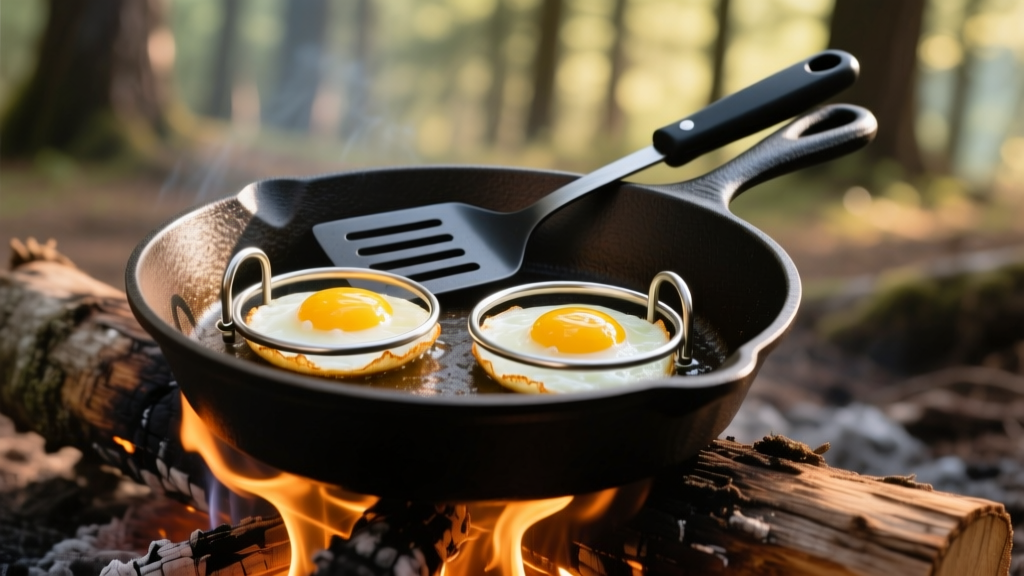
Transporting fragile eggs in a cooler often results in cracked shells and ruined groceries. The GSI Outdoors Egg Carrier ($10) is a crush-proof, hard-plastic vault that securely holds up to six eggs, featuring a built-in foam pad to absorb trail vibrations. For those cooking on sloped or uneven camp skillets, Norpro Silicone Egg Rings are essential. Unlike rigid metal rings, the flexible silicone conforms to the warped surface of a well-used cast iron skillet, preventing egg whites from bleeding out and ensuring perfectly round patties for campfire breakfast sandwiches.
RV and Tailgate Appliance Integration
If you are cooking in an RV or a tailgate setup with a portable generator, wattage limits dictate your appliance choices. The Dash Rapid Egg Cooker is a staple among RVers because it operates at just 360 watts. This low draw means you can boil eggs for a campsite potato salad without tripping the 15-amp breaker at a state park pedestal, even if your partner is simultaneously running the coffee maker. For hard-boiled egg prep on the go, the OXO Good Grips Compact Egg Slicer folds flat into your utensil roll, allowing you to quickly process eggs for avocado toast or salads without hauling a bulky, single-use kitchen tool.
Camp Kitchen Food Safety Protocol
According to the USDA Food Safety and Inspection Service, cross-contamination is the leading cause of foodborne illness in outdoor settings. Never use the same cutting board or knife for raw campfire proteins and ready-to-eat foods like sliced eggs or salads without sanitizing with a bleach solution (1 tablespoon of unscented liquid chlorine bleach per gallon of water). Always store eggs in a cooler maintained below 40°F, and discard any eggs that have been left out at ambient campsite temperatures for more than two hours (or one hour if the outdoor temperature exceeds 90°F).
Camp Kitchen Maintenance and Rust Prevention
High-carbon steel field knives will develop a patina and eventually rust if left exposed to morning dew or acidic marinades. After every use, wash the blade with mild biodegradable camp soap, dry it immediately with a microfiber cloth, and apply a micro-thin layer of food-safe mineral oil or Camellia oil. For folding camp knives, use compressed air to blow out grit and wood dust from the pivot mechanism before applying a drop of PTFE-based lubricant to ensure smooth deployment at the breakfast table.
Frequently Asked Questions
Can I use my indoor kitchen knife block set for camping?
It is highly discouraged. Standard kitchen knives typically feature thin, brittle edges designed for clean cutting boards, not the uneven, abrasive surfaces of outdoor prep tables or the lateral stress of camp cooking. Furthermore, the wooden handles and high-carbon steels of premium indoor knives will quickly degrade, warp, or rust when exposed to campfire smoke, humidity, and damp storage conditions.
How do I keep silicone egg rings from sticking on a camp grill?
Even non-stick silicone requires a barrier when exposed to the high, uneven heat of a campfire griddle. Lightly brush the inside of the egg rings with high-smoke-point oil (like avocado or grapeseed oil) before dropping them onto the pre-heated cast iron. Remove the rings when the egg whites are 80% set to ensure a clean release.
What is the best way to clean a portable knife sharpener in the wild?
Diamond and ceramic sharpening rods accumulate microscopic metal swarf (shavings) that will clog the abrasive pores and render the tool useless. In the field, use a standard pencil eraser to rub away the dark metal stains from ceramic rods, and use a stiff nylon brush with a drop of dish soap and water to clean diamond plates. For more comprehensive outdoor gear and camp kitchen setups, REI's Expert Advice portal offers excellent primers on organizing your mobile cooking station.
Written by
Lena ChenLena Chen earned her M.S. in Human-Computer Interaction from Carnegie Mellon University and a B.S. in Electrical Engineering from the University of Washington. She has spent the past decade specializing in smart home architecture and IoT ecosystems, helping over 200 homeowners design fully connected living spaces. Lena is a certified Matter protocol consultant and has published peer-reviewed research on voice-first interface design in the ACM Digital Library. Her reviews of smart home products combine deep technical analysis with real-world usability testing, evaluating everything from Zigbee mesh stability to Alexa skill responsiveness. She regularly speaks at CEDIA Expo and CES smart home panels.