Cool Gadget Finds: Portable Projectors & Mobile Tech
Discover the ultimate cool gadget finds for 2026. We compare top portable projectors, mobile OLED displays, and AR glasses for tech enthusiasts.
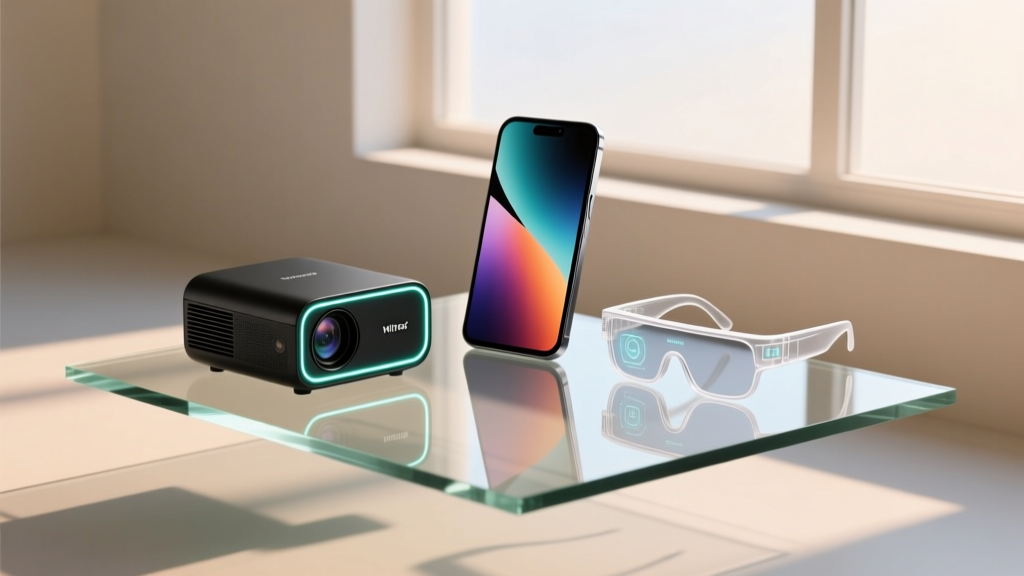
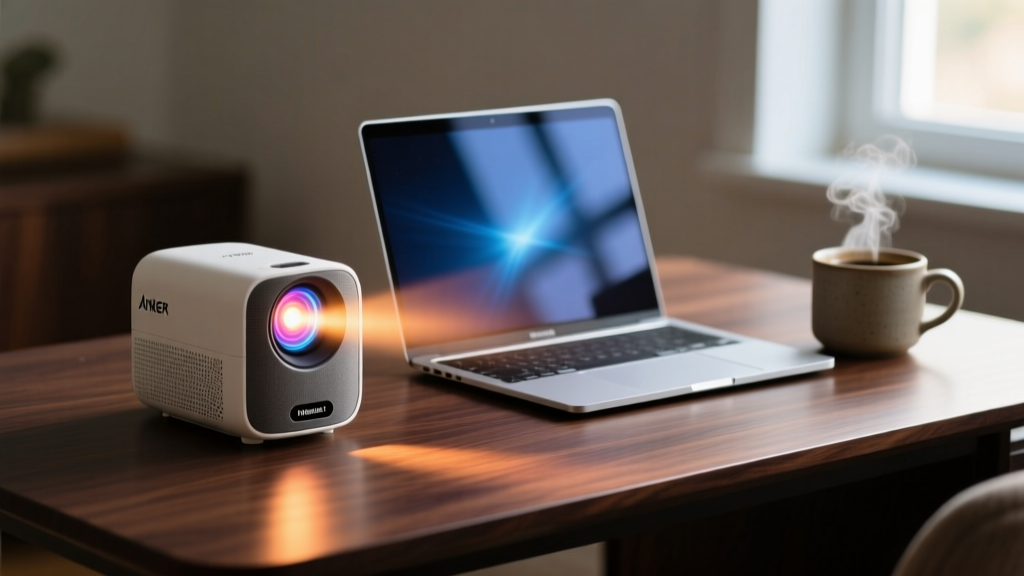
The 2026 Portable Display Landscape: Beyond the Living Room
Finding a genuinely cool.gadget that bridges the gap between pocketability and home-theater performance requires navigating a minefield of inflated specifications. The era of dim, 720p pico projectors is definitively over. In 2026, the portable display market has bifurcated into two distinct, high-performance categories: high-lumen laser/LED hybrid projectors and ultra-high-density mobile OLED panels. For tech enthusiasts who refuse to compromise on visual fidelity while traveling, camping, or working remotely, understanding the exact physics and hardware limitations of these devices is critical.
Manufacturers have largely transitioned from legacy ANSI lumen ratings to the stricter ISO/IEC 21118:2020 standard, which measures actual light output across multiple points on the screen rather than just peak center white. This shift has exposed older models that relied on inflated 'light source lumens' and elevated newer devices utilizing ALPD (Advanced Laser Phosphor Display) and RGB triple-laser architectures. Below, we dissect the hardware that actually delivers on its promises.
Projector Matrix: Sub-3lb Cinema Engines
When evaluating portable projectors, the triad of throw ratio, ISO lumens, and thermal management dictates real-world usability. A 1.2:1 throw ratio remains the sweet spot for hotel rooms and small apartments, allowing a 100-inch diagonal image from roughly 8.7 feet away. You can verify exact spatial requirements using Projector Central's Throw Distance Calculator before purchasing.
| Model | Light Source | ISO Lumens | Throw Ratio | Battery (Wh) | Street Price |
|---|---|---|---|---|---|
| Anker Nebula Capsule 3 Laser | ALPD Laser | 300 ISO | 1.2:1 | 52Wh (2.5 hrs) | $799 |
| XGIMI Halo+ (2025 Refresh) | RGB LED | 900 ISO | 1.2:1 | 59.5Wh (2.5 hrs) | $799 |
| Samsung The Freestyle 2nd Gen | Single LED | 230 ISO | 1.2:1 | N/A (Requires PD) | $899 |
| Dangbei Atom | ALPD Laser | 1200 ISO | 1.2:1 | N/A (Wall plug) | $599 |
Hardware Deep Dive: XGIMI Halo+ vs. Anker Capsule 3
The XGIMI Halo+ dominates in raw brightness. Its 900 ISO lumens are sufficient to combat moderate ambient light, such as a dimly lit living room or a tent at dusk. However, this output comes at a thermal cost; the Halo+ utilizes a larger active cooling fan that peaks at 32dB, which is noticeable during quiet dialogue scenes. Conversely, the Anker Nebula Capsule 3 Laser sacrifices absolute brightness (300 ISO lumens) for superior contrast and color volume. The ALPD laser light source achieves 97% DCI-P3 color gamut coverage and maintains a near-silent 24dB acoustic profile, making it the superior choice for dedicated, dark-room viewing.
Mobile Displays and AR: The Alternative Screens
Projectors are not the only solution for mobile, large-format visuals. For professionals and enthusiasts requiring pixel-perfect accuracy, portable OLED monitors and Augmented Reality (AR) spatial displays offer distinct advantages.
ASUS ZenScreen OLED MQ16AH
Measuring 15.6 inches with a 1920x1080 resolution, the MQ16AH is a masterclass in mobile color reproduction. It delivers 100% DCI-P3 and 100% sRGB coverage with a Delta E < 2 factory calibration. Unlike standard IPS portable monitors that wash out under overhead office lighting, the OLED panel's infinite contrast ratio (100,000:1) ensures deep blacks and crisp text rendering. It draws a maximum of 15W via USB-C, meaning it can be powered directly by a modern MacBook or high-end Windows laptop without requiring an external wall adapter.
XREAL Air 2 Ultra: Spatial Computing on the Go
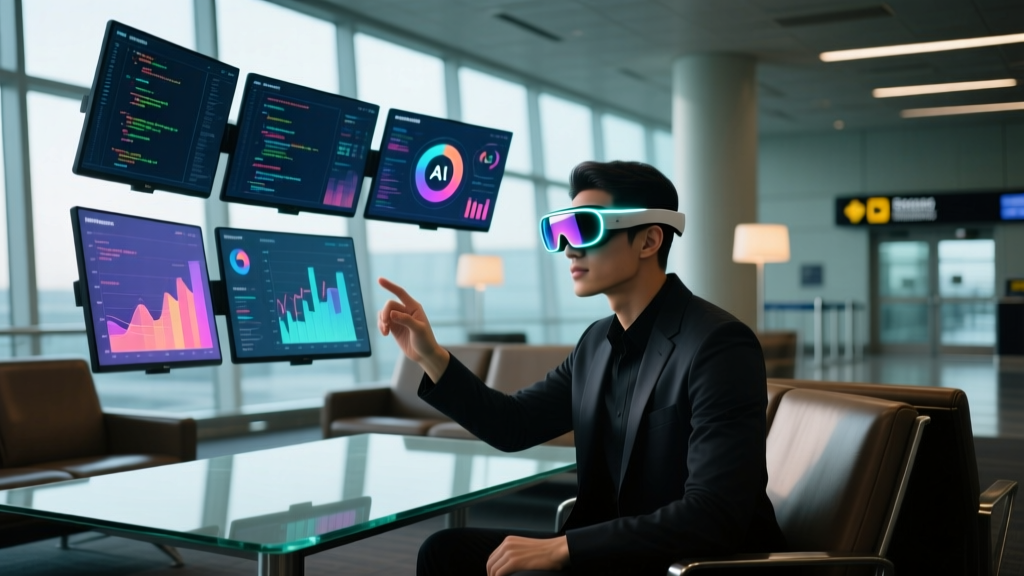
For those seeking a screen size that defies physical luggage constraints, the XREAL Air 2 Ultra AR glasses project a virtual 201-inch equivalent display from 6 meters away. Utilizing dual Sony Micro-OLED panels, they achieve a 46-degree field of view (FoV) and a 120Hz refresh rate. The 6DoF (Six Degrees of Freedom) spatial tracking allows users to pin virtual monitors in physical space, a feature heavily utilized by developers and video editors working in constrained environments like airplanes or trains. Priced around $699, they represent a massive leap over previous 3DoF head-tracking models.
The Hidden Costs: Keystone Correction and Thermal Throttling
Marketing materials heavily promote 'auto-keystone' and 'obstacle avoidance,' but rarely disclose the computational and optical penalties of these features. Understanding these edge cases is vital for enthusiasts who demand pristine image quality.
Digital keystone correction does not physically move the lens; it compresses the digital image matrix. Applying a 20-degree vertical keystone correction to a 1080p (1920x1080) signal effectively reduces the vertical pixel density on the top edge by roughly 12% to 15%. This results in visible stair-stepping (aliasing) on text and fine lines. Always prioritize physical projector placement or models with optical lens shift over digital keystone correction whenever possible.
Thermal throttling is another silent killer of portable projector performance. Sub-2lb devices lack the thermal mass of traditional home theater projectors. When running at maximum brightness in a room temperature of 75°F (24°C) or higher, devices like the Samsung Freestyle will often throttle their LED output by 15-20% after 45 minutes of continuous use to protect internal components. To mitigate this, ensure the projector's intake vents are not obstructed by blankets or soft surfaces, and consider using an external USB-powered cooling pad for extended marathon sessions.
Power Delivery: Engineering the Off-Grid Cinema
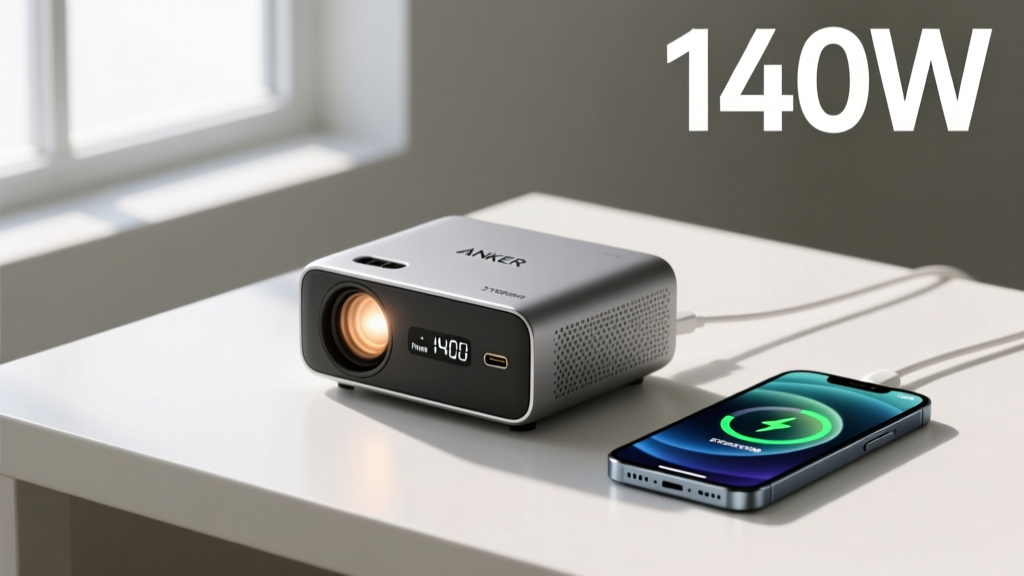
A portable projector is only as good as the power ecosystem supporting it. Relying on internal batteries limits you to 2.5 hours of runtime—barely enough for a standard feature film. The solution lies in USB-C Power Delivery (PD) 3.1 protocols.
To run a projector indefinitely off-grid, you need a power bank capable of outputting at least 65W continuously, though 100W+ is recommended to prevent battery drain during high-brightness HDR scenes. The Anker Prime 27,650mAh (250W) power bank is the current benchmark. It supports PD 3.1 140W output on its primary USB-C port, easily sustaining the XGIMI Halo+ while simultaneously fast-charging a smartphone on its secondary port. For a comprehensive breakdown of power protocols, refer to the USB Implementers Forum (USB-IF) Power Delivery specifications.
The Audio Bottleneck
Physics dictates that sub-3lb plastic enclosures cannot produce meaningful bass response. Built-in projector speakers typically max out at 5W per channel and lack lower-midrange frequencies, resulting in tinny, fatiguing audio. Do not rely on standard Bluetooth pairing, which introduces 150-200ms of latency, causing severe lip-sync issues. Instead, utilize projectors that support aptX Low Latency or the newer Auracast broadcast audio standard, pairing them with dedicated portable soundbars like the Bose Ultra Portable or high-end TWS earbuds that support LE Audio.
Decision Framework: Which Setup Should You Buy?
Selecting the right mobile display technology depends entirely on your primary use case and environmental constraints. Use the following framework to make your final purchasing decision:
- The Outdoor Camper / Backyard Cinephile: Buy the XGIMI Halo+. Its 900 ISO lumens are necessary to cut through twilight ambient light, and the 59.5Wh battery is TSA-compliant for flights while providing enough juice for a full movie off-grid.
- The Dark-Room Purist / Frequent Flyer: Buy the Anker Nebula Capsule 3 Laser. The ALPD laser provides superior contrast and color volume in dim environments, and the soda-can form factor easily slips into a backpack side-pocket.
- The Remote Professional / Colorist: Buy the ASUS ZenScreen OLED MQ16AH. Projectors cannot match the 100,000:1 contrast and Delta E < 2 color accuracy required for professional photo and video editing on the road.
- The Spatial Computing Early Adopter: Buy the XREAL Air 2 Ultra. If you work in cramped spaces like economy class seats or trains and need multiple massive virtual monitors without the physical footprint, 6DoF AR glasses are the only viable solution.
Ultimately, the mobile display market in 2026 rewards those who look past marketing buzzwords and focus on verifiable metrics like ISO lumens, throw ratios, and PD charging standards. By matching the specific optical and thermal characteristics of these devices to your exact environment, you can build a truly uncompromising portable tech ecosystem.
Written by
Lena ChenLena Chen earned her M.S. in Human-Computer Interaction from Carnegie Mellon University and a B.S. in Electrical Engineering from the University of Washington. She has spent the past decade specializing in smart home architecture and IoT ecosystems, helping over 200 homeowners design fully connected living spaces. Lena is a certified Matter protocol consultant and has published peer-reviewed research on voice-first interface design in the ACM Digital Library. Her reviews of smart home products combine deep technical analysis with real-world usability testing, evaluating everything from Zigbee mesh stability to Alexa skill responsiveness. She regularly speaks at CEDIA Expo and CES smart home panels.