Cool Technology Gadgets for Outdoor Phone Photography: 2026 Guide
Discover the best cool technology gadgets for outdoor phone photography in 2026, including rugged wireless chargers, 3-axis gimbals, and pro lens kits.
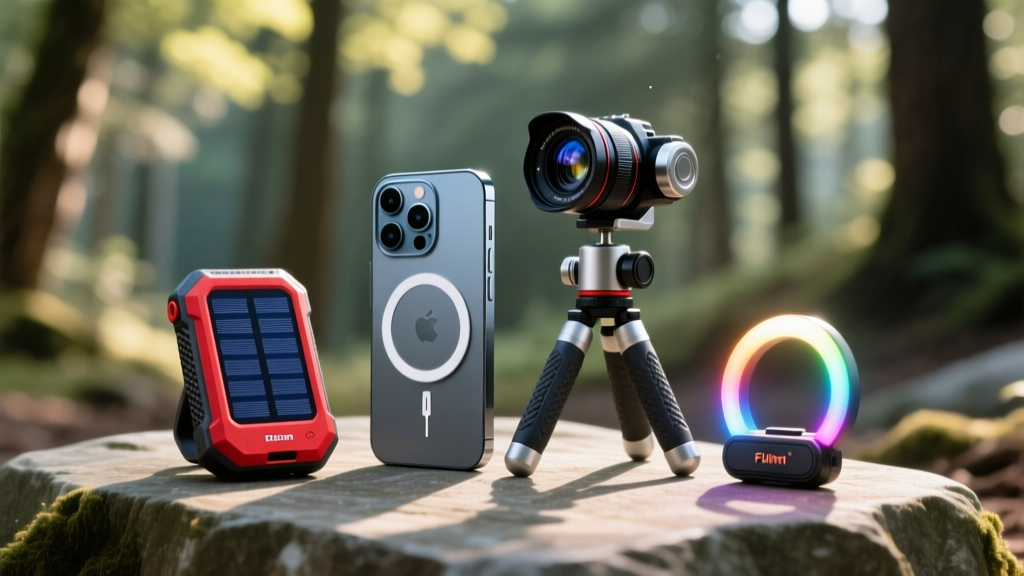

Building the Ultimate Outdoor Smartphone Rig
Smartphone sensors have reached a level of maturity where they can reliably replace dedicated point-and-shoot cameras in the wild. However, the chassis of a modern flagship phone is fundamentally designed for urban environments, not the abrasive, freezing, or wet conditions of the backcountry. To bridge this gap, outdoor photographers are turning to a new generation of cool technology gadgets specifically engineered for environmental extremes. This guide breaks down the essential phone accessories—wireless power systems, stabilization gimbals, and optical lens kits—required to build a weather-sealed, high-performance mobile photography rig in 2026.
The Power Problem: Qi2 Wireless Chargers in Extreme Climates
The most critical failure point for any outdoor electronics setup is power depletion. While USB-C charging is reliable, exposed ports are vulnerable to moisture ingress and dust accumulation. The Qi2 magnetic wireless charging standard has solved this by enabling fully sealed, port-free charging ecosystems. Modern Qi2 power banks utilize a 15W magnetic profile with an enhanced alignment ring, ensuring efficient power transfer even when the phone is housed inside a waterproof dry bag or a ruggedized bumper case.
Lithium-polymer cells experience increased internal resistance in sub-zero temperatures. According to REI's cold-weather hiking guidelines, keeping your electronics close to your body heat is mandatory. A 10,000mAh Qi2 power bank can lose up to 30% of its effective capacity at -10°C (14°F) if left exposed. Always store your wireless charging rig in an inner jacket pocket when not actively shooting.
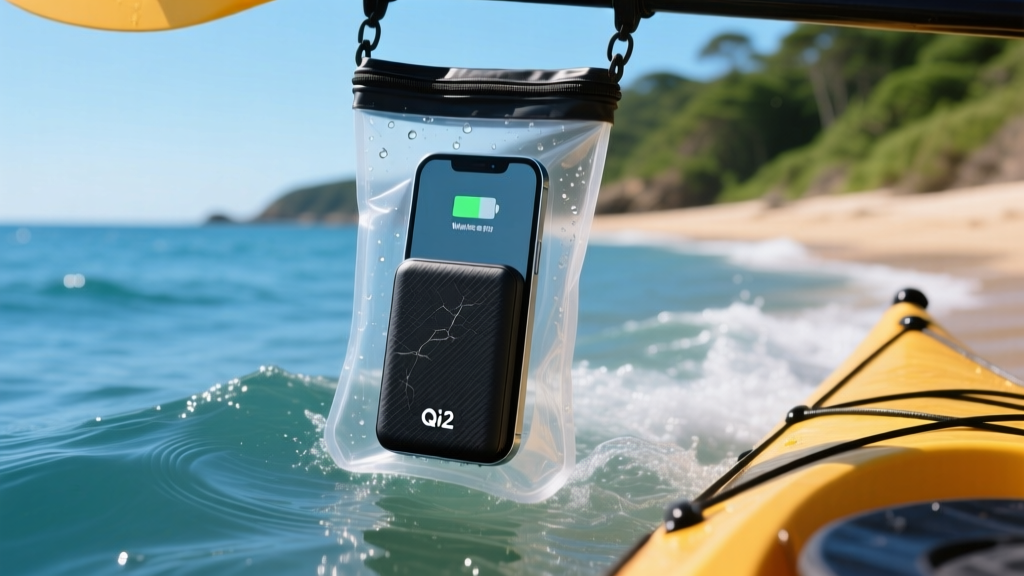
Top Rugged Power Banks for 2026
When selecting a wireless charger for the trail, prioritize IP67 water resistance and drop-proof armor over ultra-slim form factors. Look for models featuring aerospace-grade aluminum shells and silicone shock absorbers. The current benchmark for outdoor Qi2 banks includes a minimum 10,000mAh capacity (yielding roughly 1.5 full charges for a 5,000mAh flagship phone), integrated kickstands for timelapse shooting, and pass-through charging capabilities that allow you to charge the bank via solar while it simultaneously powers your phone.
Stabilization: 3-Axis Gimbals for Uneven Terrain
Handheld smartphone video suffers from high-frequency micro-jitters that digital stabilization (EIS) struggles to correct without introducing edge-warping artifacts. Mechanical 3-axis gimbals remain the gold standard for smooth tracking shots on hiking trails or ski slopes. In 2026, the market has shifted toward gimbals with integrated AI subject tracking and higher torque motors capable of handling the increased weight of modern flagship phones equipped with massive camera bumps.
| Gimbal Model | Max Payload | IP Rating | Battery Life | Best Use Case |
|---|---|---|---|---|
| DJI Osmo Mobile 7 | 320g | IP44 | 10 Hours | Alpine skiing, fast tracking |
| Insta360 Flow 2 | 300g | IP55 | 12 Hours | Dusty canyons, light rain |
| Zhiyun Smooth 6 | 350g | None | 14 Hours | Heavy phones + lens kits |
For a comprehensive look at motor specifications and tracking algorithms, review DJI's smartphone gimbal lineup and compare their ActiveTrack 7.0 against competing AI vision systems. When shooting in wet environments, ensure your gimbal's slip rings are sealed; an IP55 rating protects against low-pressure water jets from any angle, making it ideal for coastal or waterfall photography.
Payload and Motor Torque Considerations
The addition of a 58mm telephoto lens and a magnetic MagSafe case adds approximately 65g to 85g to your phone's total weight. If your phone weighs 230g, you are pushing 315g. Operating a gimbal near its maximum payload limit causes the brushless motors to draw excess current, reducing battery life by up to 40% and generating excess heat. Always calculate your total rig weight before heading into the field and select a gimbal with at least a 20% payload overhead.
Optical Expansion: Pro Lens Kits for Nature
Digital zoom degrades image quality through aggressive cropping and upscaling. For wildlife and macro nature photography, physical optical glass is non-negotiable. The current generation of smartphone lenses utilizes aerospace-grade aluminum housings and extra-low dispersion (ED) glass to minimize chromatic aberration at the edges of the frame. The industry standard for professional mobile optics is detailed in Moment's T-Series lens collection, which offers cinema-quality glass tailored for mobile sensors.

Mounting Systems: Bayonet vs. Threaded
When choosing a lens kit, the mounting mechanism is just as critical as the glass. Clip-on mounts are prone to slipping when subjected to the vibrations of hiking or the shock of a mountain bike descent. For outdoor enthusiasts, a dedicated case with a bayonet or threaded mount is mandatory. Threaded mounts (M-series) allow the lens to screw directly into the case, providing a weather-resistant seal and absolute mechanical rigidity.
- Prep the Threads: Before attaching a lens in a dusty environment, use a manual air blower to clear debris from the case's mounting ring. Grit caught in the threads will scratch the aluminum housing.
- Align and Engage: For bayonet mounts, align the red index dots, push firmly, and twist clockwise until you hear the mechanical click. For threaded mounts, turn counter-clockwise until the threads catch, then screw in clockwise to avoid cross-threading.
- Seal the Gap: In high-humidity or wet environments, apply a microscopic bead of silicone grease to the O-ring gasket on the back of the lens to prevent moisture from reaching the phone's primary camera module.
- Calibrate Software: Launch your manual camera app and disable digital lens correction. Physical lenses require their own specific optical profiles to correct for barrel or pincushion distortion.
Environmental Sealing and Edge Cases
Even with IP68-rated phones, the physical camera bump creates a structural weak point where water can pool and dust can accumulate. When deploying your phone in extreme environments—such as slot canyons with fine silica dust or saltwater spray zones—supplement your accessories with a transparent, touch-sensitive TPU dry bag. Modern TPU films offer 98% light transmission and do not interfere with the magnetic alignment of Qi2 chargers or the autofocus lasers on the rear camera array. Always pack microfiber cloths in sealed ziplock bags; a wet lens cloth will smear oils across your external glass, ruining the shot.
Frequently Asked Questions
Can I use a screen protector with a magnetic wireless charger?
Yes, but thickness matters. Tempered glass protectors thicker than 0.33mm can weaken the magnetic pull of the Qi2 alignment ring, causing the power bank to detach during vigorous outdoor activities. Stick to 0.2mm film protectors or ensure your protective case has a built-in, reinforced magnetic ring.
Do external lenses work with the phone's ultra-wide sensor?
Most premium external lenses (like 58mm telephotos or anamorphic lenses) are designed exclusively for the primary 1x main sensor. Attempting to mount a telephoto lens over an ultra-wide sensor will result in severe vignetting and autofocus failure due to the mismatched optical geometry.
Written by
Lena ChenLena Chen earned her M.S. in Human-Computer Interaction from Carnegie Mellon University and a B.S. in Electrical Engineering from the University of Washington. She has spent the past decade specializing in smart home architecture and IoT ecosystems, helping over 200 homeowners design fully connected living spaces. Lena is a certified Matter protocol consultant and has published peer-reviewed research on voice-first interface design in the ACM Digital Library. Her reviews of smart home products combine deep technical analysis with real-world usability testing, evaluating everything from Zigbee mesh stability to Alexa skill responsiveness. She regularly speaks at CEDIA Expo and CES smart home panels.