Best Eco-Friendly Travel Gadgets for Women in 2026
Discover the best eco-friendly travel gadgets for women in 2026. We review sustainable power banks, UV water bottles, and modular audio gear.
The Global E-waste Monitor reports that over 62 million metric tons of electronic waste are generated annually, a figure that continues to climb as travel tech adoption accelerates. For the eco-conscious female traveler, building a sustainable gear kit in 2026 requires moving beyond greenwashed marketing. True sustainability in travel electronics hinges on three verifiable metrics: modularity (can it be repaired?), material origin (is it recycled or virgin plastic?), and off-grid energy independence.
This guide bypasses generic eco-friendly claims to evaluate the specific engineering, material science, and real-world utility of the best sustainable travel gadgets for women available today. Every product featured below includes exact pricing, material breakdowns, and practical deployment strategies for off-grid and urban travel.
The Carbon-Neutral Power Setup: BioLite SolarPanel 5+ and Charge 40 PD
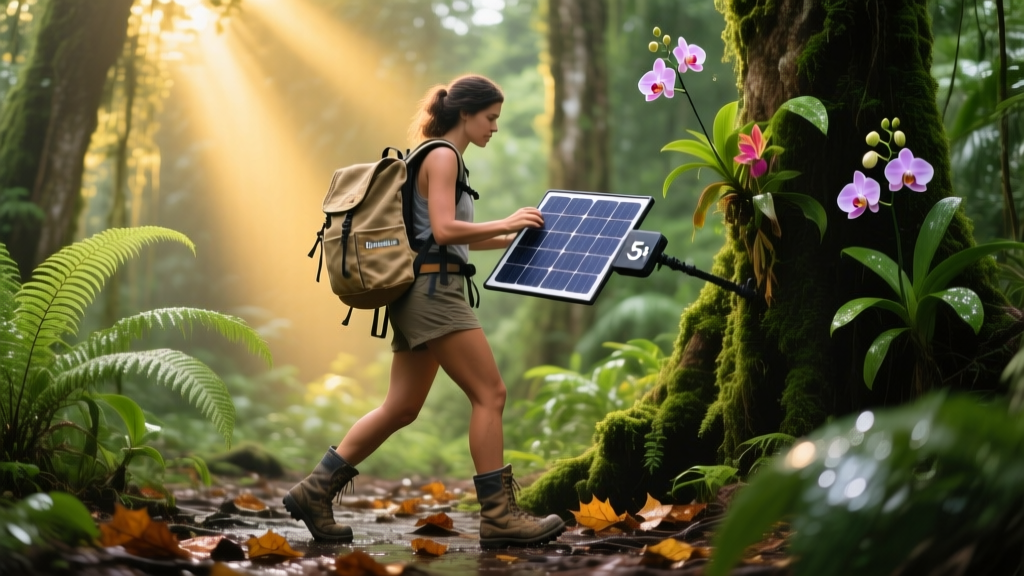
Relying on grid electricity in regions heavily dependent on coal or diesel generators negates the environmental benefit of low-power devices. The most effective solution for 2026 is a decentralized, solar-powered charging array. The BioLite SolarPanel 5+ ($59.95) paired with the BioLite Charge 40 PD ($59.95) power bank provides a robust, fossil-fuel-free energy loop.
Technical Specifications and Real-World Yield
- Solar Output: 5-watt monocrystalline cells. While rated for 5W, real-world yield under direct, 90-degree midday sunlight averages 4.1W to 4.4W due to atmospheric scattering and thermal efficiency loss.
- Integrated Storage: The 5+ model includes a built-in 2,200mAh lithium-ion battery, allowing it to store energy even when disconnected from your main power bank.
- Power Bank Capacity: The Charge 40 PD holds 10,000mAh (37Wh). This is critical for air travel, as it sits well below the FAA and IATA strict limit of 100Wh for carry-on lithium batteries.
- Material Origin: BioLite utilizes recycled plastics in the Charge series housing and offsets the carbon footprint of their manufacturing logistics.
Do not lay the SolarPanel 5+ flat on a backpack while walking. The shifting angle reduces solar capture by up to 60%. Instead, strap it to the rear of your pack using the integrated bungee loops, or deploy it on a static surface angled directly at the sun during rest stops. A 45-minute static deployment at solar noon will yield approximately 1,800mAh of stored energy—enough to fully recharge a modern smartphone from 0% to 80%.
Hydration Tech Without the Plastic Waste: LARQ Bottle PureVis 2
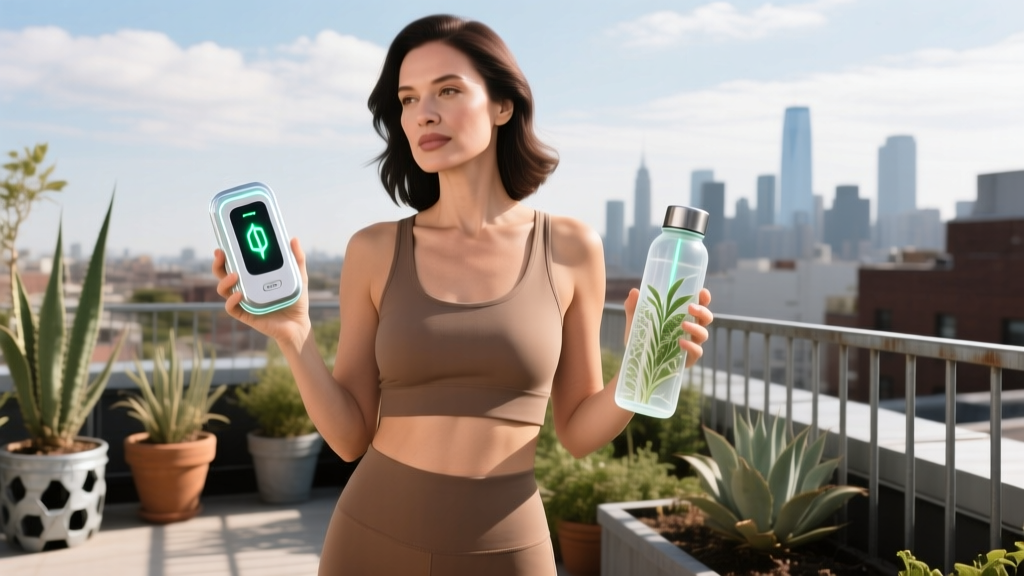
Single-use plastic water bottles are the most pervasive physical pollutant in global tourism. While physical filter bottles (like pump or squeeze filters) solve the safety issue, their proprietary carbon and membrane filters degrade and must be discarded, creating secondary micro-plastic and material waste. The LARQ Bottle PureVis 2 ($129.00) eliminates filter waste entirely by utilizing UV-C LED technology.

The Science of 280nm UV-C Purification
The PureVis 2 cap houses a mercury-free UV-C LED that emits light at a 280-nanometer wavelength. This specific frequency disrupts the DNA and RNA of bacteria, viruses, and protozoa, rendering them harmless. A standard 60-second cycle neutralizes up to 99.99% of biological contaminants like E. coli and Giardia. Because it relies on light rather than a physical mesh, there is zero filter waste. The rechargeable lithium-polymer battery in the cap lasts up to 30 days on a single USB-C charge.
Comparative Analysis: UV-C vs. Physical Filtration
| Feature | LARQ PureVis 2 (UV-C) | GRAYL GeoPress (Physical) | LifeStraw Go (Membrane) |
|---|---|---|---|
| Purification Method | 280nm UV-C Light | Electroadsorption / Carbon | Hollow Fiber Membrane |
| Ongoing Waste | None (Zero filter waste) | High (Replace every 350 cycles) | Medium (Replace every 4,000L) |
| Weight (Empty) | 15.2 oz | 16.9 oz | 8.2 oz |
| Best Use Case | Urban travel, clear water sources | Heavy metals, turbid water | Hiking, lightweight backpacking |
Note: UV-C light requires relatively clear water to penetrate effectively. If you are traveling to regions with highly turbid (muddy) water, a physical pre-filter is still required.
Modular Audio and Recycled Trackers: Fairbuds and Chipolo ONE Point
The true cost of wireless earbuds and Bluetooth trackers is their planned obsolescence. When a non-replaceable lithium battery degrades after 18 months, the entire sealed unit becomes e-waste. The Fairphone Sustainability Impact Report highlights that modular design is the only viable path to reducing the carbon footprint of personal audio.
Fairbuds: The Repairable Audio Standard
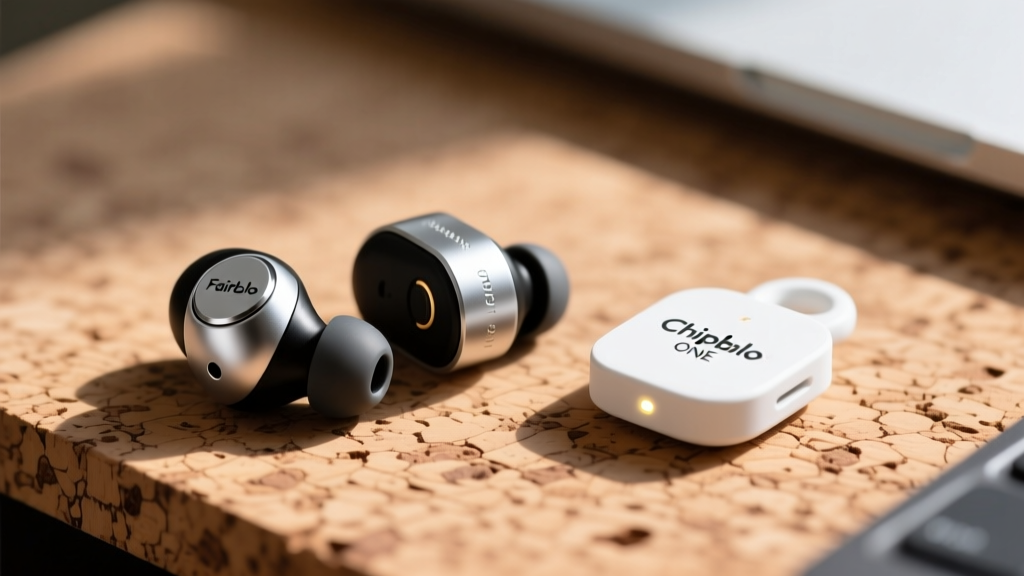
Priced at $109, the Fairbuds are engineered for complete disassembly. Unlike competitors glued together with industrial adhesives, the Fairbuds use standardized pogo pins and friction-fit housings. If the battery in the left earbud degrades, you can purchase a replacement battery module for $19 and swap it in seconds without specialized tools. The casing is constructed from 40% post-consumer recycled plastics, and the internal circuit boards utilize fair-trade gold and responsibly sourced tin.
Chipolo ONE Point: Ocean-Bound Plastic Tracking
Luggage trackers are essential for modern travel, but millions of them are discarded when their batteries die. The Chipolo ONE Point ($28.00) is manufactured using 65% recycled ocean-bound fishing nets. It integrates natively with Google's Find My Device network (utilizing the massive Android device mesh for precise location pinging). Crucially, it uses a standard, user-replaceable CR2032 coin cell battery that lasts up to two years, ensuring the plastic housing remains in use for a decade or more.
Decision Framework: Building a Zero-Waste Tech Kit
When evaluating any new travel gadget, run it through this three-point sustainability matrix before purchasing:
- End-of-Life Audit: Can the device be opened? If the manufacturer uses proprietary pentalobe screws and heavy adhesive, the device is designed for the landfill. Prioritize devices with standard Phillips or Torx screws and modular components.
- Power Source Independence: Does the gadget require constant grid charging? Prioritize devices with high-efficiency solar integration, kinetic charging, or ultra-low-power draw (like e-ink displays or Bluetooth Low Energy 5.3).
- Material Traceability: Look for specific certifications. Vague terms like "eco-friendly" are meaningless. Demand specific data: "100% post-consumer recycled ABS plastic," "FSC-certified packaging," or "conflict-free tantalum."
Frequently Asked Questions
Can I bring solar panels and modular power banks through airport security?
Yes. The TSA and international aviation authorities restrict lithium-ion batteries based on Watt-hours (Wh), not the presence of solar panels. The BioLite Charge 40 PD is 37Wh, which is well below the 100Wh threshold for unrestricted carry-on travel. Always pack power banks in your carry-on; they are strictly prohibited in checked luggage due to fire risk in the cargo hold.
How do I maintain the LARQ UV-C cap to ensure it doesn't break?
The UV-C LED is protected by a quartz glass dome. Over time, hard water minerals (calcium and magnesium) can build up on this glass, blocking the 280nm light waves and rendering the purification useless. Once a month, unscrew the cap and wipe the inner quartz dome with a microfiber cloth dampened with white vinegar to dissolve mineral deposits. Never submerge the electronic cap in water.
Are Fairbuds waterproof enough for tropical travel?
The Fairbuds carry an IP54 rating. This means they are protected against dust ingress and splashing water from any direction, making them perfectly safe for heavy humidity, sweat, and light rain in tropical environments. However, they are not rated for submersion; do not wear them while swimming or snorkeling.
Written by
Ryan TanakaRyan Tanaka holds a B.S. in Mechanical Engineering from Oregon State University and is a certified AWS Solutions Architect. He has built over 80 custom electronics projects ranging from CNC machines to IoT sensor networks, and has reviewed development boards, 3D printers, soldering equipment, and maker tools for the past 6 years. Ryan is an active contributor to 12 open-source hardware projects on GitHub and teaches monthly workshops at three hackerspaces across the Pacific Northwest. His reviews combine engineering rigor with accessibility — he evaluates products not just on specs but on documentation quality, community support, and learning curve for beginners. He has presented at Maker Faire Bay Area, Open Hardware Summit, and the Adafruit community showcase, and maintains a popular blog documenting his build processes.