Fix TWS Audio: Hacks Worthy of a Gadget From Chip and Dale
Solve TWS dropouts, bass loss, and battery decay with ingenious acoustic mods, LE Audio tweaks, and practical 2026 true wireless earbud picks.
The Physics of TWS Frustrations (And How to Hack Them)
When your $300 earbuds fail mid-commute, you don't need a generic reboot—you need fixes that feel like a gadget from Chip and Dale. Channeling the ingenious, scrappy engineering of Gadget Hackwrench from the classic Rescue Rangers, we are tackling the real-world physics problems of 2026’s true wireless stereo (TWS) landscape. Despite the advent of Bluetooth 5.5 and advanced spatial audio, TWS earbuds still fall victim to RF interference, acoustic seal degradation, and lithium-ion micro-cell decay.
As tech enthusiasts, we don't just accept these flaws; we engineer around them. Below is a masterclass in practical TWS troubleshooting, featuring DIY acoustic mods, developer-level protocol tweaks, and the best problem-solving hardware available today.
Problem 1: The Bluetooth Multipoint Black Hole
Multipoint connectivity—simultaneously connecting to your laptop and smartphone—is a staple feature that frequently devolves into a stuttering mess. When switching audio sources, the legacy Bluetooth Classic protocol struggles with bandwidth negotiation, resulting 200ms to 400ms dropouts.
The 'Hackwrench' Fix: Force LE Audio Routing
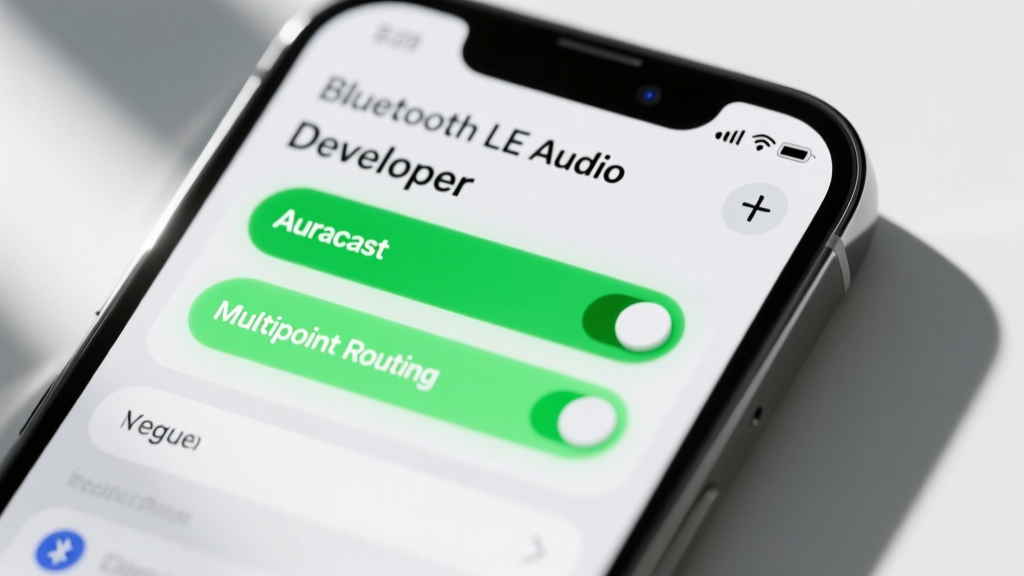
Instead of relying on the manufacturer's buggy firmware implementation, you can force your Android device to prioritize Bluetooth Low Energy (LE) Audio using the LC3 codec. LE Audio handles multipoint streams with significantly lower overhead.
- Enable Developer Options on your Android device.
- Navigate to Bluetooth LE Audio settings.
- Force the LC3 Codec and enable Auracast broadcast reception (even if unused, it primes the LE stack).
- Toggle 'Disable Absolute Volume' to decouple the OS mixer from the earbud's internal DAC, reducing handshake latency during source switching.
Expert Insight: According to the Bluetooth SIG, LE Audio's LC3 codec delivers higher quality at 160 kbps than SBC does at 345 kbps, drastically reducing the RF footprint required for stable multipoint connections in crowded environments.
Problem 2: Acoustic Seal Degradation & Sub-Bass Loss
Silicone ear tips are notorious for reflecting high frequencies and losing their elasticity after 4 to 6 months of exposure to ear oils and heat. This microscopic warping breaks the pneumatic seal in your ear canal, resulting in a measurable 4dB to 8dB drop in sub-bass response (20Hz - 80Hz) and a total collapse of passive noise isolation.
The Tegaderm-Foam Hybrid Mod
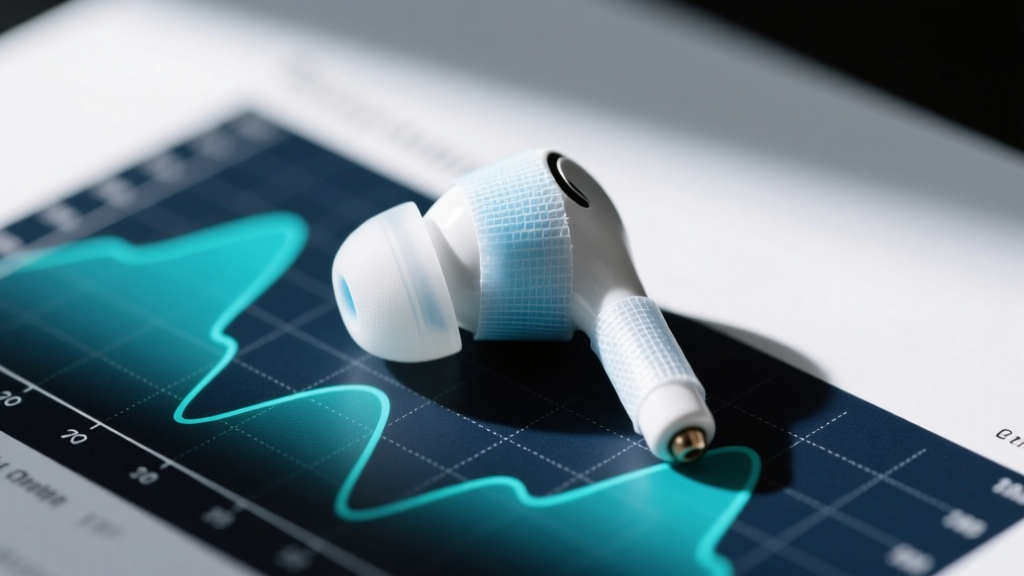
Memory foam tips solve the seal issue but absorb high frequencies, making cymbals sound muddy. Here is a practical, field-tested modification to get the best of both worlds:
- Step 1: Purchase third-party Comply-style memory foam tips.
- Step 2: Wrap the exterior of the foam dome in a single layer of 3M Tegaderm (or any breathable, medical-grade transparent dressing).
- Step 3: Trim the excess tape at the base with an X-Acto knife.
The Result: The foam expands to create a perfect, custom-molded acoustic chamber in your ear canal, while the Tegaderm layer prevents the foam from absorbing high-frequency sound waves and protects it from earwax degradation. This $5 mod restores the flat frequency response intended by the audio engineers, a trick verified by independent measurements on RTINGS testing methodologies.
Comparison Matrix: 2026 TWS Problem-Solvers
Not every problem requires a DIY fix. Sometimes, the most practical pick is hardware engineered to bypass common TWS failure points. Here is how the top enthusiast-tier earbuds stack up against specific real-world problems.
| Device Model | Primary Problem Solved | Key Tech / Feature | Est. Price (2026) |
|---|---|---|---|
| Sennheiser Momentum TW 4 | Codec Bottlenecks & Multipoint | BT 5.4, aptX Lossless, Native LE Audio | $299 |
| Fairbuds (Gen 2) | Battery Degradation & E-Waste | User-swappable micro-cells, modular stems | $149 |
| Sony WF-1000XM5 | Acoustic Seal & Wind Noise | Polyurethane foam tips, AI bone-conduction mics | $278 |
| Technics EAH-AZ100 | Call Quality in RF Crowds | Triple-mic beamforming, UWB spatial awareness | $329 |
Problem 3: The 14-Month Battery Cliff
TWS earbuds contain lithium-ion micro-cells (typically 40mAh to 65mAh). Because they are constantly subjected to shallow discharge cycles and heat generated by the charging case's wireless coil, these cells hit a 'battery cliff' around the 14-month mark, where maximum capacity plummets below 70%.
The Modular Hardware Solution
If you are tired of treating $300 earbuds as disposable e-waste, the Fairbuds lineup is the ultimate practical pick for the enthusiast. Unlike sealed units from Apple or Bose, the Fairbuds feature a modular design that allows you to pop out the battery stems and replace them with fresh cells in seconds, extending the total lifecycle of the audio hardware from 2 years to 7+ years.
The Software Preservation Protocol
If you already own sealed earbuds, you must manage the charging case's behavior. Never leave your earbuds in a case that is plugged into a wireless charger overnight. The ambient heat from inductive charging accelerates Li-ion dendrite formation. Instead, charge the case via USB-C to 80%, and remove the earbuds if you plan to store them for more than 48 hours to prevent deep-discharge voltage drops.
Advanced Troubleshooting: Clearing the RF Traffic Jam
If your right earbud consistently stutters when walking through urban centers or office spaces, you are experiencing 2.4GHz spectrum saturation. Wi-Fi routers, microwaves, and other Bluetooth devices are choking the airspace.
The Coexistence Hack
Most modern TWS earbuds utilize a 'relay' system where the phone sends the signal to the primary earbud, which then relays it to the secondary earbud. If the primary earbud is blocked by your body (e.g., your phone is in your left pocket, but the right earbud is the primary receiver), the signal must pass through your water-dense torso.
- The Fix: Go into your companion app and manually reassign the 'Primary Earbud' to the side closest to your phone's typical carrying position.
- Router Optimization: If the stutter happens at home, log into your Wi-Fi 6E/7 router and force your 2.4GHz band to use Channel 1, 6, or 11 exclusively. Disable 'Auto-Channel' selection, which often places Wi-Fi traffic directly over the Bluetooth frequency hopping spread spectrum (FHSS) bands.
FAQ: Quick Field Fixes for the Rescue Ranger
Why does my ANC suddenly cause ear pressure and nausea?
This is 'ANC pumping,' caused by a broken acoustic seal. The internal feedback microphones detect outside noise leaking in, overcompensate with inverse sound waves, and create localized pressure spikes. Re-seating your earbuds or applying the Tegaderm-foam mod mentioned above will instantly resolve this.
Can I clean the acoustic mesh without ruining the drivers?
Never use isopropyl alcohol or compressed air; alcohol degrades the waterproof nano-coating, and air pressure can blow the balanced armature drivers off their suspension. Instead, use a dry, soft-bristled toothbrush and a piece of mounting putty (like Blu Tack) to gently lift earwax out of the mesh pores.
How do I fix a stuck charging pin in the case?
Oxidation on the pogo pins prevents charging. Take a standard pencil eraser and gently rub it against the gold contacts on both the earbud and inside the case. The mild abrasive removes the oxidation layer without stripping the gold plating, restoring a perfect electrical connection.
Written by
Tom ReynoldsTom Reynolds holds a CFA (Chartered Financial Analyst) designation and a B.S. in Finance from the University of Texas at Austin. Before entering tech journalism, he spent 6 years as a quantitative analyst at a hedge fund, building cost-benefit models for consumer product investments. Tom has maintained a proprietary database of over 10,000 tech deals for the past 8 years, developing his signature "penny-per-feature" evaluation framework that calculates the true value proposition of every gadget. His budget gadget reviews are known for their financial rigor — he tracks price history across 15+ retailers, calculates cost-per-use over 3-year lifespans, and identifies the exact inflection point where premium features justify their markup. Tom's deal alerts have saved his readers an estimated .3 million since 2018.