Identify Old Kitchen Gadgets: 2026 Vintage Baking Tools Trends
Discover how to identify old kitchen gadgets for baking. Explore 2026 vintage pastry tool trends, authentication tips, and safe restoration methods.
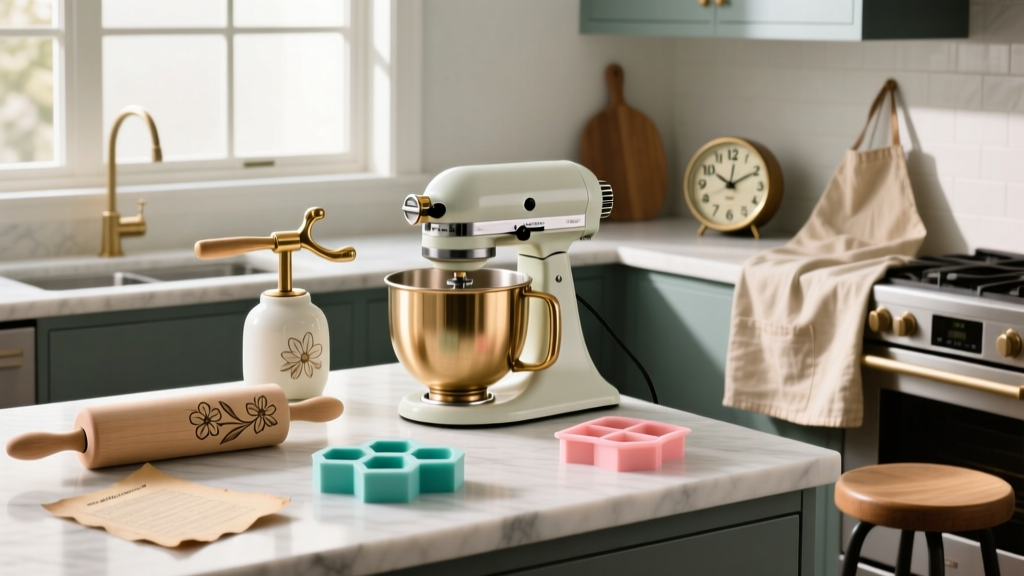
The 2026 Shift: Why Home Bakers Are Reclaiming Vintage Pastry Tools
The modern baking landscape of 2026 is undergoing a massive rejection of planned obsolescence. Home bakers and professional pastry chefs alike are moving away from brittle silicone molds, warping aluminum sheets, and plastic stand-mixer attachments. In their place, a surging demand for heritage carbon steel, cast iron, and hardwood pastry tools has taken over the market. Learning to identify old kitchen gadgets is no longer just a niche hobby for antique dealers; it is a practical skill for anyone looking to equip their kitchen with heirloom-quality tools that outperform modern mass-produced alternatives.
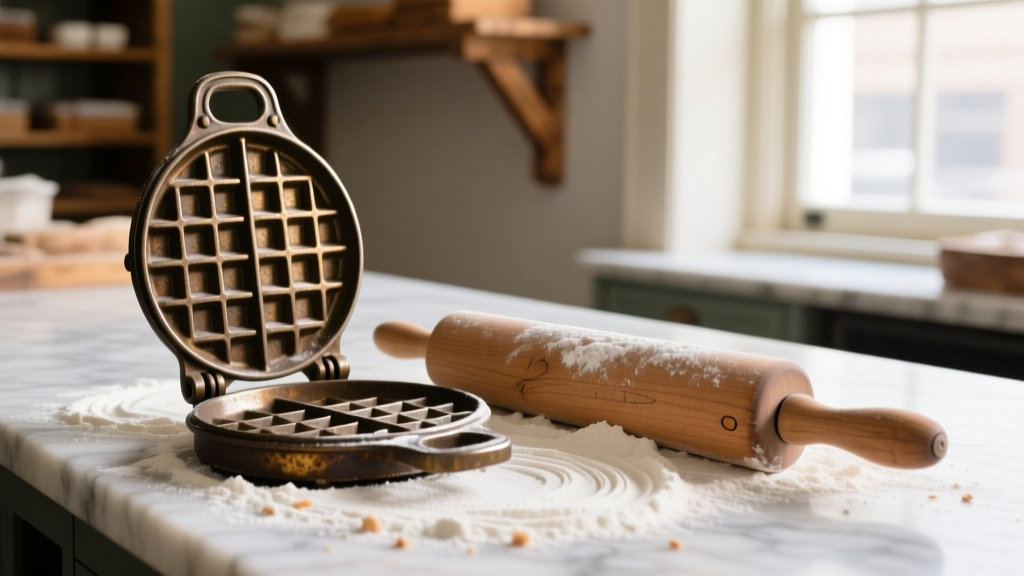
This trend is driven by a demand for thermal mass and mechanical precision. A 1930s cast iron waffle iron holds and distributes heat with a density that modern non-stick electric waffle makers simply cannot replicate. Similarly, mid-century wooden rolling pins offer a surface friction and weight distribution that prevents dough from tearing. However, navigating estate sales, antique malls, and online auctions requires a trained eye to separate genuine culinary artifacts from worthless rusted scrap.
How to Identify Old Kitchen Gadgets: Baking & Pastry Edition
Authenticating vintage baking tools requires examining manufacturing marks, material composition, and structural joinery. Here is a deep dive into the specific identifiers for the most sought-after pastry gadgets.
Cast Iron & Carbon Steel: Waffle Irons and Krumkake Makers
Stovetop waffle irons and Scandinavian krumkake irons are among the most heavily traded vintage baking tools. To accurately date and value these pieces, you must examine the base and the hinge mechanism.
- Gate Marks: If you see a raised, rough line or a small bump on the bottom of the cast iron, this is a gate mark. It indicates the iron was cast in a sand mold before 1900, as the channel where molten iron entered the mold was broken off rather than ground smooth.
- Patent Dates and Logos: Look for cast lettering on the handle or the interior cooking plates. Brands like Griswold, Wagner, and Birmingham Stove & Range (BSR) stamped their logos and patent dates directly into the metal. As detailed in the Smithsonian's historical breakdown of waffle irons, the transition from long-handled fireplace irons to short-handled stovetop models occurred in the late 19th century, making handle length a primary dating metric.
- Hinge Pins: Early irons used a simple drop-pin hinge. By the 1920s, manufacturers introduced locking hinges or ball-and-socket joints to keep the plates perfectly parallel, ensuring even batter thickness.
Tinned Steel & Aluminum: Cookie Cutters and Pastry Blenders
Before the widespread adoption of stainless steel in the 1950s, pastry blenders and cookie cutters were made from tinned steel (steel coated in a thin layer of tin to prevent rust) or cast aluminum.
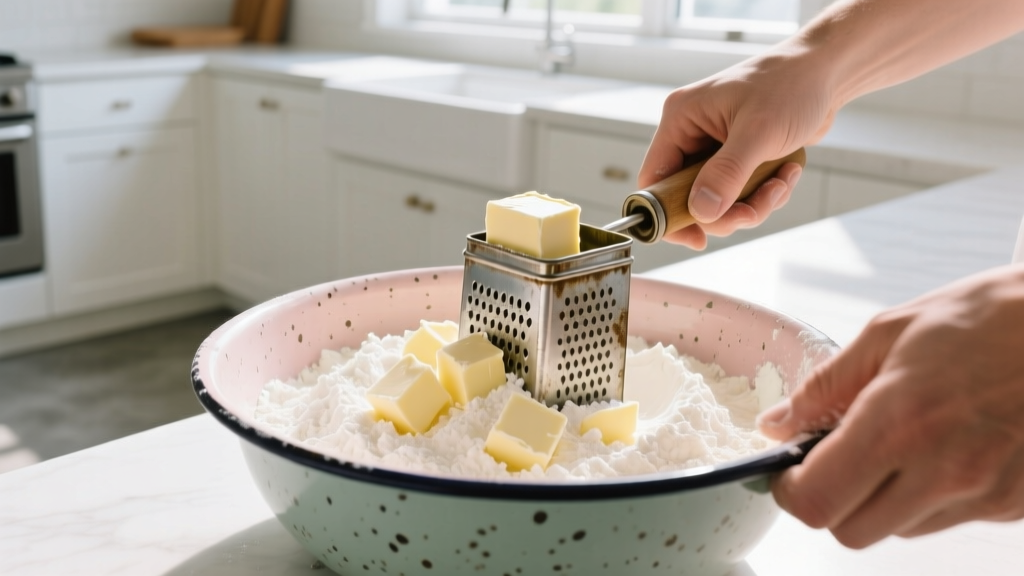
- The Foley Pastry Blender: The original pastry blender was patented by John W. Foley in the early 20th century. Authentic vintage Foley blenders feature a distinct cast metal handle with a smooth, ergonomic curve and thick, rigid carbon steel wires. Modern reproductions often use thin, flexible stainless steel wires that bend when cutting cold butter into flour. Look for the "Foley Mfg. Co." stamp on the metal bracket.
- Hand-Cut Cookie Cutters: Vintage tin cookie cutters from the 1800s and early 1900s were often hand-cut and soldered. Look for overlapping metal joints and a rougher, asymmetrical solder line on the back. The presence of a folded, reinforced edge on the top (the blunt side you press with your hand) is a hallmark of high-quality early 20th-century tinsmithing, designed to protect the baker's fingers.
Woodenware: Rolling Pins and Butter Molds
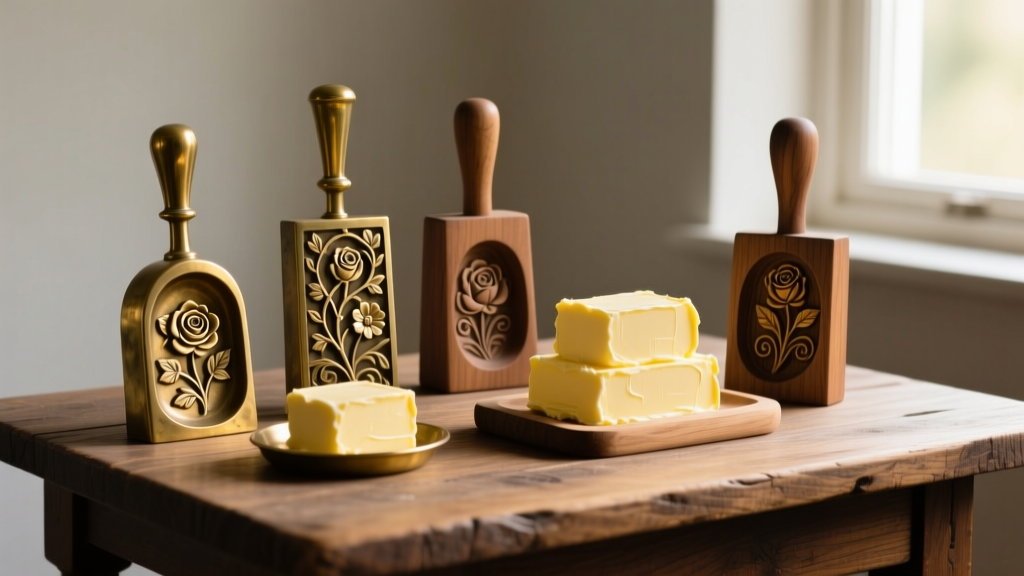
Wooden baking tools require an understanding of grain structure and historical joinery. American-style rolling pins with ball bearings and wooden handles were popularized in the early 1900s. When identifying these, check the internal rod. Vintage models used heavy steel rods and brass or hardwood bushings, giving them a substantial weight (often over 2.5 lbs) that modern lightweight versions lack. For butter molds, look for intricate, deep-relief carvings of wheat sheaves, cows, or floral patterns. Authentic 19th-century molds were carved with chisels, leaving microscopic tooling marks inside the grooves, whereas modern laser-cut replicas have perfectly smooth, uniform grooves.
Authentication Matrix & 2026 Market Valuations
The market for vintage baking tools has stabilized in 2026, with prices reflecting the scarcity of fully restored, food-safe pieces. The following matrix outlines current valuation benchmarks for serious collectors and functional home bakers.
| Gadget Type | Key Identification Markers | Average Restored Value (2026) | Common Failure Modes |
|---|---|---|---|
| Griswold Stovetop Waffle Iron | Slant logo, patent dates (1910-1930s), smooth hinge | $120 - $250 | Pitted cooking surface, seized hinge pin |
| Foley Pastry Blender | Cast handle, thick carbon wires, manufacturer stamp | $35 - $65 | Severe rust on wires, cracked wooden handle |
| Antique Butter Molds | Chisel tooling marks, deep relief, no modern varnish | $85 - $180 | Wood rot, mold spores in deep grooves |
| Hand-Soldered Tin Cookie Cutters | Asymmetrical solder joints, folded top edge, tinplate | $15 - $45 (each) | Tin coating flaking, exposed rusting steel core |
Restoration vs. Retirement: Food Safety in 2026
Acquiring vintage baking tools is only the first step; making them safe for modern food preparation is where many beginners fail. Not all old kitchen gadgets can or should be saved.
Never use vintage ceramic pie weights, painted wooden tools, or antique tins with colored enamel accents for food preparation. The FDA guidelines on lead in food contact materials explicitly warn against using older items where lead-based glazes, paints, or lead-tin solder alloys were common. If a vintage tin cookie cutter features painted exterior detailing, retire it to decorative use only. For bare cast iron and carbon steel, rust removal via electrolysis or white vinegar baths is safe, provided the metal is immediately neutralized and polymerized with a food-safe oil like flaxseed or grapeseed.
Proper Seasoning and Maintenance for Heritage Metals
Restoring a cast iron waffle iron or a carbon steel tart pan requires building a polymerized carbon layer. Avoid using modern synthetic aerosol sprays, which contain propellants that leave a sticky, gummy residue when heated. According to expert cast-iron maintenance guides, the most durable seasoning is achieved by applying a microscopically thin layer of 100% pure flaxseed oil and baking the tool upside down at 450°F (232°C) for one hour. Repeat this process four to six times to create a glass-like, non-stick patina that rivals any modern chemical coating.
Sanitizing Vintage Woodenware
Wooden rolling pins and butter molds are porous and can harbor century-old bacteria or rancid fats if not properly treated. Do not submerge wooden tools in water or run them through a dishwasher, as this will warp the wood and crack the internal steel rods of American-style pins. Instead, scrub the wood with a stiff brush using a mixture of coarse kosher salt and lemon juice to draw out old oils. Once dry, treat the wood generously with food-grade mineral oil or a beeswax-based board cream. Avoid vegetable oils like olive or canola, which will oxidize and turn rancid inside the wood grain over time.
Sourcing Strategies: Where to Find Authentic Pastry Artifacts
The secondary market for vintage baking tools has become highly competitive in 2026. While online auction sites remain popular, the highest quality pieces are often sourced through localized, physical channels where sellers are less aware of the current market premiums for specific baking niches.
"The best estate sales for vintage baking tools are those belonging to individuals who lived in rural agricultural communities during the mid-20th century. You are far more likely to find heavy-duty, commercial-grade pastry cutters and cast iron baking stones in these estates than in urban suburban cleanouts."
When evaluating a potential purchase, always carry a small neodymium magnet. While this won't help with cast iron (which is naturally magnetic), it will instantly tell you if a supposed "copper" or "brass" mixing bowl is actually just copper-plated steel. Furthermore, inspect the interior of any vintage metal baking pans for pitting. Surface rust can be removed, but deep pitting compromises the structural integrity of the pan and creates pockets where food and moisture will inevitably become trapped, leading to persistent bacterial growth.
By mastering the ability to identify old kitchen gadgets, home bakers can curate a functional, historically rich kitchen space that not only elevates the quality of their pastries but also serves as a sustainable alternative to the disposable gadget culture of the past two decades.
Written by
Sarah KimSarah Kim holds certifications from both NASM (National Academy of Sports Medicine) and ACE (American Council on Exercise), along with a B.S. in Kinesiology from UCLA. She has spent 7 years bridging the gap between exercise science and consumer technology, evaluating fitness trackers, smart scales, sleep monitors, and recovery devices with clinical precision. Sarah has tested over 200 health-focused wearables in controlled lab settings and real-world training environments, comparing device data against gold-standard medical equipment like ECG monitors and DEXA scans. She consults for three fitness app companies on data accuracy standards and has presented research on wearable reliability at the American College of Sports Medicine (ACSM) annual conference. Her reviews emphasize clinical validity over marketing claims.