Beginner vs Expert: Sourcing Wholesale Kitchen Gadgets for Prep & Blending
Compare beginner and expert strategies for sourcing wholesale kitchen gadgets, focusing on commercial blenders, food processors, and choppers.
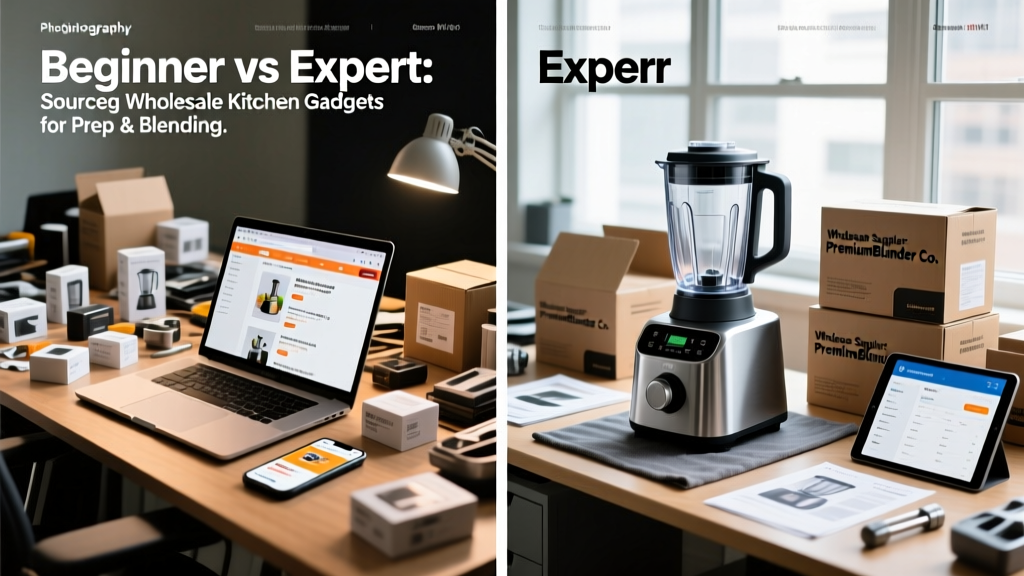
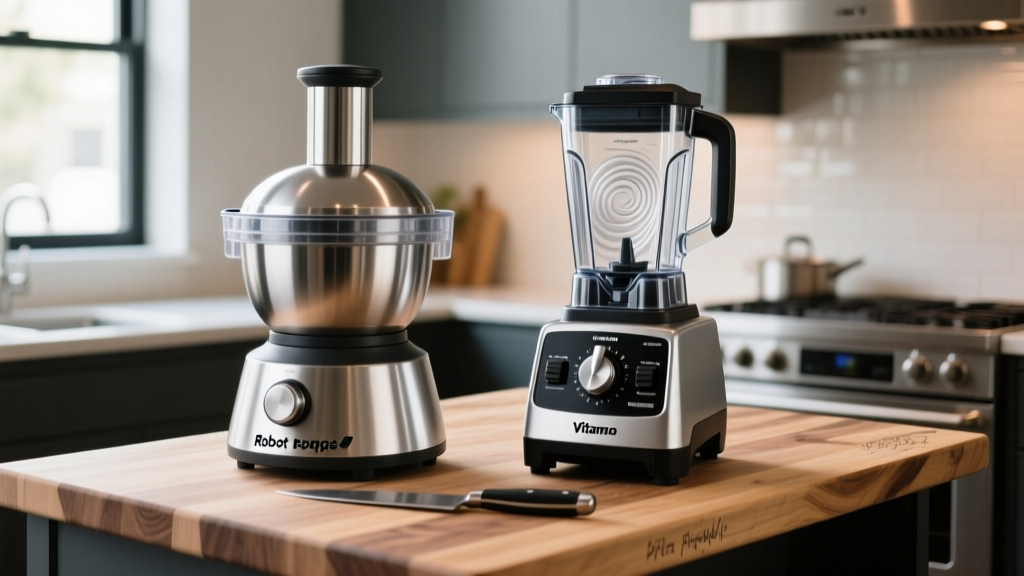
The Procurement Divide: Price vs. Total Cost of Ownership
Sourcing equipment for a high-volume commercial kitchen, catering startup, or ghost kitchen requires navigating a market flooded with deceptive specifications. When procuring wholesale kitchen gadgets—specifically motorized prep equipment like blenders, food processors, and choppers—the gap between novice buyers and seasoned culinary directors is stark. Beginners optimize for the lowest upfront invoice price and peak horsepower claims. Experts optimize for continuous torque, thermal overload thresholds, gear train metallurgy, and compliance with sanitation standards.
Mindset Comparison: The Sourcing Matrix
- The Beginner Approach: Buys 10 units of a generic '3.5 Peak HP' blender at $120 each. Focuses on multi-function marketing and digital touchscreens. Assumes all wattage claims translate to blending power.
- The Expert Approach: Buys 5 units of a commercial-grade Vitamix or Blendtec at $950 each. Focuses on continuous duty motors, metal drive sockets, NSF/ANSI certification, and the availability of replacement carbon brushes and blade assemblies.
The financial reality of wholesale procurement is dictated by the Total Cost of Ownership (TCO). A budget blender that burns out its universal motor or strips its plastic drive socket every four months costs exponentially more in replacement fees, downtime, and lost prep time than a premium unit engineered for 10,000-hour lifecycles.
Blenders: Wattage Myths vs. Torque Realities
The most common trap in the wholesale kitchen gadgets market is the 'Peak Horsepower' metric. Marketing teams for budget brands frequently advertise 3.0 or 3.5 peak HP motors. However, peak HP only measures the absolute maximum electrical draw at the exact moment the motor stalls before tripping a breaker. It does not measure the continuous mechanical torque delivered to the blade under heavy loads like nut butters, frozen purees, or fibrous ginger roots.
Beginner Trap: The Plastic Drive Socket
In budget commercial blenders, the motor shaft connects to the blade assembly via a drive socket. To cut manufacturing costs, novice-targeted brands mold these sockets from hard plastics or low-grade polymers. Under the lateral torque of crushing ice, these plastic gears strip within weeks. Once stripped, the motor spins freely while the blade remains stationary, rendering the unit useless and voiding most commercial warranties.
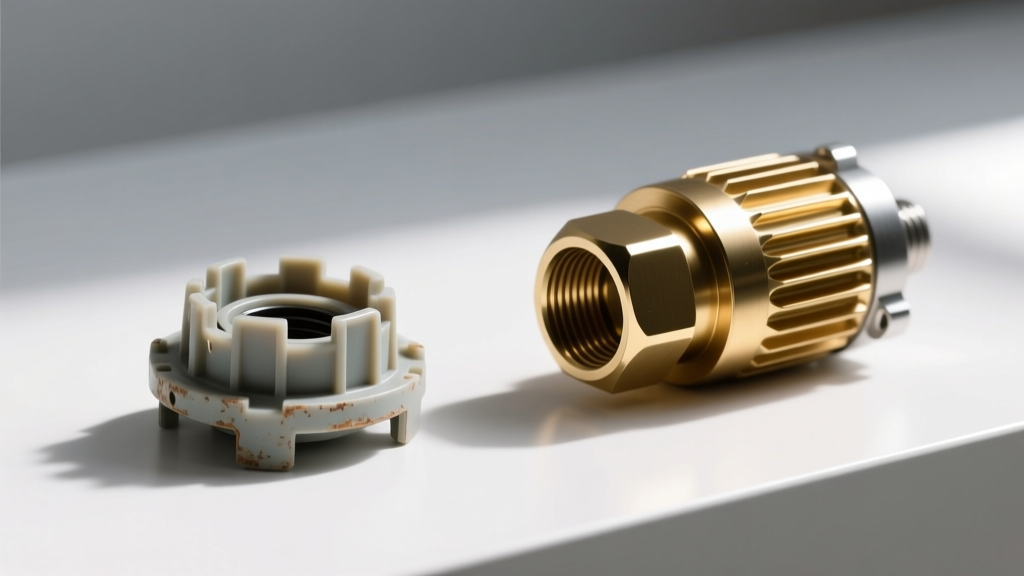
Expert Metric: Continuous Duty and Thermal Protection
Experts look for continuous duty ratings and advanced thermal management. Premium commercial blenders, such as the Vitamix The Quiet One (approx. $1,200 retail, $950 wholesale) or the Blendtec Stealth 875, utilize aircraft-grade stainless steel ball bearings and solid metal hex drives. Furthermore, they feature sophisticated microprocessor-controlled thermal sensors that detect motor heat buildup and automatically reduce power to prevent permanent stator damage, rather than simply tripping a hard reset switch that halts kitchen operations.
| Feature | Budget Import (Beginner Choice) | Vitamix The Quiet One (Expert Choice) |
|---|---|---|
| Drive Socket Material | Injection-molded polycarbonate | Hardened stainless steel hex |
| Motor Type | Universal (high heat, short life) | Series-wound with thermal cutoff |
| Sound Enclosure | None or thin acrylic (85+ dB) | Magnetic seal polycarbonate (64 dB) |
| NSF/ANSI Compliance | Rarely certified | NSF/ANSI Standard 2 Certified |
| Estimated Lifespan | 6 - 14 months | 5 - 7 years |
Food Processors & Choppers: Gear Trains and Bowl Geometry
When scaling prep operations, the choice between batch bowls and continuous feed systems dictates kitchen flow. Beginners often bulk-order standard batch food processors for all tasks, leading to bottlenecks during high-volume vegetable prep. Experts segment their procurement based on the specific geometry of the cut and the volume of the yield.
The Batch vs. Continuous Feed Decision Framework
- Batch Processors (e.g., Waring WFP14S, ~$600): Ideal for emulsions, doughs, pestos, and small-batch purees. The S-blade relies on the vortex created within the bowl. Expert Insight: Avoid polycarbonate bowls for highly acidic or heavily pigmented ingredients (like turmeric or tomato paste), as micro-scratches from the blade will permanently stain the plastic and harbor odors.
- Continuous Feed Processors (e.g., Robot Coupe CL50, ~$1,800): Essential for slicing, grating, and julienning high volumes of produce. Ingredients are pushed through a hopper while an offset disc spins horizontally. Expert Insight: The offset disc design prevents the 'mushing' effect seen in cheaper models where the blade sits too close to the bowl floor, crushing the product rather than slicing it cleanly.
Chopper Gadgets: The Fallacy of Manual Pull-Cords
In the realm of manual choppers, beginners frequently source bulk orders of pull-cord choppers (priced between $15 and $30 each) for dicing onions and herbs. While adequate for home use, these gadgets fail catastrophically in commercial environments. The nylon pull-cords fray and snap under repetitive tension, and the internal recoil springs rust when exposed to the high humidity of commercial dishwashers.
Experts bypass manual pull-cords entirely, opting instead for heavy-duty mechanical lever choppers (such as the Nemco 55200AN) or motorized buffalo choppers. Lever choppers utilize a cast-iron or heavy-gauge steel plunger mechanism that forces produce through a stationary grid blade, relying on mechanical leverage rather than fragile springs and cords.
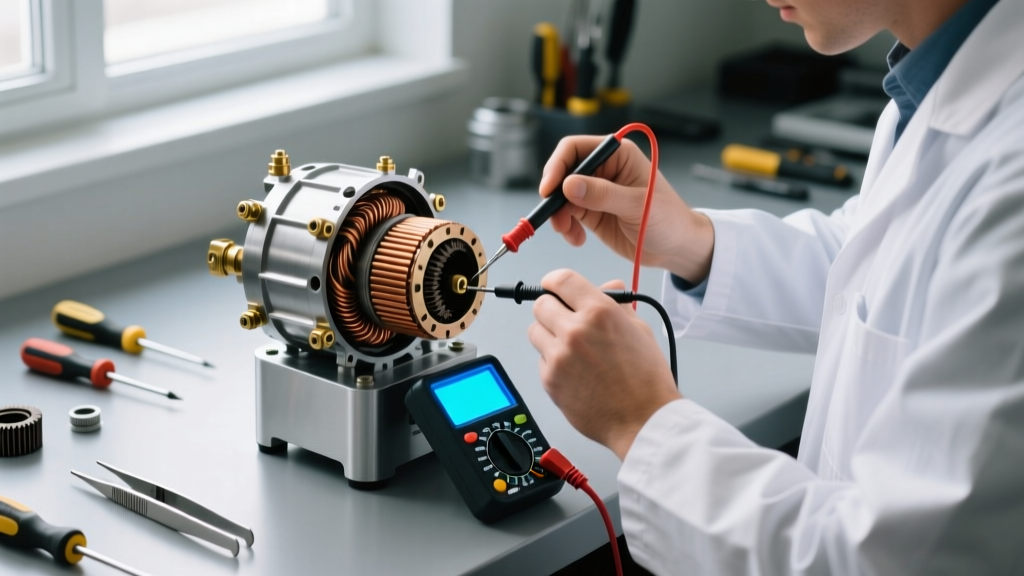
Sanitation, Compliance, and the FDA Food Code
A frequently overlooked aspect of sourcing wholesale kitchen gadgets is regulatory compliance. According to the FDA Food Code, food contact surfaces must be smooth, easily cleanable, and non-absorbent. When procuring blenders and processors, the gasket seals and blade shafts are primary risk vectors for bacterial harborage.
Budget blenders often use fixed blade assemblies where the rubber gasket degrades over time, trapping food particles beneath the blade. Expert buyers exclusively source blenders with removable, dishwasher-safe blade assemblies or one-piece Eastman Tritan copolyester pitchers that eliminate the bottom gasket entirely. Furthermore, verifying that equipment meets NSF/ANSI Standard 2 ensures that the materials used in the gadget's construction will not leach harmful chemicals into acidic foods and can withstand the high-temperature sanitizing cycles of commercial dishwashers.
Navigating the 2026 Wholesale Market: Direct vs. Distributor
The supply chain for commercial kitchen equipment has evolved significantly. While beginners are often tempted by direct-from-manufacturer sourcing on B2B marketplaces to save 20% on the invoice, experts understand the hidden liabilities of gray-market imports.
'Purchasing non-certified, direct-import motorized prep equipment voids your commercial property insurance if an electrical fire originates from the unit. The short-term savings are entirely negated by the catastrophic liability exposure.' — Commercial Kitchen Risk Assessment Guidelines.
Authorized distributors provide critical post-sale infrastructure: localized repair technicians, guaranteed OEM part availability (like replacement carbon brushes and drive couplings), and loaner programs during warranty repairs. When calculating the budget for wholesale kitchen gadgets, always factor in a 5% annual maintenance reserve for consumable parts like processor pusher plates, blender tamper caps, and slicing discs.
Energy Efficiency and Operational Overhead
Motorized prep equipment runs for hours daily. Consulting the ENERGY STAR commercial food service equipment database can reveal significant long-term savings. High-efficiency brushless DC (BLDC) motors, now entering the premium wholesale market, reduce energy consumption by up to 30% compared to traditional universal motors, while simultaneously offering higher torque at lower RPMs, resulting in quieter operation and less heat transfer into temperature-sensitive ingredients like dairy or emulsions.
Expert Sourcing Checklist for Motorized Prep Gadgets
- Verify Drive Mechanics: Demand metal-on-metal drive couplings; reject plastic gears.
- Check Sanitation Certs: Require NSF/ANSI 2 documentation for all food-contact components.
- Audit Service Networks: Confirm the distributor stocks replacement blade shafts and carbon brushes locally.
- Test Bowl Geometry: Ensure batch bowls have distinct baffling to maintain vortex circulation during heavy loads.
- Demand Thermal Protection: Verify the motor features auto-reset thermal limiters rather than hard-break fuses.
Ultimately, mastering the procurement of wholesale kitchen gadgets requires shifting the focus from the initial purchase price to the lifecycle cost, mechanical durability, and sanitation compliance of the equipment. By prioritizing continuous torque, robust metallurgy, and certified sanitation designs, kitchen operators can build a prep line that withstands the brutal demands of high-volume service without compromising on safety or efficiency.
Written by
Priya SharmaPriya Sharma holds a Ph.D. in Acoustical Engineering from the University of Southampton and a B.Tech in Electronics from IIT Delhi. She has spent 9 years as a consumer electronics journalist, with deep specialization in audio equipment, camera systems, and assistive technology. Priya is an active member of the Audio Engineering Society (AES) and has co-authored papers on spatial audio perception published in the Journal of the Acoustical Society of America. Her reviews of headphones, portable DACs, and studio monitors include objective measurements using Audio Precision analyzers alongside subjective listening tests. She also serves on the advisory board of the Global Accessibility Reporting Initiative (GARI), evaluating mobile devices for users with visual and hearing impairments.