The Crossword Kitchen Gadget Guide: Unique Italian Pasta Makers
Discover the ultimate crossword kitchen gadget guide. Explore unique Italian pasta makers, chitarras, and bronze dies for authentic 2026 cooking.
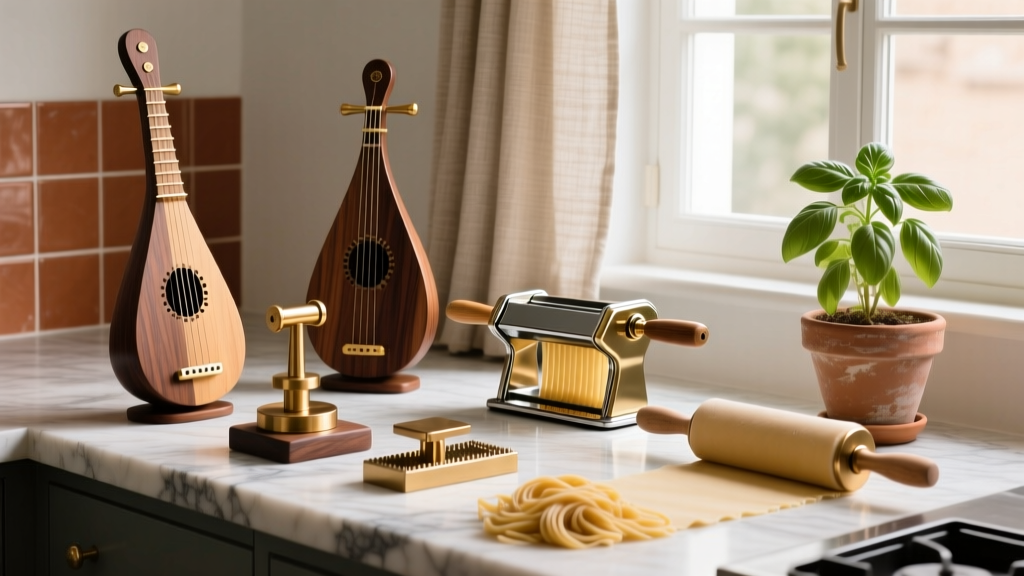
The Intersection of Wordplay and Culinary Art
If you are an avid crossword solver, you have likely been stumped by clues like "9-letter Italian half-moon chopper" (MEZZALUNA) or "8-letter pasta-cutting guitar" (CHITTARRA). These terms frequently appear in weekend puzzles, but in the culinary world, they represent a fascinating category of analog, tactile tools that are experiencing a massive renaissance in 2026. As home cooks increasingly seek screen-free, hands-on cooking experiences, traditional Italian pasta makers and specialty prep gadgets have moved from dusty antique shelves to the center of the modern kitchen island.
This guide decodes the most sought-after "crossword kitchen gadget" answers, transforming them from obscure trivia into actionable, high-performance tools for your culinary arsenal. We will explore exact hydration ratios, specific model recommendations, and the material science that makes these unique finds indispensable for authentic Italian cooking.
The Chitarra: Strumming Your Way to Perfect Spaghetti
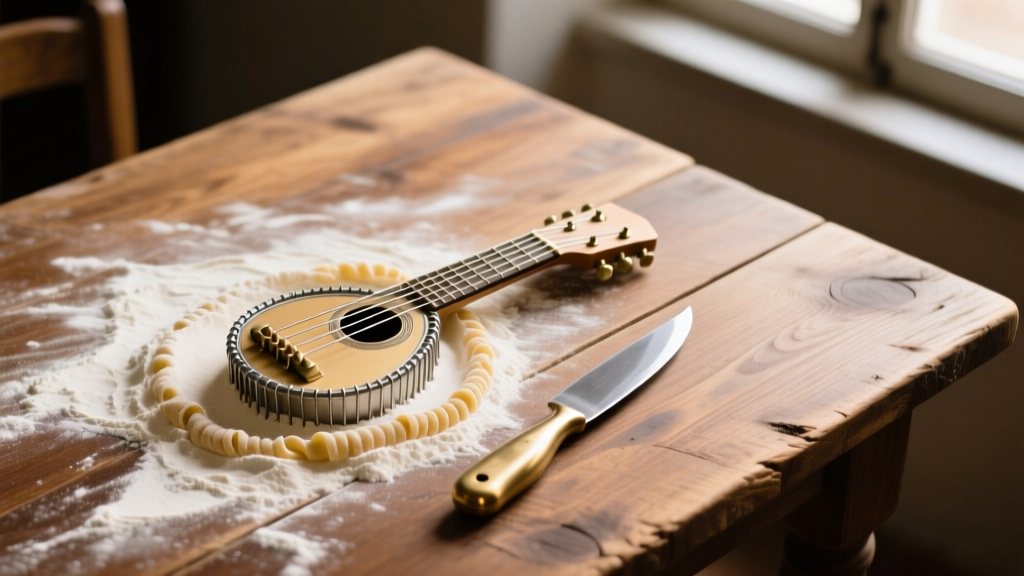
The chitarra (Italian for "guitar") is an 8-letter crossword staple and a cornerstone of Abruzzese cuisine. Unlike a standard roller extruder, a chitarra consists of a wooden frame strung with tightly spaced stainless steel or brass wires. When you press a sheet of pasta dough through the wires using a rolling pin, it cuts the dough into square-edged strands known as spaghetti alla chitarra. The square edges provide a distinct, chewy bite and superior sauce-gripping geometry compared to round extruded spaghetti.
For serious home cooks, the Fante's Traditional Chitarra (typically priced around $55) remains the gold standard. Its stainless steel wires are spaced exactly 2.5mm apart and are tensioned to prevent sagging during heavy use. However, the chitarra is unforgiving if your dough hydration is off.
To prevent dough from sticking to the wires, your hydration must sit strictly between 50% and 55%. Use a blend of 60% Caputo Semola Rimacinata (finely milled durum wheat) and 40% high-protein all-purpose flour. For 300g of total flour, use exactly 150g of whole eggs (about 3 large eggs). Knead for 8 minutes until the dough passes the windowpane test, then rest it wrapped in beeswax wrap at room temperature for exactly 45 minutes before rolling to a 2mm thickness.
Decoding the Ridges: Surface Area and Sauce Adhesion
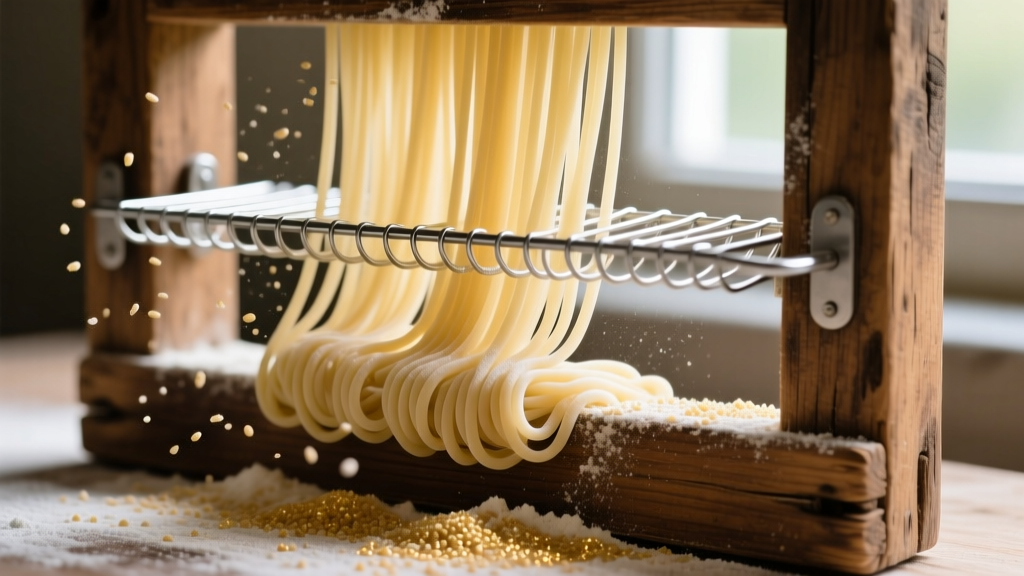
Another category of crossword favorites involves ridging tools. Why do Italian cooks obsess over ridges? The physics of sauce adhesion relies on surface area and starch release. A smooth piece of pasta allows oil-based sauces to slide off, while micro-ridges trap emulsified starchy water and fats, creating a cohesive dish. While industrial factories use bronze dies (more on that below), home cooks use specialized wooden boards and paddles to achieve similar effects.
| Tool Name | Best Application | Ideal Sauce Pairing | 2026 Price Range |
|---|---|---|---|
| Cavatelli Board | Orecchiette, Cavatelli, Strascinati | Chunky broccoli rabe ragù, sausage crumbles | $15 - $28 |
| Gnocchi Paddle | Potato, ricotta, or semolina gnocchi | Brown butter sage, gorgonzola cream | $12 - $20 |
| Riga Gnocchi Comb | Large tubular pastas, garganelli | Heavy wild boar ragù, baked ziti sauces | $18 - $35 |
When shopping for a cavatelli board, avoid plastic variants. Look for untreated beechwood or olive wood boards with deep, hand-carved grooves. The deeper the groove, the more sauce the pasta will hold. According to culinary historians documented by the Smithsonian Magazine, the evolution of these textured shapes was directly tied to the introduction of rich, meat-based sauces in Southern Italy during the 18th century, necessitating pasta shapes that could physically carry the sauce to the palate.
The Mezzaluna: More Than Just a 9-Letter Answer
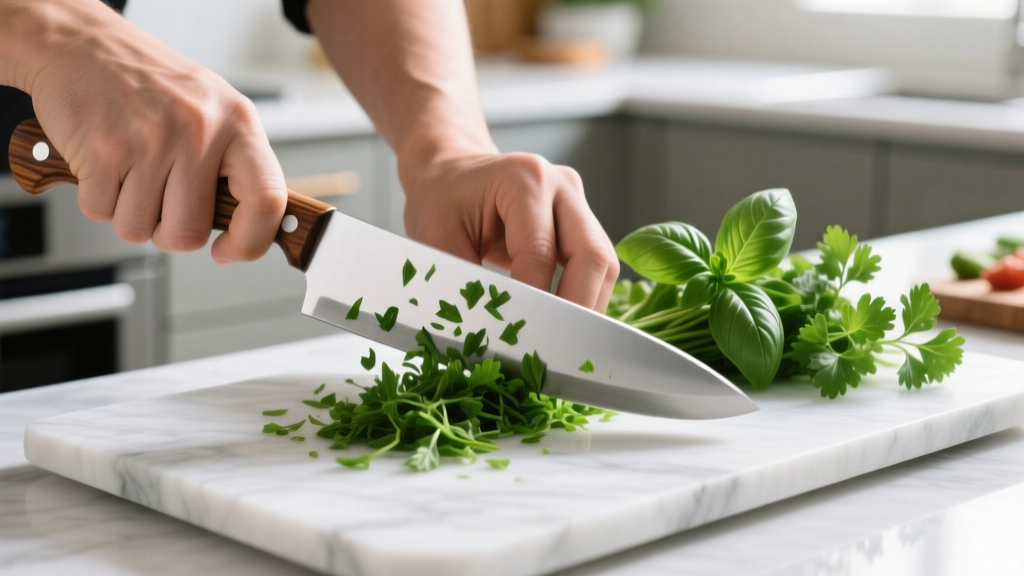
The mezzaluna ("half-moon") is perhaps the most iconic crossword kitchen gadget. While modern food processors can pulverize herbs in seconds, they also bruise delicate cell walls, oxidizing basil and turning parsley into a bitter, dark paste. A properly balanced mezzaluna uses a shearing action rather than a blunt impact, preserving the volatile essential oils of fresh herbs.
When choosing a mezzaluna, you will encounter two main designs: single-blade and double-blade.
- Single-Blade (Traditional): Models like the Alessi Girotondo or traditional Italian wooden-handled variants feature one thick, curved blade. This allows you to use your free hand to gather herbs while rocking the blade. It is infinitely easier to clean and sharpen.
- Double-Blade (Modern): Brands like Zyliss offer twin-blade mezzalunas that cut processing time in half. However, fibrous herbs like rosemary or lemongrass frequently become wedged in the 4mm gap between the blades, requiring a toothpick or brush to clean.
Beyond herbs, the mezzaluna is the traditional tool for chopping pasta dough into maltagliati (literally "badly cut" pasta), a rustic shape specifically designed to be paired with hearty bean soups like pasta e fagioli.
The Bronze Die Extrusion Advantage
If your crossword puzzle asks for a "pasta extruder plate," the answer you are looking for relates to the material science of the die itself. In 2026, the market for home pasta extruders has matured significantly, with standalone models from Philips and heavy-duty stand mixer attachments from Kenwood and KitchenAid dominating the space. However, the true secret to restaurant-quality extruded pasta at home is not the motor—it is the trafile al bronzo (bronze dies).
"Teflon dies operate at high speeds and generate heat, which essentially cooks and seals the outside of the pasta, leaving it slick. Bronze dies are softer, creating microscopic friction and abrasions on the pasta surface. This increases the surface area by up to 30%, allowing starchy pasta water and emulsified fats to cling aggressively to the noodle."
— Adapted from material science analyses on The Kitchn's guide to bronze-cut pasta.
Upgrading to bronze dies is a mandatory step for serious home extruders. If you own a Kenwood Chef or Cooking Chef stand mixer, the Kenwood AT910 bronze die accessory kit (retailing around $75) includes dies for rigatoni, fusilli, and macaroni. For Philips Pasta Maker owners, third-party artisans on platforms like Etsy now machine custom bronze dies that perfectly fit the Philips extrusion shaft, allowing you to create authentic paccheri and casarecce at home for roughly $45 per die.
When extruding with bronze dies, your dough must be incredibly dry—typically a 30% to 33% hydration ratio using purely semolina flour and water. The dough should look like crumbly sand before it enters the extruder; the immense pressure (often exceeding 1,000 PSI in commercial machines, and roughly 300 PSI in high-end home models) forces the crumbs together into a cohesive, perfectly textured noodle.
Crossword Clue Cheat Sheet for the Italian Kitchen
Keep this quick-reference guide handy the next time you are filling in the Sunday grid or browsing specialty kitchenware stores:
- Clue: "Mandoline alternative, 9 letters"
Answer: MEZZALUNA (Ideal for herbs and maltagliati dough). - Clue: "Pasta-cutting guitar, 8 letters"
Answer: CHITTARRA (Requires 50% hydration dough and a 2mm rolling thickness). - Clue: "Gnocchi ridging tool, 6 letters"
Answer: PADDLE (Or RIGATO; look for untreated beechwood). - Clue: "Bronze pasta plate, 3 letters"
Answer: DIE (Specifically trafile al bronzo for maximum sauce adhesion).
By understanding the mechanical and historical purpose behind these tools, you elevate your cooking from simple recipe-following to true culinary craftsmanship. The next time you encounter one of these terms in a puzzle, you will know exactly how to wield it in your kitchen.
Written by
Priya SharmaPriya Sharma holds a Ph.D. in Acoustical Engineering from the University of Southampton and a B.Tech in Electronics from IIT Delhi. She has spent 9 years as a consumer electronics journalist, with deep specialization in audio equipment, camera systems, and assistive technology. Priya is an active member of the Audio Engineering Society (AES) and has co-authored papers on spatial audio perception published in the Journal of the Acoustical Society of America. Her reviews of headphones, portable DACs, and studio monitors include objective measurements using Audio Precision analyzers alongside subjective listening tests. She also serves on the advisory board of the Global Accessibility Reporting Initiative (GARI), evaluating mobile devices for users with visual and hearing impairments.