Japanese Kitchen Gadgets Cooking: Top Electric Kettles 2026
Solve bitter tea and slow brews with our 2026 guide to Japanese kitchen gadgets cooking tools, featuring Zojirushi and Tiger electric kettles.
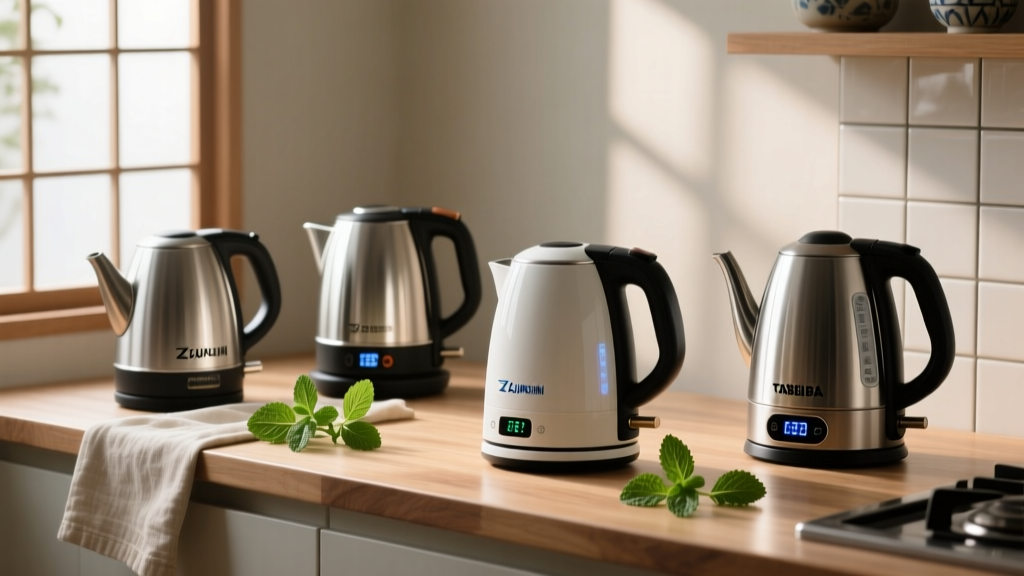
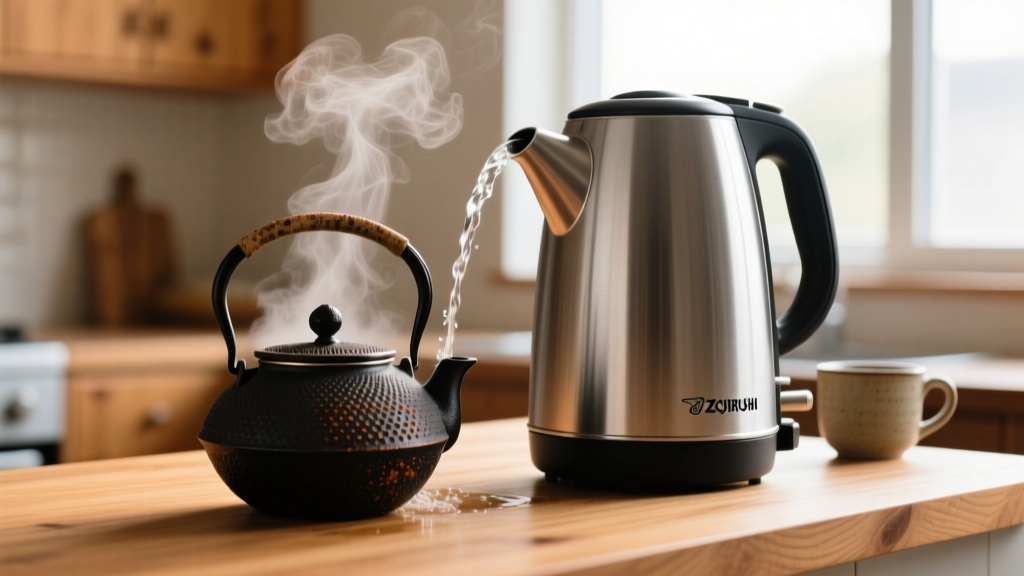
The Bitter Tea & Slow Coffee Problem: Why Precision Matters
The philosophy behind Japanese kitchen gadgets cooking equipment is rooted in an uncompromising dedication to precision, patience, and the elevation of simple ingredients. Nowhere is this more evident than in water temperature control. If your green tea tastes aggressively bitter, or your pour-over coffee yields a hollow, astringent cup, the culprit is rarely the bean or the leaf—it is the water. Boiling water (212°F/100°C) violently extracts tannins and catechins from delicate tea leaves, completely overpowering the sweet, umami-rich amino acids like L-theanine that high-quality teas are prized for.
Standard stovetop kettles and cheap electric jugs operate on a binary logic: heat until boiling, then shut off. This leaves you guessing when the water cools to the optimal 160°F (71°C) for Sencha or 195°F (90°C) for light-roast coffee. Japanese electric water boilers solve this by utilizing microcomputerized (Micom) thermistors and vacuum insulation to hold water at exact, user-defined temperatures for hours. This eliminates the waiting game and guarantees consistent extraction for every single cup.
Diagnostic Matrix: Match Your Beverage Problem to the Right Gadget
Before investing in high-end heating equipment, identify the specific failure point in your current brewing routine. Use this diagnostic matrix to pinpoint the exact Japanese kitchen gadget that solves your problem.
| Symptom / Problem | Root Cause | Gadget Solution | Target Temp |
|---|---|---|---|
| Gyokuro tastes bitter and metallic | Water too hot; scorching delicate leaves | Zojirushi CD-LFC40 (122°F setting) | 122°F - 140°F |
| Pour-over coffee is muddy or over-extracted | Turbulent water flow agitating grounds | Hario V60 Buono Electric Gooseneck | 195°F - 205°F |
| Waiting 10+ minutes for water to heat up | On-demand heating without thermal retention | Tiger PDU-A50U VE Hybrid Boiler | 175°F - 208°F |
| Hard water scale ruining tea flavor | Calcium carbonate buildup on heating element | Panasonic NC-EG3000 (Graphite coating) | Varies |
The Heavyweights: Zojirushi vs. Tiger VE Hybrid Boilers
When outfitting a serious tea station or a high-volume household, the two undisputed leaders in the Japanese market are Zojirushi and Tiger. Both brands offer exceptional build quality, but their underlying thermal technologies cater to slightly different user behaviors.
Zojirushi CD-LFC40: The Set-and-Forget Master
Retailing around $215, the Zojirushi CD-LFC40 Micom Water Boiler and Warmer is the gold standard for households that consume tea or instant meals throughout the day. Its standout feature is the inclusion of a dedicated 122°F (50°C) setting. While most Western kettles bottom out at 180°F, this ultra-low setting is specifically engineered for preparing baby formula safely without destroying nutrients, and for brewing ultra-premium Gyokuro green tea, which requires water cooled to near-bath temperature to extract maximum umami without bitterness.
The interior features Zojirushi’s proprietary non-stick coating, which resists mineral adhesion better than bare stainless steel. However, the primary drawback is its reliance on continuous electrical draw to maintain temperature once the water drops below the target threshold, which can add a marginal amount to your monthly utility bill if left on 24/7.
Tiger PDU-A50U: The Energy Efficiency Champion
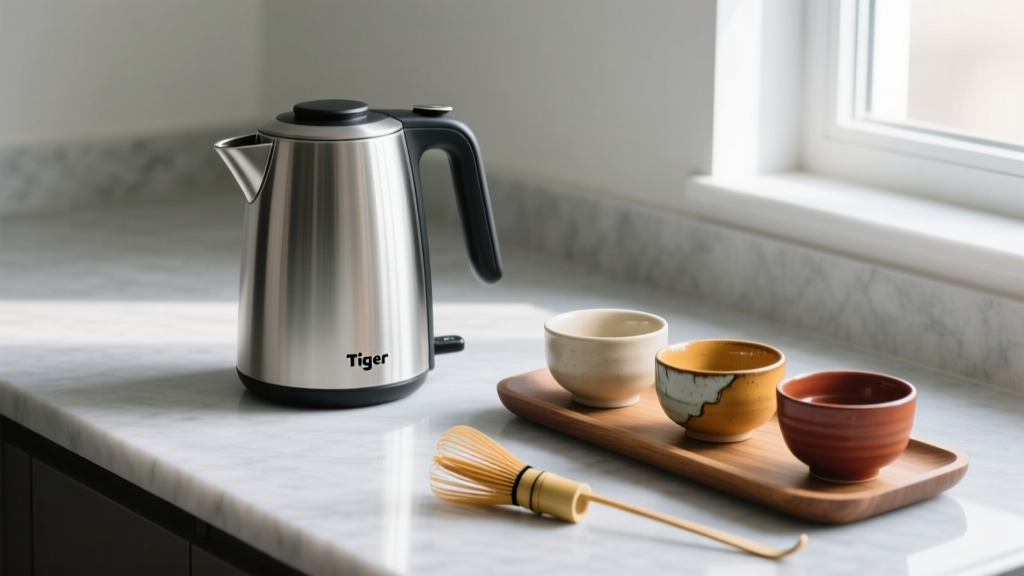
Priced slightly higher at approximately $240, the Tiger PDU-A50U solves the energy consumption problem through VE (Vacuum Electric) technology. Tiger integrates a physical vacuum-insulated layer between the inner and outer stainless steel walls—similar to a high-end Thermos flask. Once the water reaches the target temperature, the heating element completely shuts off. The vacuum seal retains the heat for hours with zero electricity draw. If the temperature eventually drops, the Micom sensor triggers a brief, low-wattage pulse to bring it back up. For eco-conscious users or those in regions with high electricity rates, the Tiger VE hybrid pays for itself in energy savings over a two-year period.
"Micom" (Microcomputerized) simply means the kettle uses a digital thermistor chip to read water temperature and pulse the heating element accordingly. "VE" (Vacuum Electric) refers to the physical insulation of the chamber. A VE kettle will always have a Micom chip, but a Micom kettle does not necessarily have VE insulation. Always look for the "VE" badge if energy retention is your priority.
Manual Control: Gooseneck Kettles for Pour-Over Precision
While automated boilers are perfect for dispensing water into teapots, they lack the flow-rate control required for artisanal pour-over coffee. Water quality and mineral content heavily influence extraction; according to the Environmental Protection Agency (EPA), the mineral profile and pH of your tap water can drastically alter the taste of your brew, but even perfectly filtered water will yield a bitter cup if poured with too much turbulence.
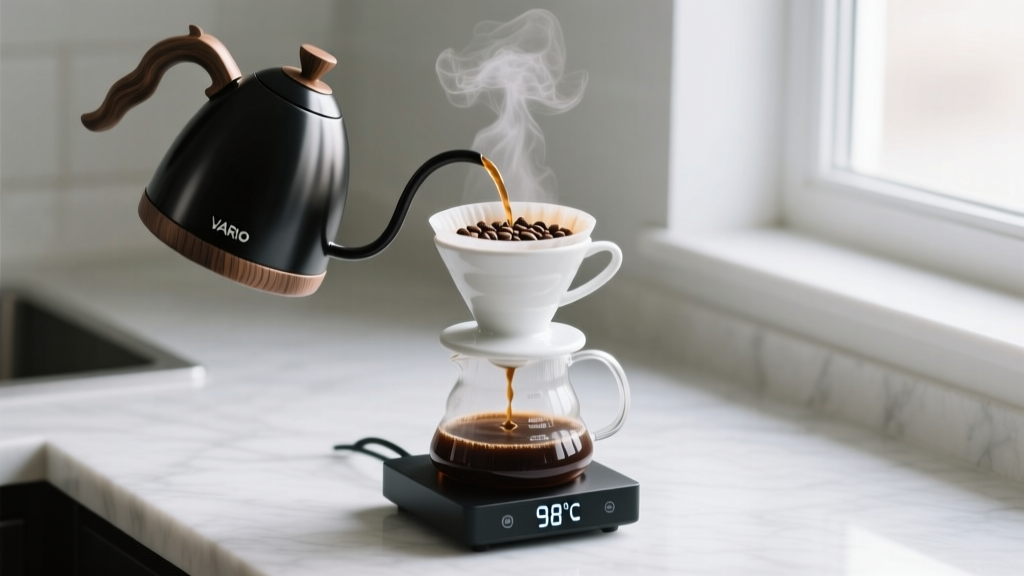
The Hario V60 Electric Buono Gooseneck Kettle ($110) bridges the gap between Japanese design and coffee science. The ultra-thin, curved spout restricts water flow to a slow, laminar stream. This allows the barista to pour in precise concentric circles, ensuring all coffee grounds are evenly saturated without digging trenches into the coffee bed. Unlike the Zojirushi, the Hario is a rapid-boil-and-pour device. It heats 800ml of water in under four minutes and features a built-in digital thermometer on the base to display the real-time temperature of the water as it cools, allowing you to strike exactly at 200°F (93°C) for light roasts.
Maintenance: Descaling Japanese Inner Pots Without Ruining the Coating
Hard water is the silent killer of precision kettles. As the Centers for Disease Control and Prevention (CDC) notes, while boiling water makes it microbiologically safe, it does not remove dissolved minerals like calcium and magnesium. Over time, these minerals precipitate out of the water and form a chalky white scale on the heating elements and inner walls. This scale acts as a thermal insulator, causing the kettle’s thermistors to misread the water temperature and eventually burn out the heating coil.
Warning: Never use distilled white vinegar to descale a Zojirushi or Tiger boiler. The acetic acid in vinegar can degrade the specialized fluoride and graphite non-stick coatings used in premium Japanese models, leading to peeling and voiding your warranty.
The Citric Acid Descaling Protocol
- Fill to the Max Line: Fill the boiler with fresh, cold tap water up to the maximum capacity indicator.
- Add Citric Acid: Drop exactly 1 tablespoon (approx. 15 grams) of food-grade citric acid powder into the water. Do not use lemon juice, as the natural sugars will caramelize and burn onto the heating element.
- Initiate the Clean Cycle: Press and hold the "Descaling" or "Clean" button (on Zojirushi models, this is usually the "Keep Warm" button held for 3 seconds). The kettle will boil the acidic solution and hold it at a rolling simmer for 45 minutes.
- Soak and Flush: Once the cycle completes, unplug the unit and let the hot solution sit for an additional 2 hours to dissolve stubborn calcium bonds. Pour out the solution, rinse twice with cold water, and run one final boiling cycle with plain water to flush the spout.
Sourcing and Voltage Warnings for 2026 Imports
A common trap for enthusiasts exploring Japanese kitchen gadgets cooking tools is purchasing domestic Japanese models directly from Tokyo-based retailers via proxy shopping services. Japan operates on a 100V electrical grid, whereas North America uses 120V. Plugging a 100V Zojirushi CD-LFC40 directly into a standard US 120V wall outlet will overvolt the heating element by 20%, causing it to burn out catastrophically within weeks, or worse, melt the internal wiring and create a fire hazard.
If you are importing a Japanese domestic market (JDM) model to secure a specific colorway or a slightly lower base price, you must use a step-down voltage transformer rated for at least 1500W (to handle the initial 1000W-1200W heating surge). However, for most buyers in 2026, purchasing the official North American 120V versions (which carry English labeling, UL safety certifications, and local warranties) is the only practical and safe choice. The slight price premium of the US models is easily justified by the elimination of bulky, humming transformers on your kitchen counter.
Written by
Priya SharmaPriya Sharma holds a Ph.D. in Acoustical Engineering from the University of Southampton and a B.Tech in Electronics from IIT Delhi. She has spent 9 years as a consumer electronics journalist, with deep specialization in audio equipment, camera systems, and assistive technology. Priya is an active member of the Audio Engineering Society (AES) and has co-authored papers on spatial audio perception published in the Journal of the Acoustical Society of America. Her reviews of headphones, portable DACs, and studio monitors include objective measurements using Audio Precision analyzers alongside subjective listening tests. She also serves on the advisory board of the Global Accessibility Reporting Initiative (GARI), evaluating mobile devices for users with visual and hearing impairments.