Best Amazon Kitchen Gadgets for Coffee & Tea Lovers: 2026 Gift Guide
Discover the best Amazon kitchen gadgets for coffee and tea lovers in our 2026 gift guide. Expert picks for espresso, pour-over, and smart mugs.
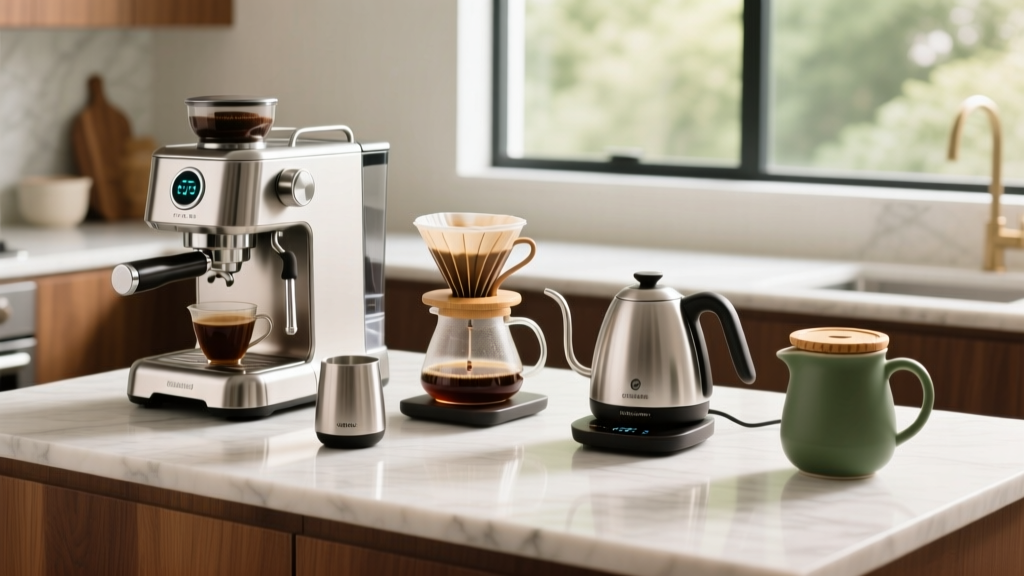
Gift-giving for coffee and tea aficionados is notoriously difficult. They already have a favorite mug, and buying beans or loose-leaf tea is a consumable gamble that often misses their specific flavor preferences. The most reliable solution lies in precision hardware. In 2026, the market for specialty brewing tools has matured significantly, meaning you can source professional-grade extraction equipment directly from mainstream retail platforms. When curating a list of the best Amazon kitchen gadgets for caffeine enthusiasts, we filter out novelty novelties and focus strictly on thermal dynamics, grind consistency, and extraction yield.
The Caffeine Connoisseur's 2026 Gift Matrix
Use this decision framework to match the gadget to the recipient's specific brewing habits and skill level.
| Recipient Profile | Gadget Match | Price Range | Skill Required |
|---|---|---|---|
| The Camping Espresso Snob | Wacaco Picopresso | $120 - $140 | High (Dialing in grind) |
| The Pour-Over Purist | Fellow Stagg EKG | $190 - $210 | Medium (Pour technique) |
| The Forgetful Tea Drinker | Ember Mug 2 | $145 - $160 | Low (App pairing) |
| The Iced Coffee Addict | HyperChiller V2 | $25 - $35 | Low (Freeze prep) |
Precision Pour-Overs & Espresso: The Premium Tier
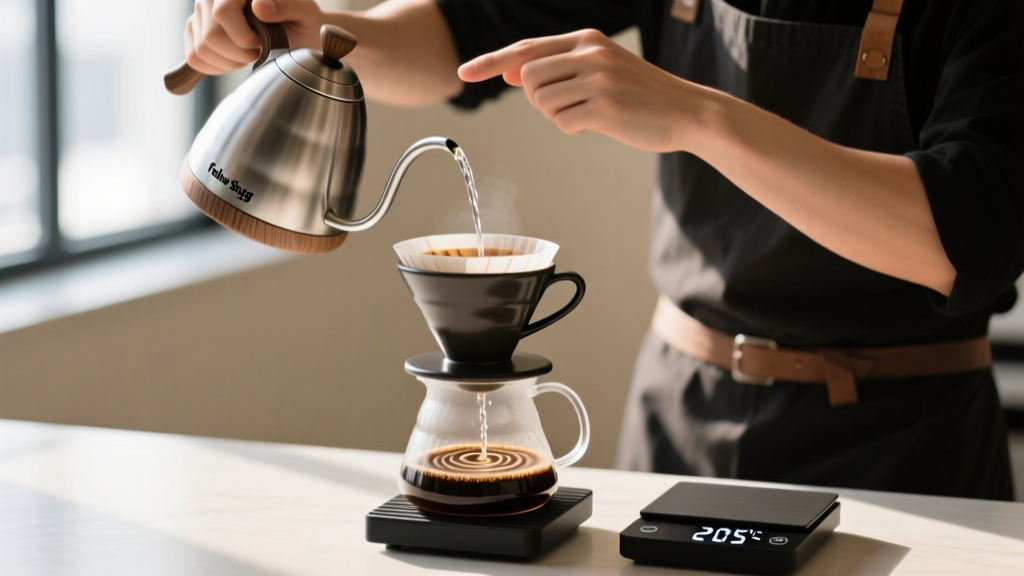
Fellow Stagg EKG Electric Gooseneck Kettle
For the pour-over enthusiast, water flow rate and thermal stability are non-negotiable. The Fellow Stagg EKG remains the gold standard in 2026. It features a 1200W heating element and a precision PID controller that holds water temperature within 1°F of the target. The gooseneck spout is engineered for a 0.6L/min flow rate, allowing the user to execute the slow, concentric pours required to properly bloom and extract light-roast coffees. Priced around $195, it includes a 60-minute hold mode, making it equally valuable for a French press or a delicate white tea steep.
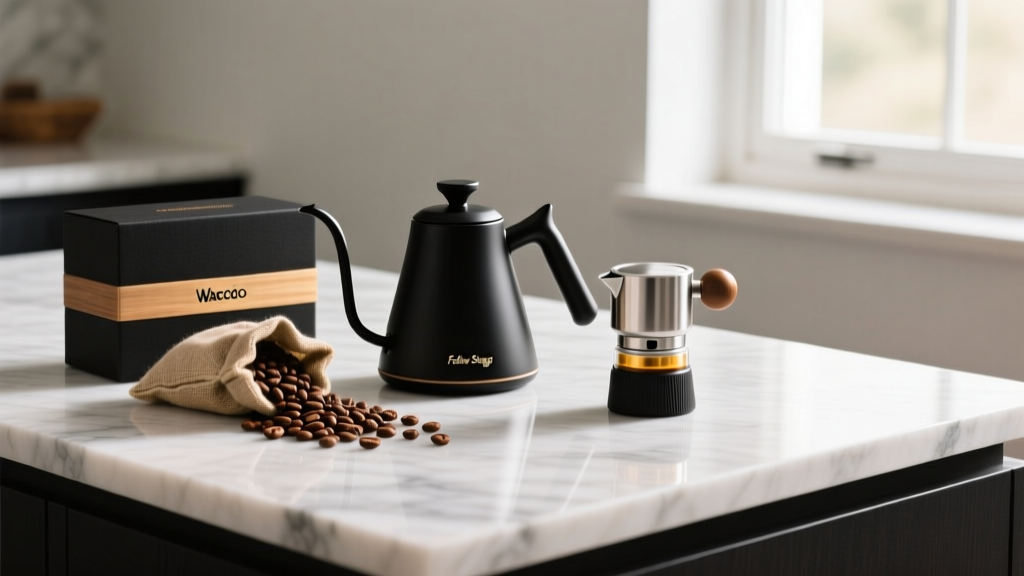
Wacaco Picopresso Portable Espresso Maker
Most portable espresso makers rely on pressurized baskets that produce a watery, aerated imitation of crema. The Wacaco Picopresso ($129) is a genuine manual espresso machine shrunk to the size of a soda can. It utilizes a standard 52mm non-pressurized portafilter and requires an 18g dose of ultra-fine coffee (200-300 microns). By manually pumping the lever, the user generates up to 18 bars of pressure. The failure mode here is grind size: if the recipient does not own a high-end burr grinder capable of espresso-level consistency, the Picopresso will choke or run too fast. It is the ultimate gift for the tinkerer who loves dialing in variables.
Smart Sips: Temperature-Controlled Tea & Coffee
Ember Temperature Control Smart Mug 2
The optimal drinking temperature for coffee and tea is highly subjective, but it universally drops below the palatable threshold within 15 minutes of brewing. The Ember Mug 2 (10oz capacity, ~$149) solves this with a built-in lithium-ion battery and a micro-heating element at the base. Users can set the exact temperature via the companion app—most coffee drinkers prefer 135°F to 140°F, while black tea drinkers often push it to 145°F. The mug maintains the target heat for up to 1.5 hours off the charging coaster, and indefinitely when seated on it. The ceramic coating prevents the metallic taste transfer that plagued early smart mug iterations.
The Under-$40 Stocking Stuffers That Actually Perform
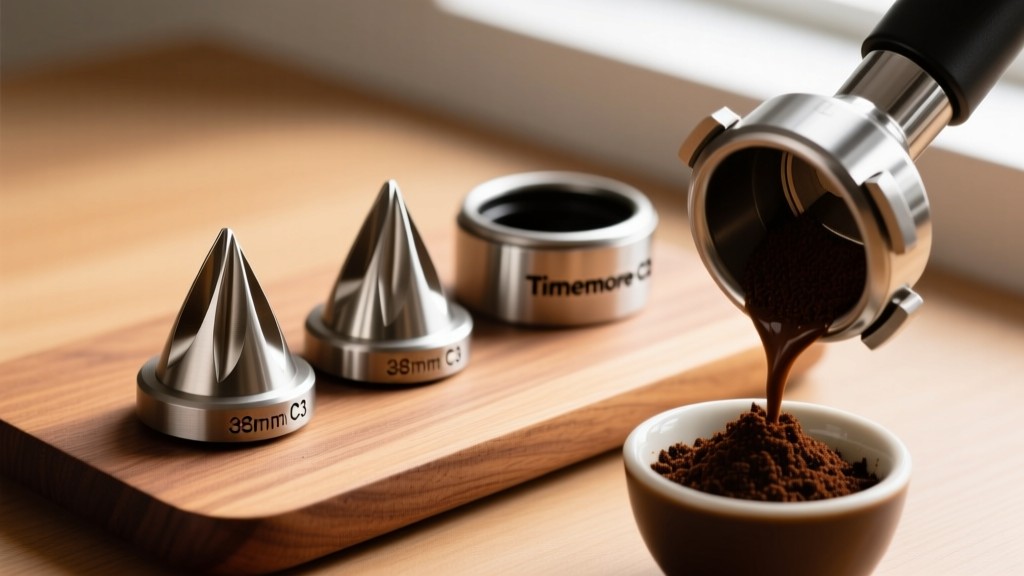
Timemore C3 Manual Coffee Grinder
Blade grinders chop beans into uneven boulders and dust, leading to simultaneous under-extraction (sour) and over-extraction (bitter). The Timemore C3 (~$69, often on sale under $50) is an entry-level conical burr grinder that punches vastly above its weight class. It features 38mm stainless steel burrs machined on a 5-axis CNC, ensuring a uniform particle distribution. The adjustment dial uses a click system: 12-15 clicks for espresso, 22-25 clicks for AeroPress, and 25-30 clicks for pour-over. The all-metal body and dual-bearing shaft eliminate the wobble that plagues cheap plastic grinders, preserving the delicate floral notes of single-origin beans.
HyperChiller Beverage Chiller
Pouring hot coffee over ice instantly dilutes the brew and mutes the flavor compounds. The HyperChiller (~$29) utilizes a dual-chamber thermodynamic design. You fill the inner and outer chambers with water and freeze it solid. When you pour 8oz of freshly brewed hot coffee into the center chamber and swirl it for 60 seconds, the stainless steel walls transfer the heat into the frozen core, dropping the coffee's temperature by up to 130°F without a single drop of meltwater dilution. It is an essential, low-cost gadget for the iced coffee loyalist.
Sourcing & Freshness: The Unsung Heroes of the Gift
Hardware is only half the equation. The National Coffee Association emphasizes that water quality and bean freshness dictate the ceiling of any extraction. If you are pairing a gadget with a consumable, avoid supermarket beans with opaque "best by" dates. Instead, source from specialty roasters that print the exact roast date on the bag. Coffee peaks in flavor between 7 and 21 days post-roast as carbon dioxide off-gasses.
"The extraction of tea polyphenols and catechins is highly temperature-dependent. Using boiling water on delicate green or white teas will scorch the leaves, releasing excessive tannins and resulting in an astringent, bitter cup."
— Harvard Health Publishing, on the biochemical impact of brewing temperatures.
Frequently Asked Questions (FAQ)
Do manual grinders really outperform electric blade grinders?
Yes, unequivocally. Blade grinders use a spinning propeller that shatters beans randomly, creating a wide particle size distribution. Burr grinders (manual or electric) crush beans between two abrasive surfaces set at a specific distance, ensuring every particle is roughly the same size. Uniformity is the single most critical factor in preventing bitter or sour coffee.
What is the ideal water temperature for different teas?
If gifting a variable-temperature kettle like the Fellow Stagg, include this cheat sheet:
- White Tea: 160°F - 170°F (Prevents scorching delicate buds)
- Green Tea: 175°F - 180°F (Avoids bitter tannin extraction)
- Oolong Tea: 190°F - 200°F (Opens tightly rolled leaves)
- Black / Herbal Tea: 208°F - 212°F (Full rolling boil required for robust extraction)
Is the Wacaco Picopresso difficult to clean in the wild?
It requires more effort than a pod machine. After pulling a shot, the user must unscrew the portafilter, knock out the 18g coffee puck, and rinse the basket and shower screen. It comes with a protective cap that doubles as a rinsing cup, but access to clean water is mandatory to prevent rancid coffee oils from building up in the 52mm basket.
Written by
Priya SharmaPriya Sharma holds a Ph.D. in Acoustical Engineering from the University of Southampton and a B.Tech in Electronics from IIT Delhi. She has spent 9 years as a consumer electronics journalist, with deep specialization in audio equipment, camera systems, and assistive technology. Priya is an active member of the Audio Engineering Society (AES) and has co-authored papers on spatial audio perception published in the Journal of the Acoustical Society of America. Her reviews of headphones, portable DACs, and studio monitors include objective measurements using Audio Precision analyzers alongside subjective listening tests. She also serves on the advisory board of the Global Accessibility Reporting Initiative (GARI), evaluating mobile devices for users with visual and hearing impairments.