Latest Gadgets for Men: The Ultimate 2026 Buyer's Guide
Discover the latest gadgets for men in our 2026 buyer's guide. We review top EDC tools, smart desk gear, and adventure tech with expert insights.

The Evolution of Men's Utility Tech in 2026
The market for the latest gadgets for men has fundamentally shifted from single-purpose novelties to hyper-integrated, high-utility ecosystems. In 2026, the defining characteristics of top-tier men's gear are aerospace-grade material science, miniaturized power delivery, and seamless cross-device compatibility. Whether you are optimizing your everyday carry (EDC), building a tactile command center for your desk, or preparing for off-grid adventures, the gadgets you choose must deliver measurable performance gains over their predecessors.
This comprehensive buyer's guide cuts through the marketing noise. We evaluate exact specifications, real-world failure modes, and precise price-to-performance ratios across four critical categories: EDC, Desktop Command, Off-Grid Adventure, and Wearable Health.
Everyday Carry (EDC): The Titanium & OLED Renaissance
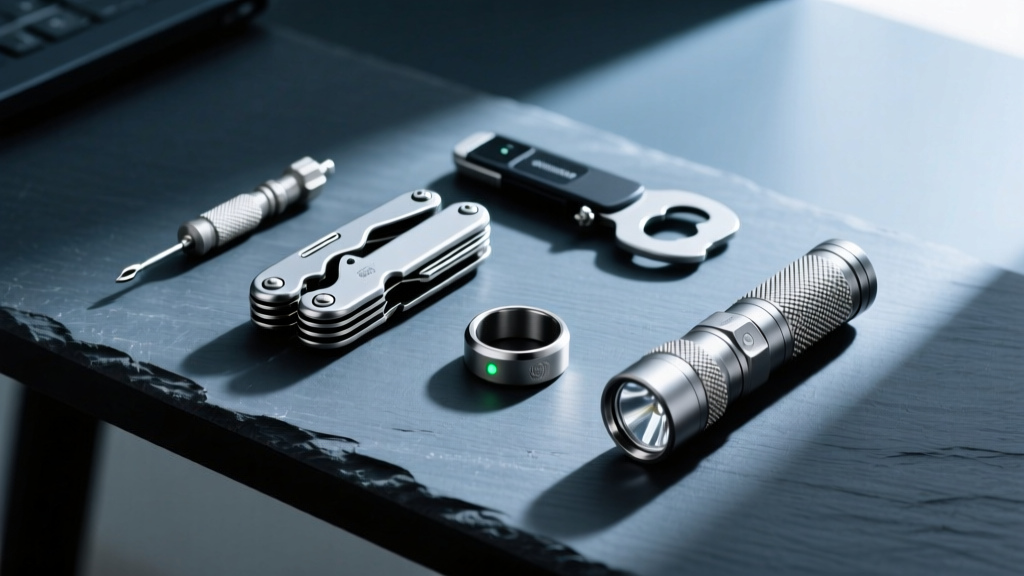
Modern EDC is no longer just about carrying a pocket knife; it is about maximizing capability per cubic inch while minimizing weight. The current gold standard relies on Grade 5 titanium and high-efficiency emitters.
Spotlight: Nitecore EDC27 & Leatherman Charge+ TTi
The Nitecore EDC27 redefined the ultra-thin flashlight category. Delivering a staggering 3,000 lumens from a chassis just 1.97 inches thick, it utilizes an integrated OLED display to show exact remaining runtime and lumen output. Priced around $55, its dual-core USB-C rechargeable battery eliminates the need to carry spare CR123A cells.
For cutting and mechanical tasks, the Leatherman Charge+ TTi remains the undisputed flagship. The S30V stainless steel main blade holds an edge 40% longer than standard 420HC steel, while the titanium handle scales reduce the overall weight to 8.2 ounces. According to extensive durability testing by Wirecutter's multi-tool experts, the Charge+ TTi's wire cutters and replaceable shear pins make it the only EDC tool that survives heavy-gauge copper wire stripping without catastrophic joint failure.

EDC Illumination Comparison Matrix
| Model | Max Lumens | Battery / Charging | Weight | Street Price |
|---|---|---|---|---|
| Nitecore EDC27 | 3,000 | Integrated Li-ion / USB-C | 3.35 oz | $55 |
| Olight Warrior Mini 3 | 1,750 | Custom 18650 / Magnetic | 4.23 oz | $75 |
| Streamlight MacroStream USB | 1,250 | Integrated Li-ion / USB-C | 4.60 oz | $80 |
| Wurkkos TS11 | 4,500 | 1x 18650 / USB-C | 3.70 oz | $45 |
Desktop Command Centers: Tactile Feedback & Macro Control
As remote work and digital creation become permanent fixtures, the latest gadgets for men in the workspace category prioritize tactile feedback and programmable automation. Touchscreens are out; physical, haptic-enabled interfaces are in.
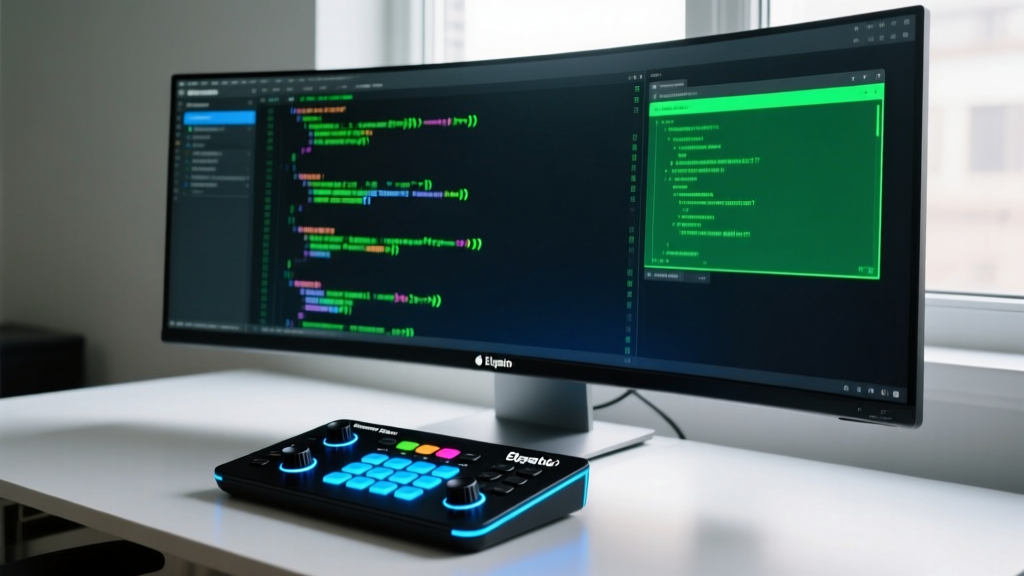
Elgato Stream Deck+ (2026 Edition)
The Elgato Stream Deck+ ($199) is not just for Twitch streamers; it is a high-end macro pad for developers, video editors, and audio engineers. It features eight customizable LCD keys and four motorized rotary dials with haptic feedback.
Real-World Application: For Adobe Premiere Pro users, the dials can be mapped to jog through timelines or adjust color grading wheels with physical resistance. For programmers, the keys can trigger complex Git commit sequences or Docker container deployments. The physical resistance of the dials provides the muscle memory that glass touchscreens completely lack.
Many premium desk gadgets and EDC lights sit on wireless charging pads or remain plugged in at 100% capacity, degrading battery health. If your gadget lacks a built-in 'battery conservation mode' (which caps charging at 80%), use a smart plug with an automation rule to cut power once the device hits 85%, extending the battery's total lifecycle by up to 300 charge cycles.
Off-Grid & Adventure Tech: Satellite & Solar Integration
When cellular networks fail, survival and communication rely on dedicated satellite architecture and decentralized power. The 2026 adventure tech landscape is defined by the miniaturization of Iridium satellite transceivers and LiFePO4 battery chemistry.
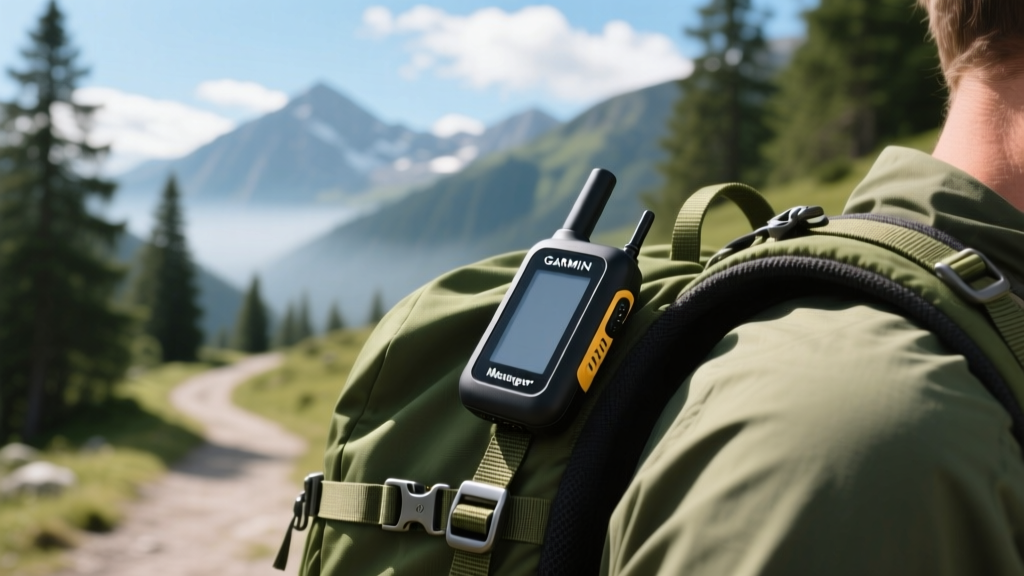
Garmin inReach Messenger & Jackery Explorer 300 Plus
The Garmin inReach Messenger ($299) bridges the gap between your smartphone and the Iridium satellite network. Unlike older, bulkier models, the Messenger acts as a Bluetooth bridge, allowing you to type two-way text messages on your phone's full keyboard while the device handles the satellite uplink. Its 1,100 mAh battery delivers up to 28 days of battery life in 10-minute tracking mode. As noted in Garmin's official satellite communicator specifications, the device is IPX7 water-rated and drop-tested to MIL-STD-810 thermal and shock standards.
For power, the Jackery Explorer 300 Plus utilizes LiFePO4 (Lithium Iron Phosphate) chemistry. While slightly heavier than standard NMC lithium-ion batteries, LiFePO4 guarantees 3,000+ charge cycles to 80% capacity, making it a decade-long investment for overlanding and basecamp setups.
Adventure Gear Decision Framework
- If you are a solo backcountry hiker: Prioritize the Garmin inReach Mini 2 (3.5 oz) over the Messenger to save weight, sacrificing the phone-keyboard interface for ultralight efficiency.
- If you are an overlander / car camper: Skip the 300W portable stations and invest in the Jackery Explorer 1000 v2. The 1070Wh capacity is required to run portable 12V compressor fridges without draining overnight.
- If you are a marine / water sports enthusiast: Ensure your satellite communicator is paired with a fixed-mount VHF radio; satellite devices have high latency and are not suitable for immediate, life-threatening maritime distress calls where VHF Channel 16 is monitored locally.
Wearable Health: The Smart Ring Dominance
Wrist fatigue is real. The latest gadgets for men in the health sector have migrated from bulky smartwatches to low-profile smart rings, prioritizing passive biometric tracking over active screen notifications.
Oura Ring 4 (Titanium vs. Stealth)
The Oura Ring 4 ($349) represents a massive leap in sensor density. It features 18 signal pathways (up from 8 in Generation 3), reducing signal dropout by 120% during high-movement sleep phases.
Material Selection Guide:
Choose the Horizon Titanium model if you work with your hands or lift weights; titanium resists micro-scratches from gym knurling and tools far better than the PVD-coated Stealth model. The Stealth model's black coating will eventually wear off at the contact points if subjected to daily manual labor or heavy barbell lifting. The Oura's sleep staging algorithms, validated against polysomnography in Oura's published clinical science reviews, remain the most accurate consumer-grade sleep tracker on the market, specifically excelling in REM and Deep Sleep phase detection.
The 2026 Gadget Buying Checklist
Before purchasing any high-ticket tech toy or utility tool, run it through this four-point verification process to avoid buyer's remorse:
- Proprietary vs. Universal Ecosystems: Does the device use standard USB-C Power Delivery (PD) and replaceable 18650/21700 cells? Avoid gadgets with proprietary charging cradles or custom-shaped batteries that will become e-waste in three years.
- Material Honesty: Look for specific alloy designations. "Aerospace aluminum" is a marketing term; "6061-T6 Aluminum" is a verifiable metallurgical standard. "Surgical steel" is vague; "S30V or MagnaCut" indicates premium edge retention.
- Repairability Index: Can the battery be replaced without destroying the waterproof seal? Brands like Nitecore and Framework score high here; sealed, glued units score zero.
- Subscription Traps: Calculate the 3-year Total Cost of Ownership (TCO). A $299 gadget with a $6/month mandatory cloud subscription actually costs $515 over three years. Factor this into your budget.
Frequently Asked Questions (FAQ)
What is the most practical everyday carry gadget for 2026?
For pure utility, a high-quality multi-tool like the Leatherman Charge+ TTi combined with a USB-C rechargeable flashlight like the Nitecore EDC27 offers the highest daily ROI. They solve 95% of minor mechanical and illumination problems encountered in urban and suburban environments.
Are smart rings better than smartwatches for men?
For sleep tracking and passive recovery monitoring, smart rings like the Oura Ring 4 are superior due to their comfort and lack of screen-based sleep disruption. However, if you require real-time GPS mapping, active workout heart-rate broadcasting to gym equipment, or on-wrist notifications, a smartwatch like the Garmin Fenix 8 remains the necessary choice.
How do I maintain the battery health of my EDC flashlights?
If your EDC light uses removable 18650 or 21700 lithium-ion cells, remove them from the flashlight if you plan to store the light for more than a month. Store the batteries in a fireproof LiPo bag at roughly 50% charge (around 3.7V) in a cool, dry place. Leaving a battery inside a high-drain flashlight can lead to parasitic drain, over-discharging the cell below 2.5V and permanently damaging its chemistry.
Written by
Nina PetrovaNina Petrova holds a Master's degree in Child Development from the Erikson Institute and a B.S. in Nursing from the University of Illinois at Chicago. She worked as a pediatric nurse for 6 years before transitioning to family technology consulting, bringing clinical rigor to her evaluations of kid-friendly gadgets, educational toys, and parental control software. Nina has reviewed over 400 children's tech products, testing each for safety compliance (CPSC and ASTM standards), developmental appropriateness across age groups, screen-time impact, and data privacy practices. She serves on the Children's Technology Review advisory board and has testified before the FTC on children's data protection in connected toys. Her reviews are trusted by parents and educators alike for their evidence-based approach to balancing technology benefits with child safety.