Must-Have Boat Gadgets: Best Marine Drones & Aerial Gear for 2026
Discover the must-have boat gadgets for 2026, featuring waterproof marine drones, bait-drop systems, and anti-corrosion accessories for serious boaters.
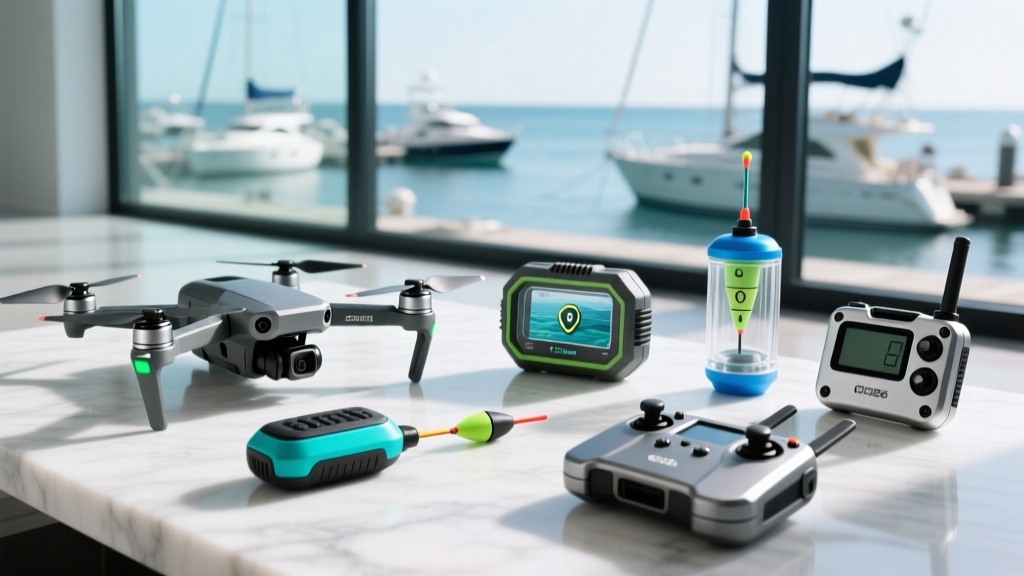
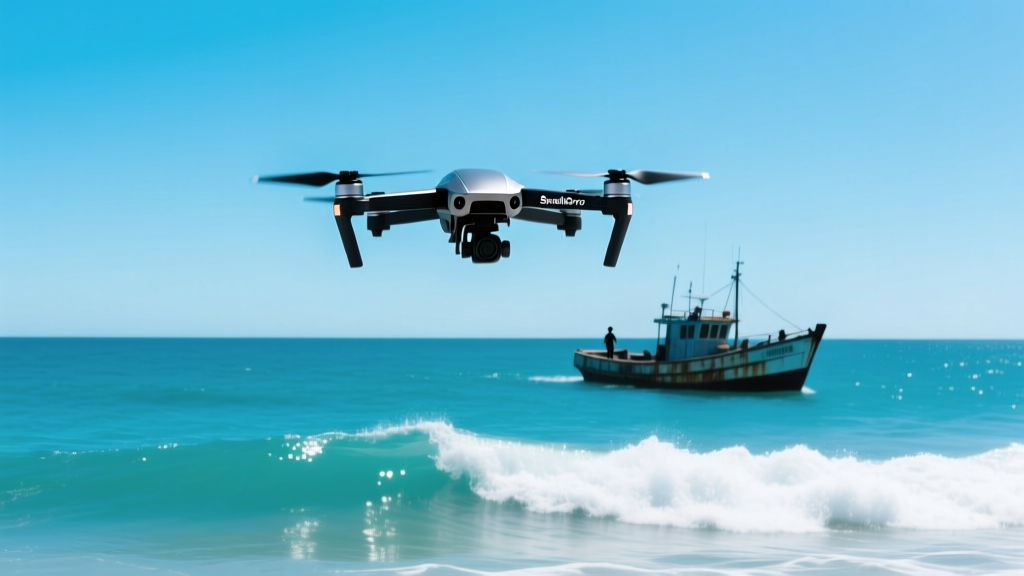
When curating a list of must-have boat gadgets, most boaters immediately think of sonar arrays, electric windlasses, or advanced chartplotters. However, the most transformative piece of marine technology you can add to your vessel in 2026 is a specialized drone. Whether you are scouting baitfish schools beyond the horizon, inspecting a submerged hull for blistering, or dropping a flotation device in an emergency, aerial gadgets solve critical on-water problems that traditional marine electronics simply cannot address.
The marine environment is uniquely hostile to consumer electronics. Salt mist, high-velocity crosswinds, and magnetic interference from steel hulls will destroy or disable a standard camera drone in minutes. This guide cuts through the marketing fluff to provide a problem-solving framework for selecting, outfitting, and operating marine-grade drones and aerial accessories on your boat.
The Hostile Marine Environment: Why Standard Drones Fail
Before investing in aerial gear, it is crucial to understand the specific failure modes that occur when flying over saltwater. Standard consumer drones are not designed for the maritime operational envelope.
- Galvanic Corrosion: Salt aerosol infiltrates brushless motor stators and ESC (Electronic Speed Controller) solder joints, causing micro-shorts and mid-flight motor desyncs.
- Visual Positioning System (VPS) Confusion: Downward-facing optical and infrared sensors struggle to lock onto the moving, reflective, and textureless surface of open water, leading to altitude drift or sudden plunges.
- Magnetic Interference: The steel hull, magnetic steering compasses, and high-current wiring of a boat create localized magnetic anomalies that cause severe compass errors, resulting in the dreaded "toilet bowl" flyaway effect.
To combat these issues, you must select hardware specifically engineered for ingress protection (IP) ratings and high-wind resistance, paired with specialized marine accessories.
Waterproof Workhorses: Hull Inspection & Rescue
If your primary use case involves flying close to the water, landing on the surface, or operating in heavy sea spray, a fully waterproof drone is non-negotiable. The undisputed leader in this category is the SwellPro SplashDrone 4 (retailing around $2,199).
Unlike standard drones that will short-circuit upon water contact, the SplashDrone 4 boasts an IP67 waterproof rating. According to SwellPro SplashDrone 4 official specifications, the aircraft can land on water, float indefinitely, and even use its proprietary "Auto-Invert" feature to flip itself upright if a wave capsizes it.
Practical Applications for the SplashDrone 4
- Hull Inspection: Fly down to the waterline to inspect the boot stripe, check for hull blisters, or clear a fouled propeller without deploying a diver or hauling the boat out.
- Emergency Payload Drop: Equipped with a 4kg payload release module, it can drop a self-inflating life ring to a person in the water up to 1.5 miles away.
- Mooring Line Threading: Use the payload drop to carry a lightweight messenger line over a distant piling or dock cleat when wind makes maneuvering the boat dangerous.
The Angler's Advantage: Bait-Dropping & Scouting
For offshore and surf anglers, the ability to drop live bait precisely beyond the break or scout for surface-feeding pelagics is a massive advantage. While waterproof drones are great, they often lack the optical zoom and wind resistance required for deep offshore scouting.
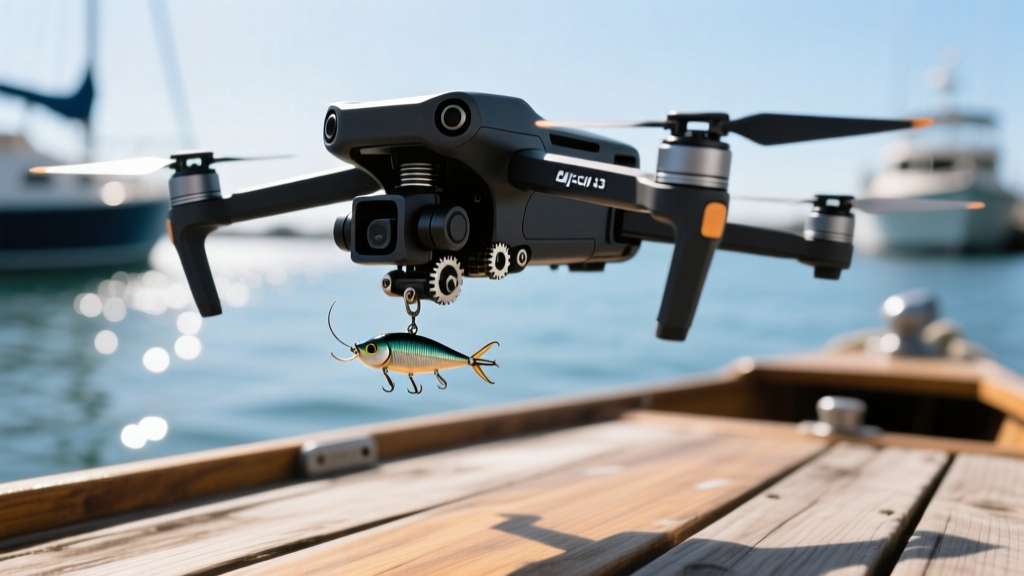
The optimal problem-solving setup for 2026 is pairing the DJI Air 3 ($1,099) with a third-party payload drop system, such as the FlyWin mechanical release ($149). The DJI Air 3 features dual cameras (including a 3x medium telephoto lens perfect for spotting baitballs from above) and Level 6 wind resistance (up to 12 m/s), which is critical when operating 5 miles offshore. You can review the DJI Air 3 technical overview for its full aerodynamic profile.
Payload vs. Flight Time: The Offshore Matrix
Adding a payload drop mechanism and bait adds weight and aerodynamic drag. Here is what you can realistically expect from the DJI Air 3 when launching from a moving center console:
| Configuration | Max Wind Resistance | Estimated Flight Time | Safe Offshore Range |
|---|---|---|---|
| Stock DJI Air 3 (No Payload) | 12 m/s (Level 6) | ~42 Minutes | 4.5 Miles |
| + FlyWin Drop System (Empty) | 11 m/s | ~38 Minutes | 4.0 Miles |
| + Drop System + 300g Bait/Sinker | 9 m/s (Level 5) | ~28 Minutes | 2.5 Miles |
Pro Tip: Never drop heavy pyramid sinkers directly from the drone. The sudden release of weight causes the drone to violently surge upward, potentially triggering obstacle avoidance brakes or snapping a propeller. Always use a breakaway line or a specialized sliding drop-loop rig.
Mission-Critical Marine Accessories
The drone itself is only half the equation. To protect your investment and ensure operational readiness on the water, these accessories are mandatory additions to your marine gadget arsenal:
1. Anti-Corrosion Treatment (Corrosion Block or Boeshield T-9)
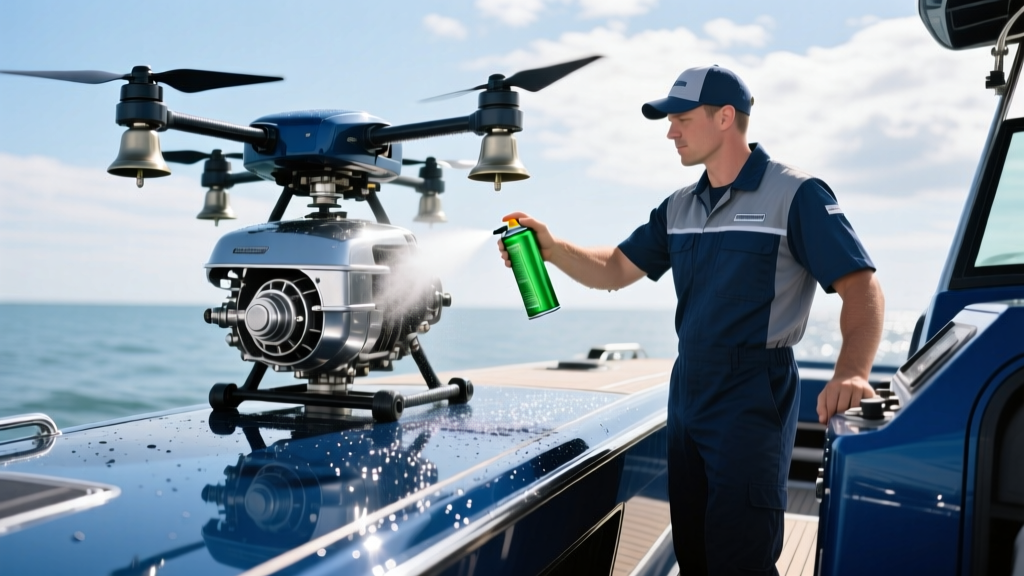
Even if your drone is not fully waterproof, salt mist will penetrate the motor bells. After every marine flight, use compressed air to blow out the motors, then apply a light mist of a marine-grade anti-corrosion spray like Corrosion Block directly into the motor stators. This displaces moisture and leaves a protective film that prevents galvanic corrosion on the copper windings.
2. Pelican 1650 Waterproof Hard Case
Storing a drone in a soft fabric bag on a boat is a recipe for disaster. A rogue wave or a leaking cooler will destroy the electronics. The Pelican 1650 ($280) provides an airtight, crushproof environment. Crucially, it features an automatic pressure equalization valve, which prevents the case from vacuum-sealing shut when you change altitudes or experience rapid barometric pressure drops on the water.
3. PolarPro Marine ND/PL Filter Set
Water glare destroys aerial footage and can blind the drone's optical obstacle avoidance sensors. A high-quality Circular Polarizer (CPL) or ND/PL (Neutral Density/Polarizer) filter cuts through the surface glare, allowing you to see beneath the water to spot reefs, wrecks, and gamefish.
Vessel-to-Drone Decision Matrix
Not every boat requires a $2,000 waterproof drone. Use this framework to match your vessel type and primary use-case to the correct hardware.
| Vessel Type | Primary Use Case | Recommended Drone | Estimated Budget |
|---|---|---|---|
| Kayak / SUP | Selfie tracking, shallow water scouting | HoverAir X1 Pro | $499 |
| Bass Boat / Skiff | Cove scouting, structure mapping | DJI Mini 4 Pro | $959 |
| Center Console (Offshore) | Bait dropping, pelagic scouting | DJI Air 3 + FlyWin Drop | $1,350 |
| Motor Yacht / Cruiser | Hull inspection, rescue, mooring | SwellPro SplashDrone 4 | $2,199 |
Real-World Edge Cases & Pre-Flight Troubleshooting
Operating drones from a moving vessel introduces edge cases that are rarely covered in standard user manuals. Memorize these troubleshooting protocols before launching from the deck.
The Steel Hull Compass Error
The Problem: You launch from the deck of a steel-hulled trawler or a boat with heavy magnetic steering components. The drone immediately displays a "Compass Error" or begins drifting erratically in circles.
The Fix: Never calibrate your drone's compass on the boat. Calibrate it on the dock, away from large metal structures, before loading the boat. If you must launch from a highly magnetic vessel and the drone refuses to hold a GPS lock, immediately switch the controller to ATTI (Attitude) Mode. This disables the magnetic compass reliance and uses only the barometer and GPS for positioning, requiring you to manually control the drone's yaw and drift.
Depth Perception Over Open Water
The Problem: When descending to land on the boat deck from 50 feet up, the lack of visual texture over the water tricks the human eye and the drone's sensors, leading to hard crashes into the console.
The Fix: Do not rely on the downward vision sensors for auto-landing over water; the reflections will cause the drone to "think" it is higher than it is and slam into the deck. Always disable auto-landing when returning to a boat. Manually fly the drone over the boat, drop to 10 feet, and use the visual feed to gently lower it onto a high-contrast, non-slip landing pad.
FAA Compliance on the Water
Even when operating miles offshore, you are subject to aviation regulations. According to the FAA recreational drone guidelines, any drone weighing over 250 grams (which includes all the models recommended above) must be registered, and the operator must pass the TRUST test. Furthermore, you must maintain Visual Line of Sight (VLOS). When scouting 3 miles offshore, use a high-visibility orange skin on the drone and have a designated visual observer on the boat using marine binoculars to maintain legal compliance and avoid collisions with low-flying coastal patrol aircraft.
By selecting the right marine-grade hardware and adhering to strict operational protocols, a drone transitions from a fragile toy into one of the most powerful, problem-solving must-have boat gadgets on the market.
Written by
Ryan TanakaRyan Tanaka holds a B.S. in Mechanical Engineering from Oregon State University and is a certified AWS Solutions Architect. He has built over 80 custom electronics projects ranging from CNC machines to IoT sensor networks, and has reviewed development boards, 3D printers, soldering equipment, and maker tools for the past 6 years. Ryan is an active contributor to 12 open-source hardware projects on GitHub and teaches monthly workshops at three hackerspaces across the Pacific Northwest. His reviews combine engineering rigor with accessibility — he evaluates products not just on specs but on documentation quality, community support, and learning curve for beginners. He has presented at Maker Faire Bay Area, Open Hardware Summit, and the Adafruit community showcase, and maintains a popular blog documenting his build processes.