2026 Audio Trends: How New Tech Gadgets Elevate Portable Sound
Explore how new tech gadgets are transforming portable audio in 2026. We analyze LE Audio, Auracast, silicon-anode batteries, and flagship speakers.
The Shift from A2DP to LE Audio and Auracast
The portable audio landscape has undergone a fundamental architectural shift. For over a decade, enthusiasts were bottlenecked by the Bluetooth A2DP profile and the SBC codec, which capped bitrates and introduced noticeable latency. In 2026, the proliferation of Bluetooth LE Audio has finally rendered legacy protocols obsolete in the premium tier. The introduction of the LC3 (Low Complexity Communication Codec) provides higher audio quality at 160 kbps than SBC does at 345 kbps, drastically reducing power consumption while expanding dynamic range.
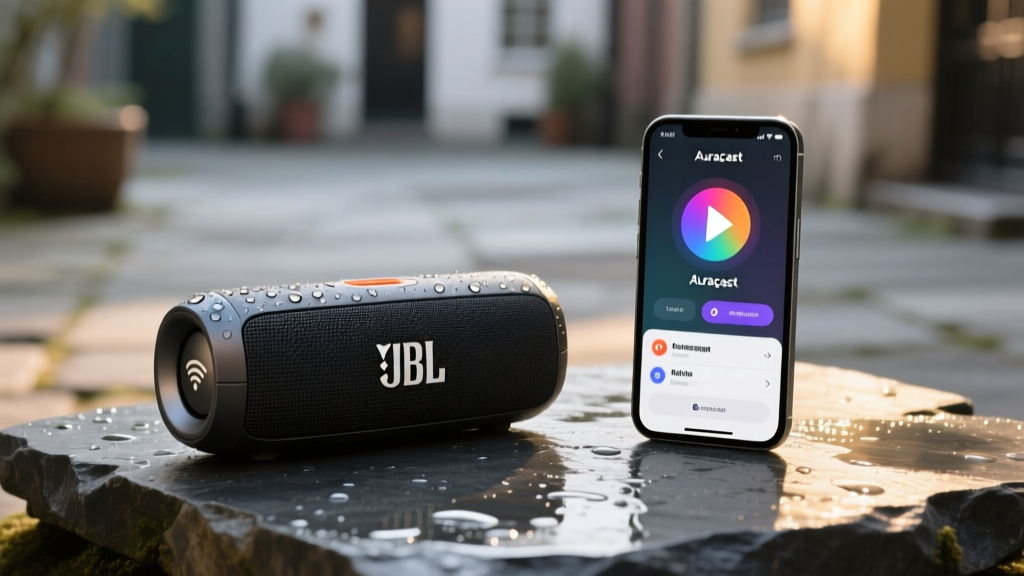
The true revolution isn't just in point-to-point efficiency; it's in Auracast. This broadcast capability allows a single transmitter to push uncompressed audio to an unlimited number of receivers within a 100-meter radius, fundamentally changing how we interact with public and multi-room audio.
Codec Breakdown: LC3 vs. aptX Lossless
While LC3 dominates the ultra-low-power and broadcast segments, Qualcomm's aptX Lossless remains the standard for critical listening on point-to-point connections, scaling up to 1.2 Mbps to deliver bit-perfect CD-quality (16-bit/44.1kHz) audio. Here is how the current 2026 codec ecosystem stacks up for portable audio gadgets:
| Codec | Max Bitrate | Latency | Primary Use Case |
|---|---|---|---|
| LC3 (LE Audio) | 345 kbps | ~20ms | Auracast broadcasting, ultra-long battery life |
| aptX Lossless | 1.2 Mbps | ~80ms | Bit-perfect CD-quality critical listening |
| LDAC | 990 kbps | ~150ms | Hi-Res Audio (24-bit/96kHz) on Android/Sony |
| AAC | 256 kbps | ~150ms | Legacy Apple ecosystem fallback |
Hardware Innovations: Silicon-Anode Batteries and Edge AI
Battery technology in portable speakers has historically been a compromise between capacity and weight. The integration of silicon-anode battery cells in 2026's flagship new tech gadgets has broken this compromise. By replacing the traditional graphite anode with a silicon-carbon composite, manufacturers are achieving a 25% to 30% increase in energy density without increasing the physical volume of the battery cell.
Don't just look for 'waterproof.' An IP67 rating means the device can survive submersion in 1 meter of fresh water for 30 minutes. However, it does not protect against galvanic corrosion from saltwater or chlorinated pool water. If you are taking your speaker to the beach, ensure the USB-C port features a hydrophobic nano-coating and always rinse the chassis with fresh water before charging.
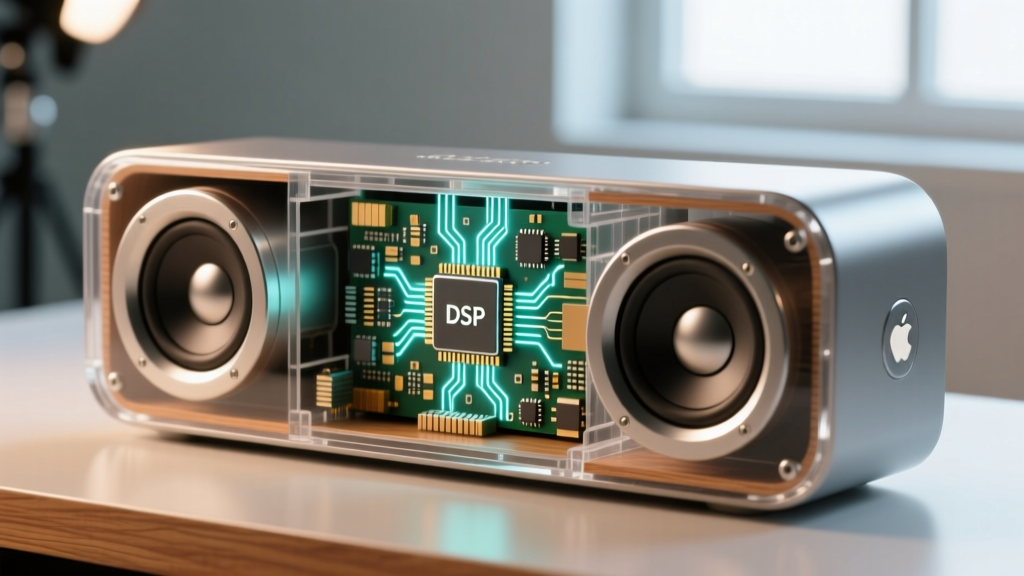
Furthermore, Edge AI processing is now standard in speakers priced above $200. Dedicated neural processing units (NPUs) inside the speaker analyze the acoustic environment in real-time. Instead of relying on static EQ profiles, the DSP (Digital Signal Processor) dynamically adjusts phase alignment and bass roll-off based on whether the speaker is placed in a corner, on a sandy beach, or suspended from a backpack.
2026 Flagship Portable Speakers: Spec & Price Matrix
To understand where the market currently sits, we analyzed three dominant models that define the premium portable segment this year. Pricing reflects current MSRP for the Wi-Fi and LE Audio equipped variants.
| Model | MSRP | Battery / Playtime | Key Tech Feature |
|---|---|---|---|
| Sonos Move 2 | $449 | 48Wh / 24 Hours | Auto-Trueplay room correction, Wi-Fi 6 |
| JBL Charge 5 Wi-Fi | $249 | 27Wh / 22 Hours | Auracast broadcast, AI Sound Boost |
| Bose SoundLink Max | $399 | 32Wh / 20 Hours | Custom transducer array, aptX Lossless |
Spatial Audio and Directional Sound Projection
While Dolby Atmos and head-tracked spatial audio have become ubiquitous in premium earbuds, translating three-dimensional soundscapes to portable Bluetooth speakers presents unique physics challenges. In 2026, manufacturers are solving this through advanced beamforming and acoustic lens technologies.
- Acoustic Lenses: Brands like Bang & Olufsen utilize physical omnidirectional acoustic lenses mounted over upward-firing tweeters to disperse high frequencies evenly across a 360-degree horizontal plane, preventing the 'sweet spot' limitation of traditional forward-firing drivers.
- Psychoacoustic Bass Extension: Because portable enclosures cannot physically move enough air to reproduce sub-40Hz frequencies, DSP algorithms now inject harmonic distortion at 80Hz and 120Hz. This tricks the human brain into perceiving the fundamental sub-bass frequency, a technique that has improved drastically with the latest generation of audio NPUs.
- Directional Privacy Modes: A new feature emerging in high-end portable gadgets is directional sound projection. Using phased array speaker configurations, the device can focus audio into a tight 30-degree beam, allowing you to listen to a podcast on a crowded train without bleeding sound to the passengers next to you.
The Enthusiast's Buying Framework for 2026
Navigating the saturated market of portable audio requires a strict decision framework. Do not buy based on brand loyalty; buy based on your specific acoustic and connectivity requirements.
The most common point of failure in 2026 portable speakers is not blown drivers or degraded batteries; it is USB-C port corrosion. When sweat or saltwater dries inside the port, it creates a conductive salt bridge that shorts the 5V and 20V power delivery pins. Always verify that the speaker's charging port is recessed and features active moisture detection that physically cuts power to the pins when wet.
Step-by-Step Decision Tree
- Assess Your Network Environment: If you primarily listen at home or in locations with stable Wi-Fi, prioritize a speaker with Wi-Fi 6 and native streaming (AirPlay 2, Chromecast, Spotify Connect). Wi-Fi bypasses Bluetooth compression entirely. Recommendation: Sonos Move 2.
- Evaluate Your Broadcast Needs: If you host parties or want to sync audio across multiple outdoor zones without relying on a local Wi-Fi router, you must ensure the device explicitly supports Bluetooth 5.4 Auracast. Look for the official Auracast certification logo on the box, not just generic 'Party Mode' branding. Recommendation: JBL Charge 5 Wi-Fi.
- Determine Your Codec Ecosystem: If you are an Android user with a device supporting Snapdragon Sound, prioritize speakers with aptX Lossless to guarantee bit-perfect transmission. If you are strictly in the Apple ecosystem, aptX is irrelevant; focus on AAC optimization and AirPlay 2 integration. Recommendation: Bose SoundLink Max for Android, Sonos for Apple.
- Check the Power Delivery (PD) Profile: A massive battery is useless if it takes 8 hours to charge. Ensure the speaker supports at least 27W USB-C PD input. This allows a 30Wh battery to reach 80% capacity in under 45 minutes, a critical metric for weekend travel.
The era of basic Bluetooth speakers is over. By focusing on LE Audio capabilities, silicon-anode energy density, and intelligent DSP processing, enthusiasts can now secure portable audio gadgets that rival dedicated indoor hi-fi setups while surviving the rigors of outdoor deployment.
Written by
Lena ChenLena Chen earned her M.S. in Human-Computer Interaction from Carnegie Mellon University and a B.S. in Electrical Engineering from the University of Washington. She has spent the past decade specializing in smart home architecture and IoT ecosystems, helping over 200 homeowners design fully connected living spaces. Lena is a certified Matter protocol consultant and has published peer-reviewed research on voice-first interface design in the ACM Digital Library. Her reviews of smart home products combine deep technical analysis with real-world usability testing, evaluating everything from Zigbee mesh stability to Alexa skill responsiveness. She regularly speaks at CEDIA Expo and CES smart home panels.