Best Spy Gadgets for Adults: 2026 Personal Safety Buyer's Guide
Explore the top spy gadgets for adults in 2026. Our buyer's guide reviews hidden cameras, GPS trackers, and audio recorders for ultimate personal safety.
Redefining 'Spy Gear' for Personal Protection
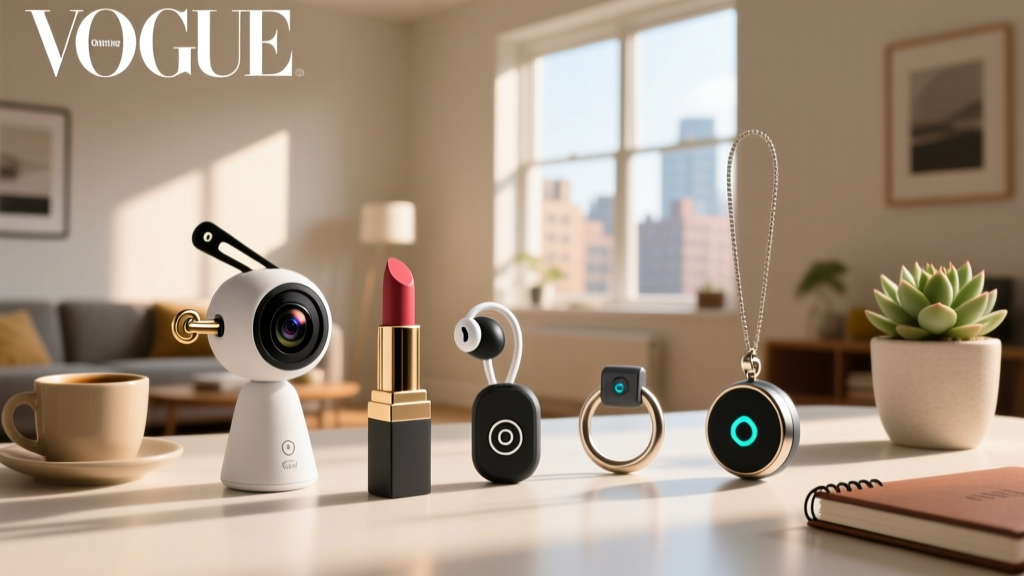
The term 'spy gadgets for adults' often evokes cinematic espionage, but in the context of women's safety, these tools serve a critical, life-preserving function: counter-surveillance, evidence gathering, and route security. When dealing with stalkers, domestic abuse, or workplace harassment, the ability to discreetly document incidents and track assets shifts the power dynamic back to the victim. This 2026 buyer's guide strips away the gimmicks and evaluates covert technology based on battery chemistry, thermal limits, legal admissibility, and real-world concealment.
Covert Audio Recorders: Documenting Verbal Harassment
Audio evidence is frequently the only proof available in cases of gaslighting, verbal threats, or coercive control. However, consumer-grade 'spy pens' often fail due to poor microphone gain and short battery life. For legal-grade documentation, you need dedicated digital voice recorders with Voice Operated Recording (VOR) and high-bitrate compression.
Top Pick: Sony ICD-UX570F ($89.99)
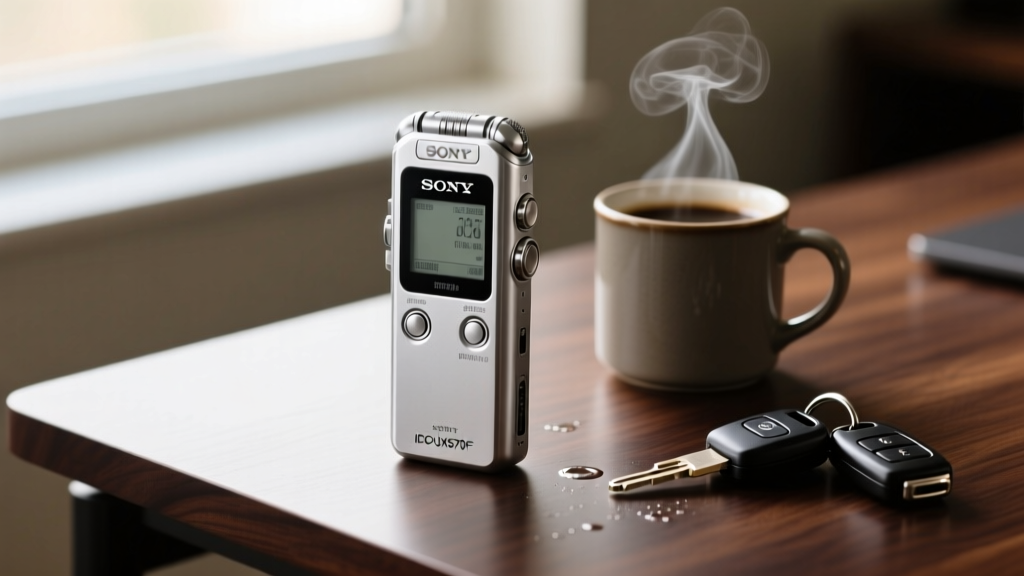
The Sony ICD-UX570F remains the gold standard for covert audio in 2026. Its S-Microphone system captures a frequency response of 20Hz to 20,000Hz, ensuring that whispered threats or muffled conversations through drywall are captured with enough clarity for forensic audio enhancement. Pro Tip: Set the recording format to MP3 at 128kbps rather than LPCM/WAV. This reduces file size by 80% while retaining the vital vocal frequency range (300Hz–3400Hz) required by legal transcription services, extending the 4GB internal memory to hold roughly 59 hours of audio.
Budget Alternative: Olympus WS-883 ($59.99)
Featuring a 90-degree stereo microphone spread, the WS-883 is ideal for capturing multi-party conversations in a room. Its 'Low Cut Filter' is essential for eliminating the hum of HVAC systems or vehicle engines when recording in a car. Battery life reaches 41 hours on a single AAA charge, but it lacks the instant one-touch recording slider found on the Sony model.
Before deploying audio recorders, you must understand local wiretapping laws. Under the Federal Wiretap Act (18 U.S.C. § 2511), federal law requires only one-party consent. However, 11 states—including California, Florida, and Pennsylvania—enforce 'all-party' consent laws. Recording an abuser without their knowledge in an all-party state can result in felony charges and render the evidence inadmissible in family court. Always consult the National Network to End Domestic Violence (NNEDV) Tech Safety resources before deploying audio surveillance.
Micro GPS Trackers: Asset and Route Security
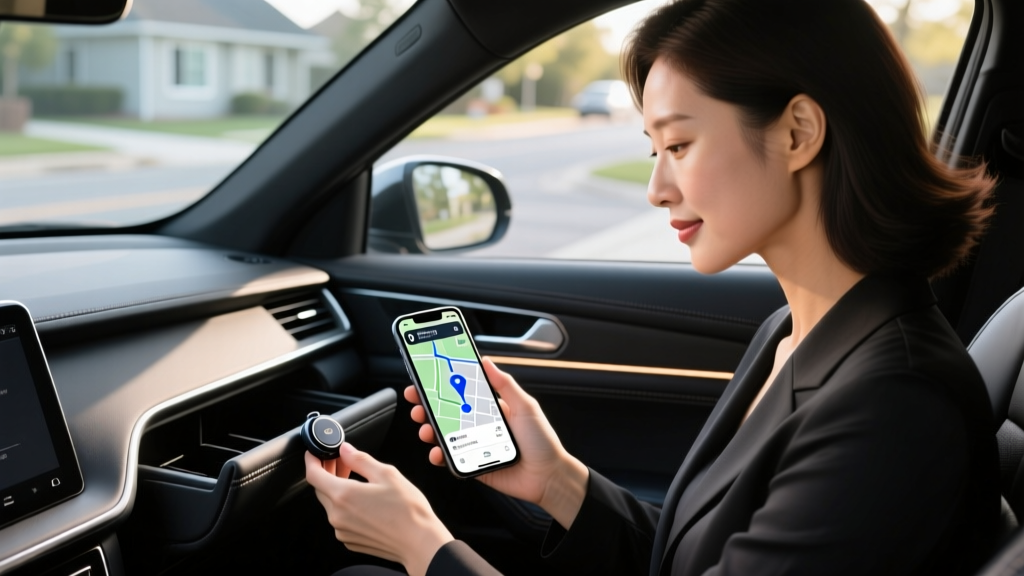
GPS trackers are deployed in personal safety for two distinct reasons: securing your own vehicle against unauthorized movement (e.g., an abuser taking your car) or tracking a shared asset. The market is split between Bluetooth mesh networks and standalone cellular GPS.
Cellular GPS: Tracki 2026 Mini ($119.95 + $13.99/mo)
Unlike Bluetooth tags, the Tracki Mini uses 4G LTE/5G cellular triangulation combined with satellite GPS to provide real-time pings every 15 seconds. It is the only reliable option if the tracked asset will move out of your phone's Bluetooth range. The 2026 hardware revision includes a 3-axis accelerometer that triggers 'movement alerts' even if the device is in sleep mode, reducing battery drain. Expect 5 days of battery life on 1-minute ping intervals, or up to 45 days on 15-minute intervals.
Bluetooth Mesh: Apple AirTag 2nd Gen ($29.00)
The 2nd Generation AirTag (released late 2025) features an upgraded ultra-wideband (UWB) chip for Precision Finding up to 150 feet. It is highly effective for securing luggage, backpacks, or parked cars in dense urban environments. However, Apple's anti-stalking protocols will cause the AirTag to emit an 80-decibel chime if it is separated from its owner's iPhone and moves with an unauthorized iOS device for more than 8 hours. This makes it unsuitable for covertly tracking a third party, but excellent for personal asset recovery.
Wearable Hidden Cameras: Real-Time Documentation
When physical altercations or stalking occur in public spaces, wearable cameras provide undeniable visual evidence. The primary engineering challenge with covert cameras is thermal throttling.

Avoid 4K resolution on sub-2-inch hidden cameras. Processing 8.3 megapixels per frame generates roughly 2.5 watts of heat. Without active cooling or a large aluminum chassis, the image sensor will thermal-throttle and shut down the device in approximately 42 minutes. For reliable 90-minute continuous capture in a concealed body-cam format, strictly choose 1080p at 30fps. The Electronic Frontier Foundation (EFF) notes that lower-resolution footage is frequently preferred by law enforcement anyway, as it requires less bandwidth to upload to evidence portals.
Top Pick: Transcend DrivePro Body 20 ($199.00)
Designed for private security, the DPB20 features a 160-degree wide-angle lens and built-in infrared (IR) LEDs for zero-lux night recording. Its standout feature for personal safety is the 128-bit AES hardware encryption. If the device is snatched or stolen during an incident, the perpetrator cannot access the microSD card without the proprietary decryption key, preserving your evidence chain.
2026 Covert Safety Device Comparison Matrix
| Device Model | Category | Battery Life (Max) | Storage / Capacity | Price (USD) |
|---|---|---|---|---|
| Sony ICD-UX570F | Audio Recorder | 27 Hours (Continuous) | 4GB Internal (~59h MP3) | $89.99 |
| Olympus WS-883 | Audio Recorder | 41 Hours (Continuous) | 4GB Internal (~1590h LP) | $59.99 |
| Tracki 2026 Mini | Cellular GPS | 45 Days (15-min pings) | Cloud (Requires Sub) | $119.95 + Sub |
| Apple AirTag 2 | Bluetooth Mesh | 12 Months (CR2032) | N/A (Location Data) | $29.00 |
| Transcend DPB20 | Wearable Camera | 3.5 Hours (1080p) | microSD (Up to 128GB) | $199.00 |
Step-by-Step: Building a Covert Safety Loadout
Deploying these devices requires a strategic approach to ensure evidence is captured, secured, and legally viable.
- Establish the Baseline: Before an anticipated confrontation, ensure all devices are fully charged and storage is cleared. Test the audio recorder in the specific environment (e.g., inside your car with the engine running) to calibrate the microphone sensitivity.
- Activate Pre-Recording Buffers: If using a wearable camera like the Transcend DPB20, enable the 'Pre-Record' feature. This continuously caches the last 15 seconds of video in RAM. When you press the record button, it saves the 15 seconds prior to the trigger, ensuring you capture the instigation of an incident, not just the aftermath.
- Implement Automated Cloud Backups: Physical devices can be confiscated or destroyed. Configure your audio recorder or body cam to auto-upload files via Wi-Fi to an encrypted, off-site cloud server (e.g., Proton Drive or Tresorit) the moment you enter your home network.
- Maintain Chain of Custody: Never edit, trim, or alter the metadata of recorded files. If you need to highlight a specific timestamp for law enforcement, create a separate text document noting the file name and exact start/end times (e.g., 'Incident_04.wav, 02:14 - 03:45').
Frequently Asked Questions
Can I use a bug sweeper to check if my home or car is tracked?
Yes, but consumer RF (Radio Frequency) detectors under $50 are largely ineffective against modern burst-transmission GPS trackers. Devices like the Tracki only emit an RF signal for a few milliseconds when pinging the cell tower. To reliably find hidden trackers, use a dedicated GPS bug detector with a magnetic field sensor, such as the Jepwco K18+ ($65.00), which detects the rare-earth magnets used to mount trackers to vehicle undercarriages.
Are hidden camera detector apps on smartphones real?
Most smartphone apps claiming to find hidden cameras are pseudoscientific. They attempt to use the phone's magnetometer to find lenses, which is highly inaccurate. The only reliable smartphone method is using the front-facing camera (which lacks an IR filter) in a pitch-black room to spot the infrared glow of night-vision camera LEDs. For thorough sweeps, a dedicated optical lens finder with a pulsing red LED array is required.
Written by
Ryan TanakaRyan Tanaka holds a B.S. in Mechanical Engineering from Oregon State University and is a certified AWS Solutions Architect. He has built over 80 custom electronics projects ranging from CNC machines to IoT sensor networks, and has reviewed development boards, 3D printers, soldering equipment, and maker tools for the past 6 years. Ryan is an active contributor to 12 open-source hardware projects on GitHub and teaches monthly workshops at three hackerspaces across the Pacific Northwest. His reviews combine engineering rigor with accessibility — he evaluates products not just on specs but on documentation quality, community support, and learning curve for beginners. He has presented at Maker Faire Bay Area, Open Hardware Summit, and the Adafruit community showcase, and maintains a popular blog documenting his build processes.