7 Problem-Solving Tool Gadgets for Men for Everyday Fixes
Discover 7 problem-solving tool gadgets for men that tackle everyday fixes. From magnetic drive guides to precision ratchets, upgrade your EDC today.

The Anatomy of an Everyday Failure
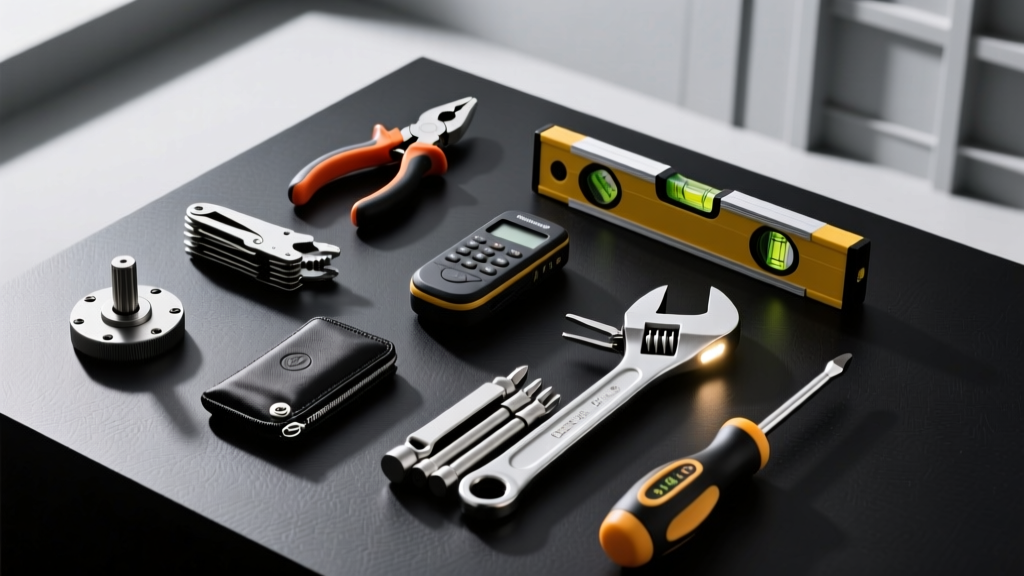
A stripped Torx screw, a dead smart thermostat, or a frayed gear strap—everyday mechanical failures do not wait for a convenient trip to the hardware store. For the hands-on problem solver, a pocket knife and a roll of duct tape are no longer sufficient. Modern everyday carry (EDC) requires specialized, high-leverage tool gadgets for men designed to diagnose, extract, measure, and repair with precision.
Rather than carrying a 40-pound rolling toolbox, the goal is modular problem-solving. This guide breaks down seven highly specific, purpose-built tools that address the most common mechanical and electrical friction points you will encounter in the field, the garage, or the office.
Fastener Extraction & Drive Optimization
Stripped fasteners and cam-out are the primary causes of project delays and damaged workpieces. Standard multi-tools lack the jaw geometry and torque management to handle compromised hardware.
1. Vampliers VT001 6-Inch Combination Pliers
Standard combination pliers feature horizontal serrations that slip when clamping onto a rounded or stripped screw head. The Vampliers VT001 solves this with a patented jaw design featuring both horizontal and vertical serrations at the tip. This cross-hatch pattern bites into deformed Phillips, Torx, and hex heads, allowing you to extract fasteners that would otherwise require drilling out. Forged from high-carbon steel with jaws hardened to HRC 58-64, the VT001 maintains its bite even after repeated use on hardened stainless steel screws.
2. Milwaukee 48-32-2101 Shockwave Magnetic Drive Guide
When using an impact driver in tight spaces, maintaining a perfectly perpendicular angle is nearly impossible, leading to bit cam-out and stripped screw heads. The Milwaukee 48-32-2101 is not just a magnetic bit holder; it is a physical drive guide. The sleeve slides over the fastener head, allowing up to a 10-degree tilt angle while keeping the bit fully seated. Rated to withstand the 1,800 in-lbs of torque generated by modern brushless impact drivers, this $6 accessory prevents hundreds of dollars in damaged material and ruined fasteners.
Electrical Diagnostics & Illumination
Troubleshooting dead circuits or working in low-light environments requires tools that provide immediate, accurate data without risking personal safety.
3. Klein Tools NCVT-2 Dual Range Voltage Tester
False positives are the bane of standard non-contact voltage testers, especially when working near low-voltage data cables (like Cat6 or thermostat wires). The Klein NCVT-2 features a dual-range toggle: a standard 70-1000V AC range for household wiring, and a highly sensitive 12-70V AC range for low-voltage systems. Crucially, it carries a CAT IV 1000V safety rating, meaning it is tested to withstand transient voltage spikes up to 12,000V at the service entrance. Always adhere to OSHA's guidelines on hand and power tools by verifying your tester on a known live source before trusting a 'dead' reading.
4. Nitecore TINI 2 EDC Flashlight
Phone flashlights lack the throw and thermal management required for under-hood or attic inspections. The Nitecore TINI 2 outputs 500 lumens from a footprint smaller than a car key. Unlike cheaper flashlights that use Pulse Width Modulation (PWM) to dim the light—causing invisible flickering that leads to eye strain—the TINI 2 uses a high-efficiency constant current circuit. The integrated OLED screen displays exact battery voltage and remaining runtime, eliminating the guesswork of a dying light mid-repair.
Problem-Solver EDC Matrix
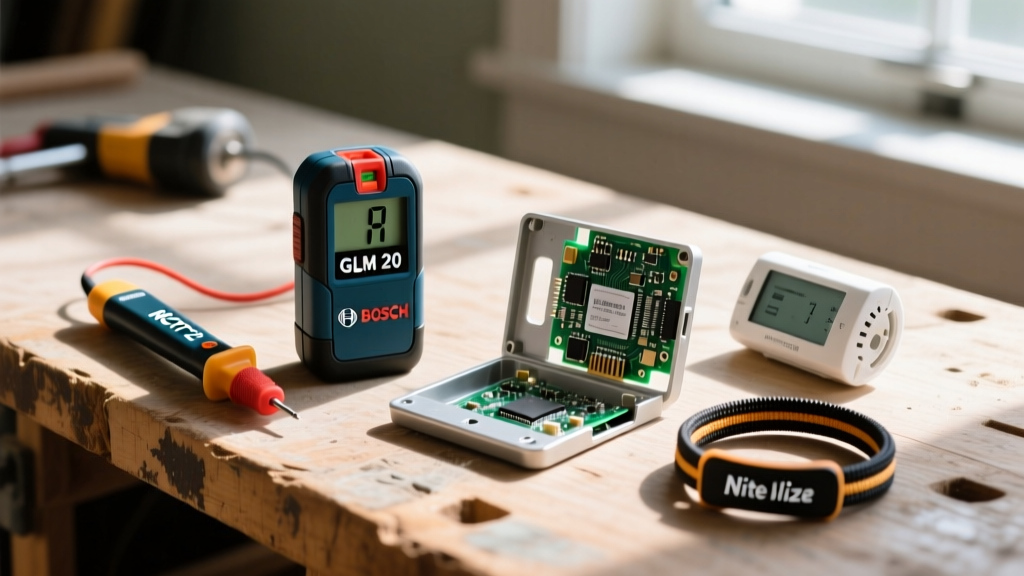
| Tool | Primary Problem Solved | Weight | Approx. Cost | Common Failure Mode Addressed |
|---|---|---|---|---|
| Vampliers VT001 | Stripped screw extraction | 5.6 oz | $28 | Standard pliers slipping on deformed heads |
| Milwaukee 48-32-2101 | Impact driver cam-out | 1.2 oz | $6 | Bit slipping under high torque/angles |
| Klein NCVT-2 | Voltage verification | 1.4 oz | $25 | False positives on low-voltage data lines |
| Nitecore TINI 2 | Targeted illumination | 1.0 oz | $40 | Phone flashlights overheating and lacking throw |
| Bosch GLM 20 | Interior spatial measurement | 3.2 oz | $30 | Tape measure sag and hook slippage |
| Nite Ize Gear Ties | Ad-hoc rigging/bundling | 0.8 oz | $5 (4pk) | Zip-ties requiring cutting and single-use waste |
| Leatherman ARC | Heavy-duty cutting/prying | 8.6 oz | $230 | Standard multi-tool blades chipping or rusting |
Precision Measurement & Ad-Hoc Rigging
Estimating dimensions or using single-use fasteners introduces compounding errors and waste into any project. Precision and reusability are the hallmarks of a professional problem-solver.
5. Bosch GLM 20 Blaze Laser Measure
Metal tape measures suffer from hook slippage, blade sag over 10 feet, and the inability to measure inside corners accurately. The Bosch GLM 20 uses a Class II laser to measure distances up to 65 feet with an accuracy of +/- 1/8 inch. Its IP54 dust and water resistance rating ensures survival in dusty drywall environments. When calibrating or relying on digital measurement tools, understanding baseline accuracy is critical; refer to NIST standards for length measurement to understand how traceable calibration impacts professional tolerances.
6. Nite Ize 12-Inch Gear Ties
Zip-ties are permanent, require a blade to remove, and leave sharp plastic edges. Nite Ize Gear Ties feature a bendable aluminum wire core encased in UV-resistant TPE (thermoplastic elastomer). They are the ultimate ad-hoc rigging solution for securing loose wiring behind a TV mount, bundling extension cords, or temporarily clamping a split hose. The 12-inch size offers the optimal balance of tensile strength and wrapping diameter for EDC.
The Heavy-Duty Anchor: Leatherman ARC
While specialized tools solve specific problems, a multi-tool remains the necessary anchor for general cutting, prying, and gripping. However, standard stainless steel blades (like 420HC) struggle with edge retention and corrosion resistance when exposed to sweat and moisture.
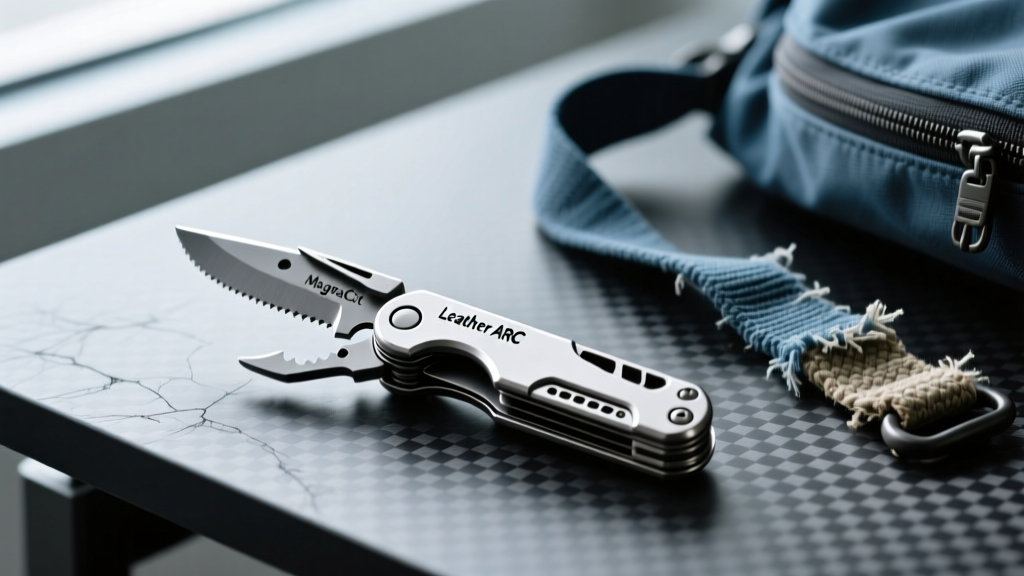
The Leatherman ARC represents a massive leap in metallurgy for EDC gadgets. It is the first Leatherman to feature a blade made from CPM MagnaCut steel. MagnaCut eliminates the traditional compromises of tool steel, offering the high toughness required for prying, the extreme corrosion resistance needed for marine or humid environments, and the edge retention typically reserved for premium pocket knives. Paired with a diamond-coated file and a premium bit kit, the ARC transitions from a simple pocket knife to a comprehensive field-repair station.
Warning: The Weight vs. Utility Trade-off
At 8.6 ounces, the Leatherman ARC is a substantial pocket anchor. If your daily carry involves dress pants or lightweight technical fabrics, the ARC will cause pocket sag and fabric wear. For lightweight environments, drop the ARC and rely on the Vampliers and a dedicated folding knife. Reserve the ARC for heavy canvas work pants, tool belts, or backpack carry.
Building Your Modular Troubleshooting Kit
The most effective EDC strategy is not about carrying every tool, but carrying the right tools for your specific failure environment. A mechanic will prioritize the Vampliers and Milwaukee drive guide, while an IT professional or smart-home installer will lean heavily on the Klein NCVT-2 and Bosch GLM 20.
'A tool is only as good as the diagnostic thought process behind it. Carry instruments that give you data, not just leverage.'
Audit your past three months of minor frustrations. Did you struggle with stripped screws? Dead batteries? Inaccurate cuts? Select the specific problem-solving tool gadgets for men that directly neutralize your most frequent friction points, and build a kit that turns everyday failures into five-minute fixes.
Written by
Ryan TanakaRyan Tanaka holds a B.S. in Mechanical Engineering from Oregon State University and is a certified AWS Solutions Architect. He has built over 80 custom electronics projects ranging from CNC machines to IoT sensor networks, and has reviewed development boards, 3D printers, soldering equipment, and maker tools for the past 6 years. Ryan is an active contributor to 12 open-source hardware projects on GitHub and teaches monthly workshops at three hackerspaces across the Pacific Northwest. His reviews combine engineering rigor with accessibility — he evaluates products not just on specs but on documentation quality, community support, and learning curve for beginners. He has presented at Maker Faire Bay Area, Open Hardware Summit, and the Adafruit community showcase, and maintains a popular blog documenting his build processes.