Must-Have Gadgets If You Love Cool Tech: Pet Guide 2026
Discover the ultimate pet tech buyer's guide. We review must-have gadgets if you love cool tech, from AI cameras to microchip feeders and GPS trackers.
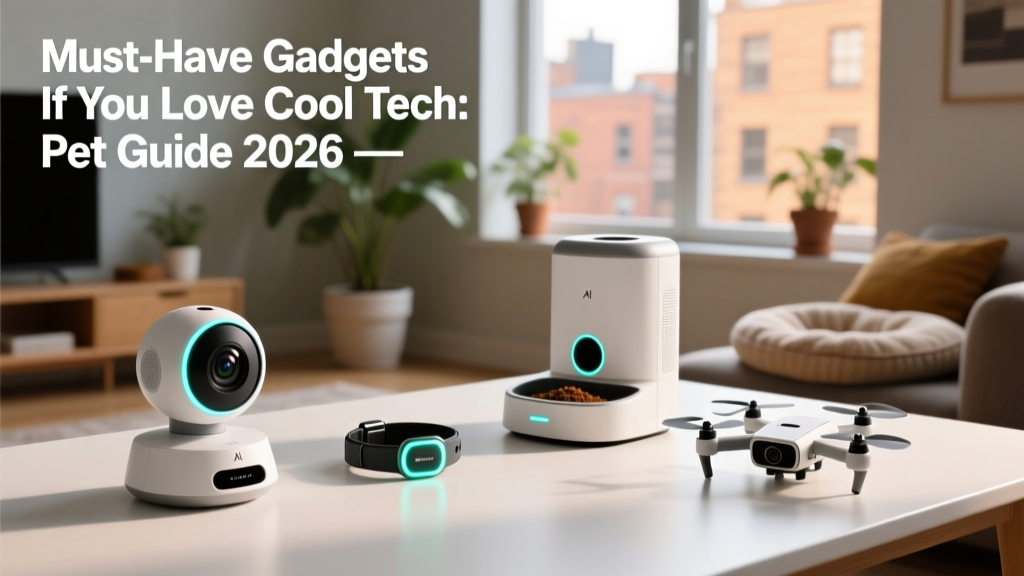
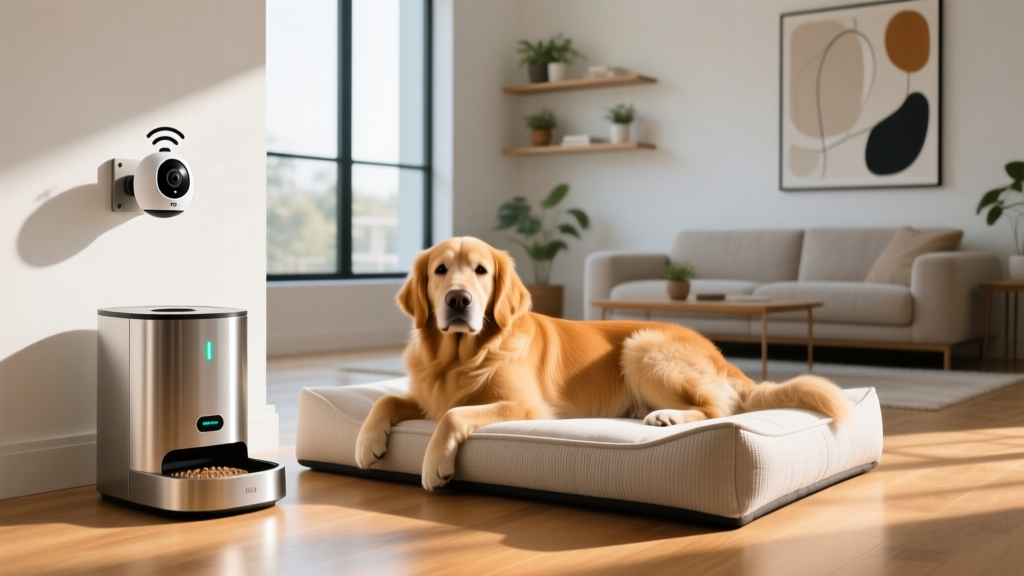
When compiling a list of must-have gadgets if you love cool tech, pet-specific hardware often gets relegated to novelty status. In 2026, however, the veterinary IoT sector has matured into a highly sophisticated ecosystem. Modern pet tech leverages edge-computing AI, LTE-M cellular networks, and localized RFID biometrics to solve genuine behavioral and health challenges. According to the American Pet Products Association (APPA), spending on pet tech and health-focused accessories has grown exponentially, driven by owners who demand the same reliability from their pet gear as they do from their own smart home devices.
This comprehensive buyer's guide cuts through the marketing fluff. We evaluate the hardware specifications, network requirements, and real-world failure modes of the top pet tech categories, providing a concrete framework to help you decide exactly what to buy for your specific animal.
The Decision Matrix: Matching Pet Tech to Animal Profiles
Buying pet tech without considering your animal's specific morphology and behavior leads to expensive failures. A 15-pound terrier has vastly different hardware requirements than a 90-pound mastiff or a 10-pound indoor cat. Use this matrix to identify your primary hardware category.
| Pet Profile | Primary Vulnerability | Recommended Tech Category | Critical Hardware Spec to Verify |
|---|---|---|---|
| Multi-cat household (Indoor) | Resource guarding & obesity | Microchip Smart Feeders | 15-digit ISO RFID compatibility & lid closure speed (<1.5s) |
| Escape-artist Hound (Outdoor) | Perimeter breaches & high-speed roaming | LTE-M GPS Collars | 10-second ping rate & IP68 waterproofing (submersible) |
| Senior Dog (Indoor/Outdoor) | Cognitive decline & mobility issues | AI Vision Cameras & Smart Ramps | Local edge-processing for anomaly detection (no cloud lag) |
| Food-motivated Medium Dog | Binge eating & gastric torsion | Auger-based Smart Feeders | Stainless steel bowl & programmable micro-portions (1/10 cup) |
Precision Nutrition: Smart Feeders & Hydration
The smart feeder market is bifurcated into two distinct mechanical designs: gravity-fed hoppers with auger screws, and microchip-activated enclosed bowls. Understanding the mechanical limitations of each is critical for avoiding malfunctions.
Auger Feeders vs. Microchip Bowls
Auger-based feeders, like the PETLIBRO Granary Dual Smart Feeder, rely on a rotating helical screw to push kibble down a chute. These are ideal for dogs but come with strict physical limitations. The auger mechanism generally requires kibble diameters between 2mm and 12mm. If you feed a raw-coated or freeze-dried kibble that exceeds 12mm, or if the food has high moisture content that causes clumping, the auger will jam, triggering a motor stall and a push-notification failure.
For multi-pet homes, microchip feeders like the SureFeed Microchip Pet Feeder Connect are mandatory. These devices read the pet's implanted ISO microchip (or an RFID collar tag) and only open the transparent polycarbonate lid for the authorized animal.
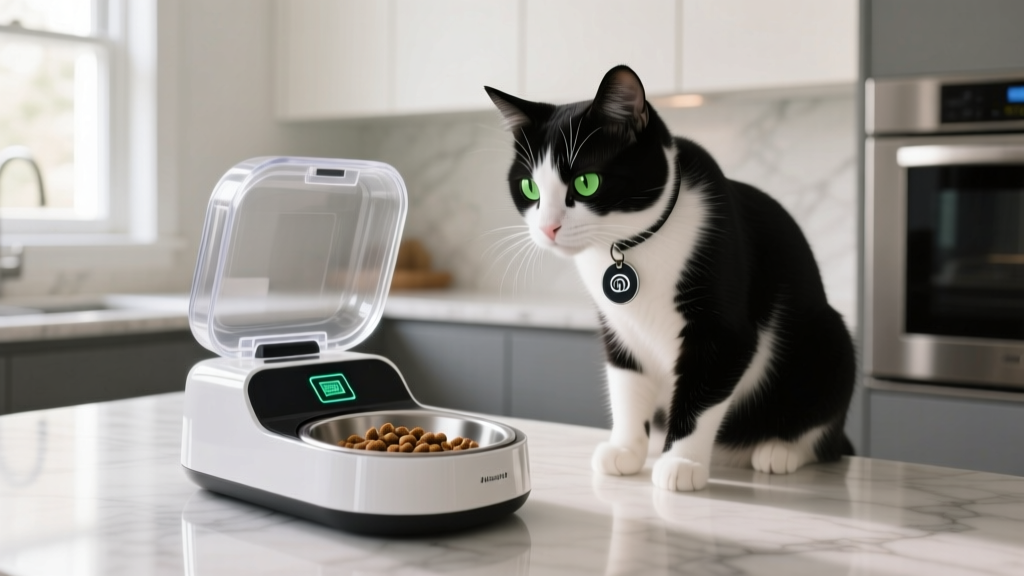
If you have two cats with similar microchip frequencies, cheaper feeders suffer from 'RFID collision,' opening for the wrong cat. Furthermore, pay attention to the lid closure speed. The SureFeed Connect closes in approximately 1.2 seconds. If your unauthorized pet is a fast eater, they can steal food before the lid fully seals. For aggressive resource guarders, look for models with physical rear-guards to prevent tail-swiping.
Location & Vitals: Next-Gen GPS Trackers
Basic Bluetooth trackers (like standard Apple AirTags) rely on crowdsourced mesh networks, making them useless for pets that escape into rural or low-traffic areas. True pet GPS trackers utilize LTE-M (Long Term Evolution for Machines) or NB-IoT cellular bands, which offer superior wall penetration and lower power consumption than standard 4G LTE.
The Fi Series 3 and the Tractive GPS DOG 4 represent the current gold standard, but they operate on fundamentally different power-management philosophies.
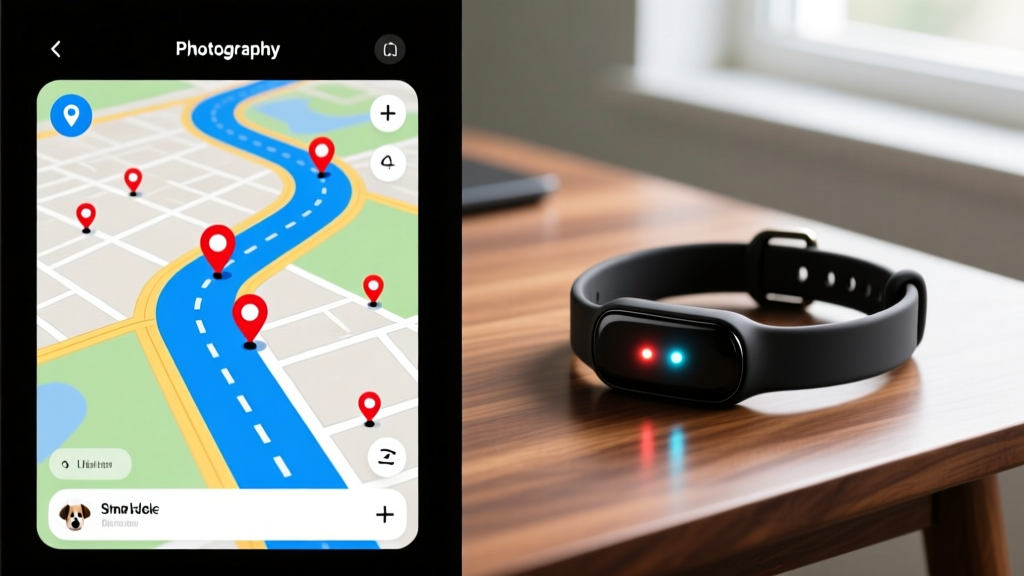
- Fi Series 3: Prioritizes battery life using a proprietary low-power mesh network when at home (via the Fi Base Station), only switching to LTE-M when the dog leaves the Wi-Fi perimeter. Battery life spans 2 to 3 months. However, its 'Lost Dog Mode' pings every 60 seconds, which can result in a lagging map view during high-speed chases.
- Tractive GPS DOG 4: Prioritizes real-time granularity. In Live Tracking mode, it pings the server every 2.5 to 10 seconds. This provides a highly accurate breadcrumb trail for hunting or hiking dogs, but it decimates the battery, requiring recharges every 3 to 5 days.
'The trade-off in GPS pet tracking is strictly bound by physics: higher ping frequencies require more cellular radio wake-ups, which drains the lithium-polymer battery exponentially. Buyers must choose between monthly charging convenience and real-time tactical accuracy.' — Canine Search and Rescue Tech Review, 2025
AI Vision: Behavior-Tracking Pet Cameras
Early pet cameras were essentially repurposed baby monitors with two-way audio. The 2026 generation utilizes localized edge-AI to perform specific behavioral and health analyses without sending continuous video streams to the cloud, addressing both latency and privacy concerns.
The Eufy Security Indoor Cam S350 features a dual-lens system (4K wide-angle + 1080p telephoto) that uses on-device AI to track pet movement. More importantly, it includes specific algorithmic triggers for vomit detection and abnormal inactivity. If a dog remains stationary in a corner for an unusual duration, or if the camera identifies the visual signature of regurgitation, it sends an immediate high-priority alert.
Conversely, the Furbo 360 Dog Camera focuses on interactive enrichment. Its motorized base rotates a full 360 degrees, auto-tracking the dog as it moves around the room, and features an automated treat-tossing mechanism that disperses kibble at varying distances to stimulate foraging behavior.
Camera Integration & The Matter Standard
A major pain point in pet tech has been app fragmentation. As the Connectivity Standards Alliance (CSA) continues to roll out the Matter smart home protocol, 2026 has seen the first wave of pet cameras natively supporting Matter over Thread. This allows your pet camera to integrate directly into Apple Home, Home Assistant, or Samsung SmartThings without relying on proprietary cloud bridges, enabling complex routines like turning on the smart thermostat if the pet camera detects the dog is shivering.
Real-World Troubleshooting & Edge Cases
Even premium hardware fails when deployed incorrectly. Before returning a device, check these common edge cases documented by veterinary technicians and IoT installers:
- The 2.4GHz vs. 5GHz Wi-Fi Trap: 95% of smart pet feeders and cameras operate exclusively on the 2.4GHz Wi-Fi band. This is intentional; 2.4GHz offers vastly superior wall penetration, which is necessary when devices are placed in basements or far corners of a home. If your router uses 'Smart Connect' (merging 2.4 and 5GHz under one SSID), the feeder's low-power Wi-Fi chip will often fail to handshake. Fix: Create a dedicated 2.4GHz IoT SSID on your router.
- GPS Collar Fit & Antenna Blockage: LTE-M antennas require a clear line of sight to cell towers. If a GPS collar is strapped too tightly under a thick winter coat, or if the dog has dense, matted fur around the neck, signal attenuation can cause 'ghost fencing' (false escape alerts). Fix: Ensure the collar is positioned high on the neck, just behind the ears, with the antenna facing upward.
- Auger Motor Burnout from Humidity: In high-humidity environments (above 65% RH), dry kibble absorbs ambient moisture inside the feeder's hopper, becoming sticky. This increases the torque required by the auger motor, eventually stripping the plastic gears. Fix: Place silica gel desiccant packs inside the hopper and replace them every 30 days.
According to the American Veterinary Medical Association (AVMA), integrating consistent monitoring tools can significantly reduce emergency vet visits by catching dietary and behavioral anomalies early. By selecting hardware based on mechanical specs and network protocols rather than marketing claims, you transform your pet's environment into a genuinely responsive, data-driven ecosystem.
Written by
Emma LarssonEmma Larsson holds an M.A. in International Relations from Sciences Po Paris and a B.A. in Communications from Stockholm University. A digital nomad since 2017, she has worked from over 45 countries across six continents, building deep expertise in portable power solutions, travel routers, compact computing, and connectivity gadgets that survive international travel. Emma is a certified member of the Travel Technology Association and has advised three travel gear startups on product-market fit for remote workers. Her reviews evaluate products against real travel scenarios — TSA compliance, voltage compatibility across 200+ countries, durability through 50+ checked bag cycles, and battery life under airplane mode vs. active use. She has been featured in Condé Nast Traveler's "Tech-Savvy Traveler" series and speaks at Remote Work Summit events.