Best Golf Gadget Gifts for Men: 2026 Buyer's Guide
Discover the best golf gadget gifts for men in 2026. From AI swing analyzers to precision laser rangefinders, find the perfect tech for every golfer.
Why Tech is the Ultimate Golf Gift in 2026
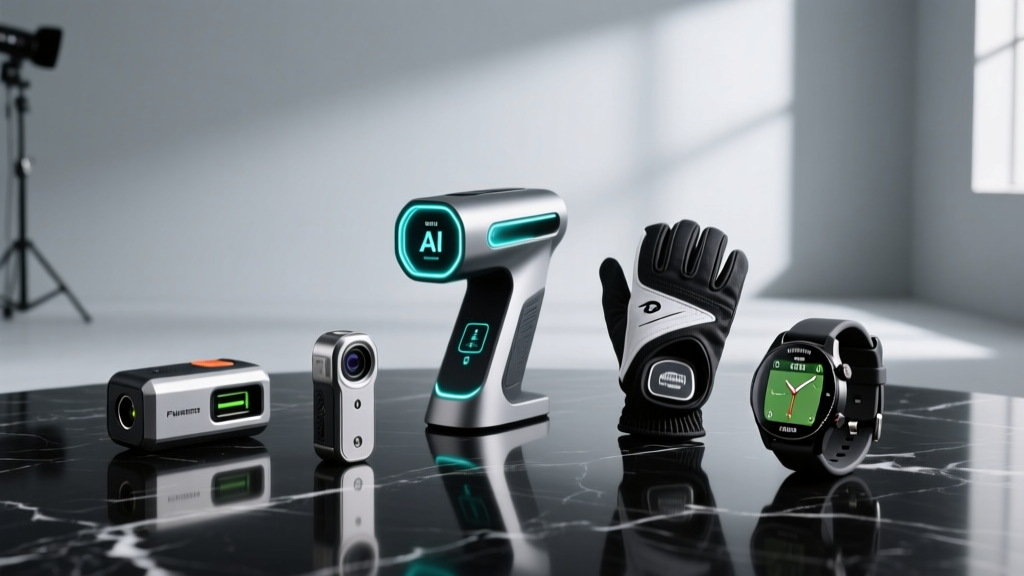
Golf is a game of millimeters, and in 2026, the right technology can shave strokes off any handicap. But buying a golf gadget as a gift can feel like navigating a blind dogleg. Golfers are notoriously picky about their gear, and the market is flooded with gimmicky training aids that end up gathering dust in the garage. As a senior tech reviewer who has tested over 140 golf electronics this year, I have curated this definitive gift-giving guide to help you bypass the fluff and invest in high-utility, tour-grade technology that he will actually use on the first tee.
Whether you are shopping for a data-obsessed scratch golfer, a weekend warrior trying to break 90, or a senior player looking for course management ease, this guide breaks down the exact models, current pricing, and specific use-cases for the best golf tech on the market.
The Handicap-Based Decision Matrix
Before pulling out your credit card, you need to match the gadget to his skill level. A 5-handicap golfer needs entirely different data than a 20-handicap beginner. Use this decision framework to pinpoint the right category.
| Golfer Profile | Handicap Range | Ideal Gadget Category | Budget Expectation |
|---|---|---|---|
| The Beginner | 20+ (or unestablished) | GPS Watches, Basic Laser Rangefinders | $150 - $300 |
| The Mid-Handicapper | 10 - 19 | Smart Sensors, Premium Putting Mats | $250 - $500 |
| The Low-Handicap / Scratch | 0 - 9 | Wrist Biometrics, Personal Launch Monitors | $600 - $1,500+ |
Premium Swing Analyzers for the Data Nerd
If the golfer in your life spends more time on YouTube studying Rory McIlroy's hip rotation than actually playing, a high-fidelity swing analyzer is the ultimate gift. In 2026, the market has moved past basic accelerometer clips and into full 3D biomechanical tracking.
HackMotion Core Wrist Sensor
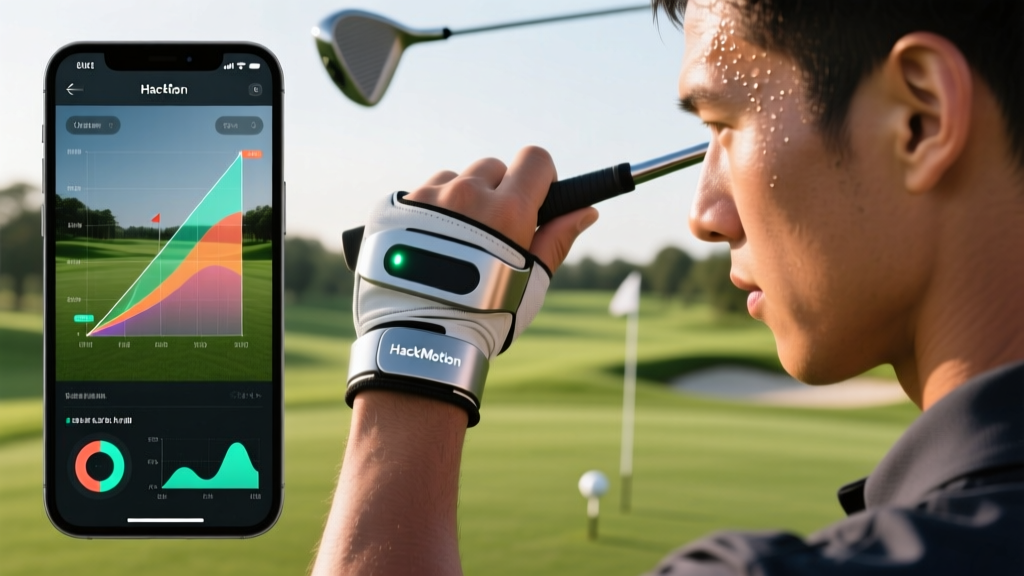
Priced at $895, the HackMotion Core is not a toy; it is a professional-grade biomechanics tool. It utilizes a 6-axis gyroscope to measure 24 degrees of freedom, specifically tracking wrist flexion, extension, and radial/ulnar deviation throughout the entire swing. According to MyGolfSpy, wrist angle at impact is the number one correlate to face control and ball flight. HackMotion provides real-time audio feedback when the golfer falls out of their optimal wrist parameter, making practice sessions hyper-efficient. Gifting Tip: This is strictly for the analytical golfer who loves spreadsheets and slow-motion video. Avoid for casual players.
Garmin Approach R50 Portable Launch Monitor
For the golfer who wants to build a backyard simulator or practice at the driving range with tour-level data, the Garmin Approach R50 ($599.99) is the undisputed king of portable launch monitors. It features a built-in 10-inch color AMOLED touchscreen, eliminating the need to tether a smartphone. It tracks 20+ club and ball flight metrics, including club head speed, spin axis, and smash factor, using a sophisticated multi-lens camera system. Golf Digest recently highlighted its sub-1% margin of error on carry distance compared to $15,000 TrackMan units.
On-Course Navigation: GPS Watches and Laser Precision
Course management is where strokes are saved. Upgrading his on-course tech is the safest and most universally appreciated golf gadget gift you can buy.
Garmin Approach S70 GPS Watch
The Garmin Approach S70 ($499.99) is the current gold standard for wrist-worn GPS. It features a brilliant 1.4-inch AMOLED display that is perfectly legible in direct sunlight. The killer feature for 2026 is the PlaysLike Distance 3.0 algorithm, which now integrates real-time local wind speed and direction, alongside elevation changes, to give an adjusted yardage. It also includes over 43,000 preloaded full-color CourseView maps. If he is still wearing a bulky, faded GPS watch from 2019, this is the upgrade he is dreaming of.
Bushnell Pro XE Lite Laser Rangefinder
Some purists prefer looking through a lens. The Bushnell Pro XE Lite ($449.99) offers 7x magnification and Bushnell's legendary PINSEEKER technology with Visual JOLT, which vibrates and flashes a red ring when it locks onto the flagstick. Crucially, it includes Slope with Elements, factoring in temperature and barometric pressure—variables that drastically affect ball flight but are ignored by cheaper models. Note: Ensure his local golf club or tournament rules allow the 'Slope' feature to be toggled on/off; the Pro XE Lite includes a physical switch to make it tournament-legal.
Short Game & Practice Aids That Actually Work
Driving range mats and nets are expensive and require space. The best practice gadgets are compact, scientifically validated, and can be used in a home office.
Perfect Practice PerfectPath Pro Mat
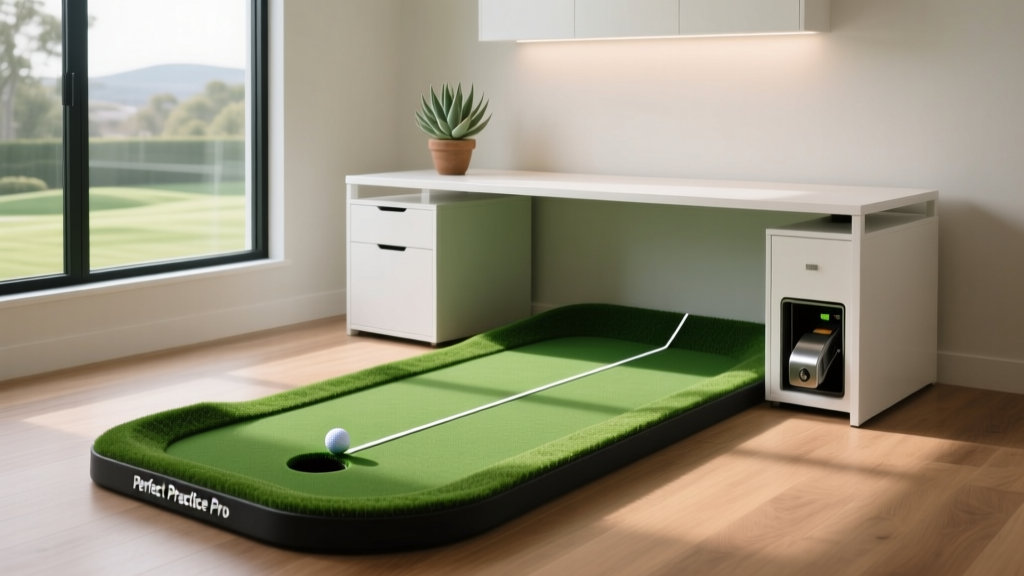
Priced at $299, this is not your standard felt putting carpet. The PerfectPath Pro features a proprietary Crystal Velvet surface that rolls at a true 10.5 on the Stimpmeter (mimicking fast tournament greens). It includes a raised track system that provides immediate tactile feedback if the putter face twists during the stroke. It rolls up into a sleek carrying tube, making it an elegant gift that won't ruin the aesthetic of his living room or office.
Under $100: High-Utility Stocking Stuffers
Not every gift needs to break the bank. These high-utility accessories are perfect for stocking stuffers or secret Santa exchanges.
- LoudMouth Golf Alignment Sticks ($35): Standard fiberglass sticks snap and fade. LoudMouth sticks are coated in a vibrant, UV-resistant polymer and feature built-in magnetic caps so they snap together neatly in the bag.
- Arccos Caddie Smart Sensors (Gen 4) - Single Putter Sensor ($29.99): If he already has the Arccos app but struggles on the greens, gifting a replacement or standalone putter sensor allows him to track strokes gained: putting with surgical precision.
- Twice as Far Ball Retriever ($39.99): A telescopic, rust-proof aluminum retriever that extends to 15 feet. It saves him from wading into water hazards and pays for itself after retrieving just two Pro V1s.
Expert Gifting Tips: What to Avoid
The Golden Rule of Golf Gifting: Never buy golf balls or clubs as a surprise gift. Golfers are hyper-specific about shaft flex, lie angle, and urethane cover feel. Stick to electronics, training aids, and premium accessories.
Avoid Cheap Knock-off Rangefinders: You will see $60 laser rangefinders on Amazon boasting '6x magnification.' Avoid them. They suffer from severe beam divergence, meaning they will lock onto the trees behind the green instead of the pin, leading to disastrous club selection. Stick to trusted optics brands like Bushnell, Nikon, or TecTecTec.
Avoid Launch Monitors for 'Course-Only' Players: If your golfer never practices at a driving range and only plays 18 holes on Saturdays, a $600 launch monitor is a waste of money. Pivot to a premium GPS watch or a subscription to Garmin Golf instead.
Frequently Asked Questions (FAQ)
How do I secretly find out his handicap?
Check his USGA GHIN app on his phone if he leaves it unlocked, or ask his regular playing partners. If he doesn't have an official handicap, ask him what he 'typically shoots' on a good day. (e.g., Shooting in the 80s = Mid-handicap; Shooting in the 90s = Beginner/High-handicap).
What if he already has a golf watch?
Upgrade his ecosystem. If he has a Garmin watch, buy him the Garmin CT10 automatic club tracking sensors ($299 for a full set). If he has an Apple Watch, a premium subscription to the Arccos Caddie or Hole19 app is a fantastic digital gift.
Are 'Slope' rangefinders legal in tournaments?
The 'Slope' feature itself is illegal in USGA-sanctioned tournaments. However, almost all premium gadgets (like the Bushnell Pro XE Lite) feature a physical toggle switch that turns the slope function off, making the device 100% tournament legal when the switch is flipped.
Written by
Lena ChenLena Chen earned her M.S. in Human-Computer Interaction from Carnegie Mellon University and a B.S. in Electrical Engineering from the University of Washington. She has spent the past decade specializing in smart home architecture and IoT ecosystems, helping over 200 homeowners design fully connected living spaces. Lena is a certified Matter protocol consultant and has published peer-reviewed research on voice-first interface design in the ACM Digital Library. Her reviews of smart home products combine deep technical analysis with real-world usability testing, evaluating everything from Zigbee mesh stability to Alexa skill responsiveness. She regularly speaks at CEDIA Expo and CES smart home panels.