Beginner vs Expert: Sourcing Portable Power From a Gadget Wholesaler
Discover how beginners and experts differ when sourcing portable power. Learn to leverage a gadget wholesaler for premium power banks and solar chargers.
The Portable Power Paradigm Shift in 2026
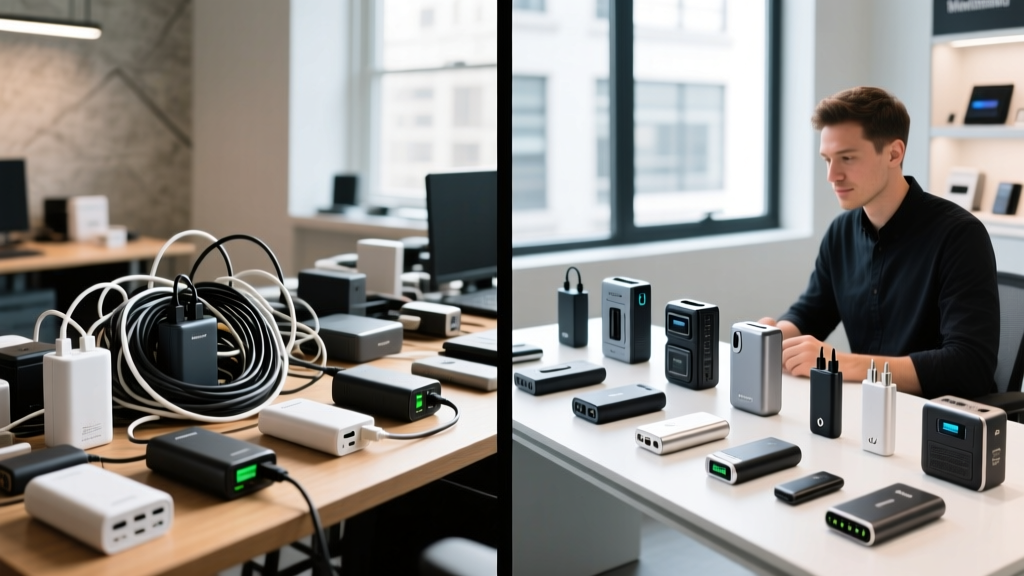
The portable power market has evolved dramatically. With the widespread adoption of USB-C PD 3.1 and high-density 21700 lithium-ion cells, the gap between consumer-grade retail products and professional-grade enthusiast gear has never been wider. For tech enthusiasts, digital nomads, and off-grid professionals, relying on standard retail channels often means paying a premium for inflated specs and generic battery management systems (BMS). Conversely, experts and resellers are increasingly bypassing retail to source directly from a gadget wholesaler, unlocking superior margins, custom PCB designs, and verifiable cell chemistry. This guide breaks down the fundamental differences between how beginners and experts approach portable power sourcing, covering power banks, solar chargers, and smart car adapters.
The Beginner’s Approach: Retail Convenience vs. Hidden Costs
Beginners typically prioritize convenience and brand recognition. They navigate to major retail platforms, filter by 'Best Seller,' and purchase based on surface-level marketing claims. A classic example is buying a premium retail power bank like the Anker Prime 27,650mAh (250W), which retails for around $179. While it is an excellent consumer product, the beginner's approach is riddled with hidden inefficiencies when viewed through an enthusiast or bulk-sourcing lens.
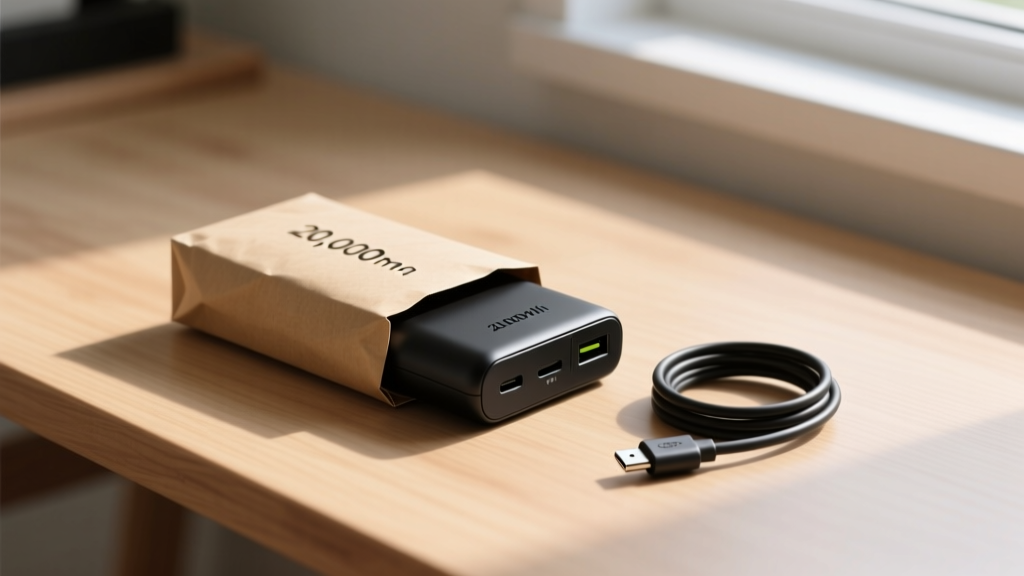
- Spec Inflation: Beginners trust the '20,000mAh' label on the box, unaware that cheap retail units often use low-grade Li-Po pouch cells that degrade to 70% capacity within 300 charge cycles.
- Protocol Ignorance: A beginner sees 'Fast Charging' and assumes compatibility. They often miss that the device lacks PPS (Programmable Power Supply), meaning it won't trigger Samsung's 45W Super Fast Charging 2.0.
- The Margin Trap: For enthusiasts building custom EDC (Everyday Carry) kits or resellers stocking inventory, paying $40+ per 10,000mAh at retail destroys profit margins and limits hardware customization.
The Expert’s Playbook: Leveraging a Gadget Wholesaler
Experts treat portable power as a science. Instead of clicking 'Add to Cart' on a retail site, they leverage B2B networks, Global Sources, and specialized gadget wholesaler platforms to source components or white-label units with exact specifications. They understand that the true value of a power bank lies not in the plastic shell, but in the BMS chipset and the internal cell configuration.
Decoding the Spec Sheet: What Experts Actually Look For
When communicating with a gadget wholesaler, experts discard marketing jargon and demand engineering-level transparency. Here is how the two mindsets compare when evaluating a spec sheet:
| Feature | Beginner Focus (Retail) | Expert Focus (Wholesale Sourcing) |
|---|---|---|
| Capacity | '20,000mAh' (Marketing label) | 4S2P configuration using 5000mAh 21700 cells (Actual 40,000mAh) |
| Charging Protocol | 'Fast Charging' or 'QuickCharge' | USB-C PD 3.1, 140W, PPS 3.3-21V, QC 3.0 fallback |
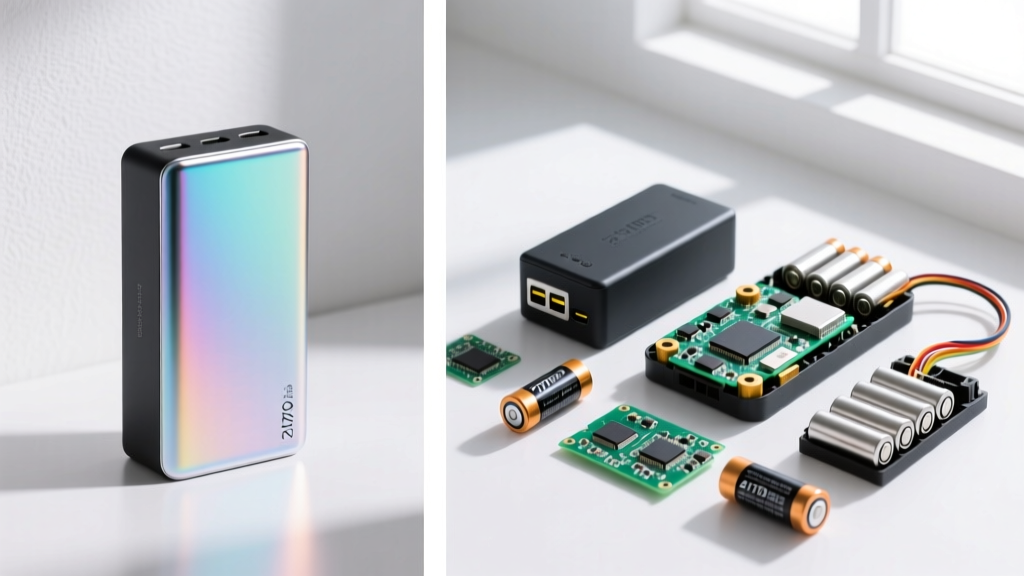
| Cell Chemistry | Generic Li-Po pouch (Prone to swelling) | Samsung INR21700-50E or Molicel P42A (High discharge, stable) |
| BMS Chipset | Unspecified / Basic protection | Southchip SC8815 or Injoinic IP2368 (Bidirectional, highly efficient) |
By specifying exact components like the Battery University recommended Molicel P42A cells, experts ensure high continuous discharge rates (up to 45A) and superior thermal stability, which is critical for 140W PD 3.1 output.
Portable Power Categories: Sourcing Strategies
1. High-Capacity PD 3.1 Power Banks
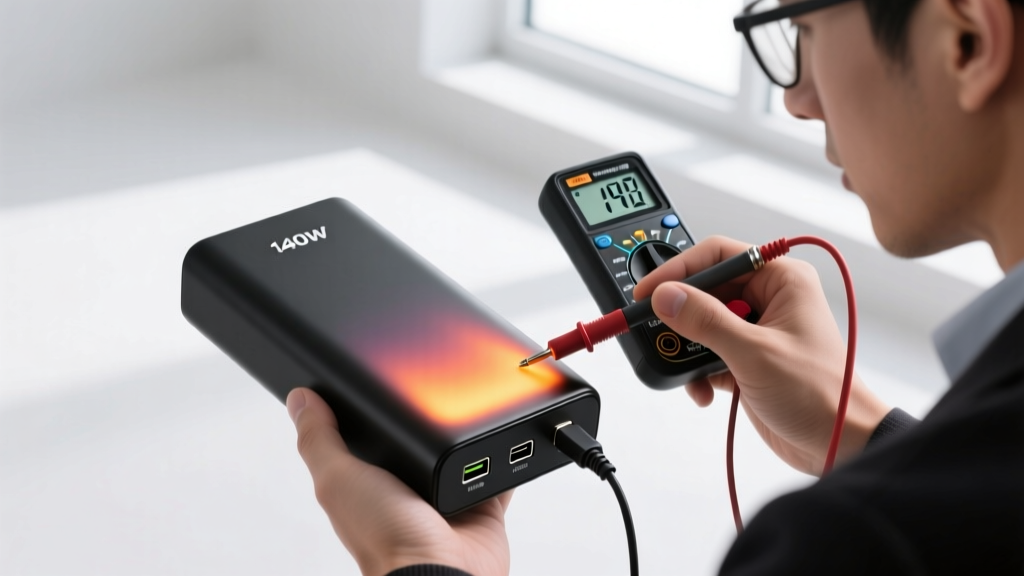
In 2026, 140W USB-C PD 3.1 is the gold standard for charging high-performance laptops like the MacBook Pro 16-inch or Dell XPS 15 on the go. When sourcing from a gadget wholesaler, experts request units utilizing the Southchip SC8815 buck-boost controller. This chip handles the complex voltage negotiations required for PD 3.1 while maintaining high thermal efficiency. Beginners buy a $120 retail brick that throttles to 60W after 10 minutes due to poor heat dissipation; experts source wholesale units with graphene thermal pads and aluminum alloy chassis that sustain 140W output indefinitely.
2. Foldable Solar Chargers
Solar technology is where retail marketing is most deceptive. Beginners buy cheap 60W foldable panels with PET (Polyethylene Terephthalate) lamination. PET degrades, yellows, and delaminates after just one summer of UV exposure. Experts sourcing from a gadget wholesaler explicitly demand ETFE (Ethylene Tetrafluoroethylene) laminated panels paired with SunPower Maxeon monocrystalline cells. ETFE is aerospace-grade, self-cleaning, and guarantees 90%+ power output after 10 years of harsh outdoor use. Furthermore, experts insist on integrated MPPT (Maximum Power Point Tracking) charge controllers rather than basic PWM, ensuring up to 30% higher energy harvest in cloudy conditions.
3. Smart Car Adapters and Buck Converters
A standard 12V car cigarette lighter port is typically fused at 10A to 15A, capping theoretical output at 120W to 180W. Beginners buy cheap multi-port car chargers that blow the car's fuse or melt the adapter housing under load. Experts source smart car adapters featuring advanced buck-boost converters with active thermal throttling. These wholesale units negotiate power dynamically, capping output at a safe 110W if internal temperatures exceed 65°C, while utilizing high-temperature Japanese capacitors to survive the extreme heat of a parked car dashboard in July.
The ROI Matrix: Retail vs. Wholesale Sourcing
For enthusiasts looking to equip a team, or resellers building a brand, the financial and qualitative differences are stark. Below is a comparative matrix detailing the real-world ROI of retail versus wholesale sourcing.
| Metric | Retail (Amazon/Best Buy) | Gadget Wholesaler (B2B Direct) |
|---|---|---|
| Cost per 10,000mAh | $35 - $55 USD | $8 - $14 USD (at 500+ MOQ) |
| Customization | None (Stuck with white-label retail designs) | Custom PCB tuning, ETFE solar, bespoke branding |
| Warranty Handling | 18-24 months (Easy consumer RMA) | 1% defect allowance (Requires incoming QA) |
| Safety Certifications | Pre-certified (UL/CE/FCC on the box) | Must verify raw UN38.3 & UL 2056 PDF reports |
Actionable Framework: How to Vet Your First Gadget Wholesaler
Sourcing directly requires due diligence. Follow this expert framework to ensure your wholesale partner delivers safe, high-performance portable power:
- Demand UN38.3 Documentation: Never ship or handle lithium cells without UN38.3 transport certification. A reputable wholesaler will provide this immediately.
- Verify UL 2056 Compliance: For the US market, ensure the power bank's PCB and enclosure meet UL 2056 standards for electrical and fire safety.
- Order a 'Golden Sample': Before committing to an MOQ (Minimum Order Quantity), order a single sample. Disassemble it to verify the cell wrappers match the quoted brand (e.g., checking the QR codes on Samsung 50E cells).
- Stress Test with Protocol Analyzers: Use a tool like the Power-Z KM003C to read the PDOs (Power Data Objects). Verify that the PPS voltage ranges match the USB-IF PD 3.1 specifications promised on the spec sheet.
Frequently Asked Questions
Is there a minimum order quantity (MOQ) when using a gadget wholesaler?
Typically, yes. For fully customized PCB designs and branded enclosures, MOQs usually start at 500 to 1,000 units. However, many wholesalers offer 'white-label' stock models with lower MOQs (50-100 units), allowing beginners to test the market before committing to custom tooling.
How do I prevent wholesalers from swapping premium cells for cheap ones?
This is a common edge case in B2B sourcing. Experts mitigate this by including a 'BOM (Bill of Materials) Lock' clause in the purchase agreement, stipulating that any deviation from the specified Molicel or Samsung cells results in a rejected shipment. Additionally, conducting randomized teardowns of the first 5% of the production run is standard practice.
Are ETFE solar chargers worth the higher wholesale cost?
Absolutely. While PET panels might cost $15 wholesale, ETFE panels of the same wattage will cost closer to $35-$45. However, the failure rate of PET panels in real-world outdoor conditions approaches 40% within two years, leading to massive warranty claims. ETFE's longevity makes it the only viable choice for serious enthusiasts and reputable brands.
Written by
Jake MorrisonJake Morrison holds a B.S. in Electrical Engineering from UC Berkeley and an MBA from Stanford Graduate School of Business. With over 12 years of hands-on experience in consumer electronics, he previously served as a senior product engineer at a Silicon Valley startup before transitioning to tech journalism. Jake has personally tested and benchmarked over 3,000 gadgets across categories including smartphones, wearables, smart home devices, and audio equipment. His durability testing methodology — involving controlled drop tests, thermal cycling, and water submersion — is widely cited by major tech publications. He is a certified CompTIA A+ technician and a contributing editor to the IEEE Consumer Electronics Magazine.