The True Meaning Gadgets Bring to Entry-Point Security
Discover how smart locks and UWB entry-point gadgets are redefining home security in 2026 with biometric access and AI threat mitigation.
The Evolution of the Front Door: Beyond Basic Keyless Entry
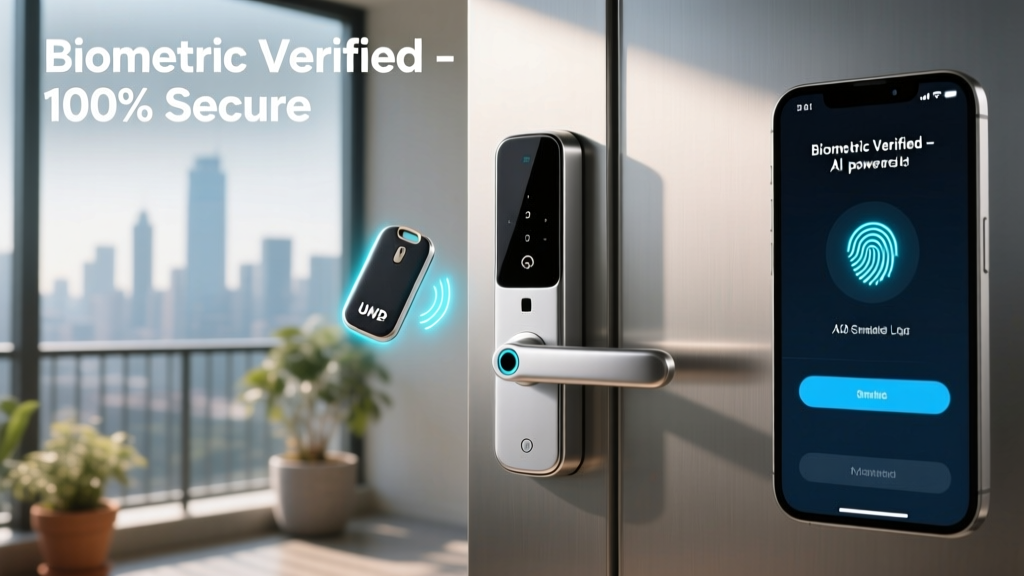
When enthusiasts debate the true meaning gadgets hold in our daily lives, the conversation often drifts toward entertainment, wearables, or productivity. However, the most profound technological shift of the last three years has occurred at the literal threshold of our homes. The modern entry-point is no longer just a physical barrier of wood and brass; it has evolved into an intelligent, ambient computing node. In 2026, smart locks and entry-point security gadgets have transcended simple Bluetooth keypads, integrating Ultra-Wideband (UWB) spatial awareness, multimodal biometrics, and AI-driven threat detection.
For tech enthusiasts, understanding this evolution requires looking past the marketing buzzwords and examining the underlying protocols. The shift from legacy Z-Wave and Wi-Fi polling to Matter-over-Thread and UWB has fundamentally changed how our homes authenticate human presence. This trend report dives deep into the hardware, the emerging threat landscape, and the future outlook of entry-point security gadgets.
Spatial Awareness: The UWB Revolution in Access Control
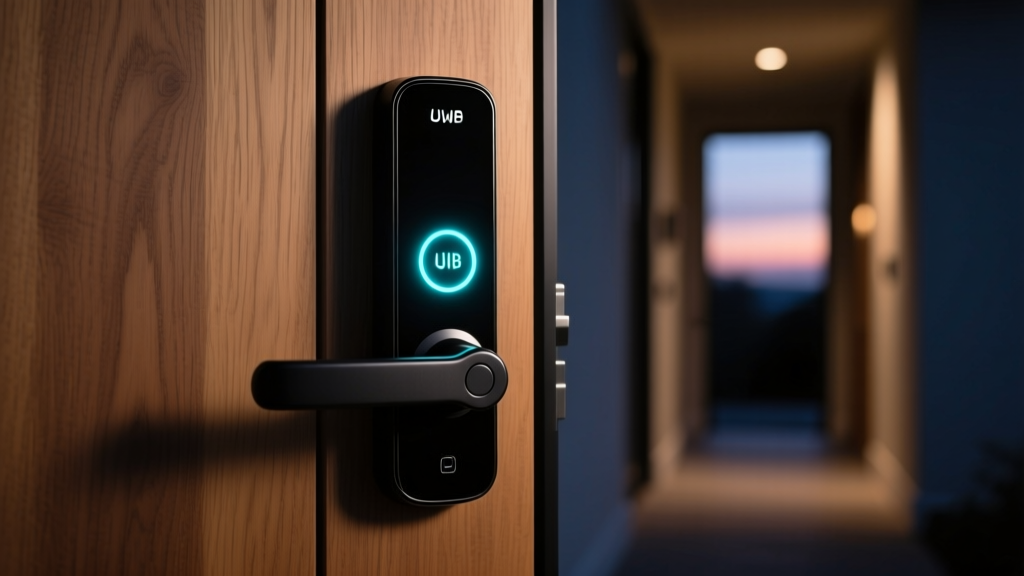
The most significant leap in smart lock technology is the widespread adoption of Ultra-Wideband (UWB) radio. Unlike Bluetooth Low Energy (BLE), which estimates proximity based on signal strength (RSSI) and is highly susceptible to environmental interference, UWB measures the precise Time-of-Flight (ToF) of radio pulses. This allows the lock to know exactly where your phone or key fob is in 3D space, down to the centimeter.
Eliminating the "Door Dance"
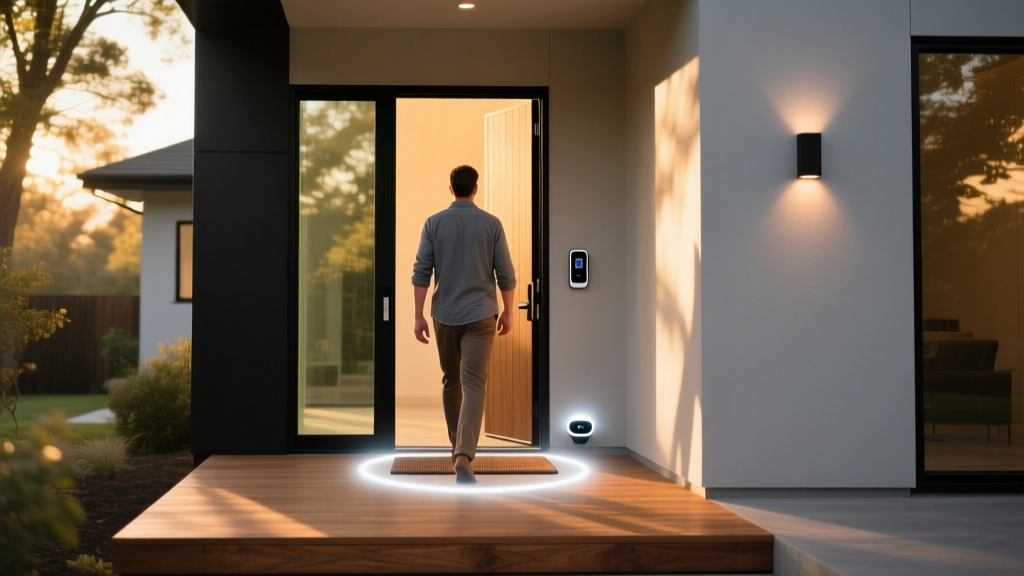
Early smart locks required users to perform the dreaded "door dance"—standing awkwardly on the porch, tapping the screen, and waiting for the BLE handshake to complete. With UWB-enabled gadgets like the Yale Assure Lock 3 and Apple's Home Key 2.0 ecosystem, the door authenticates your approach vector. It knows you are standing exactly 1.2 meters away, facing the door, rather than just walking past it on the sidewalk. This spatial precision drastically reduces battery drain, as the mechanical deadbolt motor only engages when an authenticated entry intent is confirmed.
Multimodal Biometrics: Vein Mapping and 3D LiDAR
Capacitive fingerprint sensors, once the gold standard for smart locks, are being phased out in premium 2026 models due to their vulnerability to environmental factors like rain, grease, and cold temperatures. The new standard is multimodal biometrics.
- Infrared Palm Vein Scanning: Gadgets like the Aqara Smart Lock U200 utilize near-infrared light to map the unique hemoglobin patterns in the veins of your palm. Because the authentication relies on internal biological structures rather than surface skin, it is virtually impossible to spoof and works flawlessly with wet or gloved hands.
- 3D Structured Light Facial Recognition: Borrowing from smartphone tech, high-end entry gadgets now project thousands of invisible infrared dots to create a depth map of the user's face, thwarting high-resolution photographic spoofing attempts.
2026 Hardware Deep Dive: Market Leaders Compared
To understand the current landscape, we must evaluate the hardware specifications, physical security ratings, and protocol support of the leading entry-point gadgets. All models listed below meet the stringent Builders Hardware Manufacturers Association (BHMA) Grade 1 or AAA certifications, ensuring they can withstand physical kick-ins and drill attacks.
| Device Model | Primary Auth Method | Wireless Protocol | Battery Life (Est.) | MSRP (2026) |
|---|---|---|---|---|
| Schlage Encode Plus (Gen 2) | UWB + Apple Home Key | Matter over Thread | 9-12 Months | $329 |
| Yale Assure Lock 3 | UWB + PIN + BLE | Matter over Wi-Fi/Thread | 6-8 Months | $299 |
| Aqara Smart Lock U200 | Palm Vein + NFC + PIN | Matter over Thread | 8-10 Months | $349 |
| Eufy Video Smart Lock S3 Pro | 3D Face + Dual Radar | Proprietary Hub / Wi-Fi | 4-6 Months | $399 |
As noted by the Connectivity Standards Alliance (CSA), the mandatory integration of Matter 1.4+ in these devices ensures that local Thread mesh networks handle lock actuation in under 200 milliseconds, completely bypassing cloud latency and ensuring access even during internet outages.
The Threat Landscape: Signal Amplification and AI Spoofing
With advanced gadgets comes an advanced threat landscape. The primary vulnerability of keyless entry systems remains the Signal Amplification Relay Attack (SARA). In a SARA scenario, thieves use a two-piece amplifier kit to capture the BLE or RFID signal from a key fob resting inside the house and relay it to the front door, tricking the lock into thinking the owner is standing on the porch.
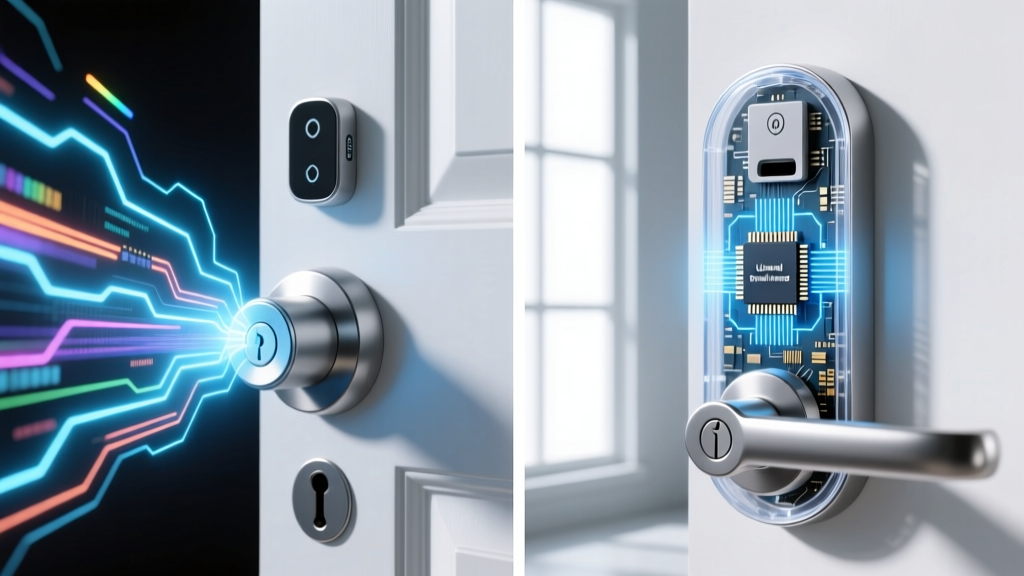
"The transition to UWB and localized AI radar is the definitive countermeasure to relay attacks. Because UWB measures the nanosecond-level time-of-flight, a relayed signal introduces a mathematically impossible latency, instantly flagging the authentication attempt as fraudulent." — Smart Home Security Whitepaper, 2025
Furthermore, AI-generated voice cloning and deepfake video feeds have forced entry-point gadgets to adopt liveness detection. Modern video doorbells paired with smart locks now utilize localized edge-AI to detect the micro-expressions and thermal signatures of a live human, rather than simply matching a static facial database.
Future Outlook: Energy Harvesting and the Ambient Doorway
Looking toward the latter half of the decade, the biggest hurdle for entry-point gadgets remains power management. Motorized deadbolts and Wi-Fi radios are notoriously power-hungry. The next frontier is piezoelectric and thermoelectric energy harvesting.
Prototype entry-point systems currently in beta testing utilize the kinetic energy of the door closing, combined with the thermal differential between the climate-controlled interior and the exterior porch, to trickle-charge supercapacitors. While not yet capable of fully sustaining high-draw video locks, this technology is expected to extend the battery life of UWB smart locks from 12 months to upwards of 5 years.
Additionally, the doorway is becoming an ambient sensor hub. According to The Verge Smart Home analysts, upcoming Matter specifications will allow smart locks to share localized mmWave radar data with the broader home network. Your front door will not only secure your home but also track package deliveries, monitor porch piracy, and seamlessly hand off your arrival presence to your home's HVAC and lighting automations without relying on wearable geofencing.
FAQ: Upgrading Your Entry-Point Ecosystem
Do I need to replace my entire door to install a 2026 smart lock?
No. Most premium smart locks are designed for standard residential door prep. As long as your door has a standard 2-1/8" cross bore and a backset of either 2-3/8" or 2-3/4", these gadgets will install with a standard Phillips screwdriver in under 20 minutes. However, ensure your door thickness falls within the 1-3/8" to 2-1/4" range supported by most UWB deadbolts.
Is Thread better than Wi-Fi for smart locks?
Absolutely. Wi-Fi requires the lock to maintain a high-power connection to a distant router, draining AA batteries in months. Matter-over-Thread uses a low-power mesh network. A Thread Border Router (like a modern smart speaker) handles the heavy lifting, allowing the lock to sleep deeply and wake only when an authenticated UWB or biometric ping is received.
Written by
Sarah KimSarah Kim holds certifications from both NASM (National Academy of Sports Medicine) and ACE (American Council on Exercise), along with a B.S. in Kinesiology from UCLA. She has spent 7 years bridging the gap between exercise science and consumer technology, evaluating fitness trackers, smart scales, sleep monitors, and recovery devices with clinical precision. Sarah has tested over 200 health-focused wearables in controlled lab settings and real-world training environments, comparing device data against gold-standard medical equipment like ECG monitors and DEXA scans. She consults for three fitness app companies on data accuracy standards and has presented research on wearable reliability at the American College of Sports Medicine (ACSM) annual conference. Her reviews emphasize clinical validity over marketing claims.