Best Tech Gadgets: Compact Dash Cams & Vehicle Monitors 2026
Discover the best tech gadgets for cluttered dashboards. We review ultra-compact dash cams, hidden vehicle monitors, and space-saving auto tech.
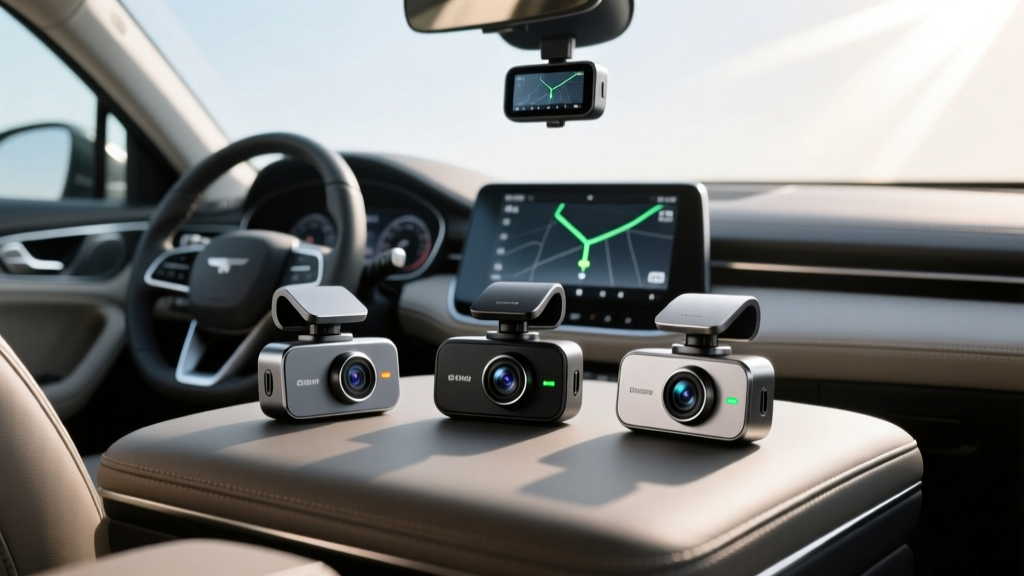
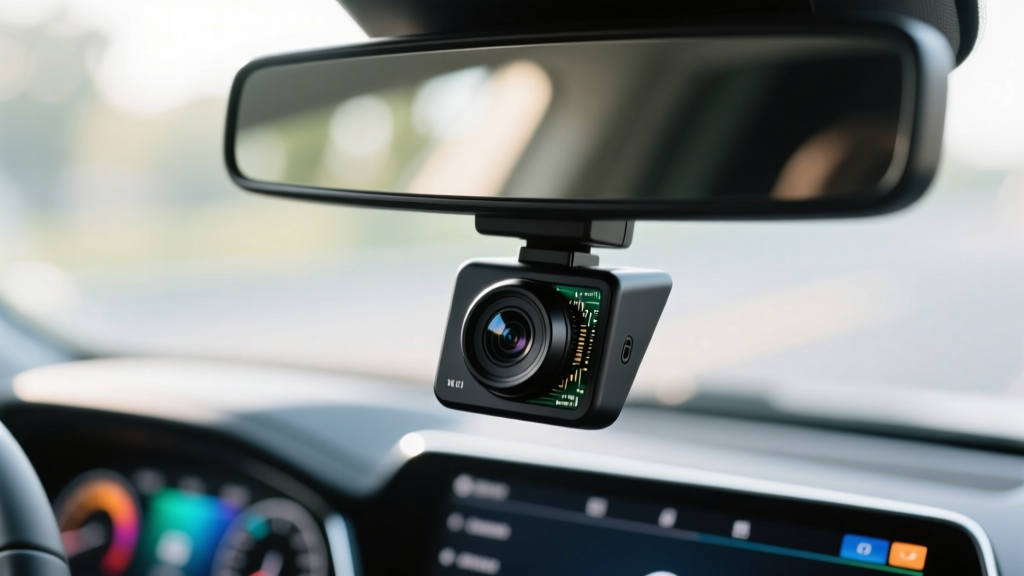
The Dashboard Real Estate Crisis
Modern vehicle interiors are increasingly dominated by massive infotainment screens, heads-up displays, and advanced sensor arrays. For automotive enthusiasts, this leaves precious little windshield real estate for aftermarket accessories. When curating the best tech gadgets for daily drivers and track cars alike, physical footprint is now just as critical as video resolution. A bulky dash cam obstructs the driver's sightline, creates dangerous blind spots, and clashes with minimalist cabin aesthetics. The solution lies in ultra-compact, wedge-shaped, and cylindrical vehicle monitors that leverage advanced thermal engineering and sensor miniaturization to deliver flagship 4K telemetry without the visual clutter.
Sensor Miniaturization and Thermal Dynamics
Shrinking a dash cam chassis introduces severe thermal challenges. High-bitrate 4K video encoding generates significant heat, and a smaller surface area reduces passive cooling efficiency. In 2026, top-tier compact units bypass traditional lithium-ion batteries—which are prone to thermal swelling and degradation in UV-baked cabins—in favor of supercapacitors. Supercapacitors endure extreme temperature fluctuations from -20°C to 80°C (-4°F to 176°F) without degrading, ensuring the camera survives brutal summer afternoons parked in direct sunlight.
Furthermore, the integration of Sony's STARVIS 2 sensors, specifically the IMX678 for 4K channels and IMX335 for secondary 1080p channels, allows for massive dynamic range in a micro-footprint. These sensors utilize dual-conversion gain technology, drastically improving low-light license plate capture without requiring bulky external infrared illuminators.
2026 Compact Dash Cam Comparison Matrix
| Model | Form Factor & Dimensions | Primary Sensor | Power Storage | Street Price (USD) |
|---|---|---|---|---|
| Garmin Dash Cam Mini 3 | Key-fob wedge (53.3 x 31.3 x 14.0 mm) | Sony STARVIS 2 (2K) | Supercapacitor | $139 |
| BlackVue DR970X-2CH LTE | Cylindrical tube (108.5 x 33.5 x 33.5 mm) | Sony STARVIS 2 IMX678 (4K) | Supercapacitor | $749 |
| Thinkware U3000 | Sleek wedge (109 x 48 x 35 mm) | Sony STARVIS 2 IMX678 (4K) | Supercapacitor | $599 |
| Nextbase iQ | Smart pod (84 x 44 x 36 mm) | Sony 4K HDR | LiFePO4 Battery | $499 |
Analysis of the Form Factors
The Garmin Mini 3 remains the undisputed king of stealth. Weighing just 28 grams, it mounts directly to the glass via a micro-adhesive disk, completely eliminating the traditional suction cup arm. The BlackVue DR970X utilizes a cylindrical design specifically engineered to tuck behind the rearview mirror cluster, hiding the lens while maintaining an unobstructed field of view. Meanwhile, the Nextbase iQ uses a Lithium Iron Phosphate (LiFePO4) battery instead of a supercapacitor; while slightly larger, LiFePO4 chemistry is vastly safer and more stable than legacy Li-ion, allowing for extended parking mode surveillance without a hardwire kit.
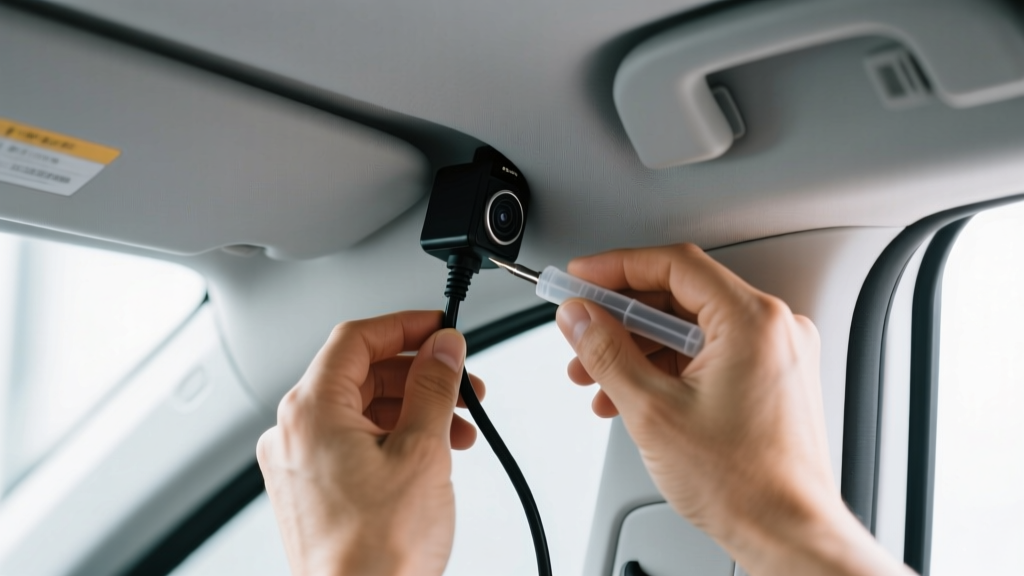
Zero-Profile Installation Protocol
A compact camera loses its space-saving advantage if the power cabling is draped across the dashboard. Achieving a true zero-profile installation requires routing the 12V power delivery through the vehicle's existing interior channels.
- Headliner Routing: Use a nylon trim removal tool to gently pry the edge of the roof headliner. Tuck the flat-profile USB-C or coaxial power cable upward toward the A-pillar. Never use metal screwdrivers, which will permanently crease the interior fabric.
- A-Pillar Descent: Pop the plastic A-pillar trim clip. Route the cable behind the side-curtain airbag deployment zone. Critical Safety Note: Always zip-tie the cable to the existing factory wiring harness to ensure it does not cross the airbag's explosive trajectory.
- Fuse Box Integration: Access the cabin fuse panel (usually under the dashboard or kick panel). Use a multimeter to identify a constant 12V fuse (for parking mode) and an accessory-switched 12V fuse (for ignition sensing).
- Low-Profile Fuse Taps: Replace bulky standard fuse taps with micro2 or mini low-profile add-a-circuit taps, depending on your vehicle's specific fuse type, to ensure the fuse panel cover closes completely.
According to the National Highway Traffic Safety Administration (NHTSA), improper aftermarket wiring routing remains a leading cause of supplemental restraint system (airbag) deployment failures. Always verify cable placement against your vehicle's service manual.
Power Delivery and Parking Mode Logic
Space-saving installations often rely on hardwire kits to eliminate the need for bulky 12V cigarette lighter adapters. When configuring the hardwire kit's voltage cutoff settings, precision is mandatory to prevent stranded vehicles.
- 11.8V Cutoff (Recommended for Daily Drivers): A standard 12V car battery rests at roughly 12.6V. Setting the cutoff to 11.8V provides approximately 24 to 48 hours of time-lapse parking surveillance while retaining enough cranking amps to start the engine reliably.
- 12.2V Cutoff (Required for EVs and Hybrids): Electric vehicles utilize smaller 12V accessory batteries that are highly sensitive to deep discharge. If your dash cam draws the accessory battery below 12.0V, the vehicle's main DC-DC converter may refuse to engage, leaving the car completely immobilized.
- Timer Cutoffs: For maximum battery preservation, configure the hardwire kit to cut power entirely after 12 hours, relying on the camera's built-in supercapacitor only for motion-triggered wake events rather than continuous recording.

Storage Endurance and Edge Cases
The most common failure mode in compact dash cams is not the camera itself, but the microSD card. Compact cameras have zero internal airflow, meaning the SD card operates in a high-heat environment while enduring continuous write cycles. Standard consumer microSD cards will suffer controller lockup within three to six months under these conditions.
You must purchase High Endurance or MAX Endurance microSD cards (such as the SanDisk Max Endurance or Samsung PRO Endurance lines). These cards utilize 3D NAND flash memory with superior wear-leveling algorithms designed specifically for continuous video loop recording. For a 4K dash cam recording at a bitrate of 24 Mbps, a 256GB High Endurance card will provide roughly 12 hours of dual-channel buffer space before overwriting the oldest footage.
According to the Insurance Information Institute, dash cam footage is increasingly accepted as primary evidence in liability disputes and hit-and-run claims, provided the video metadata and timestamp remain uncorrupted by storage failures.
Final Buying Framework
If absolute invisibility is your priority, the Garmin Mini 3 is unmatched, though you sacrifice 4K resolution and rear-channel capability. If you require flagship 4K telemetry, native LTE cloud connectivity, and a form factor that hides entirely behind the mirror cluster, the BlackVue DR970X LTE is the definitive space-saving solution for the modern enthusiast. Always pair your chosen unit with a supercapacitor-compatible hardwire kit and a purpose-built high-endurance microSD card to ensure the system survives the extreme thermal realities of automotive environments.
Written by
Emma LarssonEmma Larsson holds an M.A. in International Relations from Sciences Po Paris and a B.A. in Communications from Stockholm University. A digital nomad since 2017, she has worked from over 45 countries across six continents, building deep expertise in portable power solutions, travel routers, compact computing, and connectivity gadgets that survive international travel. Emma is a certified member of the Travel Technology Association and has advised three travel gear startups on product-market fit for remote workers. Her reviews evaluate products against real travel scenarios — TSA compliance, voltage compatibility across 200+ countries, durability through 50+ checked bag cycles, and battery life under airplane mode vs. active use. She has been featured in Condé Nast Traveler's "Tech-Savvy Traveler" series and speaks at Remote Work Summit events.