Eco Phone Accessories: Beyond Green Cooking Tools and Gadgets
Discover the best eco-friendly phone accessories for 2026. We review sustainable wireless chargers, bamboo gimbals, and recycled lens kits for green techies.
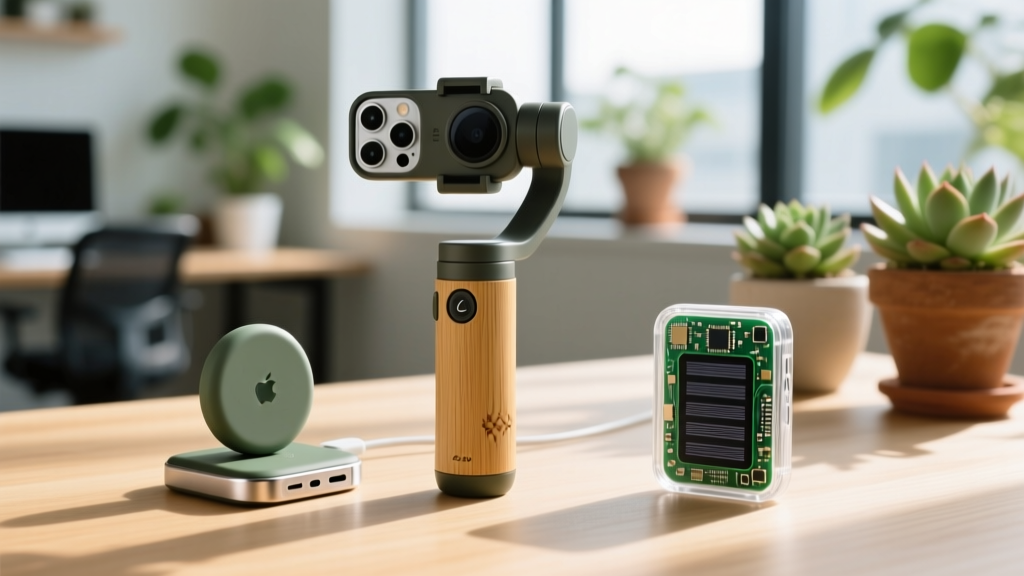
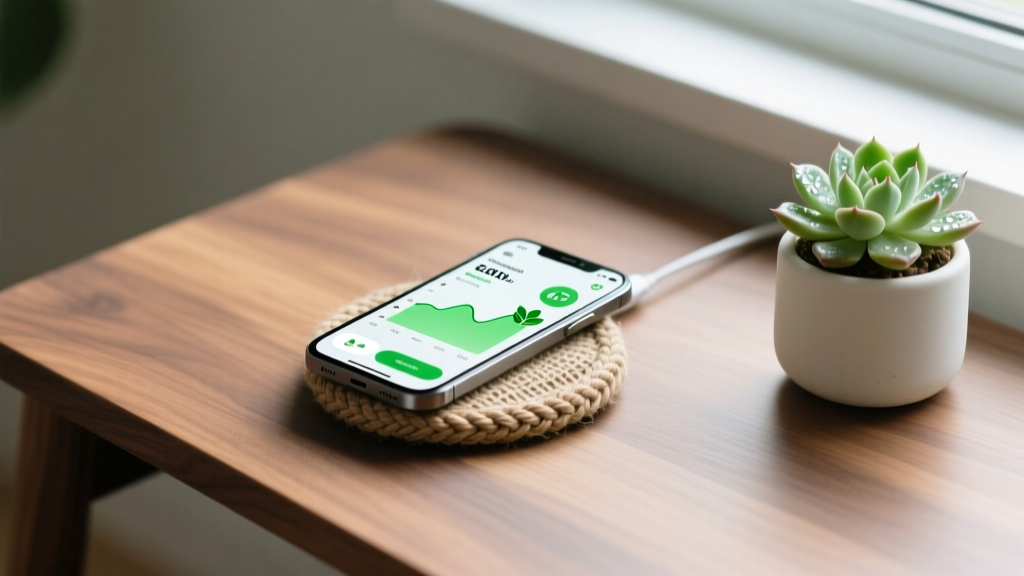
The Shift to Sustainable Mobile Tech
The modern tech enthusiast faces a persistent paradox: we demand cutting-edge innovation, yet the environmental cost of our gear continues to mount. Over the past decade, we have witnessed a massive cultural shift toward sustainability in our homes. The market for eco-friendly cooking tools and gadgets has exploded, replacing cheap plastics with bamboo utensils, recycled cast iron, and biodegradable storage. Yet, the mobile accessory space has historically lagged behind, flooded with disposable plastics and unrecyclable e-waste. Fortunately, 2026 marks a turning point. Today's premium phone accessories are finally catching up to the green standards we expect from the rest of our lives.
Whether you are upgrading your mobile photography rig or simply looking for a safer way to power up your device, the latest generation of sustainable wireless chargers, gimbals, and lens kits proves that high performance and environmental stewardship can coexist. In this guide, we break down the exact materials, efficiency metrics, and brand practices that define the new era of eco-conscious mobile tech.
The Hidden E-Waste in Mobile Accessories
Before diving into specific product recommendations, it is crucial to understand the scale of the problem. According to the EPA's Global E-Waste Overview, millions of tons of electronic waste are generated annually, and small peripherals like chargers and phone mounts make up a disproportionately large volume of this waste stream due to their short lifespans and complex material blends.
Traditional accessories often fuse metal, plastic, and adhesives in ways that make recycling nearly impossible. When a cheap wireless charger breaks, it ends up in a landfill, leaching heavy metals into the soil. The sustainable alternatives highlighted below prioritize modular design, post-consumer recycled (PCR) materials, and end-of-life take-back programs, ensuring your tech footprint remains as light as possible.
Sustainable Wireless Chargers: Efficiency Meets Ethics
Wireless charging has long been criticized for energy loss. Early Qi standards operated at roughly 60% efficiency, meaning nearly half the power drawn from your wall was lost as heat. The widespread adoption of the Qi2 standard in 2026 has dramatically improved this, but the physical materials of the chargers themselves are where eco-brands truly shine.
Top Pick: Nimble UltraCharge Pad (2026 Edition)
Nimble has consistently led the charge in eco-friendly power accessories. Their latest UltraCharge Pad utilizes a chassis milled from 100% recycled aluminum and features a braided cable made from industrial hemp and recycled PET. Priced at $59.99, it delivers a certified 15W output with an impressive 88% energy transfer efficiency, drastically reducing phantom heat and energy waste.
'The true measure of a sustainable charger isn't just the recycled plastic it uses, but the energy efficiency it maintains over a three-year lifespan. Heat degrades both batteries and components, so high-efficiency Qi2 charging is inherently a green feature.' — Wired's Guide to Eco-Friendly Tech
Eco-Charger Comparison Matrix
| Brand & Model | Primary Materials | Qi2 Efficiency | Price (MSRP) | End-of-Life Program |
|---|---|---|---|---|
| Nimble UltraCharge Pad | Recycled Aluminum, Hemp | 88% | $59.99 | Yes (1-for-1 recycling) |
| Belkin EcoBoost Pro | 75% PCR Plastics | 84% | $49.99 | Partnered Drop-off |
| OtterBox BioCharge Mat | Plant-based Bio-Resin | 82% | $44.99 | Mail-in Rebate |
Gimbals and Stabilizers: The Bio-Plastic Revolution
Gimbals are notoriously difficult to manufacture sustainably. They require high-torque brushless motors, complex logic boards, and rigid housings that can withstand intense kinetic stress. Historically, this meant relying on virgin ABS plastics and heavy steel alloys. However, material science advancements in 2025 and 2026 have introduced high-tensile bio-polymers that rival traditional plastics in durability.

Review: Hohem iSteady M7 Eco
The Hohem iSteady M7 Eco is a breakthrough for mobile videographers. The housing is constructed from a proprietary blend of 70% ocean-bound plastics and 30% glass fiber for structural rigidity. Weighing in at just 380 grams, it supports payloads up to 300 grams, easily handling the heavier flagship phones of 2026. The internal battery uses ethically sourced cobalt, and the packaging is entirely plastic-free, utilizing molded sugarcane pulp.
Pros:
- Exceptional payload-to-weight ratio using bio-polymers.
- AI tracking sensor operates at low power, extending the 12-hour battery life.
- Modular motor design allows for individual arm replacement rather than full-unit disposal.
Cons:
- The bio-resin housing can become brittle if left in extreme heat (e.g., a closed car dashboard in summer).
- Premium price tag of $149 compared to standard plastic models.
Mobile Lens Kits: Aerospace Aluminum and Trade-In Programs
For mobile photographers, add-on lenses are essential for bridging the gap between smartphone sensors and professional optics. The most sustainable approach to lens kits isn't necessarily using recycled plastics, but rather utilizing infinitely recyclable materials like aerospace-grade aluminum and high-quality optical glass that won't degrade over time.
The Moment T-Series Ecosystem
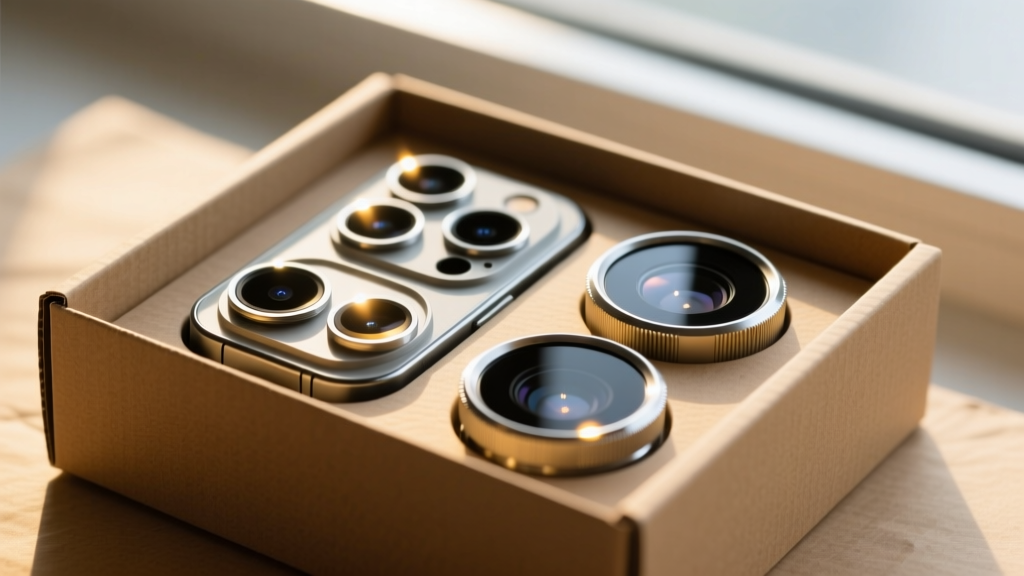
Moment's T-Series lenses remain the gold standard for longevity. Machined from 6061-T6 aerospace aluminum, these lenses are built to last a decade. Aluminum is one of the most recyclable materials on earth, retaining its properties indefinitely. Furthermore, Moment operates a robust trade-in program. When you upgrade your phone mount system or decide to switch focal lengths, you can send your old gear back for store credit, ensuring the aluminum and glass are either refurbished or properly smelted down.
Real-World Edge Case: Many cheaper, eco-branded lenses use recycled acrylic for the glass elements to save weight and carbon emissions. While this sounds green, acrylic scratches easily and yellows under UV exposure after 18 months, forcing the user to buy a replacement. Moment's use of traditional, high-grade optical glass paired with a recyclable metal housing is a far more sustainable long-term investment, despite the $119 per-lens cost.
The Tech Enthusiast's Eco-Purchasing Framework
Navigating greenwashing in the tech space requires a critical eye. Use this four-step framework before adding any mobile accessory to your cart in 2026:
- Demand Material Transparency: Look for exact percentages. 'Made with recycled materials' is a red flag. '75% Post-Consumer Recycled (PCR) Plastics' is a verifiable claim.
- Check the Repairability Score: Can the battery in the gimbal be replaced? Can the wireless charger be opened without destroying the casing? Modular design prevents premature e-waste.
- Evaluate the Packaging: Sustainable tech should not arrive wrapped in single-use polybags and styrofoam. Look for FSC-certified cardboard and soy-based inks.
- Verify the End-of-Life Plan: As highlighted by Wired's Guide to Eco-Friendly Tech, a brand's take-back or recycling program is the ultimate proof of their commitment to a circular economy.
Frequently Asked Questions (FAQ)
Are plant-based bio-plastics as durable as traditional ABS plastic for gimbals?
Yes, modern bio-polymers blended with glass fiber offer tensile strength comparable to ABS plastic. However, they are generally more sensitive to prolonged UV exposure and extreme heat. Store your bio-plastic gimbals in a padded, insulated bag when not in use to maximize their lifespan.
Does wireless charging degrade my phone battery faster than wired charging?
With the 2026 Qi2 standard, the gap has closed significantly. Qi2 chargers utilize advanced thermal throttling and magnetic alignment to ensure an 85%+ efficiency rate. As long as you use a high-quality, certified eco-charger with proper heat dissipation (like recycled aluminum housings), battery degradation is negligible compared to wired fast-charging.
How do I properly recycle old phone lenses and mounts?
Do not throw them in standard curbside recycling bins. The optical adhesives and mixed metals will contaminate the recycling stream. Utilize brand-specific trade-in programs (like Moment or ShiftCam) or drop them off at dedicated e-waste kiosks found at major electronics retailers, which use specialized shredders to separate the glass from the metal housings.
Written by
Lena ChenLena Chen earned her M.S. in Human-Computer Interaction from Carnegie Mellon University and a B.S. in Electrical Engineering from the University of Washington. She has spent the past decade specializing in smart home architecture and IoT ecosystems, helping over 200 homeowners design fully connected living spaces. Lena is a certified Matter protocol consultant and has published peer-reviewed research on voice-first interface design in the ACM Digital Library. Her reviews of smart home products combine deep technical analysis with real-world usability testing, evaluating everything from Zigbee mesh stability to Alexa skill responsiveness. She regularly speaks at CEDIA Expo and CES smart home panels.