2026 Space-Saving Dash Cams: Cool Gadgets Amazon Drivers Love
Discover the best space-saving dash cams and vehicle monitors. We review the most compact, cool gadgets Amazon offers for your car in 2026.
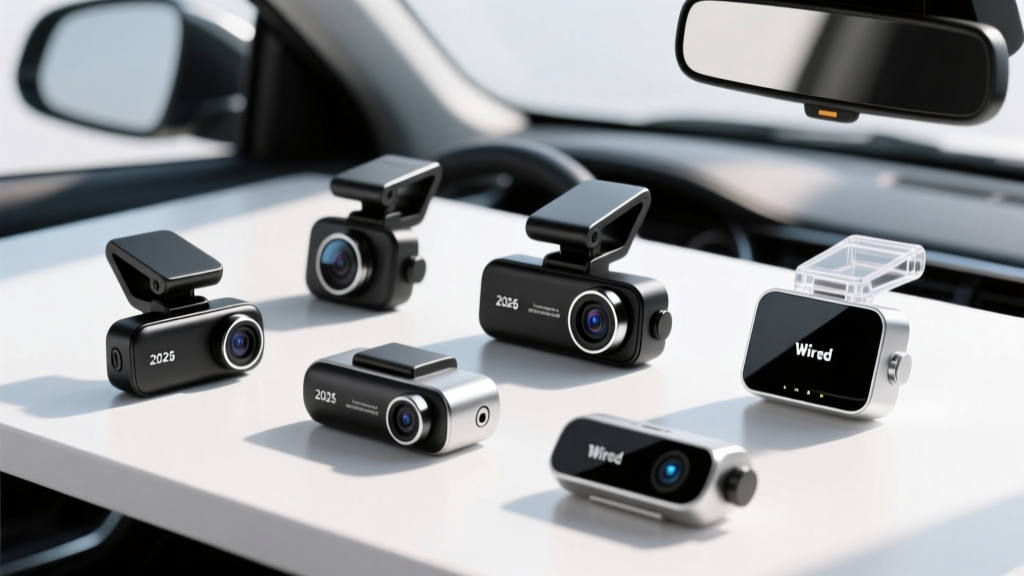
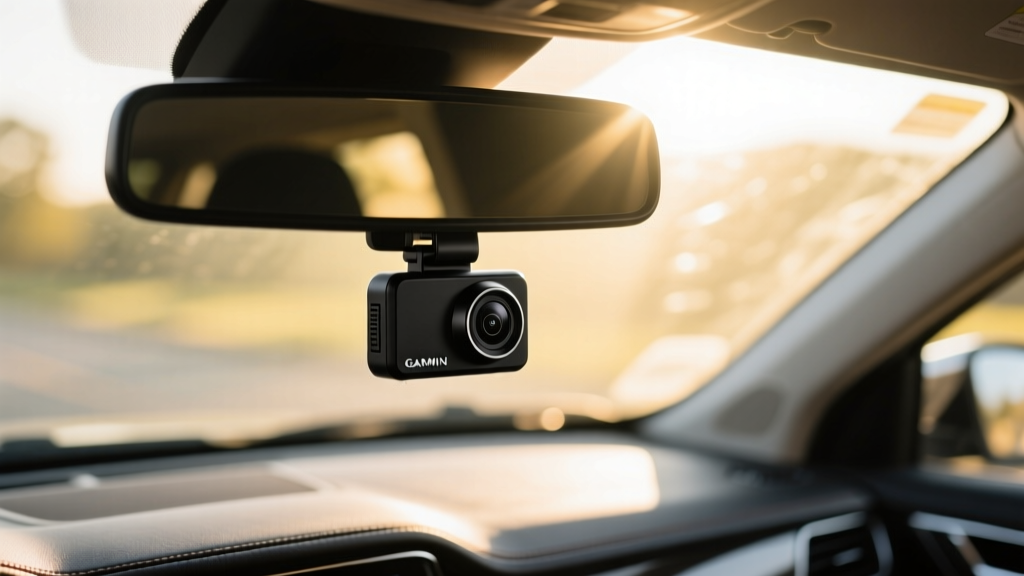
Windshield real estate is precious. A bulky camera mounted to your glass doesn't just look cluttered; it actively compromises your forward visibility and creates dangerous blind spots. When tech enthusiasts hunt for cool gadgets Amazon currently stocks for vehicle upgrades, the market is flooded with oversized, screen-heavy dash cams that belong in a 2018 sedan, not a modern daily driver. The 2026 standard for vehicle monitoring prioritizes minimalism, stealth, and high-fidelity sensor data packed into micro-enclosures.
This guide strips away the gimmicks and focuses strictly on ultra-compact dash cams and hidden vehicle monitoring hardware. We evaluate exact dimensions, thermal tolerances, and sensor capabilities to help you build a low-profile, high-performance vehicle telemetry setup.
The Physics of Windshield Blind Spots
Before selecting a camera, you must understand the geometry of windshield obstructions. According to visibility research referenced by the National Highway Traffic Safety Administration (NHTSA), any opaque object mounted in the forward field of vision creates an expanding cone of blindness. A standard 5-inch dash cam mounted 18 inches from your eyes blocks a 15-degree horizontal cone. At a distance of 100 feet, that equates to a 26-foot blind spot—easily enough to hide a pedestrian, cyclist, or compact car.
Top 4 Ultra-Compact Dash Cams (2026 Market)
The following models represent the current pinnacle of miniaturized optics. They sacrifice onboard LCD screens—which are redundant when you have a smartphone—in favor of premium image sensors and thermal stability.
| Model | Dimensions (Inches) | Image Sensor | Power Storage | Avg. Price |
|---|---|---|---|---|
| Garmin Dash Cam Mini 2 | 2.0 x 1.3 x 0.4 | Sony STARVIS (2MP) | Lithium-Ion | $139 |
| VIOFO A119 Mini 2 | 2.8 x 2.1 x 1.5 | Sony STARVIS 2 (5MP) | Supercapacitor | $149 |
| Nextbase Nano | 2.2 x 1.7 x 1.3 | Sony Exmor (2MP) | Supercapacitor | $129 |
| Thinkware F200 Pro | 3.5 x 1.8 x 1.2 | Sony STARVIS (2MP) | Supercapacitor | $249 |
Deep Dive: VIOFO A119 Mini 2
The VIOFO A119 Mini 2 is the current enthusiast favorite for a reason. While slightly wider than the Garmin, its wedge-shaped profile allows it to tuck flush against the headliner behind the rearview mirror. The critical upgrade here is the Sony STARVIS 2 IMX675 sensor. Unlike older 1080p sensors that blow out license plates in high-contrast daylight, the 5MP IMX675 utilizes dual-conversion gain technology. This allows it to capture readable license plates at 45 mph in low-light conditions without introducing the digital noise typical of budget compact cams.
Hidden Vehicle Monitoring: Beyond the Windshield
True space-saving means removing gadgets from your sightline entirely. The OBD-II (On-Board Diagnostics) port, located under your steering column, is a goldmine for stealthy vehicle telemetry.
Bouncie Smart Driving Companion
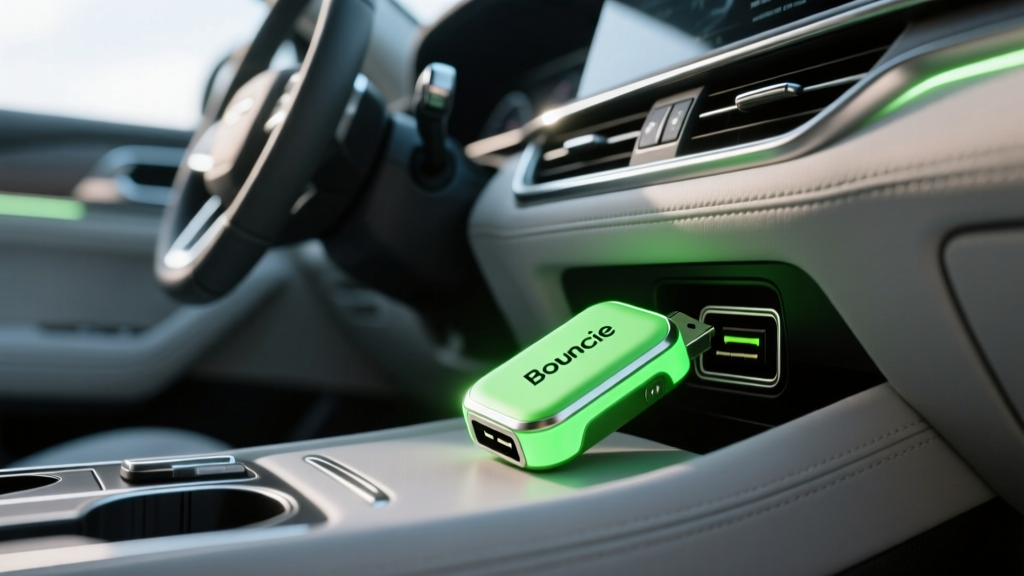
Measuring just 1.7 x 1.5 x 0.8 inches, the Bouncie OBD-II tracker plugs directly into your diagnostic port and disappears. It draws less than 50mA of standby current, ensuring zero battery drain. Bouncie pulls direct ECU data, providing real-time metrics on:
- Battery Voltage Drops: Alerts your phone if resting voltage falls below 11.8V.
- Hard Braking & Acceleration G-Forces: Logged via internal 3-axis accelerometers.
- Check Engine Codes: Translates raw OBD-II P-codes (e.g., P0420) into plain English via the app.
At $30 for the hardware and $9/month for the cellular connection, it is the most cost-effective hidden diagnostic tool on the market.
FOBO Tire 2: Bluetooth TPMS
Factory Tire Pressure Monitoring Systems (TPMS) only warn you when pressure drops 25% below baseline—often too late to prevent sidewall damage. The FOBO Tire 2 replaces your standard valve stem caps with Bluetooth-enabled sensor nodes (weighing just 10 grams each). They monitor pressure to 0.1 PSI accuracy and temperature to 1°C, sending data directly to your phone or a dedicated $15 key fob receiver. No wires, no windshield mounts, no dashboard clutter.
💡 Expert Insight: The Thermal Threat to Compact Enclosures
Miniaturization creates a severe thermal bottleneck. A parked car's dashboard can reach 160°F (71°C) in direct summer sunlight. Compact dash cams using Lithium-Ion batteries (like the Garmin Mini 2) risk battery swelling, venting, or permanent capacity degradation when exposed to sustained temperatures above 140°F (60°C).
The Fix: If you live in a climate where summer interior temperatures exceed 120°F, you must purchase a dash cam powered by a Supercapacitor (like the VIOFO or Nextbase Nano). Supercapacitors store energy electrostatically rather than chemically, safely enduring operating temperatures up to 176°F (80°C) without swelling or failing. They only hold enough charge to safely close the final video file upon power loss, which is exactly what a hardwired dash cam requires.
Installation Blueprint: Hiding the Wires
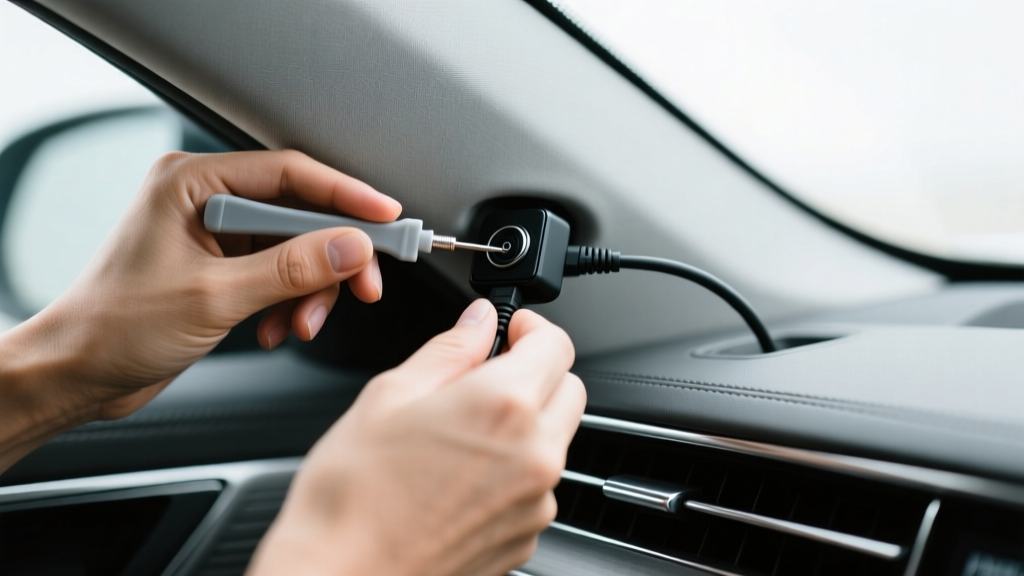
A compact dash cam is useless if a thick USB cable dangles across your dashboard. Proper hardwiring requires routing the power cable behind the vehicle's interior panels. Follow this exact sequence to maintain factory aesthetics and preserve airbag deployment paths.
- Mount the Camera: Clean the glass with 70% isopropyl alcohol. Apply the electrostatic sticker, then the 3M adhesive mount. Position it within the swept area of the wipers, but tucked directly behind the rearview mirror housing.
- Tuck the Headliner: Use a nylon plastic trim tool (never metal, which tears fabric) to gently pry down the edge of the roof headliner. Push the cable up into the gap above the glass.
- Navigate the A-Pillar: This is the critical safety step. The A-pillar (the post between your windshield and front door) contains a side-curtain airbag. You must remove the plastic trim piece labeled 'AIRBAG'. Route the dash cam wire behind the airbag, zip-tying it to the existing factory wire harness. Never route a cable across the front of the airbag, as it will become a lethal projectile during deployment.
- Drop to the Fuse Box: Run the cable down the rubber weather stripping beside the door jamb, under the dashboard kick panel, and into the interior fuse box. Use a multimeter to identify a 'constant 12V' fuse for parking mode and an 'accessory 12V' fuse for ignition power.
Storage Media: The Hidden Failure Point
Enthusiasts often pair $150 compact dash cams with $10 standard microSD cards, leading to catastrophic data loss. Dash cams utilize continuous loop recording, rewriting the same memory sectors hundreds of times. Standard cards (like the SanDisk Ultra) are rated for standard read/write cycles and will throw 'Card Error' warnings within three months of dash cam use.
You must purchase High-Endurance or Max-Endurance microSD cards. These utilize 3D NAND flash memory specifically engineered for continuous video surveillance.
| SD Card Model | Endurance Rating (128GB) | Warranty for Dash Cams |
|---|---|---|
| SanDisk High Endurance | ~10,000 Hours | 2 Years |
| Samsung PRO Endurance | ~140,000 Hours | 5 Years |
| Western Digital Max Endurance | ~120,000 Hours | 3 Years |
Troubleshooting Compact Cam Power Drops
Because space-saving dash cams lack large batteries, they are entirely dependent on consistent USB power delivery. A common failure mode in compact setups is the camera rebooting randomly while driving. This is rarely a camera defect; it is a voltage drop issue.
Compact cams drawing 5V/2A via a 12V cigarette lighter adapter suffer voltage drops if the adapter's internal step-down converter overheats. Furthermore, running a 15-foot USB-C cable from a rear hardwire kit to a front camera introduces resistance, dropping the voltage at the camera's end to 4.6V, triggering a shutdown.
The Solution: Always use the manufacturer's proprietary hardwire kit with a built-in low-voltage cutoff relay, and ensure the cable length does not exceed 11 feet. If using a cigarette adapter, verify it is rated for a continuous 3A output, not the standard 1A output found in older vehicles.
Upgrading to a stealthy vehicle monitoring setup requires prioritizing sensor quality and thermal resilience over marketing gimmicks. By selecting supercapacitor-based optics, integrating hidden OBD-II telemetry, and routing power safely behind the trim, you maintain a pristine cabin aesthetic while securing broadcast-grade incident data. Consult the Insurance Institute for Highway Safety (IIHS) for ongoing research into how dash cam prevalence is actively shifting insurance claim resolutions and fault determinations in modern traffic incidents.
Written by
Ryan TanakaRyan Tanaka holds a B.S. in Mechanical Engineering from Oregon State University and is a certified AWS Solutions Architect. He has built over 80 custom electronics projects ranging from CNC machines to IoT sensor networks, and has reviewed development boards, 3D printers, soldering equipment, and maker tools for the past 6 years. Ryan is an active contributor to 12 open-source hardware projects on GitHub and teaches monthly workshops at three hackerspaces across the Pacific Northwest. His reviews combine engineering rigor with accessibility — he evaluates products not just on specs but on documentation quality, community support, and learning curve for beginners. He has presented at Maker Faire Bay Area, Open Hardware Summit, and the Adafruit community showcase, and maintains a popular blog documenting his build processes.