Eco-Friendly VR: The Coolest Tech Gadgets of 2026
Discover the coolest tech gadgets in VR and AR for 2026. We analyze sustainable headsets, modular accessories, and eco-friendly recycling frameworks.
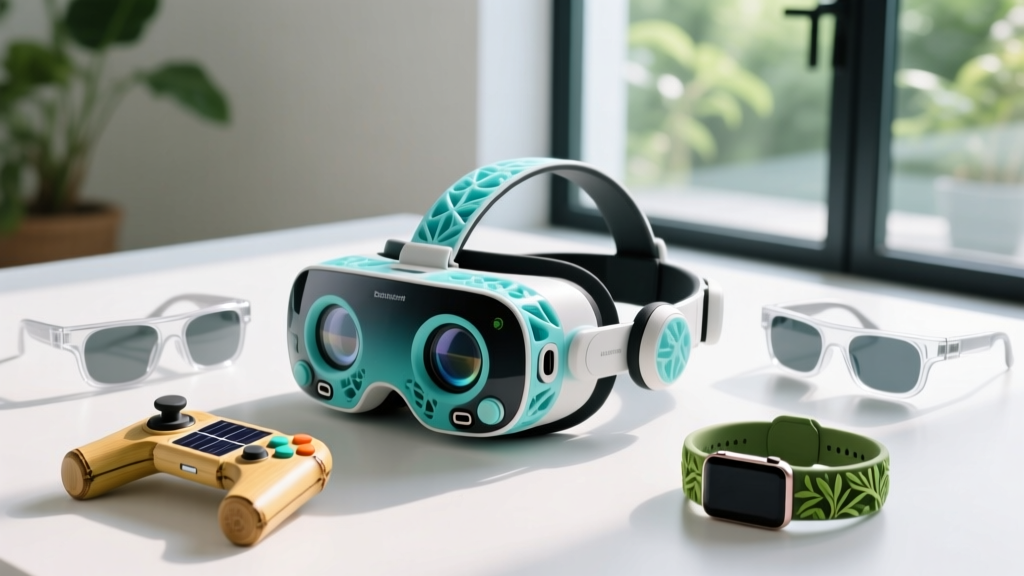
The Hidden E-Waste Footprint of Immersive Tech
The virtual and augmented reality sector faces a critical sustainability paradox. While headsets transport us to pristine digital worlds, their physical manufacturing and disposal exact a heavy toll on the real one. The average standalone VR headset has a functional lifespan of just 2.5 to 3 years. This planned obsolescence is rarely driven by optical failure; instead, it stems from non-replaceable, glued-in lithium-ion batteries that degrade after 400 charge cycles, and software lockouts that brick older hardware.
According to data tracked by the Global E-waste Monitor, mixed-material electronics like VR headsets—which fuse glass optics, rare-earth magnets, and petroleum-based plastics into inseparable assemblies—are notoriously difficult to recycle. When curating a list of the coolest tech gadgets for enthusiasts in 2026, we must evaluate hardware not just by its refresh rate or field of view, but by its modularity, material sourcing, and end-of-life viability.
Evaluating Headsets: Modularity vs. Recycled Materials
Sustainable VR hardware currently relies on two distinct engineering philosophies: designing for modular repairability, or utilizing high-percentage post-consumer recycled (PCR) materials in sealed units. Here is how the top contenders measure up.
Lynx R-1: The Open-Hardware AR Champion
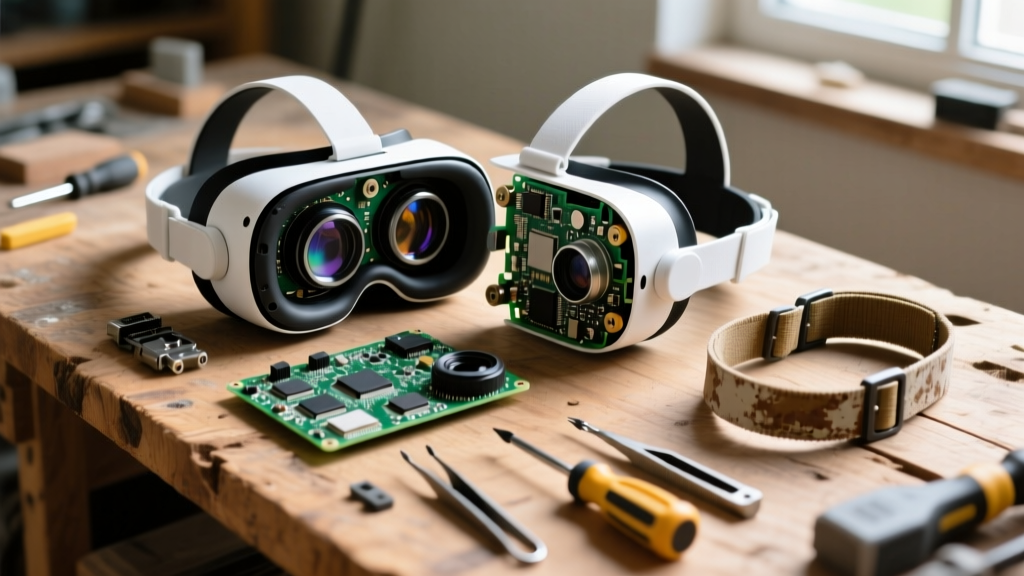
Priced at $1,699, the Lynx R-1 is an outlier in the mixed-reality space. Unlike sealed consumer units, the R-1 embraces an open-hardware, modular architecture. The facial interface, mainboard, and optical stack can be decoupled using standard Torx screwdrivers. If the main processor becomes obsolete, the expensive optical engines and pass-through cameras can theoretically be retained or upgraded. This modularity directly combats e-waste by allowing component-level repairs rather than whole-unit replacements.
Meta Quest 3: The Mainstream Recycled Pick
At $499, the Meta Quest 3 dominates market share, giving its environmental policies massive leverage. According to Meta's Sustainability Report, the Quest 3 integrates 100% post-consumer recycled (PCR) plastics in its facial interface and head strap. While the internal mainboard and glued-in battery remain repairability pain points, Meta’s aggressive trade-in and certified recycling mail-back programs ensure that end-of-life units are processed to recover copper and aluminum, keeping them out of landfills.

Apple Vision Pro: The Recycled Metals Heavyweight
The $3,499 Apple Vision Pro represents a different approach to sustainability: premium material recovery. Apple utilizes 100% recycled rare earth elements in all headset magnets and 100% recycled tin soldering on the main logic board. The custom-milled aluminum frame is highly recyclable. However, the device's extreme integration and proprietary battery tether mean that out-of-warranty repairs are virtually impossible for third-party technicians, forcing a reliance on Apple's closed-loop recycling ecosystem.
Sustainable Hardware Matrix
| Headset Model | Price (2026) | Battery Modularity | Recycled Content Highlights | Repairability Score |
|---|---|---|---|---|
| Lynx R-1 | $1,699 | User-Replaceable | Modular chassis design | High (8/10) |
| Meta Quest 3 | $499 | Glued / Sealed | 100% PCR Plastics (Strap/Interface) | Low (3/10) |
| Apple Vision Pro | $3,499 | Tethered / Swappable | 100% Recycled Rare Earths & Tin | Very Low (1/10) |
Accessories That Artificially Extend Hardware Lifespans
You do not need to buy a new headset to make an eco-friendly impact. The coolest tech gadgets often include third-party accessories designed to solve the inherent design flaws of OEM hardware, specifically targeting battery degradation and material waste.
Hot-Swappable Battery Straps (BoboVR Halo / M3 Pro)
The primary killer of standalone VR headsets is battery degradation. By utilizing a hot-swappable magnetic battery strap (ranging from $45 to $80), you shift the chemical degradation cycle away from the headset's internal, glued-in cell to an external, easily replaceable module. When the external battery inevitably loses its capacity after 500 cycles, you replace a $30 battery pack rather than discarding a $500 headset. This single accessory can effectively double the functional lifespan of your immersive hardware.
KIWI Design Bamboo-Fiber Controller Grips
Standard controller grips are made from petroleum-based TPU (thermoplastic polyurethane) or silicone, which shed microplastics and degrade into sticky residues from hand sweat. KIWI Design's eco-grips utilize a bamboo-fiber infused composite. The bamboo acts as a natural moisture-wicking agent, reducing the need for synthetic chemical treatments, and the material is significantly more resistant to UV and sweat degradation, meaning you replace them half as often.

The Sustainable VR Purchasing Framework
Before adding a new AR or VR device to your cart, run it through this three-point decision framework to minimize your environmental footprint:
- Assess the Compute Tether: PC-tethered headsets (like the Pimax Crystal or Valve Index) inherently last longer than standalone units. Because the PC handles the processing, the headset functions purely as a display. You can upgrade your PC's GPU for years without rendering the headset obsolete.
- Verify the Battery Architecture: If buying standalone, check if the OEM sells official replacement battery kits, or if the third-party accessory market offers reliable hot-swap alternatives. If neither exists, factor the cost of professional battery replacement into your total cost of ownership.
- Audit the End-of-Life Policy: Support organizations that align with iFixit's Right to Repair advocacy. Does the manufacturer provide free mail-back recycling labels? Do they publish a transparent e-waste audit? Avoid brands that treat hardware as disposable.
'The most sustainable gadget is the one you don't have to throw away. Modularity and software longevity are the true metrics of green tech in the 2020s.'
End-of-Life Protocols: Keeping Lithium Out of Landfills
When your headset finally reaches the end of its usable life, proper disposal is non-negotiable. The optical stacks contain specialized resins and coatings that require specialized e-waste shredders to separate from the glass.
- Step 1: Perform a factory reset and unlink all cloud accounts to protect your spatial mapping data.
- Step 2: Detach all fabric straps and silicone facial interfaces. These mixed textiles cannot be processed by e-waste facilities and must be disposed of separately or repurposed.
- Step 3: Tape the exposed charging contacts and battery terminals with clear packing tape to prevent short-circuiting during transport.
- Step 4: Drop the main unit and controllers at a certified e-waste kiosk (such as those found at Best Buy or Staples) or use the OEM's prepaid mail-in recycling portal.
By prioritizing modularity, leveraging lifecycle-extending accessories, and demanding transparent material sourcing, tech enthusiasts can enjoy the cutting edge of spatial computing without subsidizing the e-waste crisis.
Written by
Lena ChenLena Chen earned her M.S. in Human-Computer Interaction from Carnegie Mellon University and a B.S. in Electrical Engineering from the University of Washington. She has spent the past decade specializing in smart home architecture and IoT ecosystems, helping over 200 homeowners design fully connected living spaces. Lena is a certified Matter protocol consultant and has published peer-reviewed research on voice-first interface design in the ACM Digital Library. Her reviews of smart home products combine deep technical analysis with real-world usability testing, evaluating everything from Zigbee mesh stability to Alexa skill responsiveness. She regularly speaks at CEDIA Expo and CES smart home panels.