Gorilla Gadgets Air Cooler vs Smart Rings: Core Temp Tracking in 2026
Discover how 2026 smart rings and watches track core body temperature, offering personalized thermal insights a gorilla gadgets air cooler can't match.
The Microclimate Revolution: Wearables vs. Room Coolers
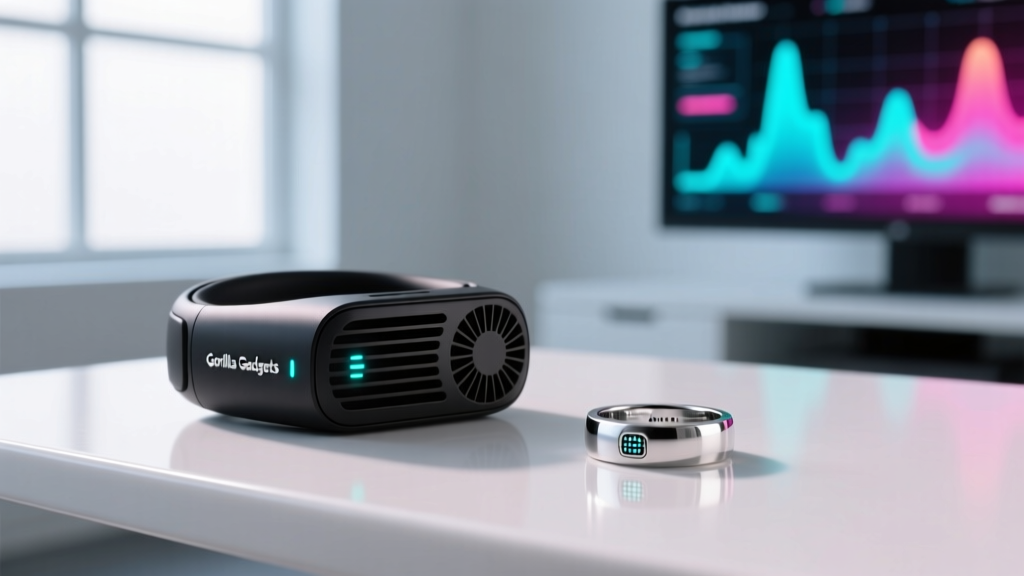
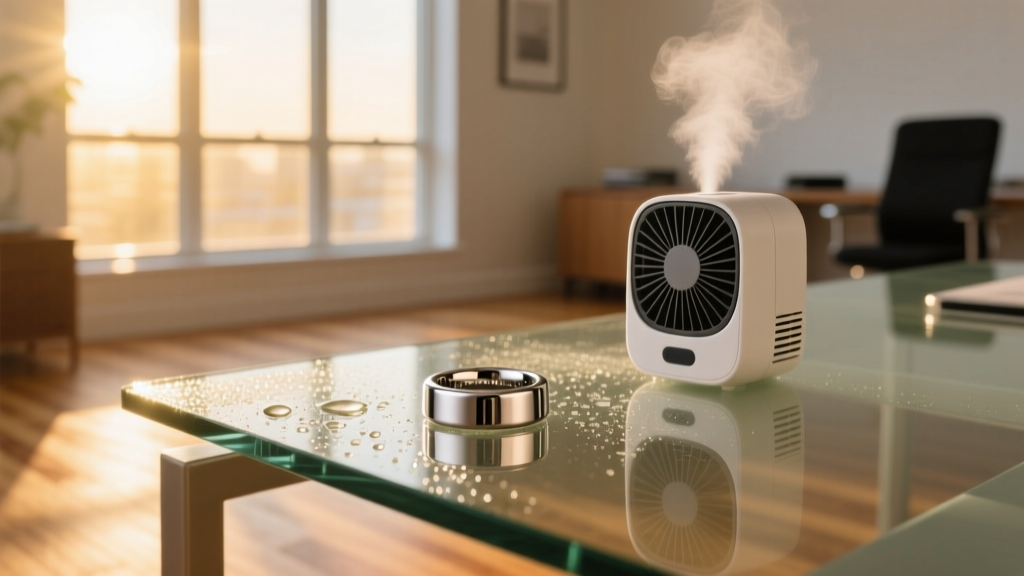
Managing personal thermal comfort has historically been a blunt, ambient-focused endeavor. Devices like the popular gorilla gadgets air cooler rely on evaporative water pads to drop your immediate room temperature by 5°F to 10°F. While effective in dry climates, this approach operates entirely blind to your actual physiological state. It cools the air, but it cannot measure if your core temperature is actually dropping, nor can it account for individual metabolic variance. In 2026, the paradigm has shifted from ambient manipulation to biometric precision. Advanced smart rings and thermal-tracking smartwatches now offer granular, continuous core temperature inference, allowing tech enthusiasts to build responsive microclimates based on real-time physiological data rather than guesswork.
According to the U.S. Department of Energy, evaporative coolers are highly dependent on relative humidity, losing efficacy dramatically when humidity exceeds 60%. Wearable thermistors, conversely, measure the physiological outcome regardless of the ambient environment, bridging the gap between external cooling and internal homeostasis.
The Sensor Stack: How Smart Rings Measure Heat
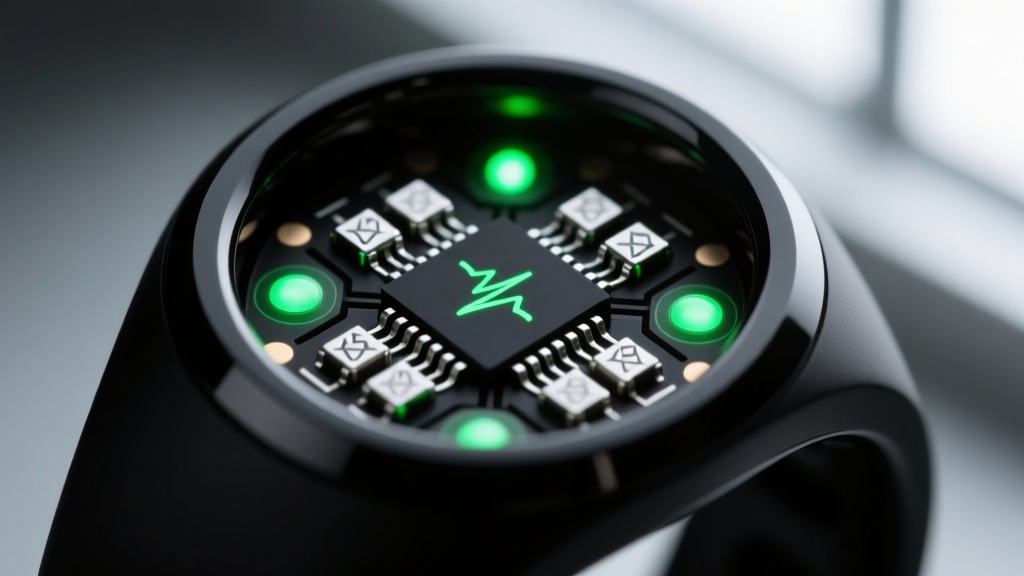
Smart rings have emerged as the superior form factor for continuous temperature tracking due to the high density of capillary beds in the fingers. The Oura Ring 4 utilizes a titanium inner molding with 18 distinct signal pathways, providing 120 times more signal coverage than its predecessor. Embedded Negative Temperature Coefficient (NTC) thermistors measure peripheral skin temperature to an accuracy of ±0.1°C.
Peripheral skin temperature naturally fluctuates between 31°C and 35°C (87.8°F - 95°F) based on environmental exposure. Core body temperature remains tightly regulated around 37°C (98.6°F). Modern wearables do not measure core temperature directly; instead, they use machine learning algorithms combining skin temperature shifts, Heart Rate Variability (HRV), and resting heart rate to infer core thermal stress and illness onset.
The Samsung Galaxy Ring takes a different hardware approach, utilizing Grade 5 titanium for its chassis. Titanium's specific thermal conductivity allows the internal PPG and temperature sensors to acclimate to skin temperature rapidly, minimizing the 'cold shock' artifact when the ring is first put on. Priced at $399, it operates without a mandatory subscription, making it a cost-effective alternative to Oura's $349 hardware plus $5.99 monthly fee for enthusiasts focused purely on raw data export.
Smartwatch Thermal Dissipation and Sensor Accuracy
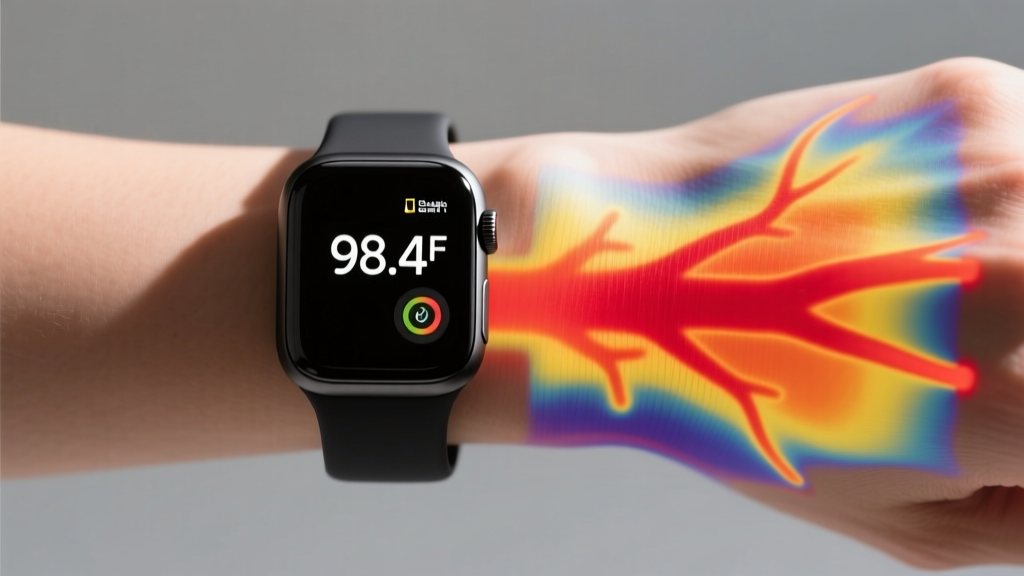
While rings excel at passive, continuous tracking, smartwatches face a unique engineering hurdle: internal heat generation. The processors and bright OLED displays in devices like the Apple Watch Ultra 3 and Garmin Fenix 8X generate localized heat that can interfere with wrist-based skin temperature sensors.
To combat this, 2026 smartwatch architectures employ thermal isolation trenches and algorithmic compensation. The Apple Watch Ultra 3 uses a dual-sensor array—one facing the skin, one facing the ambient air—to calculate the thermal gradient and subtract the device's own heat output from the biometric reading. However, as noted in research published by the National Institutes of Health (NIH) regarding wearable skin temperature sensors, wrist-based measurements remain highly susceptible to ambient thermal shock and vasoconstriction, making them less reliable for absolute baseline tracking than finger-based smart rings.
Comparison Matrix: Wearable Trackers vs. Ambient Cooling
| Device / Category | Mechanism of Action | Precision / Output | Approx. Cost |
|---|---|---|---|
| Gorilla Gadgets Air Cooler | Evaporative water pad & fan | Drops ambient temp 5-10°F (humidity dependent) | $50 - $80 |
| Oura Ring 4 | 18-pathway NTC thermistors | ±0.1°C skin temp, algorithmic core inference | $349 + $5.99/mo |
| Samsung Galaxy Ring | Grade 5 Titanium chassis thermistor | Continuous skin temp, Samsung Health integration | $399 |
| Apple Watch Ultra 3 | Dual-sensor thermal gradient array | Wrist skin temp, ambient compensation | $899 |
Failure Modes: When Wearable Temp Tracking Goes Wrong
Understanding the edge cases of biometric tracking is critical for enthusiasts relying on this data to automate their environment. Do not trust your wearable's temperature data blindly in the following scenarios:
- Peripheral Vasoconstriction: If you step into a cold environment, your body restricts blood flow to your extremities to preserve core heat. Your smart ring will register a massive temperature drop, even though your actual core temperature remains stable at 37°C.
- Ambient Thermal Shock: Taking a hot shower or washing your hands with cold water immediately before bed will skew the first 45 minutes of your Oura or Galaxy Ring sleep temperature baseline. Always remove your ring during extreme temperature exposure.
- The Evaporative Humidity Trap: If you are using a gorilla gadgets air cooler in a room with >60% relative humidity, the water will not evaporate efficiently. The room will feel clammy, and your wearable will register a rising skin temperature due to impaired sweat evaporation, triggering a false 'heat stress' alert.
Actionable Framework: Building Your 2026 Thermal Management Stack
To achieve true microclimate optimization, you must combine ambient hardware with biometric feedback loops. Here is the exact framework for integrating your wearable data with your cooling hardware:
- Establish the Baseline: Wear your smart ring continuously for 7 nights to establish your circadian temperature nadir (the lowest point your skin temp reaches during deep sleep).
- Automate via IFTTT / Home Assistant: Configure an automation where a >0.5°C deviation above your baseline skin temperature triggers your smart thermostat to drop the ambient room temperature by 2°F.
- Deploy Targeted Evaporative Cooling: If your local relative humidity is below 40%, position your gorilla gadgets air cooler directly in your line of sight at your desk. Use your smartwatch's real-time HRV drop (a sign of thermal stress) as a trigger to switch the cooler from 'Eco' to 'Max' fan speed via a smart plug.
"The future of personal cooling isn't about making the whole room colder; it's about creating a responsive thermal envelope that reacts to your autonomic nervous system in real-time."
— 2026 Wearable Biometrics & Environmental Control Report
By shifting your focus from the blunt ambient cooling of a desktop device to the precise, algorithmic core temperature inference of modern smart rings, you transition from simply reacting to the weather to actively engineering your physiological comfort.
Written by
Ryan TanakaRyan Tanaka holds a B.S. in Mechanical Engineering from Oregon State University and is a certified AWS Solutions Architect. He has built over 80 custom electronics projects ranging from CNC machines to IoT sensor networks, and has reviewed development boards, 3D printers, soldering equipment, and maker tools for the past 6 years. Ryan is an active contributor to 12 open-source hardware projects on GitHub and teaches monthly workshops at three hackerspaces across the Pacific Northwest. His reviews combine engineering rigor with accessibility — he evaluates products not just on specs but on documentation quality, community support, and learning curve for beginners. He has presented at Maker Faire Bay Area, Open Hardware Summit, and the Adafruit community showcase, and maintains a popular blog documenting his build processes.