Best Tech Gadgets 2025: Fixing True Wireless Earbud Audio Dropouts
Solve true wireless earbud dropouts, multipoint failures, and battery decay. Practical fixes and top problem-solving TWS picks for audiophiles.
The Hidden Frustrations of Modern True Wireless Audio
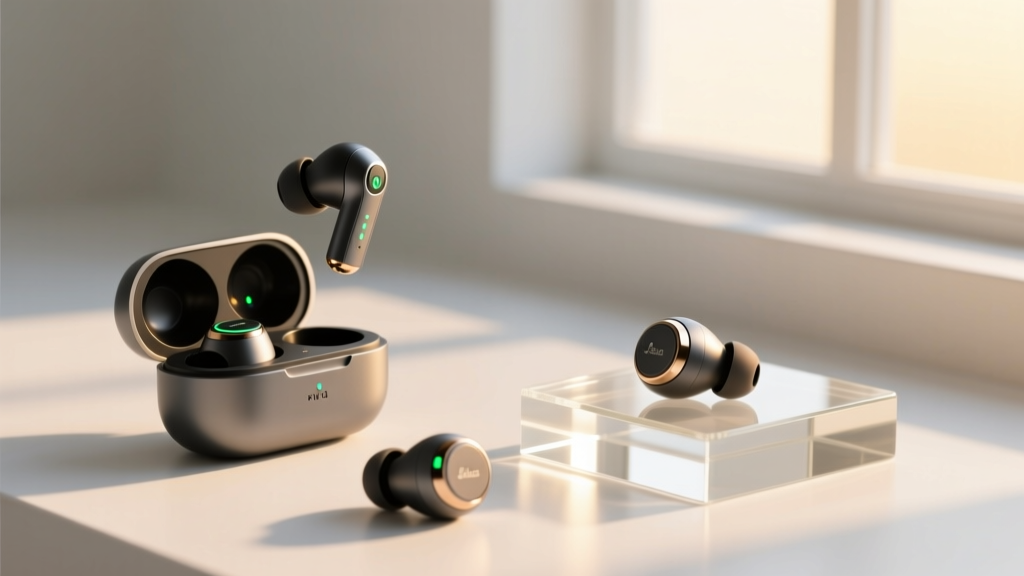
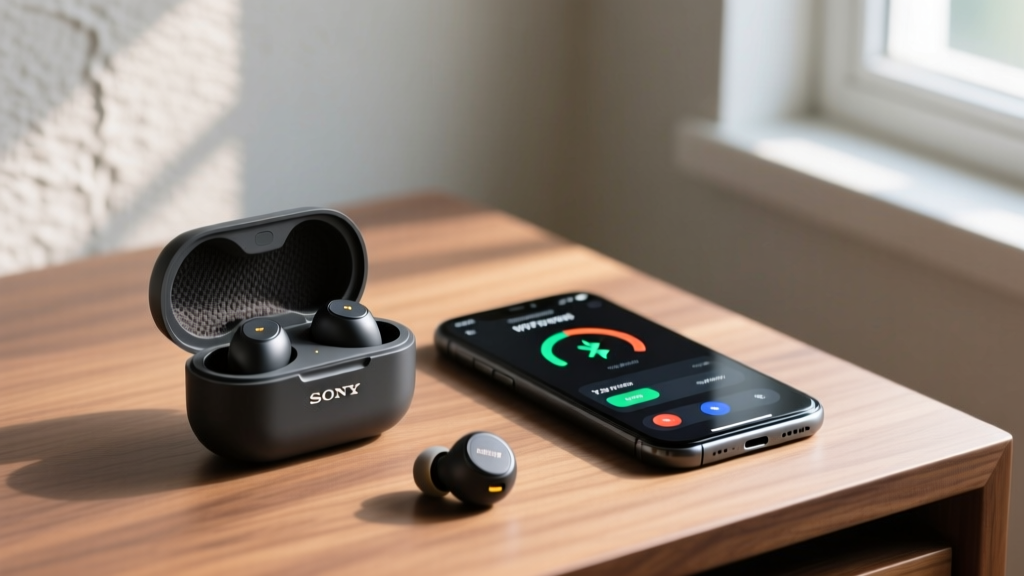
When tech publications compiled their lists of the best tech gadgets 2025 had to offer, true wireless stereo (TWS) earbuds dominated the audio categories. Yet, beneath the glossy marketing of spatial audio and adaptive active noise cancellation (ANC), a persistent reality remains for daily users: connection dropouts, multipoint stuttering, and rapid battery degradation. As we navigate the current 2026 hardware landscape, the most practical approach to TWS audio isn't just chasing the highest decibel output or the flashiest codec. It is about understanding the underlying RF (radio frequency) engineering, battery chemistry limitations, and Bluetooth protocol bottlenecks that cause these devices to fail in real-world environments.
This guide bypasses superficial reviews to provide actionable, engineering-level troubleshooting for your current earbuds, alongside practical hardware recommendations designed specifically to solve the most common TWS failure modes.
Diagnosing the Multipoint Bluetooth Bottleneck
Multipoint Bluetooth—the ability to connect your earbuds to a laptop and a smartphone simultaneously—is arguably the most requested TWS feature, yet it remains the primary culprit for audio stuttering and dropouts. To understand why, we must look at how Classic Bluetooth handles dual connections.
Time-Division Multiplexing and Bandwidth Starvation
Standard Bluetooth radios do not maintain two simultaneous, high-bandwidth audio streams. Instead, they use time-division multiplexing, rapidly switching the antenna's attention between Device A and Device B. When your smartphone receives a background notification while you are listening to a high-bitrate LDAC stream from your laptop, the earbud's Qualcomm or MediaTek chipset must momentarily pause the audio polling to check the phone's connection state. This micro-interruption manifests as a stutter, a dropout, or an aggressive volume ducking effect.
If you experience constant stuttering while using dual-device multipoint, disable the high-resolution codec (LDAC or aptX HD) on your primary listening device. Forcing the primary connection down to AAC (256 kbps) frees up the radio's time-division scheduling buffer, drastically reducing dropouts when the secondary device polls for notifications.
The industry is slowly transitioning toward Bluetooth LE Audio and Auracast, which utilizes the more efficient LC3 codec and allows for true simultaneous multi-stream broadcasting. However, until LE Audio achieves universal adoption across legacy laptops and older smartphones, managing your Classic Bluetooth bandwidth is the only reliable fix.
Micro-Battery Degradation: The 80% Charge Rule
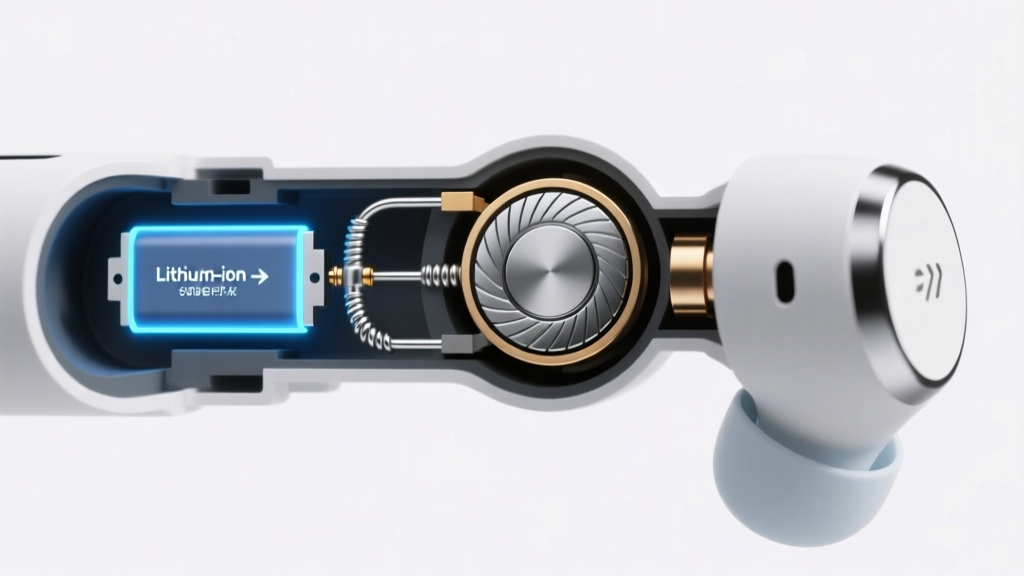
A common complaint among TWS users is a sharp decline in battery life after 12 to 18 months of use. This is not a software bug; it is a chemical inevitability dictated by the physics of micro lithium-ion cells.
The Voltage Stress Factor
Most premium TWS earbuds utilize micro-batteries ranging from 40mAh to 65mAh per bud. Unlike the 5000mAh battery in your smartphone, which benefits from sophisticated thermal dissipation and advanced battery management systems (BMS), earbud batteries are subjected to high C-rate charging (charging very quickly relative to their small capacity) and the ambient heat of the human ear canal.
Charging a lithium-ion cell to its maximum voltage of 4.2V (100% capacity) and holding it there causes accelerated solid electrolyte interphase (SEI) layer growth and internal resistance. According to battery lifecycle testing, consistently charging micro-cells to 100% can reduce their total lifespan by up to 40% compared to capping the charge at 80% (roughly 3.9V).
Actionable Battery Preservation Steps
- Enable Charge Limiters: Companion apps for brands like Sony (Headphones Connect) and Sennheiser (Smart Control) often include an "80% charge limit" or "battery care" toggle. Enable this immediately if you use your earbuds daily.
- Avoid Fast-Charging the Case Overnight: Plugging your earbud case into a 65W+ GaN fast charger overnight forces the case's internal BMS to trickle-charge the micro-batteries at high thermal loads. Use a standard 5W/1A USB-A brick for overnight case charging.
- Long-Term Storage: If storing earbuds for more than a month, discharge them to 40% and remove them from the case to prevent the case's parasitic drain from pushing the cells below the 2.5V critical undervoltage threshold, which will permanently brick the battery.
Problem-Solving Hardware Picks: The Practical Matrix
Not all TWS earbuds are engineered equally when it comes to handling edge cases. Below is a comparison of three flagship models that excel in solving specific real-world audio problems.
| Model | Price Range | Primary Problem Solved | Key Hardware Spec |
|---|---|---|---|
| Sony WF-1000XM5 | $278 - $298 | Wind noise interference & ANC pressure fatigue | Integrated Processor V2 + Bone conduction sensor |
| Technics EAH-AZ80 | $250 - $300 | Multipoint connection limits (supports 3 devices) | Custom JustMyVoice beamforming + 3-device multipoint |
| Sennheiser Momentum TW 4 | $329 - $349 | Codec compression artifacts & physical fit slippage | aptX Lossless support + IP54 dust/moisture rating |
Why these picks matter: The Technics EAH-AZ80 is currently one of the only premium TWS earbuds on the market offering true 3-device multipoint. For IT professionals or remote workers juggling a desktop, laptop, and smartphone, this eliminates the need to manually disconnect and reconnect when switching workflows. Meanwhile, the Sennheiser Momentum TW 4 utilizes Qualcomm's Snapdragon Sound architecture to deliver aptX Lossless, ensuring bit-perfect CD-quality audio (16-bit/44.1kHz) without the aggressive compression artifacts found in standard SBC or AAC connections.
Navigating RF Interference in Crowded Environments
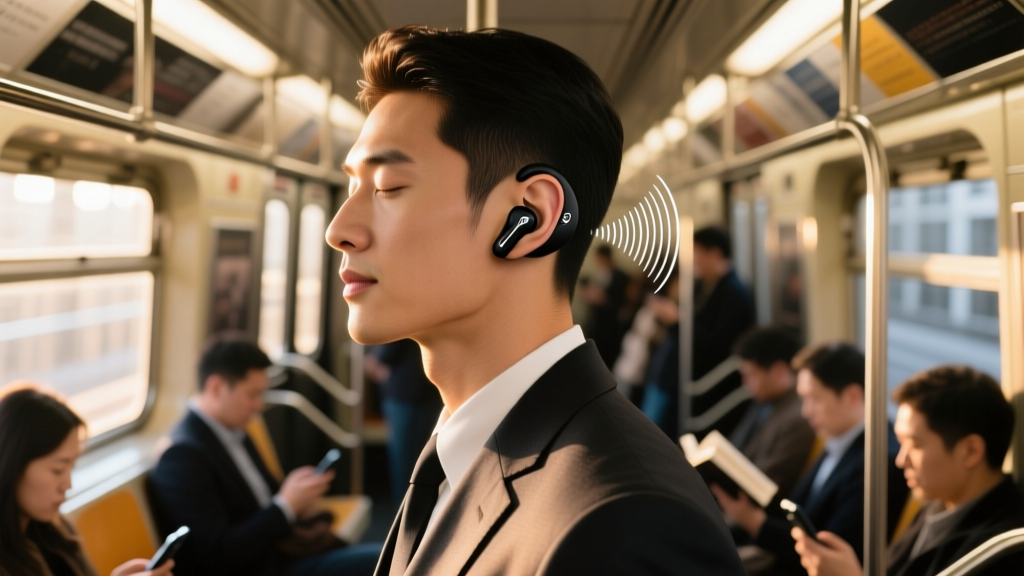
If your earbuds only drop out in specific locations—such as train stations, busy intersections, or gyms—you are experiencing 2.4GHz spectrum crowding. Both Wi-Fi and Bluetooth operate in this unlicensed ISM band. The Federal Communications Commission (FCC) notes that high-density environments with multiple overlapping Wi-Fi routers and BLE (Bluetooth Low Energy) devices create severe RF noise floors.
The Bitrate vs. Stability Trade-off
High-resolution codecs like LDAC attempt to push up to 990 kbps of audio data. In a pristine environment, this sounds incredible. In a crowded train station, the 2.4GHz interference causes packet loss. The Bluetooth protocol attempts to retransmit lost packets, but when the buffer empties, the audio drops out completely.
Leaving your LDAC connection set to "Prioritize Sound Quality" (990 kbps) in high-interference zones will result in constant stuttering. Use your companion app to switch to "Prioritize Connection Quality" (330 kbps) or force the AAC codec when commuting. The human ear cannot reliably distinguish 990 kbps from 330 kbps in a noisy, 85dB subway environment anyway due to auditory masking.
Acoustic Seal Diagnostics and Physical Fit
Audio dropouts aren't always digital; sometimes, they are acoustic. If your bass response suddenly disappears or the ANC sounds "hollow," you are experiencing a seal breach. The human ear canal changes shape slightly when you chew, talk, or sweat, which can break the acoustic seal of standard silicone tips.
Upgrading to Memory Foam and Impedance Testing
To solve physical fit issues, abandon the stock silicone tips. Invest in Comply TrueGrip Pro or SpinFit W1 memory foam tips. Memory foam expands to fill the unique asymmetrical geometry of your ear canal, creating a physical barrier that maintains the acoustic seal even during jaw movement.
Furthermore, utilize the "ear tip fit test" available in most premium companion apps. This test uses the internal feedback microphones (normally used for ANC) to measure the acoustic impedance inside your ear canal. If the app registers a poor seal, do not ignore it—a broken seal not only ruins bass response but forces the ANC algorithm to overcompensate, introducing audible white noise and increasing battery drain.
Summary: A Practical Framework for TWS Reliability
Treating your true wireless earbuds as delicate RF instruments rather than simple audio accessories will drastically improve your daily experience. By managing your multipoint bandwidth, respecting the chemical limits of micro-batteries, and adapting your codec bitrate to your physical environment, you can eliminate the vast majority of dropouts and hardware failures. When it is time to upgrade, prioritize hardware that solves your specific pain points—whether that means choosing 3-device multipoint for office productivity or aptX Lossless for critical listening at home.
Written by
Lena ChenLena Chen earned her M.S. in Human-Computer Interaction from Carnegie Mellon University and a B.S. in Electrical Engineering from the University of Washington. She has spent the past decade specializing in smart home architecture and IoT ecosystems, helping over 200 homeowners design fully connected living spaces. Lena is a certified Matter protocol consultant and has published peer-reviewed research on voice-first interface design in the ACM Digital Library. Her reviews of smart home products combine deep technical analysis with real-world usability testing, evaluating everything from Zigbee mesh stability to Alexa skill responsiveness. She regularly speaks at CEDIA Expo and CES smart home panels.