15 Cool Car Gadgets for Men: The Ultimate 2026 Buyer's Guide
Upgrade your ride with our 2026 buyer's guide to the best cool car gadgets for men. From AI dash cams to smart OBD2 scanners, find the top automotive tech.
The Modern Dashboard: Beyond Factory Options
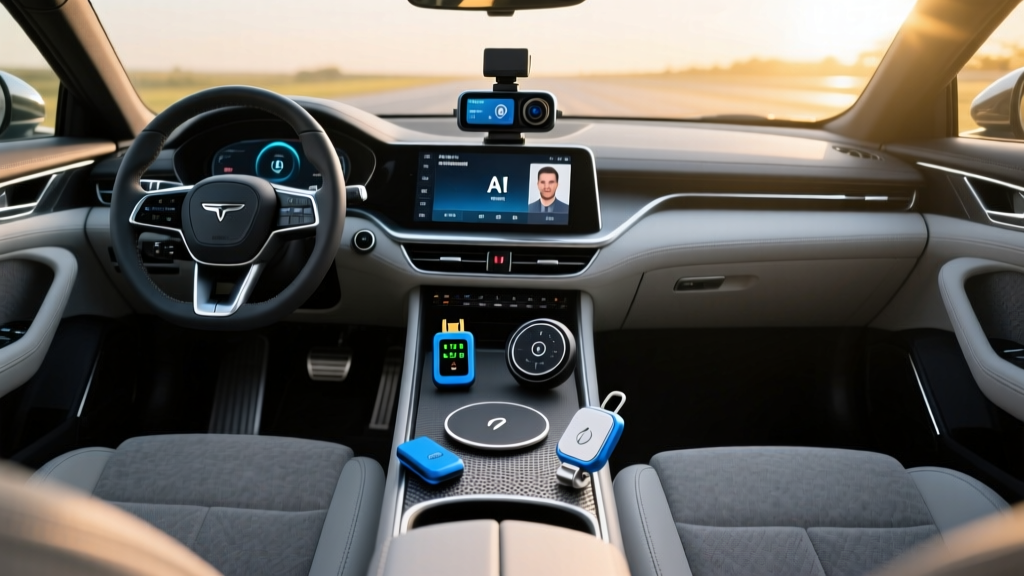
Factory-installed vehicle technology rarely keeps pace with the aftermarket sector. While automakers lock buyers into three-year product cycles, the aftermarket for cool car gadgets evolves monthly. Whether you are outfitting a daily commuter for safer highway transit or prepping a weekend track car for telemetry data, selecting the right automotive tech requires navigating a minefield of inflated specifications and proprietary software traps. This guide cuts through the marketing noise to deliver exact model numbers, real-world pricing, and hardware failure modes for the most essential vehicle upgrades available in 2026.
Vision and Security: AI-Enhanced Dash Cams
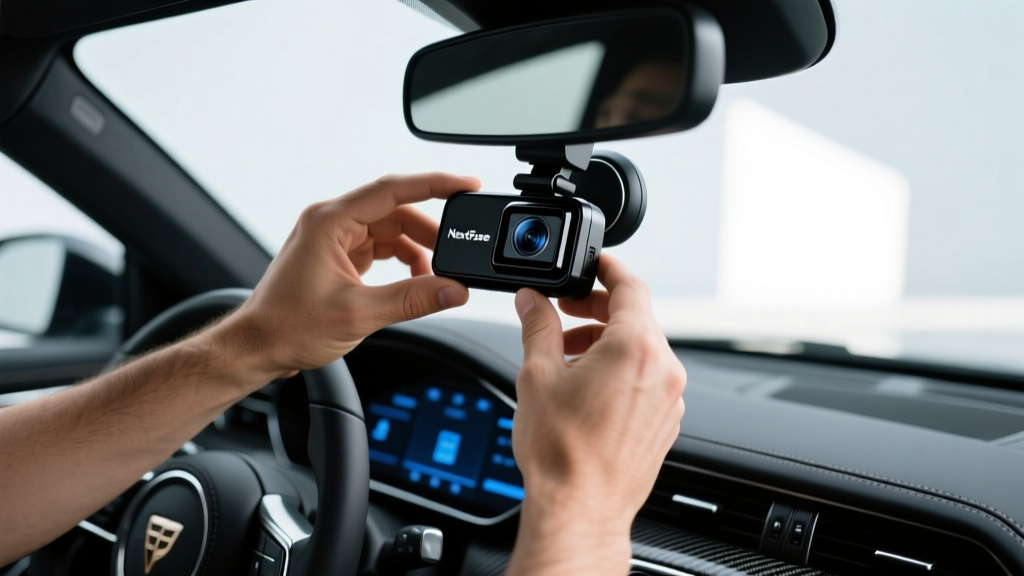
A dash cam is no longer just a passive recording loop; modern units utilize edge-computing to detect collisions and automatically upload footage via integrated 5G modules. When evaluating cool car gadgets for security, the primary hardware decision revolves around power storage: lithium-ion batteries versus supercapacitors.
Flagship Comparison: Nextbase 622GW vs. Garmin Dash Cam 67W
| Feature | Nextbase 622GW (2026 Edition) | Garmin Dash Cam 67W |
|---|---|---|
| Resolution / FPS | 4K @ 30fps / 1080p @ 120fps | 1440p @ 60fps |
| Field of View | 140 degrees | 180 degrees |
| Power Source | Supercapacitor + Battery Backup | Lithium-Ion Battery |
| Emergency SOS | Yes (Built-in 5G) | No (Requires App + Phone) |
| Street Price | $449.99 | $249.99 |
The Nextbase 622GW justifies its $449 price tag with digital image stabilization (crucial for reading license plates on bumpy roads) and an integrated Emergency SOS feature that dispatches first responders if you fail to respond to a crash prompt. However, its 140-degree field of view misses close-proximity side-swipes. The Garmin 67W captures a massive 180-degree footprint, making it superior for dense urban intersection monitoring, but its reliance on a lithium-ion battery limits its lifespan in high-heat environments.
Diagnostics and Performance: Smart OBD2 Scanners
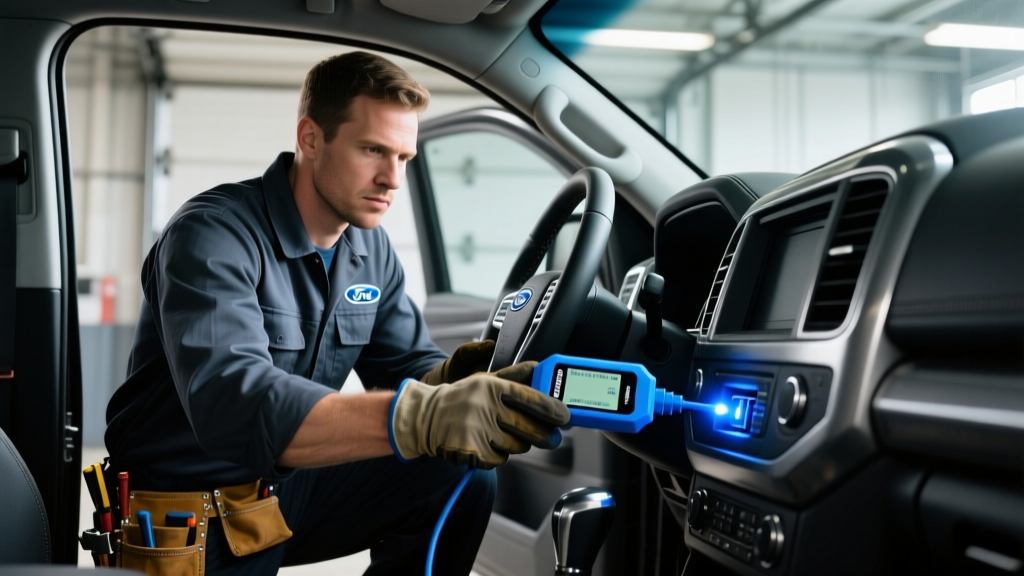
Every vehicle manufactured after 1996 features an On-Board Diagnostics (OBD2) port, usually located beneath the driver's side dashboard. Plugging a smart scanner into this port transforms your smartphone into a dealer-level diagnostic tool. The critical differentiator among OBD2 scanners is access to manufacturer-specific codes (ABS, SRS, Transmission) versus generic EPA-mandated powertrain codes.
Deep Dive: Autel MaxiAP AP200 vs. BlueDriver Bluetooth Pro
- Autel MaxiAP AP200 ($69.99 + $21.99/year per additional brand): The AP200 offers bi-directional control for one specific automaker included for free (e.g., you can command the electronic parking brake to release for pad changes on a VW). However, if you own a Ford and a Toyota, accessing deep diagnostics for the second brand requires an annual $21.99 subscription per marque.
- BlueDriver Bluetooth Pro ($119.95 flat fee): BlueDriver provides access to ABS, Airbag, and Transmission codes for all major domestic, Asian, and European brands without subscription fees. It lacks bi-directional active testing but excels at pulling freeze-frame data and providing verified, crowd-sourced repair fixes for specific error codes.
Infotainment Upgrades: Wireless CarPlay and Android Auto
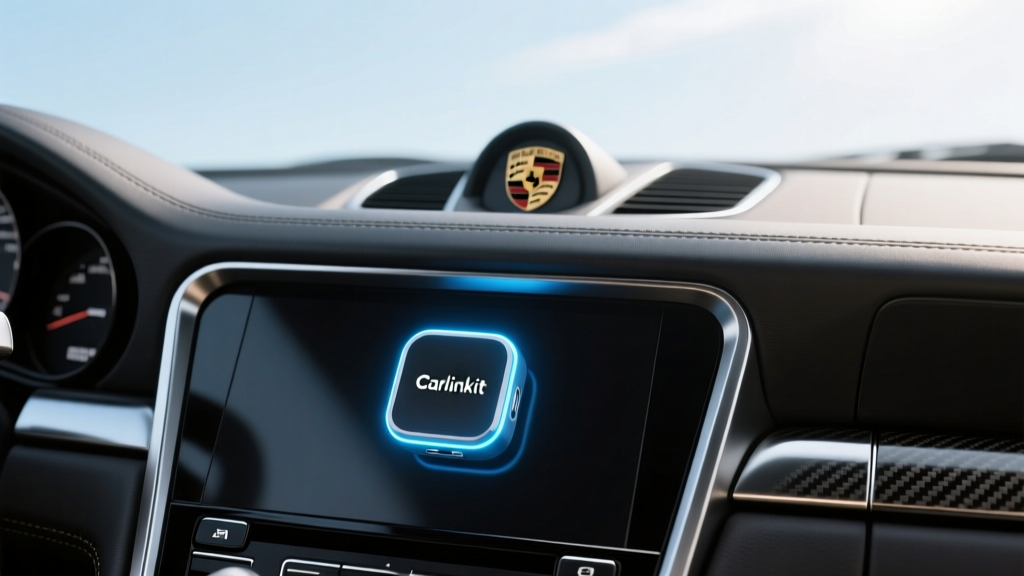
Ripping out a factory head unit to gain wireless smartphone integration often destroys steering wheel controls and backup camera functionality. The superior 2026 solution is a wireless bridge adapter. These devices plug into the car's USB port and broadcast a local Wi-Fi network to your phone.
The Carlinkit 5.0 (2air) ($129) is the current benchmark. Unlike older 2.4GHz adapters that suffer from audio latency and dropouts when passing through areas with high RF interference, the 5.0 model utilizes a dedicated 5GHz Wi-Fi chip paired with Bluetooth 5.2 for initial handshake protocols. This reduces connection time from 15 seconds down to roughly 4 seconds upon entering the vehicle.
Cabin Utility: High-Flow Tire Inflators
Relying on gas station air pumps is a guaranteed way to damage alloy wheels with poorly maintained chuck valves. A portable 12V tire inflator is one of the most practical cool car gadgets you can keep in the trunk. According to the National Highway Traffic Safety Administration (NHTSA), under-inflated tires reduce fuel economy by up to 3% and drastically increase the risk of hydroplaning and blowouts.
The AstroAI 12V Digital Tire Inflator ($35.99) delivers 100 PSI max pressure and features an auto-shutoff relay accurate to +/- 1 PSI. Operational Limitation: The internal piston cylinder lacks advanced thermal dissipation. The manufacturer mandates a 10-minute cooldown period after 15 minutes of continuous use. Attempting to inflate four completely flat 33-inch truck tires in one session will trigger the thermal fuse, requiring a 30-minute reset.
Decision Framework: Matching Gadgets to Driver Profiles
Not every driver needs a telemetry overlay or a bi-directional scanner. Use this matrix to allocate your budget effectively:
| Driver Profile | Primary Gadget Investment | Secondary Upgrade | Estimated Budget |
|---|---|---|---|
| High-Mileage Commuter | Nextbase 622GW (SOS + 4K) | Carlinkit 5.0 Wireless Bridge | $579 |
| DIY Mechanic / Restorer | Autel MaxiAP AP200 | Sherox 3.5" OBD2 HUD ($45) | $115 |
| Overlander / Off-Roader | AstroAI 12V Inflator + Patch Kit | Garmin 67W (Wide FOV for trails) | $285 |
Safety and Legal Considerations
Integrating new technology into the cabin introduces distraction risks. The NHTSA reports that distracted driving claims over 3,000 lives annually. When installing cool car gadgets, adhere to these placement rules:
- Dash Cams: Mount the device in the passenger-side wiper sweep, directly behind the rearview mirror housing. This ensures the lens captures the road without obstructing the driver's forward sightlines.
- HUDs (Head-Up Displays): If using an OBD2-powered HUD that reflects onto the windshield, apply the included polarizing film. Without it, the reflection will create a double-image ghosting effect that causes severe eye strain during night driving.
- Phone Mounts: Avoid vent mounts for heavy smartphones (over 220g). The repeated stress of dropping a phone into a gravity-mount will eventually snap the HVAC louvers on modern thin-plastic dashboards. Use CD-slot or heavy-duty 3M VHB tape dashboard mounts instead.
Frequently Asked Questions
Will an OBD2 scanner void my factory warranty?
No. Under the Magnuson-Moss Warranty Act in the United States, simply plugging a diagnostic tool into your OBD2 port cannot void your warranty. However, using a bi-directional scanner to alter ECU parameters (tuning) or clearing codes immediately before a dealer visit to hide a known defect can lead to warranty claim denials.
Do wireless CarPlay adapters drain the car battery?
Quality adapters like the Carlinkit 5.0 feature an auto-sleep chip that cuts power draw to under 2mA when the ignition is turned off. Cheap, unbranded adapters often fail to enter sleep mode, drawing upwards of 80mA, which will kill a standard 12V battery if the car sits for a long weekend.
How often should I format my dash cam's microSD card?
Dash cams perform thousands of micro write-cycles, which rapidly degrades standard memory cards. Always use a 'High Endurance' or 'Max Endurance' microSD card (e.g., SanDisk High Endurance). Even with premium cards, format the card directly through the dash cam's menu every 30 days to clear fragmented file allocation tables and prevent recording errors.
Written by
Lena ChenLena Chen earned her M.S. in Human-Computer Interaction from Carnegie Mellon University and a B.S. in Electrical Engineering from the University of Washington. She has spent the past decade specializing in smart home architecture and IoT ecosystems, helping over 200 homeowners design fully connected living spaces. Lena is a certified Matter protocol consultant and has published peer-reviewed research on voice-first interface design in the ACM Digital Library. Her reviews of smart home products combine deep technical analysis with real-world usability testing, evaluating everything from Zigbee mesh stability to Alexa skill responsiveness. She regularly speaks at CEDIA Expo and CES smart home panels.