Top Unique Gadgets for Runners: Watch Bands & Mods 2026
Upgrade your wrist with the most unique gadgets for runners in 2026. We test FKM bands, custom telemetry faces, and wearable sensor mods.
Why Standard Smartwatch Gear Fails Serious Runners
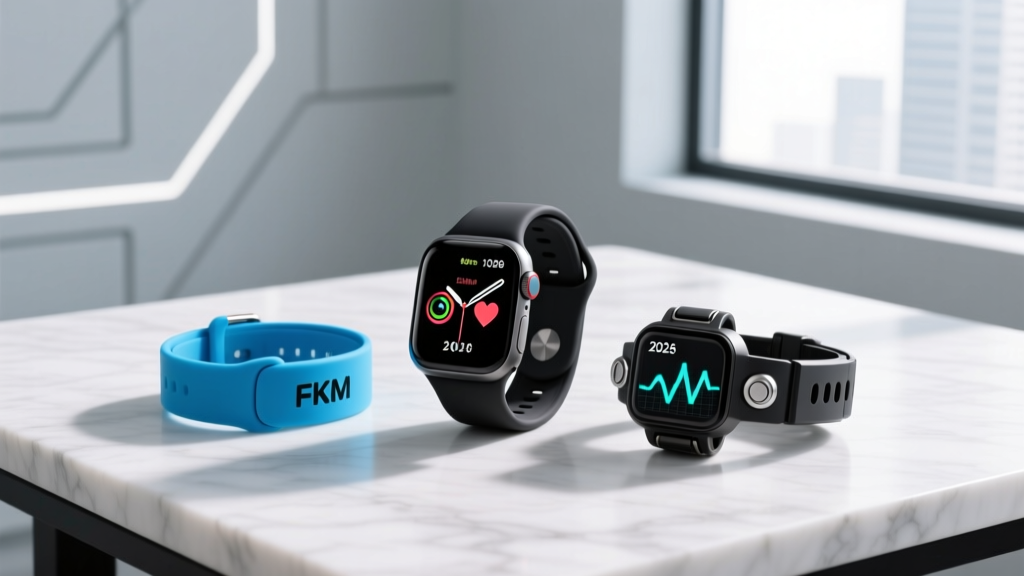
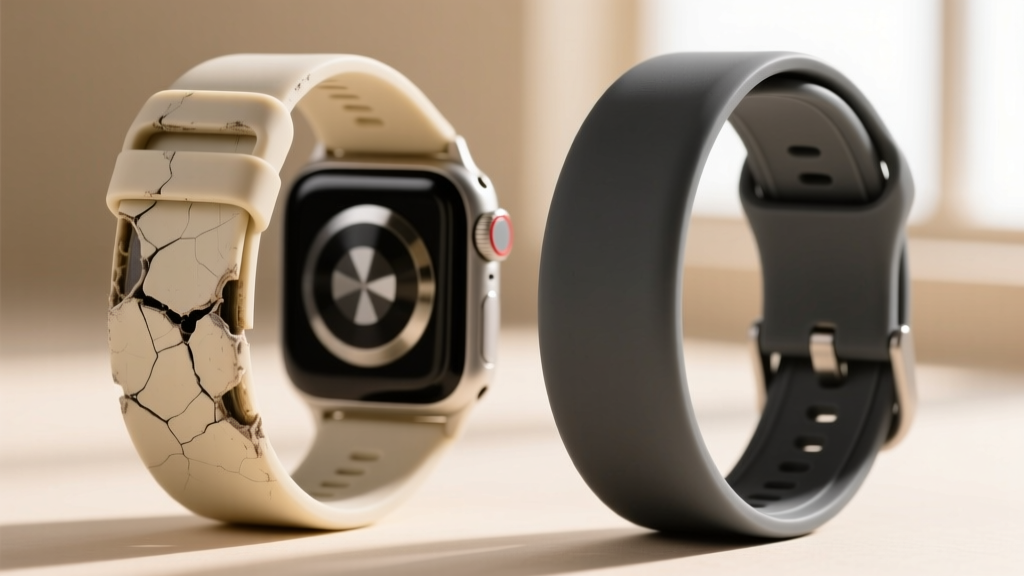
Most original equipment manufacturer (OEM) smartwatch bands are engineered for casual office wear, not the acidic, high-friction environment of marathon training. When you log over 40 miles a week, standard silicone bands undergo hydrolysis and UV degradation, leading to micro-tears at the pinholes and skin irritation from trapped sweat. Furthermore, the default watch faces provided by Apple and Garmin prioritize aesthetic minimalism over the dense, real-time telemetry that competitive runners actually need mid-stride.
If you are looking to upgrade your setup, the most impactful gadgets for runners aren't always entirely new watches. Often, they are the specialized aftermarket bands, custom data-dense watch faces, and modular wearable accessories that transform a standard smartwatch into a professional-grade biomechanics dashboard. Here is a deep dive into the best smartwatch mods and wearable accessories available in 2026.
The Material Science of Aftermarket Running Bands
The primary failure point for OEM watch bands is the material. Standard TPSiV (thermoplastic silicone vulcanizate) is cheap and flexible, but it absorbs sebum and sweat acids (which typically range from a pH of 4 to 6). Over six months of heavy training, this chemical exposure breaks down the polymer chains. To solve this, serious runners are migrating to FKM (fluoroelastomer) and aerospace-grade titanium.
1. Nomad FKM Sport Band ($99)
FKM is a high-performance fluoroelastomer characterized by extremely strong carbon-fluorine bonds. This makes it virtually impervious to UV radiation, sweat acidity, and extreme temperature fluctuations. The Nomad FKM Sport Band features a micro-textured inner channel that actively wicks moisture away from the skin, eliminating the dreaded 'swamp wrist' during long summer runs. Unlike silicone, FKM does not attract lint or degrade into a sticky residue after a year of use.
2. Garmin QuickFit Titanium Band ($199)
For trail and ultra-runners who need to shave every possible gram while maintaining structural rigidity, the Garmin QuickFit Titanium is the gold standard. Weighing in at just 28 grams (compared to the 50+ grams of steel link bands), it utilizes a porous titanium weave that allows for rapid sweat evaporation. The QuickFit mechanism uses a spring-loaded latch that has been stress-tested to withstand the violent arm swings of sprint intervals without accidental deployment.
Material Degradation & Performance Matrix
| Material | Sweat Resistance (pH 4-6) | UV Degradation | Weight (Avg) | Price Range |
|---|---|---|---|---|
| Standard Silicone | Poor (Absorbs oils/acids) | High (Brittle over time) | 35g | $20 - $49 |
| FKM Fluoroelastomer | Excellent (Non-porous) | None (Chemical stable) | 42g | $80 - $120 |
| Woven Nylon | Moderate (Traps salt) | Low (Fades only) | 25g | $30 - $60 |
| Aerospace Titanium | Perfect (Inert metal) | None | 28g | $150 - $250 |
Custom Watch Faces: Building a Telemetry Dashboard
Staring at a giant analog clock face during a tempo run is a waste of OLED pixels and battery life. The true power of modern smartwatches lies in custom data fields. According to Apple's official developer documentation, utilizing modular watch faces with specific complications can reduce the cognitive load of checking your wrist by consolidating data into single glances.
The Ideal Marathon Layout (Apple Watch Ultra 2 & Garmin Fenix 8)
- Top Left (Static): Current Heart Rate Zone (Color-coded: Blue=Z2, Red=Z5). Eliminates the need to read exact BPM numbers.
- Center (Dynamic): Lap Pace (Large font). This is your primary feedback loop for maintaining split targets.
- Bottom Right (Calculated): Running Power (Watts). Crucial for hill pacing, as GPS pace becomes unreliable on steep gradients.
- Outer Ring: Distance progress toward the next programmed mile/kilometer marker.
Apps like Watchsmith (iOS) allow you to program time-based face rotations, automatically switching from a pre-race weather/nerve-calming face to a high-contrast telemetry dashboard the exact minute your scheduled run begins.
Wearable Sensor Mods: Fixing the Optical HR Gap
Wrist-based optical heart rate sensors have improved drastically, but they still suffer from 'cadence lock' and bone interference during high-intensity intervals. A peer-reviewed study published in the NCBI confirmed that wrist-worn photoplethysmography (PPG) sensors exhibit significant mean absolute percentage errors (MAPE) during high-cadence running compared to chest straps. If you refuse to wear a chest strap, the solution is an optical armband mod.
The Stryd V3 Wind-Resistant Footpod ($299)
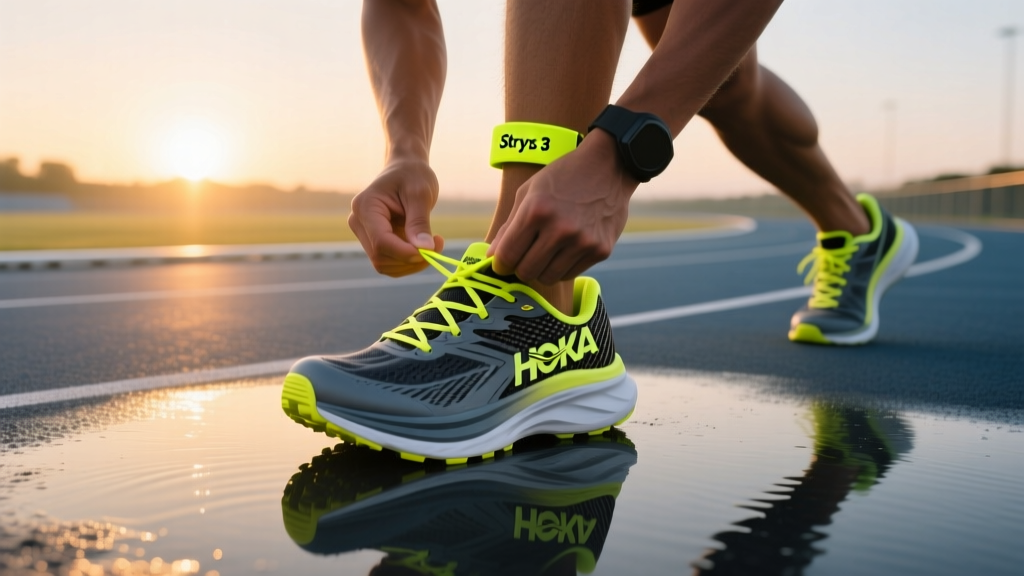
While technically a shoe-mounted wearable, the Stryd V3 Footpod integrates directly with Garmin, COROS, and Apple watches via ANT+ and Bluetooth, acting as a vital external mod. GPS watches inherently struggle with instant pace changes; they use spatial smoothing that delays pace readings by 5 to 10 seconds. Stryd uses a 3D accelerometer and a specialized wind port to measure your exact ground-contact time, vertical oscillation, and form power. It delivers instant, zero-lag pace data directly to your custom watch face, which is a game-changer for track intervals and trail running where GPS multipath errors are common.
COROS Optical Heart Rate Monitor ($129)
If you want chest-strap accuracy without the chest strap, the COROS Optical HR armband is the premier wearable accessory. By placing the sensor on the bicep or forearm, you bypass the wrist bones and tendons that cause optical signal scattering. It pairs seamlessly as a standard Bluetooth accessory to your primary watch, overriding the watch's internal, less-accurate sensor.
Troubleshooting: Fixing Mid-Run Sensor Slippage
Even with premium FKM bands and aftermarket mods, improper wear causes data dropouts. Follow this precise protocol to eliminate sensor slippage during sweaty runs:
- The Two-Finger Rule: Position the watch exactly two finger-widths above your ulnar styloid (the prominent wrist bone). Placing it directly on the bone prevents the optical sensor from maintaining flush skin contact during arm swings.
- The Tension Test: Fasten the band on the second-to-last hole. You should be able to slide one pinky finger under the band, but it should snap back immediately. If the band leaves a deep imprint after 10 minutes, it is restricting blood flow and skewing HRV data.
- Sunscreen Interference: Zinc oxide and chemical sunscreens create a physical barrier that scatters the green LED light used by optical HR sensors. Always apply sunscreen, wait 15 minutes for absorption, and then wipe the specific patch of skin under the sensor with a damp cloth before putting the watch on.
"The difference between a $400 smartwatch and a $1,200 professional setup isn't the watch itself—it's the ecosystem of bands, external pods, and custom data fields you bolt onto it. Stop settling for default silicone and basic clock faces."
Final Gear Verdict
Upgrading your wearable ecosystem yields immediate returns in both comfort and data accuracy. If you are on a strict budget, prioritize a $99 FKM band to eliminate skin irritation and hardware failure. If you are chasing PRs and need flawless data, the $299 Stryd V3 Footpod paired with a custom power-based watch face will fundamentally change how you execute race-day pacing strategies. Treat your watch not as a finished product, but as a modular platform waiting to be optimized.
Written by
Emma LarssonEmma Larsson holds an M.A. in International Relations from Sciences Po Paris and a B.A. in Communications from Stockholm University. A digital nomad since 2017, she has worked from over 45 countries across six continents, building deep expertise in portable power solutions, travel routers, compact computing, and connectivity gadgets that survive international travel. Emma is a certified member of the Travel Technology Association and has advised three travel gear startups on product-market fit for remote workers. Her reviews evaluate products against real travel scenarios — TSA compliance, voltage compatibility across 200+ countries, durability through 50+ checked bag cycles, and battery life under airplane mode vs. active use. She has been featured in Condé Nast Traveler's "Tech-Savvy Traveler" series and speaks at Remote Work Summit events.