The Coolest Wearable Gadget Tech Finds to Buy in 2026
Discover the coolest wearable gadget tech finds of 2026, from advanced smart rings to biomechanical footpods. Upgrade your everyday carry with hidden gems.

The Post-Smartwatch Era: Why Enthusiasts Are Downsizing
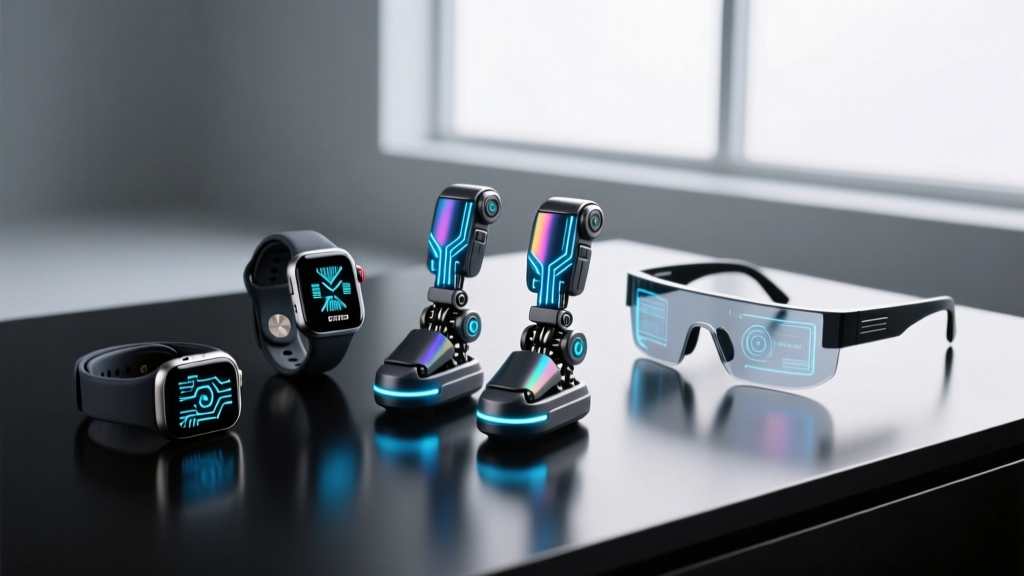
When evaluating wearable gadget tech, the market has decisively bifurcated. On one side, you have the mass-market smartwatches—iterative updates to the Apple Watch Ultra and Garmin Fenix lines that offer marginal yearly improvements in battery life and screen brightness. On the other side lies a rapidly expanding ecosystem of hyper-specialized, form-factor-defying wearables designed for data obsessives, biohackers, and endurance athletes.
For the tech enthusiast in 2026, the goal is no longer just counting steps or mirroring smartphone notifications. The objective is passive, continuous biometric telemetry and biomechanical feedback that operates invisibly in the background. We have bypassed the mainstream wrist-wearables to curate a list of the most unique, high-signal wearable devices currently available, focusing on raw data fidelity, API accessibility, and hardware innovation.
Smart Rings: Oura 4 vs. Movano Evie
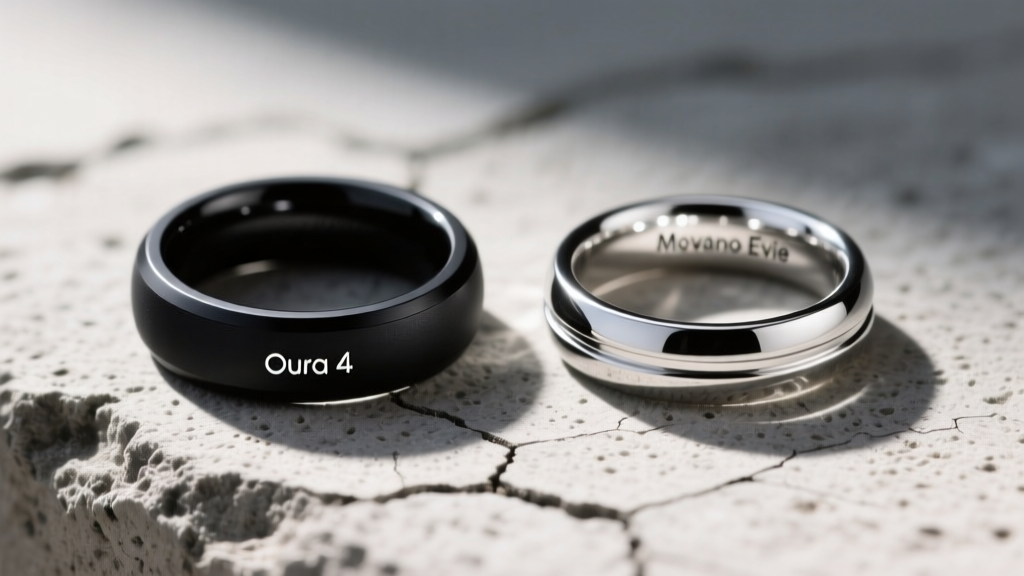
The smart ring category has matured from a niche novelty into a serious medical-grade telemetry tool. However, not all rings are built for the same enthusiast use case. The two standout devices dominating the space right now are the Oura Ring 4 and the Movano Evie Ring.
Oura Ring 4: The Algorithmic Powerhouse
Oura’s fourth generation finally solved the primary hardware complaint of previous models: the bulky inner epoxy molding. The Gen 4 features a continuous titanium inner surface with sensors that are 30% thinner. More importantly, Oura introduced 'Smart Sensing,' which utilizes 150 times more signal pathways to dynamically route data collection to the sensors with the strongest arterial contact. This eliminates the data gaps that plagued Gen 3 users who wore their rings slightly loose during sleep. Priced at $349 for the base silver model and scaling up to $449 for stealth black, it remains the gold standard for sleep staging and Heart Rate Variability (HRV) tracking.
Movano Evie Ring: Clinical Precision & Ergonomics
While Oura focuses on holistic wellness algorithms, the Movano Evie targets clinical-grade specificity. It is the first smart ring to achieve FDA clearance for medical-grade SpO2 (blood oxygen) tracking. The hardware features a unique open-gap design, which is not just an aesthetic choice; it accommodates natural finger swelling caused by temperature fluctuations, high-sodium diets, or intense training blocks. Priced around $299, the Evie is the superior choice for enthusiasts who prioritize raw, unsmoothed biometric data and female hormonal cycle tracking over generalized 'readiness' scores.
| Feature | Oura Ring 4 | Movano Evie Ring |
|---|---|---|
| Form Factor | Closed loop, Titanium | Open-gap, Silver/Plated |
| Primary Sensor Tech | Multi-pathway PPG (Smart Sensing) | Medical-grade SpO2 & Temp |
| Battery Life | Up to 8 Days | Up to 4 Days |
| Subscription Model | $5.99 / month | Currently Free (Beta/Early Access) |
| API Access | Personal Access Token (JSON) | Limited / In Development |
For a deep dive into the hardware teardown and sensor accuracy of the latest generation, Tom's Guide's comprehensive Oura Ring 4 review provides excellent baseline testing against polysomnography equipment.
Biomechanical Wearables: The Stryd Footpod Advantage
If your interest in gadget tech extends to endurance sports, wrist-based optical heart rate and GPS pace are fundamentally flawed metrics for real-time effort. Enter the Stryd V3 Footpod. Clipped to your shoelaces, this 9-gram device houses a 9-axis motion sensor (accelerometer, gyroscope, and magnetometer) that calculates running power in watts.
'Pace tells you how fast you are moving. Heart rate tells you how your body is reacting. Power tells you exactly how much mechanical work you are producing at this exact millisecond, regardless of wind, gradient, or surface.'
— Sports Science Biomechanics Framework

The Math Behind the Watts
Stryd doesn't just output a single power number; it breaks your stride down into advanced metrics like Form Power (the watts wasted on vertical oscillation and braking forces) and Leg Spring Stiffness (a measure of your tendon elasticity and running economy). At $299, it is a significant investment, but for marathoners and trail runners, it completely eliminates the guesswork of pacing on hilly terrain. The carbon-fiber reinforced casing survives impacts, mud, and sub-zero temperatures, while the battery lasts an impressive 20 hours per charge. For further reading on how power meters are replacing GPS pace in elite training, check out this analysis by Outside Online on the evolution of running power.
The Hidden Costs: Battery Degradation & Walled Gardens
Before purchasing any wearable gadget tech, enthusiasts must calculate the total cost of ownership beyond the initial MSRP. The two biggest points of failure in modern wearables are micro-battery thermal stress and proprietary data silos.
Warning: Induction Charging Thermal Stress
Smart rings utilize micro-lithium-ion cells. Because the rings are sealed for IP68 waterproofing, the batteries are non-replaceable. The primary cause of battery degradation in rings is not cycle count, but thermal stress. Dropping a ring onto a wireless induction charging puck generates localized heat. Over 24 to 36 months of nightly charging, this heat accelerates chemical aging in the micro-cell, often reducing capacity to 70% of its original design. Pro Tip: Charge your ring only when it drops below 30%, and remove it from the charger the moment it hits 100% to maximize the 3-year hardware lifespan.
Data Export & API Access
A true tech enthusiast owns their data. When building your wearable stack, verify the export protocols:
- Oura: Offers a robust Personal API. You can generate a token in the developer portal and pull your raw JSON sleep and HRV data directly into a local Python script or a self-hosted Grafana dashboard.
- Whoop: Notoriously locked down. While they offer basic CSV exports via the web dashboard, real-time API access is restricted to enterprise partners, forcing enthusiasts to rely on third-party reverse-engineered scripts to pull data into local databases.
- Garmin: Garmin Connect allows full FIT file exports, which can be parsed using open-source libraries like
fitparseto extract raw accelerometer and barometric altimeter data.
Decision Matrix: Building Your 2026 Wearable Stack
Do not buy redundant sensors. Use this framework to allocate your budget based on your primary optimization goal:
- The Biohacker (Focus: Sleep & Recovery): Pair the Oura Ring 4 with a continuous glucose monitor (CGM) like the Dexcom G7. Use the Oura API to correlate nightly HRV dips with evening glucose spikes.
- The Endurance Athlete (Focus: Output & Mechanics): Skip the smart ring. Invest in the Stryd Footpod and a chest strap (like the Polar H10) for gold-standard ECG heart rate data. Wrist-based optical sensors fail during high-cadence interval training due to muscle flexion artifacts.
- The Clinical Tracker (Focus: Hormonal & Respiratory): The Movano Evie is mandatory here. Its FDA-cleared SpO2 and continuous skin temperature deviations provide the most granular look at systemic inflammation and cycle tracking available outside a laboratory.
The landscape of wearable gadget tech has evolved far beyond the glowing rectangular screens on our wrists. By targeting specific, high-fidelity sensors like smart rings and biomechanical footpods, you can build a personalized telemetry stack that actually drives actionable changes in your health and performance.
Written by
Emma LarssonEmma Larsson holds an M.A. in International Relations from Sciences Po Paris and a B.A. in Communications from Stockholm University. A digital nomad since 2017, she has worked from over 45 countries across six continents, building deep expertise in portable power solutions, travel routers, compact computing, and connectivity gadgets that survive international travel. Emma is a certified member of the Travel Technology Association and has advised three travel gear startups on product-market fit for remote workers. Her reviews evaluate products against real travel scenarios — TSA compliance, voltage compatibility across 200+ countries, durability through 50+ checked bag cycles, and battery life under airplane mode vs. active use. She has been featured in Condé Nast Traveler's "Tech-Savvy Traveler" series and speaks at Remote Work Summit events.