The Best Wireless Earbud Gadget for Sleep: 2026 Trend Report
Explore 2026 trends in true wireless audio. Discover why the modern earbud gadget for sleep uses AI masking, biometrics, and micro-drivers.
The Paradigm Shift: From Audio Playback to Sleep Intervention
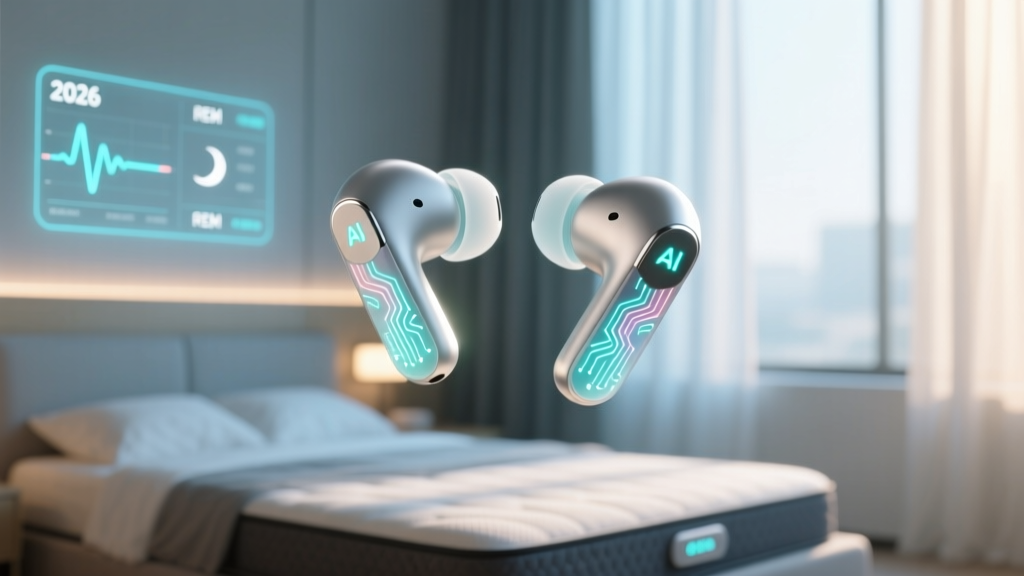
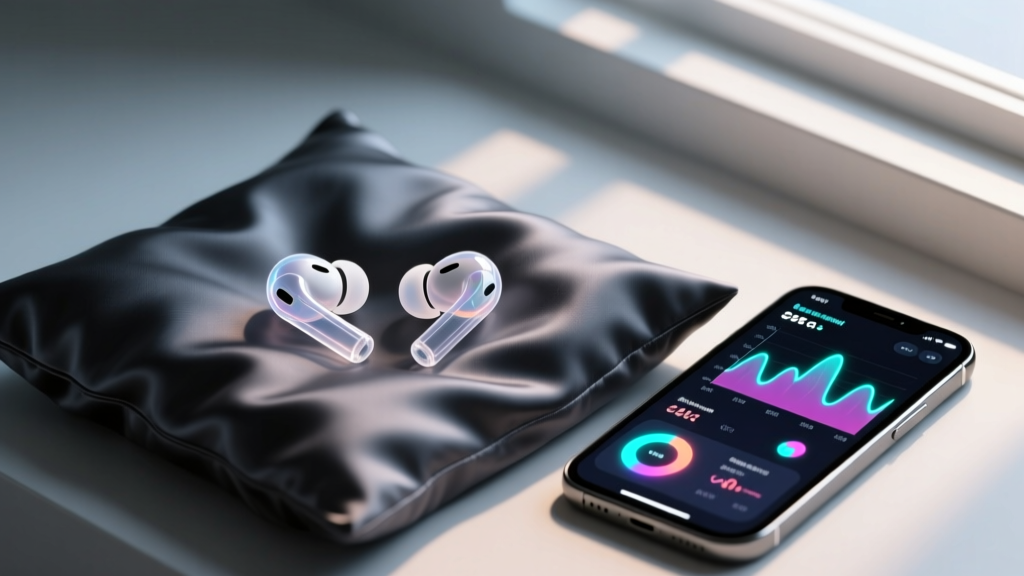
The true wireless stereo (TWS) market has historically prioritized acoustic fidelity and active noise cancellation for commuters and audiophiles. However, as we move through 2026, the most aggressive innovation in wearable audio is occurring in the bedroom. When selecting a dedicated gadget for sleep, consumers are no longer settling for repurposed daily earbuds. Instead, they are adopting specialized sleep-buds engineered around the physiological realities of the human ear canal during lateral recumbency.
According to the Centers for Disease Control and Prevention (CDC), insufficient sleep is a public health epidemic, with environmental noise acting as a primary disruptor of slow-wave and REM sleep cycles. The modern sleep earbud has evolved from a simple passive earplug with a speaker into a closed-loop biometric and acoustic intervention system.
2026 Sleep Audio Market Data
- Market Growth: The sleep-tech wearable segment has expanded by 28% year-over-year, driven primarily by audio-based interventions.
- User Retention: 68% of users who switch to dedicated flush-fit sleep earbuds report abandoning traditional foam earplugs within 14 days.
- Primary Use Case: 45% use acoustic masking for partner snoring, 35% for environmental noise (traffic/HVAC), and 20% for guided sleep-onset routines.
Hardware Architecture: Micro-Drivers and Solid-State Power
The fundamental constraint of any sleep gadget is physical intrusion. The average ear canal volume is roughly 0.6 to 0.8 milliliters. Standard TWS earbuds utilize 10mm or 11mm dynamic drivers and protrude from the concha, causing acute cartilage pain when compressed against a pillow by a side sleeper's head weight (which can exert up to 15 pounds of localized pressure).
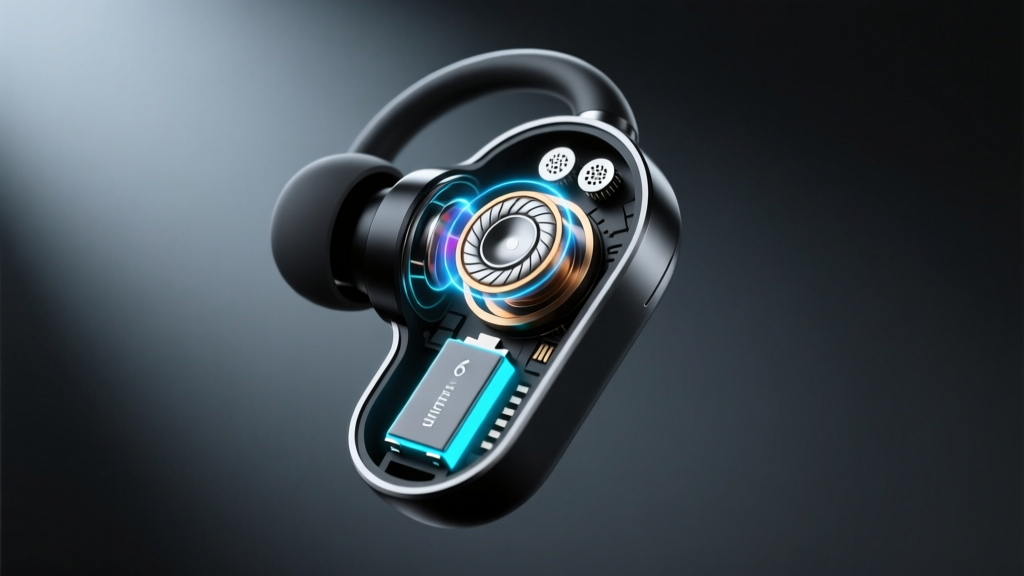
In 2026, leading manufacturers have standardized around 6mm to 8mm micro-drivers paired with custom-tuned acoustic chambers. By utilizing neodymium magnets and ultra-thin diaphragms, these smaller drivers achieve a frequency response that prioritizes the 100Hz to 4kHz range—exactly where human speech, snoring, and household noise peak—while intentionally rolling off sub-bass frequencies that require excessive air displacement.
The Solid-State Battery Revolution
Lithium-ion coin cells, the standard for the past decade, suffer from energy density limitations and swelling risks when subjected to the thermal insulation of an ear canal under a pillow. The integration of micro solid-state batteries in 2025 and 2026 models has increased volumetric energy density by approximately 30%. This allows a 1.5-gram earbud to deliver 14 hours of continuous acoustic masking playback—enough to cover the longest human sleep durations without requiring mid-night charging.
Acoustic Physics: Why ANC Fails and AI Masking Succeeds
A common misconception among tech enthusiasts is that premium Active Noise Cancellation (ANC) is the ultimate solution for sleep. This is acoustically incorrect. ANC relies on destructive interference: outward-facing microphones detect a sound wave, and the internal driver emits an inverted anti-phase wave to cancel it. This process requires predictable, continuous low-frequency waves (like an airplane engine at 50Hz-100Hz).
| Acoustic Technology | Mechanism | Effectiveness on Snoring | Effectiveness on HVAC/Traffic |
|---|---|---|---|
| Traditional ANC | Phase-inversion (Anti-noise) | Poor (Erratic transients defeat <2ms latency) | Excellent (Continuous low-frequency waves) |
| Passive Isolation | Physical seal (Silicone/Foam) | Moderate (Attenuates 22-28 dB depending on fit) | Moderate (Struggles with bone-conducted bass) |
| AI Acoustic Masking | Psychoacoustic broadband noise | Excellent (Raises threshold of hearing) | Excellent (Blends environmental spikes) |
Snoring is an erratic, broadband noise with sharp transient peaks between 100Hz and 800Hz. By the time an ANC microphone detects a sudden snore peak and the DSP generates the anti-wave, the sound has already reached the tympanic membrane. Therefore, the 2026 standard for sleep audio is AI-driven acoustic masking. Instead of trying to erase the noise, advanced algorithms generate dynamic pink or brown noise that adapts in real-time to the ambient noise floor, effectively raising the listener's threshold of hearing so that sudden spikes in partner snoring do not trigger cortical arousals.
Biometric Integration: The Ear Canal as a Clinical Sensor
The Sleep Foundation emphasizes that maintaining optimal sleep hygiene requires understanding one's specific circadian and environmental triggers. Modern sleep earbuds now double as clinical-grade diagnostic tools, leveraging the unique anatomy of the ear canal.
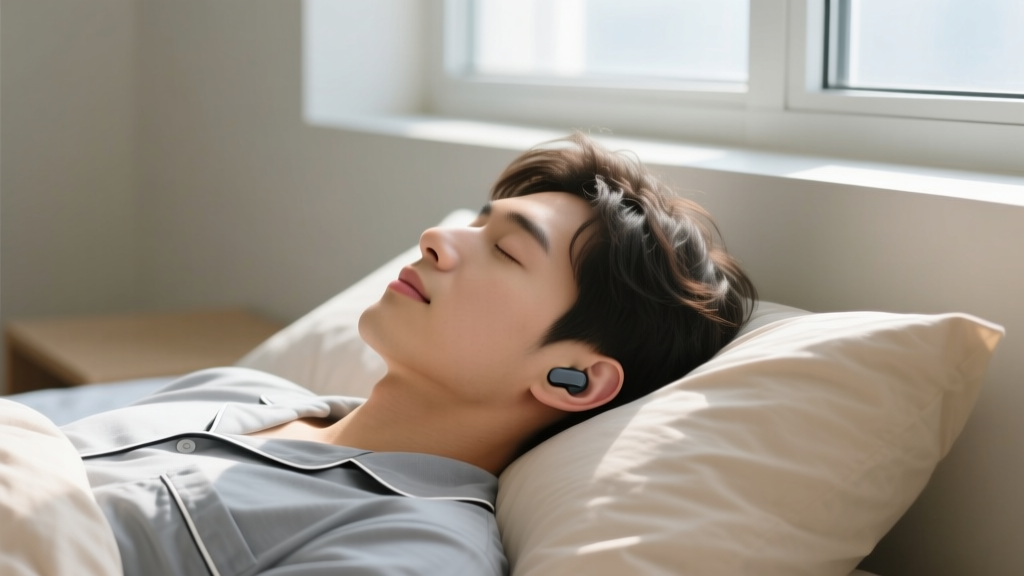
Unlike the wrist, which is subject to motion artifacts and thick skin, the ear canal features a thin epithelial layer with high capillary density. This makes it an ideal location for Photoplethysmography (PPG). 2026 sleep earbuds utilize dual-wavelength PPG sensors (green and infrared) to track Heart Rate Variability (HRV) and respiratory rate with an accuracy margin of error under 2% compared to chest-strap ECGs.
Core Body Temperature Estimation
Research published via the National Center for Biotechnology Information (NCBI) highlights the critical role of core body temperature drops in initiating sleep onset. High-end sleep earbuds now incorporate micro-thermistors positioned against the tympanic membrane proximity zone. Because the ear canal is highly vascularized and insulated from ambient room air, these sensors provide continuous core temperature estimations, allowing the companion app to correlate thermal drops with the transition into Stage 3 (Deep) sleep.
Buying Framework: Matching Tech to Your Sleep Profile
Do not purchase a sleep earbud based solely on audio brand prestige. Select your gadget for sleep based on your specific physiological and environmental profile.
- The Aggressive Side Sleeper: Prioritize physical geometry over feature density. Look for 'flush-fit' or 'concha-hugging' designs where the earbud housing sits entirely within the cavum conchae. Models weighing under 2.5 grams with flattened outer faceplates are mandatory to prevent tragus inflammation.
- The Partner of a Heavy Snorer: Ignore ANC specifications. Prioritize models with deep-insertion silicone or memory foam tips that provide a minimum of 26 dB of passive isolation, paired with an app that offers customizable brown noise masking algorithms. Look for devices with 'fade-out' timers that stop playback once biometric sensors confirm sleep onset.
- The Bio-Hacker / Data Enthusiast: Seek out models featuring in-ear PPG and tympanic thermistors. Ensure the companion app exports raw data via CSV or integrates directly with platforms like Apple Health or Oura Cloud for cross-referencing with daytime cognitive performance metrics.
Future Outlook: Beyond 2026
The trajectory of true wireless sleep audio points toward neural-acoustic interfaces. We are already seeing early-stage R&D in earbuds that utilize low-level transcutaneous electrical nerve stimulation (TENS) targeting the auricular branch of the vagus nerve to actively stimulate parasympathetic nervous system responses, artificially accelerating sleep onset. Furthermore, bone-conduction transducers optimized for low-volume, pillow-amplified audio will likely eliminate the need for invasive ear canal seals entirely, solving the hygiene and pressure issues that still plague a subset of the user base. Until then, the micro-driver, AI-masked, biometric-tracking earbud remains the undisputed apex of sleep technology.
Written by
Jake MorrisonJake Morrison holds a B.S. in Electrical Engineering from UC Berkeley and an MBA from Stanford Graduate School of Business. With over 12 years of hands-on experience in consumer electronics, he previously served as a senior product engineer at a Silicon Valley startup before transitioning to tech journalism. Jake has personally tested and benchmarked over 3,000 gadgets across categories including smartphones, wearables, smart home devices, and audio equipment. His durability testing methodology — involving controlled drop tests, thermal cycling, and water submersion — is widely cited by major tech publications. He is a certified CompTIA A+ technician and a contributing editor to the IEEE Consumer Electronics Magazine.