Essential Smartphone Gizmos for Extreme Outdoor Photography
Discover the best smartphone gizmos for outdoor photography, including rugged wireless chargers, weather-sealed gimbals, and detachable lens kits.
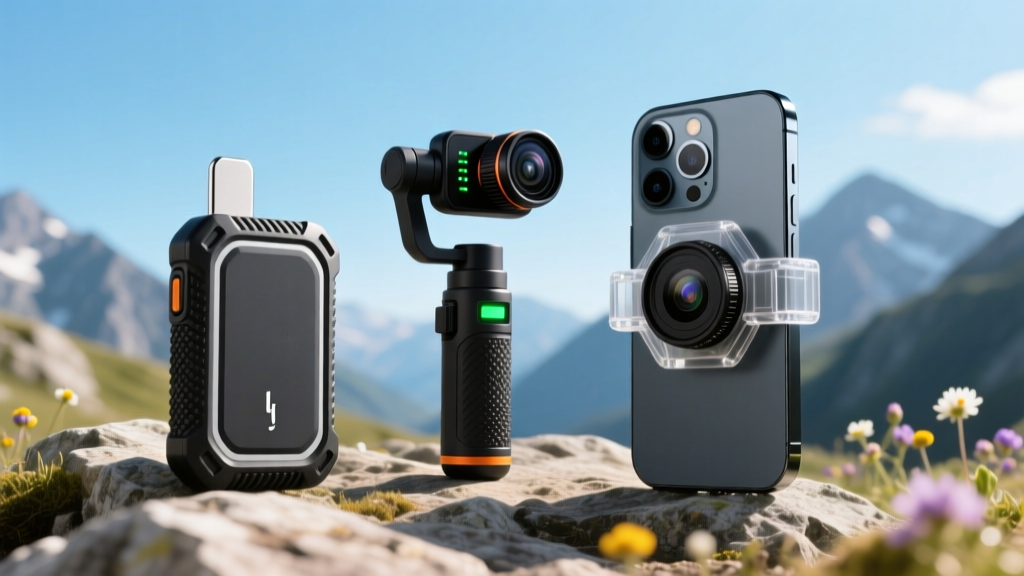
The Physical Limits of Computational Photography
Modern flagship smartphones rely heavily on computational photography to produce stunning images. However, when you take these devices into extreme seasonal environments—sub-zero winter expeditions, dusty desert canyons, or high-humidity rainforests—their physical hardware limitations become glaringly apparent. Optical image stabilization (OIS) cannot compensate for the violent shake of hiking over scree, digital zoom destroys detail in low light, and lithium-ion batteries chemically fail in freezing temperatures.
To bridge the gap between consumer electronics and professional field gear, you need specialized accessories. This guide breaks down the exact smartphone gizmos required to stabilize, optically enhance, and power your mobile setup in harsh outdoor conditions, complete with failure modes and technical specifications for 2026.
Overcoming Terrain Shake: 3-Axis Gimbals for the Backcountry
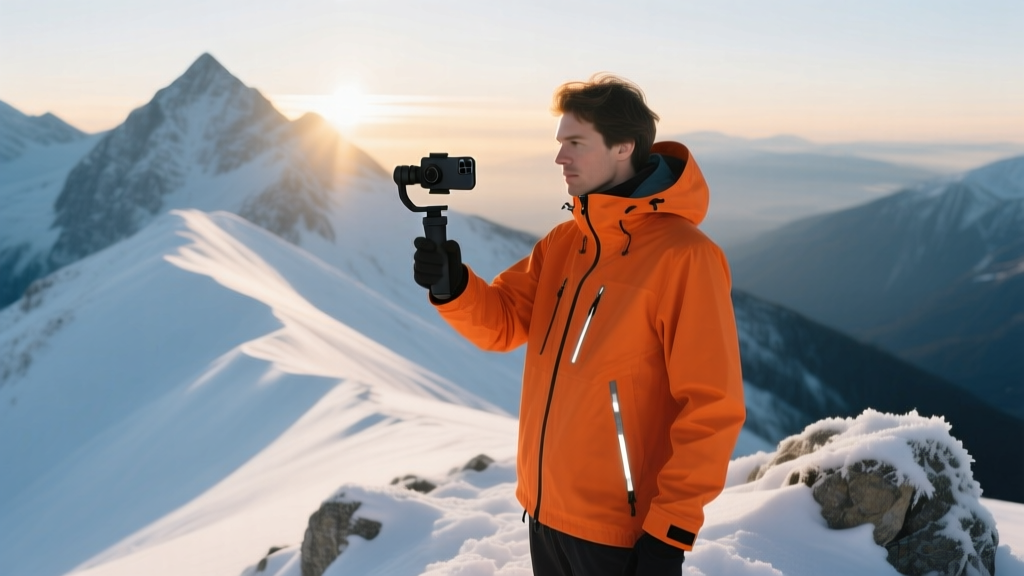
Handheld smartphone video on uneven terrain results in micro-jitters that OIS cannot fix. A 3-axis motorized gimbal is non-negotiable for backcountry filmmaking, but not all consumer models survive outdoor abuse.
Payload Limits and Motor Stall
The primary failure mode for outdoor gimbals is motor stall caused by exceeding the payload capacity. Flagship phones are heavy: the Samsung Galaxy S24 Ultra weighs 232g, and adding a rugged aramid fiber case pushes the total mass to roughly 280g. If your gimbal is rated for 290g, the brushless motors will run at maximum torque just to hold the phone level. In high winds or when executing rapid pans, the motors will overheat and trigger a thermal shutdown.
- Insta360 Flow: Rated for 300g. Features Deep Track 3.0, which excels at maintaining subject lock through dense forest foliage where contrast is low. The built-in tripod legs and selfie stick eliminate the need to carry separate mounting hardware.
- DJI Osmo Mobile 6: Rated for 290g. ActiveTrack 6.0 offers slightly smoother subject re-acquisition if a hiker temporarily disappears behind a boulder, but the external magnetic clamp is a liability in high winds if not seated perfectly.
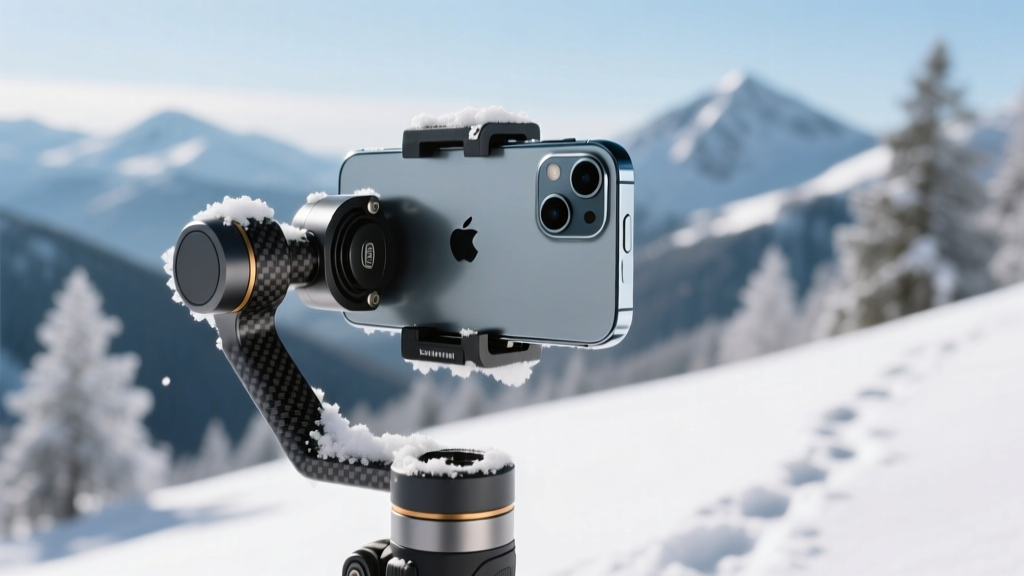
In temperatures below -5°C (23°F), the lubricants inside gimbal motor joints thicken. This increases friction, causing the gimbal to drain its battery up to 40% faster and resulting in stiff, jerky pan movements. Always store the gimbal inside your jacket until the exact moment you begin filming.
Bypassing Digital Zoom: Clip-On Lens Kits for 1-Inch Sensors
While digital zoom algorithms have improved, they still rely on cropping and AI upscaling, which introduces watercolor-like artifacts in complex textures like pine needles or distant rock faces. Detachable optical lenses provide true focal length extension, but compatibility with 2026's massive camera bumps requires precise engineering.
The Bayonet vs. Universal Clip Debate
The market is split between universal spring clips and proprietary bayonet mounts. For outdoor use, universal clips are a severe liability. Wind gusts can shift the clip by a millimeter, instantly misaligning the optical center of the external lens with the phone's sensor, resulting in soft corners and heavy chromatic aberration.
According to Moment's optical engineering guidelines, bayonet mounts integrated into a dedicated smartphone case ensure the lens element sits exactly flush and parallel to the primary sensor. The Moment T-Series 58mm Telephoto lens ($149) uses aerospace-grade metal construction that survives drops onto granite, whereas cheaper plastic-threaded alternatives will cross-thread and jam if grit enters the housing.
Vignetting on 1-Inch Sensors
If you are shooting with a device featuring a 1-inch primary sensor (such as the Xiaomi 14 Ultra or Vivo X100 Pro), be aware of mechanical vignetting. The physical diameter of most clip-on lenses is too narrow to cover the massive field of view projected by a 1-inch sensor. You will see hard black circles in the corners of your frame. To avoid this, restrict external telephoto lenses to phones with 1/1.3-inch or smaller main sensors, or use the phone's native periscope telephoto lens instead.
The Freezing Point Problem: Qi2 Wireless Power Banks
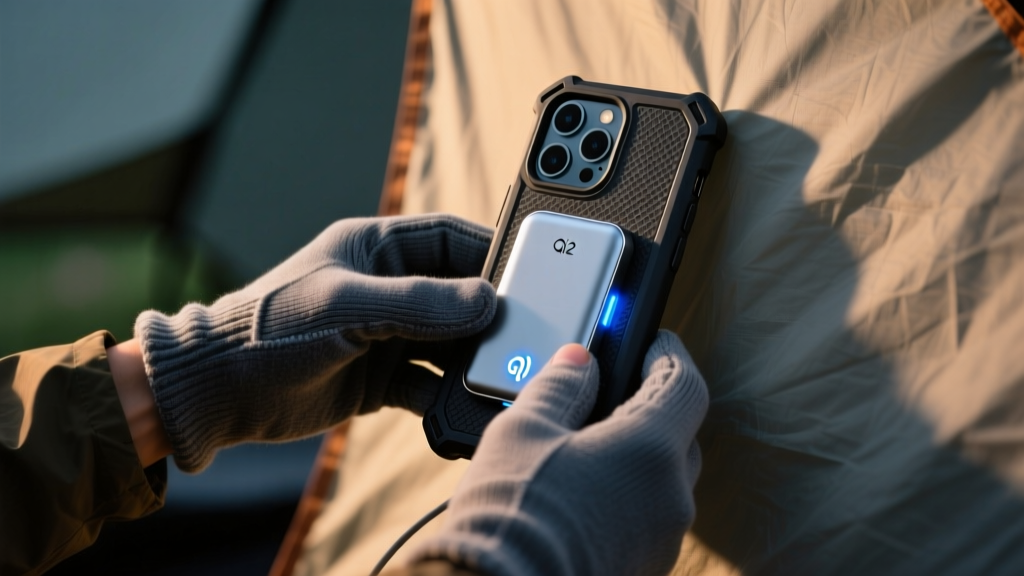
The Qi2 magnetic wireless standard has matured significantly, offering 15W charging with perfect alignment via N52 neodymium magnets. However, wireless charging introduces severe thermal and environmental vulnerabilities in seasonal extremes.
Lithium Plating and BMS Shutoffs
The most critical rule of outdoor power management is understanding lithium-ion chemistry. As documented by Battery University, charging a lithium-ion cell at or below freezing (0°C / 32°F) causes lithium plating—a permanent accumulation of metallic lithium on the anode that degrades capacity and can cause internal short circuits.
Modern Battery Management Systems (BMS) in power banks like the Anker MagGo 10K Qi2 ($60) and the carbon-fiber Nitecore NB10000 ($65) will intentionally halt charging if the internal thermistor detects sub-zero temperatures. If your phone dies on a snowy ridge, slapping a Qi2 bank onto it will not work.
1. Place both the phone and the Qi2 power bank inside an inner-layer chest pocket for 15 minutes to raise their core temperature above 5°C (41°F).
2. Wipe the back of the phone and the magnetic array with a microfiber cloth; even a microscopic layer of frost will reduce magnetic holding force by 60%, causing the bank to slip off.
3. Initiate the charge while keeping the devices inside the insulated jacket.
Moisture Ingress in Magnetic Arrays
Wireless charging coils generate heat. In wet, snowy conditions, this heat melts snow on the back of the phone, creating a thin layer of water between the charger and the device. While Qi2 chargers are generally water-resistant, the trapped moisture can seep into the phone's unsealed camera bump or speaker grills. For heavy rain or wet snow, abandon Qi2 entirely and use a USB-C to USB-C cable paired with a silicone port plug.
Outdoor Smartphone Gizmo Matrix
| Accessory Category | Recommended 2026 Model | Weight | Primary Failure Mode | Approx. Cost |
|---|---|---|---|---|
| 3-Axis Gimbal | Insta360 Flow | 369g | Motor thermal shutoff in high winds | $159 |
| Telephoto Lens | Moment T-Series 58mm | 135g | Cross-threading from trail dust | $149 |
| Wide Angle Lens | ShiftCam ProLens 16mm | 92g | Flare and ghosting in direct sun | $119 |
| Qi2 Power Bank | Nitecore NB10000 Gen 2 | 150g | BMS shutoff below 0°C | $65 |
Decision Framework: Configuring Your Loadout
Do not buy every accessory on the market. Configure your loadout based on your specific environmental hazards and shooting style.
Scenario A: Alpine Skiing and Snowboarding
Prioritize: 3-Axis Gimbal + Wired Power Bank.
Skip: Clip-on lenses.
Reasoning: High-speed action requires stabilization. Gimbals like the Insta360 Flow utilize AI tracking to keep you centered while your partner films from a distance. Clip-on lenses will inevitably fog up or collect ice crystals on the glass element at high speeds. Furthermore, wireless Qi2 chargers will fail in the freezing ambient air; rely on a wired, insulated power bank kept in a chest pocket.
Scenario B: Desert Hiking and Macro Botany
Prioritize: Bayonet-mount Lens Kit + Aramid Fiber Case.
Skip: Motorized Gimbal.
Reasoning: Fine silica dust will infiltrate gimbal motor housings within hours, causing permanent grinding and failure. Instead, invest in a Moment or ShiftCam bayonet case. The sealed mount protects the phone's native camera glass from micro-scratches caused by windblown sand, while the optical lenses allow you to capture intricate details of desert flora without relying on destructive digital cropping.
Scenario C: Coastal and Kayak Expeditions
Prioritize: Waterproof Phone Pouch with Lanyard + Qi2 Charger (for basecamp).
Skip: Exposed metal lens mounts.
Reasoning: Saltwater corrosion is the ultimate enemy of electronics. The metal bayonet threads on premium lenses will oxidize and seize if exposed to sea spray. Use an IPX8-rated floating pouch for on-water shooting, and reserve your Qi2 magnetic chargers for dry, sand-free basecamp environments where the magnetic array won't trap abrasive grit.
Written by
Emma LarssonEmma Larsson holds an M.A. in International Relations from Sciences Po Paris and a B.A. in Communications from Stockholm University. A digital nomad since 2017, she has worked from over 45 countries across six continents, building deep expertise in portable power solutions, travel routers, compact computing, and connectivity gadgets that survive international travel. Emma is a certified member of the Travel Technology Association and has advised three travel gear startups on product-market fit for remote workers. Her reviews evaluate products against real travel scenarios — TSA compliance, voltage compatibility across 200+ countries, durability through 50+ checked bag cycles, and battery life under airplane mode vs. active use. She has been featured in Condé Nast Traveler's "Tech-Savvy Traveler" series and speaks at Remote Work Summit events.