Field Drone Maintenance: The Best Gadget for Hand Wash & Gear Rinse
Discover how a smart gadget for hand wash and portable ultrasonic cleaners protect your camera and FPV drones from mud, salt, and corrosion in the field.
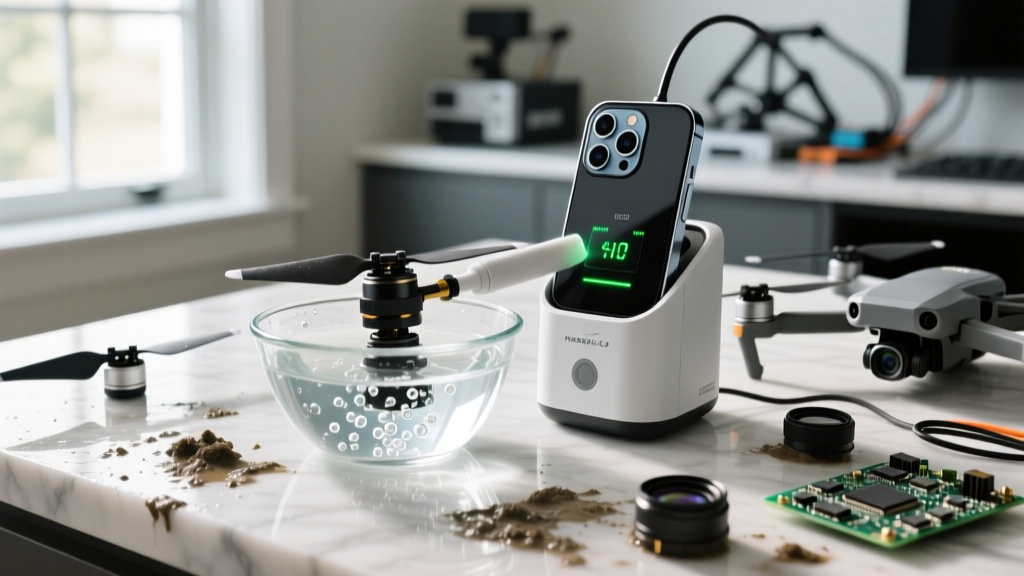
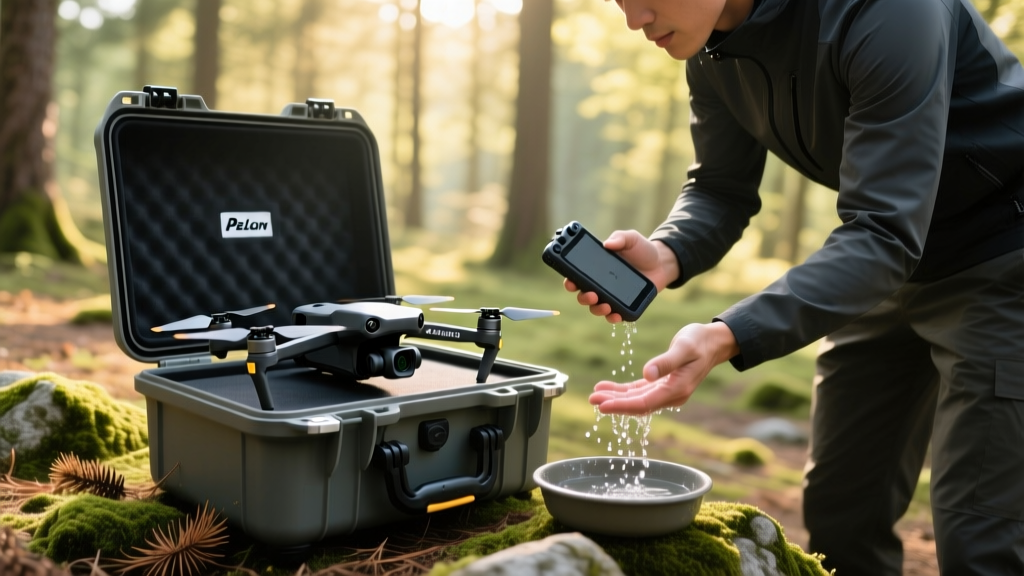
Flying camera drones like the DJI Mavic 3 Pro or FPV racers in coastal, muddy, or dusty environments introduces severe mechanical risks. Silica dust infiltrates brushless motor bells, while salt spray accelerates galvanic corrosion on ESC (Electronic Speed Controller) solder joints. Furthermore, handling LiPo batteries and carbon fiber frames coated in mud transfers abrasive grime to your hands, which is then inadvertently rubbed onto delicate gimbal bearings and camera lenses during packing. Standard field hygiene—pouring water from a Nalgene bottle over your hands—wastes precious water reserves and creates a muddy slurry that fails to adequately clean your skin or your gear.
The Hidden Enemy of Drone Gimbals: Field Contamination
Modern 3-axis gimbals rely on ultra-precision micro-bearings. When fine particulate matter (like 10-micron silica sand from a beach flight) mixes with the natural oils from your skin, it forms an abrasive paste. If you pack your drone without properly washing your hands and wiping down the chassis, this paste works its way into the gimbal's yaw and pitch axes. According to DJI's official repair guidelines, corrosion and particulate ingress are explicitly excluded from standard warranty coverage and often fall outside the scope of accidental damage protection plans if deemed a result of improper maintenance.
- Mavic 3 Pro Gimbal Replacement: ~$249 USD
- FPV 2207.5 Motor Bell Bearing Replacement: $4 per motor + 2 hours labor
- Avata 2 Lens Scratching from Grit: $89 USD replacement module
Why Standard Water Bottles Fail the Field Test
Most drone pilots carry a standard 1-liter water bottle for hydration and emergency gear rinsing. However, a gravity-fed pour requires approximately 1.5 liters of water to effectively rinse mud from a drone chassis and your hands. More critically, touching a muddy drone and then trying to unscrew a water bottle cap cross-contaminates your hydration supply. You need a touchless, metered, and pressurized solution.
The Ultimate Drone Pilot's Field Hygiene & Rinse Matrix
To solve the cross-contamination and water-waste problems, professional field operators rely on a three-tier cleaning ecosystem. Below is a comparison of the most effective tools for the job.
| Device Category | Top Model Pick (2026) | Water/Power Usage | Primary Drone Application |
|---|---|---|---|
| Smart Sensor Pump | Xiaomi Mijia Automatic Foaming Wash | 120ml water / 0.8ml soap per cycle (4x AA) | Touchless hand decontamination |
| Portable Power Cleaner | WORX WG625 Hydroshot 20V | 320 PSI / 20V 2.0Ah battery | Chassis & landing gear mud blasting |
| Ultrasonic Cleaner | Sonic Soak Portable 45kHz | 50W / USB-C PD 65W | Motor bells, props, and ND filters |
Integrating a Smart Gadget for Hand Wash into Your Fly More Combo
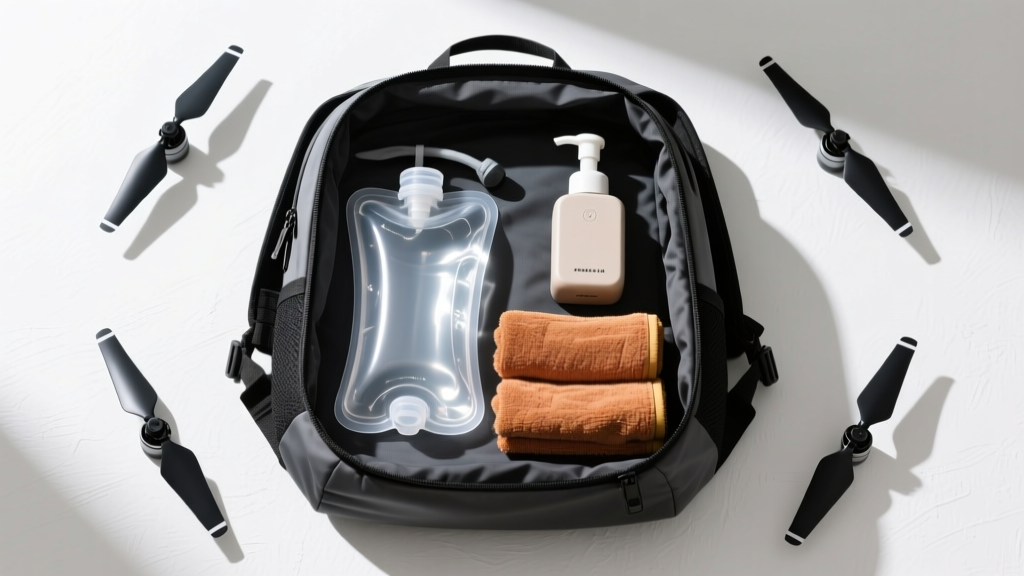
When selecting a dedicated gadget for hand wash in a rugged environment, the Xiaomi Mijia Automatic Foaming Hand Wash (or the ruggedized Simplehuman Rechargeable Sensor Pump) stands out. By dispensing a pre-lathered micro-foam, these devices reduce water consumption by 85% compared to liquid soap rubbing. For a drone pilot, this means you can mount the sensor pump to the exterior of your Pelican 1510 case or backpack using a 3D-printed TPU bracket. You draw water from a 2-liter hydration bladder via a silicone tube, allowing for up to 16 touchless hand-washing cycles without ever touching a soap bottle with propeller-grease-covered fingers.
Step-by-Step: The 3-Minute Post-Flight Decon Protocol
Follow this exact sequence immediately after powering down your aircraft to prevent particulate embedding:
- Secure the Aircraft: Place the drone on a clean, elevated surface (never the bare ground). Remove the battery and store it in a LiPo-safe bag.
- Touchless Hand Wash: Activate your smart gadget for hand wash. The infrared sensor dispenses foam without physical contact. Rinse hands using a low-flow spigot on your field water bladder, completely removing carbon dust and battery grease.
- Dry & Inspect: Use a dedicated, clean microfiber towel (color-coded blue for skin, red for gear) to dry hands.
- Gear Wipe Down: With clean hands, use a slightly dampened lens wipe to clean the camera dome and gimbal motors. Use a soft-bristle anti-static brush to sweep sand away from the folding hinges.
FPV Racing Specifics: Cleaning Motor Bell Bearings
For FPV pilots flying 5-inch freestyle or cinewhoops in muddy parks, the motor bells inevitably ingest wet soil. Wiping the outside of a 2207.5 brushless motor does nothing for the internal NMB or NSK bearings. This is where a portable ultrasonic cleaner becomes non-negotiable. By filling a collapsible silicone bowl with distilled water and a drop of isopropyl alcohol, and submerging the Sonic Soak 45kHz transducer, you create a cavitation field. The microscopic vacuum bubbles implode against the metal, violently ejecting 10-micron silica particles from deep within the bearing shields without requiring you to press the bearings out.
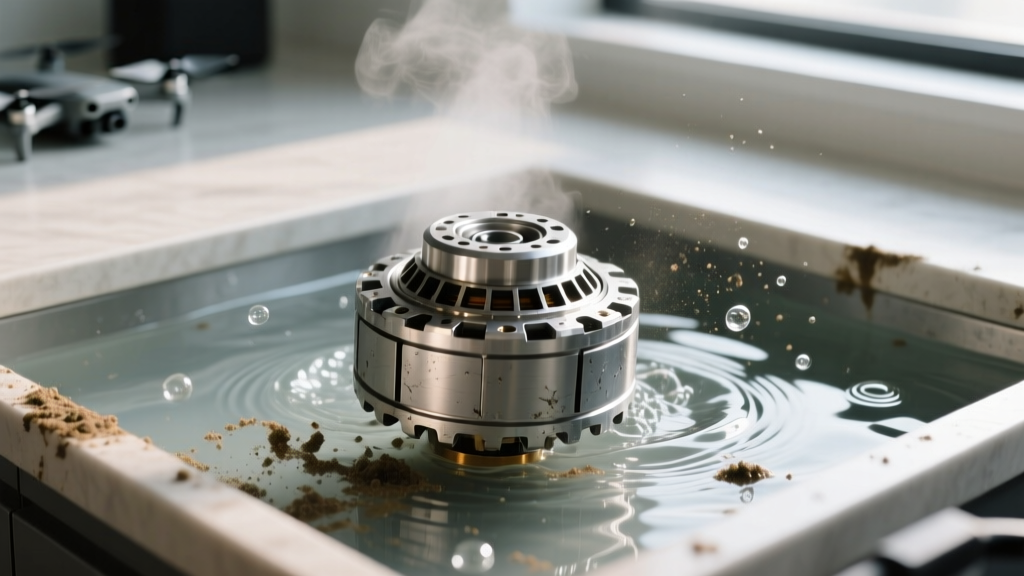
"I lost three motors in a single weekend at a coastal race because salt spray crystallized inside the bell housing. Now, I run a 45kHz ultrasonic bath in my pit tent between every heat. It pulls out green corrosion you can't even see with the naked eye."
— Marcus T., Professional FPV Racer and Drone Build Technician
Sourcing and Powering Your Field Wash Setup
Power management is the primary bottleneck for field electronics. The FAA emphasizes the importance of battery safety and proper UAS maintenance, which extends to how you manage your cleaning gadgets. Do not rely on AA batteries for your field wash gear. Instead, utilize USB-C PD (Power Delivery) trigger cables. A simple $12 USB-C to 5V/12V PD trigger cable plugged into your 100W drone charging hub (like the DJI 100W USB-C Power Adapter) can power your ultrasonic cleaner and sensor pumps indefinitely in the field. Always ensure your water bladder is positioned at least 18 inches above your sensor pump to maintain adequate gravity-fed hydrostatic pressure, preventing the pump's micro-motor from burning out due to dry-cavitation.
Frequently Asked Questions
Can I use tap water in my ultrasonic cleaner for drone parts?
No. Tap water contains dissolved minerals (calcium and magnesium) that will leave hard water spots on your camera lenses and ND filters when the water evaporates. Always use distilled or deionized water for the final rinse of any optical or precision mechanical drone component.
Is the smart foaming soap safe for cleaning the drone chassis?
Foaming hand soaps often contain moisturizers, glycerin, and light oils that will leave a streaky residue on your drone's polycarbonate shell and camera lens. Use the smart gadget for hand wash strictly for your skin. For the drone chassis, use a dedicated electronics-safe foaming cleaner or a 70% isopropyl alcohol solution applied to a microfiber cloth.
How do I winterize my portable water wash gadgets?
If you fly in sub-zero temperatures, water left inside the sensor pump's internal tubing or the ultrasonic transducer housing will freeze, expand, and crack the plastic impellers. After every winter flight, run a 50/50 mix of RV antifreeze (propylene glycol) through the pump to displace residual water and protect the internal mechanics down to -20°F.
Written by
Emma LarssonEmma Larsson holds an M.A. in International Relations from Sciences Po Paris and a B.A. in Communications from Stockholm University. A digital nomad since 2017, she has worked from over 45 countries across six continents, building deep expertise in portable power solutions, travel routers, compact computing, and connectivity gadgets that survive international travel. Emma is a certified member of the Travel Technology Association and has advised three travel gear startups on product-market fit for remote workers. Her reviews evaluate products against real travel scenarios — TSA compliance, voltage compatibility across 200+ countries, durability through 50+ checked bag cycles, and battery life under airplane mode vs. active use. She has been featured in Condé Nast Traveler's "Tech-Savvy Traveler" series and speaks at Remote Work Summit events.