Top Drone Gadgets for Swimming Pool Inspection & Fun
Discover the best waterproof and underwater drone gadgets for swimming pool leak detection, maintenance, and aerial entertainment in 2026.
The Intersection of Aerial Tech and Aquatic Maintenance
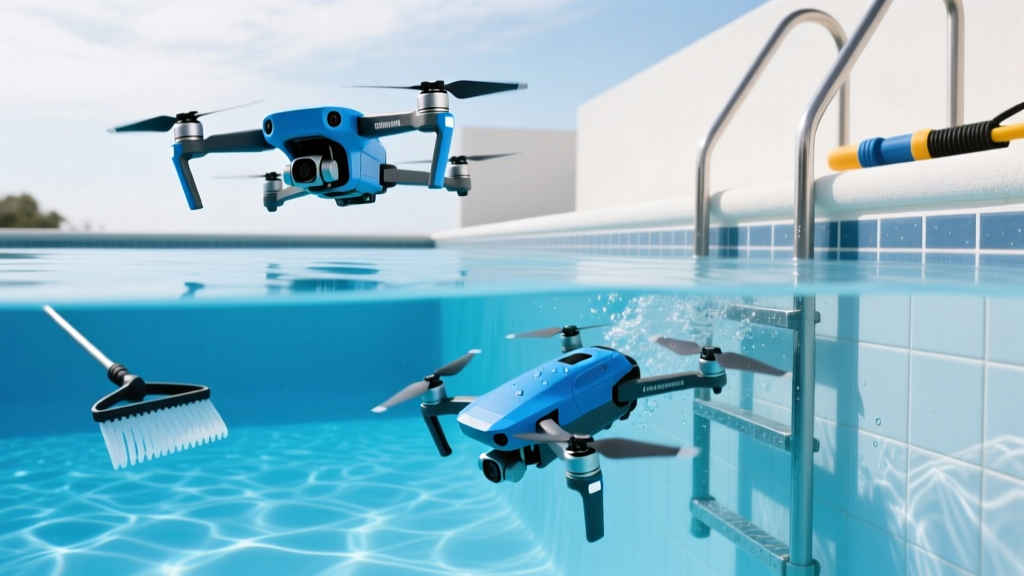
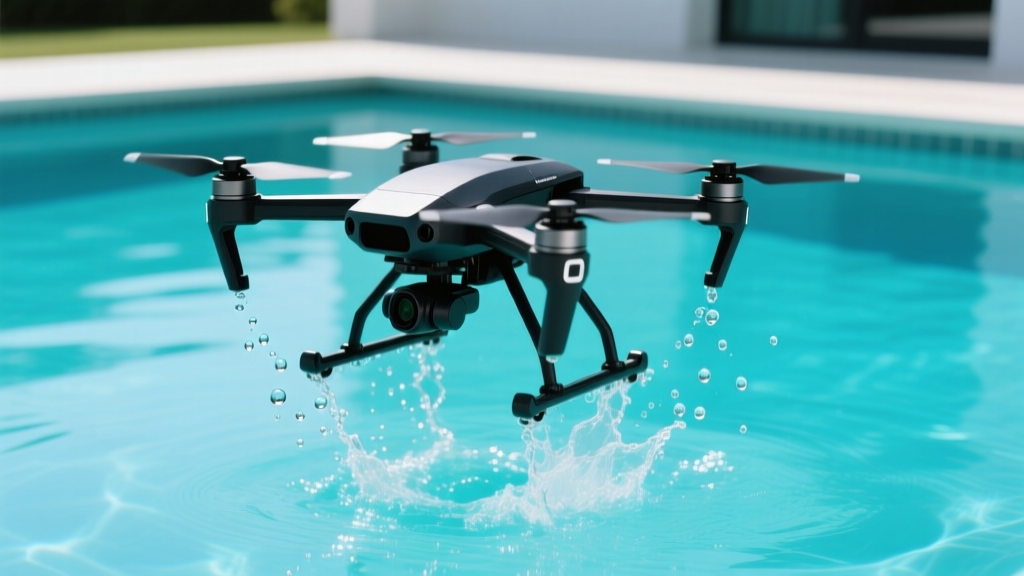
When evaluating gadgets for swimming pool maintenance, most homeowners default to robotic vacuums or smart chemical monitors. However, the integration of specialized waterproof and underwater drones has fundamentally changed how we approach pool inspection, leak detection, and poolside entertainment. Standard consumer drones fail catastrophically in pool environments due to aerosolized chlorine and saltwater corrosion. To solve this, manufacturers have developed purpose-built aquatic UAVs and ROVs (Remotely Operated Vehicles) that withstand harsh chemical exposure while delivering high-resolution diagnostic data.
This guide breaks down the most effective drone-based gadgets for swimming pool owners, focusing on actionable leak-detection methodologies, specific 2026 model recommendations, and the critical post-flight decontamination protocols required to protect your investment.
Standard IP54-rated drones (like the DJI Mini series) are only splash-resistant against fresh water. Swimming pools generate a microclimate of aerosolized chlorine and muriatic acid vapors just above the water line. These gases bypass physical splash guards and corrode the copper windings inside drone ESCs (Electronic Speed Controllers) within minutes. Always use fully sealed IP67/IP68 or purpose-built marine drones over chemically treated water.
Aerial Waterproof Drones: Surface Inspection & Entertainment
For tasks that require hovering over the water, dropping diagnostic payloads, or capturing high-frame-rate footage of poolside events, an aerial waterproof drone is mandatory. The current market leader in this niche is the SwellPro SplashDrone 4.
Practical Pick: SwellPro SplashDrone 4
- Current Price: ~$1,899 (Base) / ~$2,199 (Fisherman Edition with sonar)
- Ingress Protection: IP67 (Fully submersible up to 1 meter for 30 minutes)
- Max Wind Resistance: Level 6 (Crucial for open-air pool environments)
- Payload Capacity: 1.2 kg via mechanical release winch
The SplashDrone 4 solves a specific problem for pool owners: safe aerial dye testing. By attaching a specialized water-soluble dye tablet to the payload release mechanism, operators can hover precisely over suspected leak zones (such as main drains or skimmer throats) and drop the dye without ever entering the water or risking a standard drone in the splash zone. Furthermore, its ability to land directly on the water surface and take off again makes it an unparalleled gadget for swimming pool parties, allowing for dynamic, low-angle cinematography that would destroy a standard quadcopter.
Underwater ROVs: The Ultimate Leak-Detection Gadgets
While aerial drones handle the surface, finding micro-leaks in vinyl liners, fiberglass shells, or gunite plaster requires sub-surface imaging. Draining a pool for inspection costs between $500 and $1,500 and risks structural damage to the shell. Underwater ROVs eliminate this cost entirely.
Practical Pick: CHASING M2 Pro
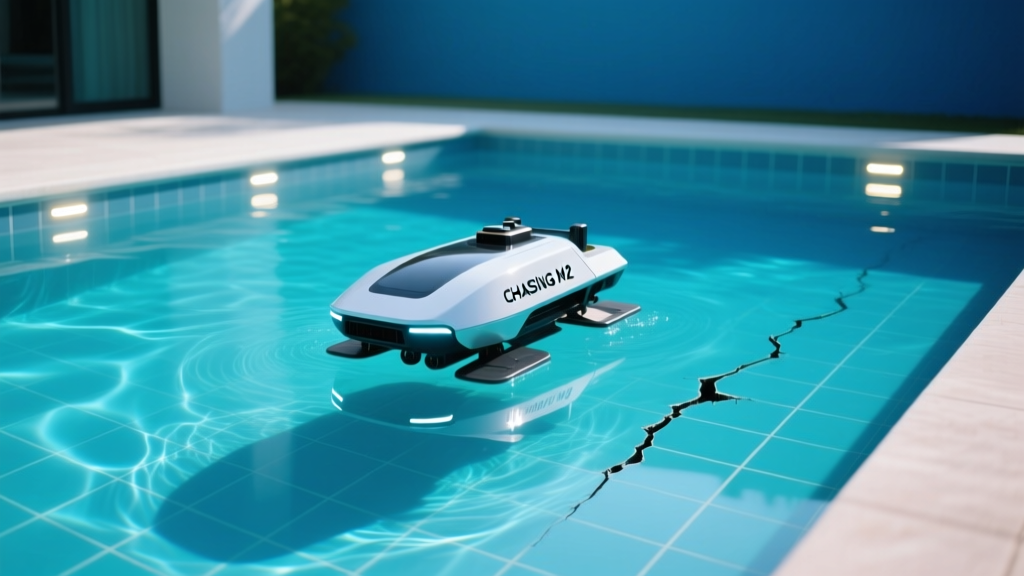
The CHASING M2 Pro is an 8-thruster vectored ROV designed for confined aquatic spaces. Unlike torpedo-style underwater drones that require wide turning radiuses, the M2 Pro’s omnidirectional thruster layout allows it to strafe laterally along pool walls and hover millimeters from the floor to inspect grout lines and main drain seals.
- Current Price: ~$3,499 (with 4K camera and laser scaler)
- Max Depth: 150 meters (vastly exceeding any residential or commercial pool depth)
- Lighting: Dual 1200-lumen LED arrays (essential for deep-end shadow penetration)
- Tether Length: 20m to 50m options (20m is sufficient for 95% of residential pools)
The inclusion of laser scalers in the 2026 Pro model allows operators to measure the exact width of a plaster crack or vinyl tear directly from the surface controller, providing precise data to pool repair contractors without guesswork.
Hardware Comparison Matrix: Pool Drones at a Glance
| Feature | SwellPro SplashDrone 4 | CHASING M2 Pro | PowerVision PowerEgg X Wizard |
|---|---|---|---|
| Type | Aerial / Surface Landing | Underwater ROV (Tethered) | Aerial / Foldable |
| IP Rating | IP67 | IP68 (Submersible) | IPX5 (Rain resistant only) |
| Primary Pool Use | Aerial dye drops, event filming | Leak detection, grout inspection | General poolside cinematography |
| Price Range | $1,899 - $2,199 | $3,499 - $4,200 | $1,249 |
| Corrosion Risk | Low (Sealed ESCs) | None (Tethered power) | High (Vents expose internals) |
Step-by-Step: Drone-Assisted Pool Leak Inspection
According to the U.S. Department of Energy, undetected pool leaks waste thousands of gallons of water and drastically increase heating costs. Here is the exact framework for using your drone gadgets for swimming pool leak isolation.
- Isolate the Plumbing: Plug all return lines, skimmers, and main drains. Perform a standard bucket test to confirm the leak is in the shell, not the plumbing.
- Deploy the ROV: Lower the CHASING M2 Pro into the deep end. Keep the tether taut but avoid dragging it across sharp coping stones.
- Systematic Grid Search: Drive the ROV along the floor-to-wall cove (the most common failure point for vinyl liners). Maintain a distance of 12 inches from the surface.
- Engage Laser Scalers: When a suspect tear or crack is spotted, activate the dual laser pointers. If the laser dots converge inside the crack, the fissure is deeper than 2mm and requires professional patching.
- Aerial Dye Confirmation: For suspected skimmer throat leaks where the ROV cannot reach, launch the SplashDrone 4. Hover 3 feet above the skimmer, drop a concentrated dye payload, and observe the water flow direction via the 4K down-facing camera.
The Post-Flight Decontamination Protocol
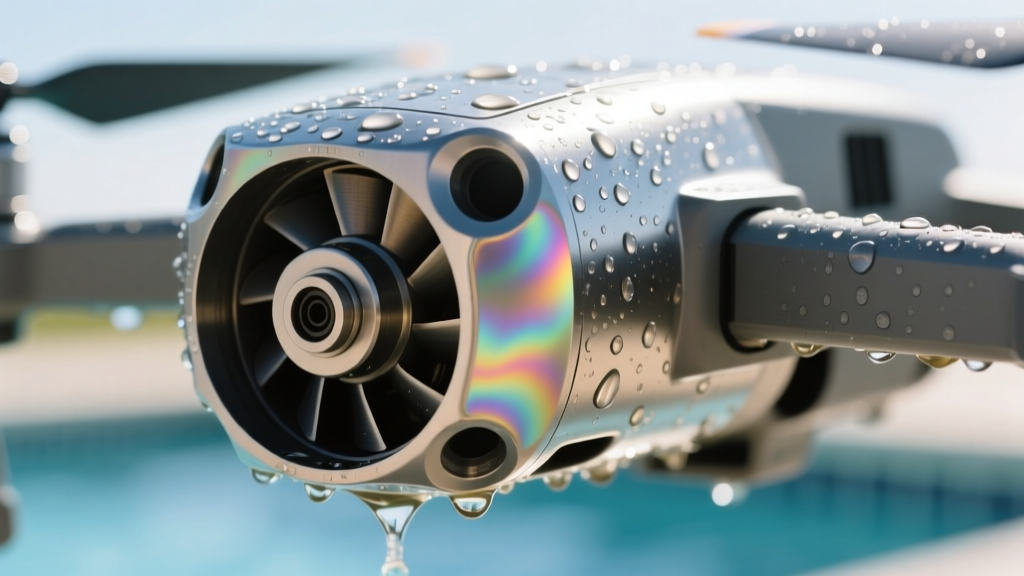
Even with IP67 sealing, the external components of your drone will accumulate pool chemical residue. Failing to clean your drone after flying over a chlorinated or saltwater pool will result in oxidized props, degraded landing gear, and seized motor bells. Follow this exact 15-minute protocol after every poolside flight session:
1. The Distilled Water Rinse
Never use tap water to rinse a drone exposed to pool chemicals. Tap water contains minerals that, when mixed with residual chlorine, accelerate galvanic corrosion. Use a pressurized spray bottle filled with 100% distilled water to blast down the landing gear, motor bells, and payload release mechanisms.
2. Motor Bell Flushing
While the motors are still spinning freely, apply two drops of CRC 3-36 or a similar non-conductive, water-displacing anti-corrosion lubricant directly into the motor bell housing gap. Manually rotate the motor shaft 10 times to distribute the lubricant and displace any trapped chlorinated moisture.
3. Propeller and Seal Inspection
Pool chemicals degrade standard polycarbonate plastics over time. Inspect the leading edges of your propellers for micro-crazing (tiny spiderweb cracks). Check the rubber silicone gaskets around the battery compartment and SD card slots; if the rubber feels sticky or swollen, the seal has failed chemical exposure and must be replaced before the next flight.
Frequently Asked Questions
Do I need an FAA license to fly a drone over my private pool?
If you are flying strictly for recreational purposes over your own private property, you do not need a Part 107 commercial license. However, you must still adhere to Federal Aviation Administration (FAA) guidelines, which include passing the TRUST test, registering drones over 250g, and avoiding controlled airspace. Always check your local municipal ordinances regarding noise and privacy.
Can underwater ROVs operate in saltwater pools?
Yes, but with strict maintenance. While the ROV itself is sealed, the exposed metal components on the tether connectors and thruster guards will corrode rapidly in saltwater. You must rinse the entire ROV and tether in fresh water immediately after use and apply dielectric grease to all O-ring seals and connection pins.
What is the maximum operating temperature for pool drones?
Most lithium-polymer (LiPo) batteries used in aerial waterproof drones will trigger thermal shutdown if internal temperatures exceed 104°F (40°C). Avoid leaving your SplashDrone or controller in direct sunlight on a pool deck during midsummer. Store the drone in an insulated cooler with a dry ice pack (wrapped in a towel to prevent freezing) between flights to maintain optimal battery discharge rates.
Written by
Jake MorrisonJake Morrison holds a B.S. in Electrical Engineering from UC Berkeley and an MBA from Stanford Graduate School of Business. With over 12 years of hands-on experience in consumer electronics, he previously served as a senior product engineer at a Silicon Valley startup before transitioning to tech journalism. Jake has personally tested and benchmarked over 3,000 gadgets across categories including smartphones, wearables, smart home devices, and audio equipment. His durability testing methodology — involving controlled drop tests, thermal cycling, and water submersion — is widely cited by major tech publications. He is a certified CompTIA A+ technician and a contributing editor to the IEEE Consumer Electronics Magazine.