Zephyr Wolfpack Chipzz Portable Power: Beginner vs Expert
Compare beginner and expert approaches to the Zephyr Wolfpack Chipzz portable power station, covering solar inputs, GaN charging, and LiFePO4 care.
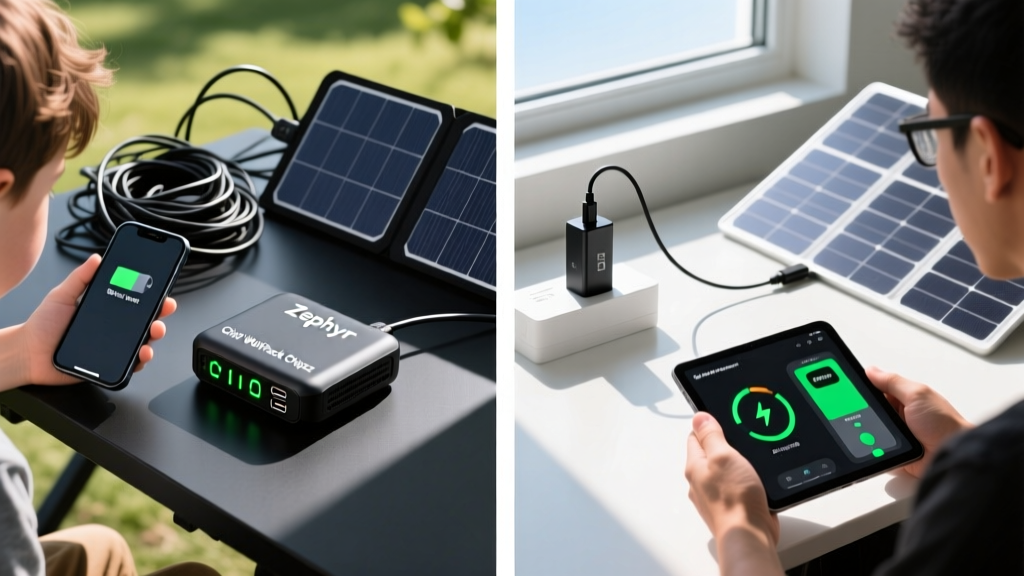
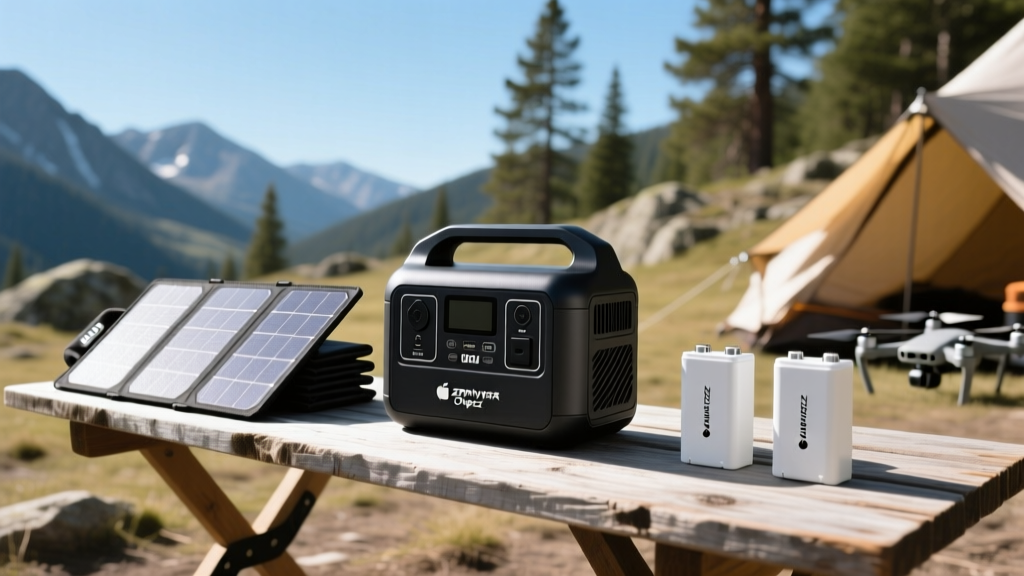
When evaluating high-end tech gadgets for off-grid and mobile use, the Zephyr Wolfpack Chipzz represents a significant leap in portable power architecture. Released with a 288Wh capacity and built-in LiFePO4 cells, this unit bridges the gap between pocket-sized power banks and heavy-duty solar generators. However, owning advanced hardware is only half the equation. The way a beginner interacts with this device versus how a seasoned tech enthusiast configures it yields drastically different real-world results.
This guide dissects the Zephyr Wolfpack Chipzz through a comparative lens, highlighting the critical differences in power routing, solar optimization, and battery longevity frameworks. Whether you are charging camera drones in the backcountry or running a CPAP machine on a road trip, understanding these expert-level nuances will maximize your investment.
The Capacity Illusion: mAh vs. Usable Watt-Hours
Beginners often fixate on the marketing headline: 80,000mAh. The immediate assumption is that a smartphone with a 5,000mAh battery will receive exactly 16 full charges. Experts know that milliamp-hours (mAh) are a misleading metric when voltage conversion is involved.
An expert looks strictly at Watt-hours (Wh). The Wolfpack Chipzz holds 288Wh of total energy. Factoring in an 85% average inverter/boost efficiency, the usable capacity is roughly 244Wh. If you are charging a 15Wh smartphone, the real-world yield is closer to 16 charges, but if you are running a 60W laptop, you are looking at roughly 4 hours of runtime, not the 4.8 hours a raw mathematical division would suggest.
Port Architecture: Basic Plugging vs. Power Routing
The physical interface of the Zephyr Wolfpack Chipzz features a dense array of output options. A beginner simply plugs devices into whatever port fits. An expert routes power based on conversion efficiency and the device's native voltage requirements.
| Port Type | Max Output | Beginner Usage | Expert Optimization |
|---|---|---|---|
| USB-C PD 3.1 | 140W (EPR) | Charging phones and tablets sequentially. | Utilizing Extended Power Range (EPR) to fast-charge 16-inch laptops at 28V/5A, bypassing standard 100W bottlenecks. |
| AC Pure Sine Wave | 300W (600W Surge) | Plugging in CPAP machines or laptops via their bulky AC bricks. | Avoided when possible. AC inversion wastes 10-15% energy. Used only for devices without DC alternatives. |
| 12V DC5521 / Car Port | 120W (10A) | Plugging in 12V car fridges directly. | Using step-down buck converters for 12V-native devices (like CPAPs) to eliminate AC inverter losses entirely. |
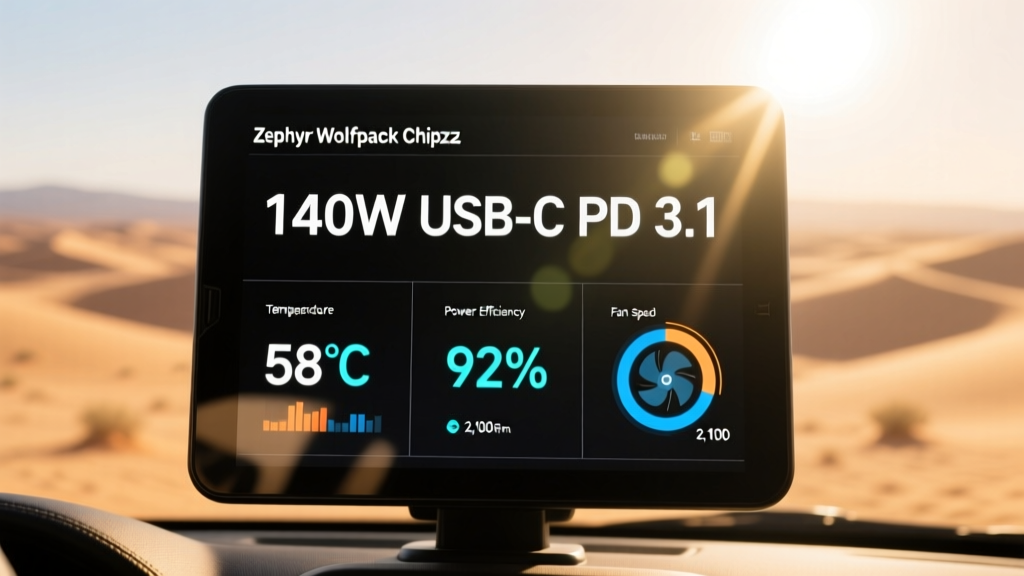
By leveraging the USB Implementers Forum's PD 3.1 specifications, experts can negotiate 140W charging speeds directly to compatible laptops, turning the Wolfpack Chipzz into a high-speed mobile charging hub rather than a mere trickle-charger.
Off-Grid Recharging: Solar Panels and 12V Car Adapters
Portable power is only as sustainable as its recharge methods. The integrated MPPT (Maximum Power Point Tracking) controller in the Zephyr Wolfpack Chipzz is a massive upgrade over older PWM controllers, but it requires correct deployment.
The Solar Wiring Matrix
Beginners typically purchase a single, cheap 60W USB solar panel and lay it in the sun, expecting a full recharge in five hours. Experts understand that USB solar panels lack the voltage headroom to trigger the MPPT controller's optimal charging curve.
- The Expert Setup: Wire two 100W rigid or semi-flexible panels in series using an XT60-to-DC adapter. This pushes the input voltage to roughly 36V-40V (well within the Chipzz's 12-45V MPPT input range). Higher voltage reduces current, minimizing heat loss in the cables and allowing the MPPT controller to efficiently step the voltage down to charge the battery, yielding up to 160W of actual input under optimal conditions.
12V Car Adapter Realities
Charging via a vehicle's 12V cigarette lighter socket seems straightforward, but it is fraught with edge cases. Most car sockets are fused at 10A (120W max). Furthermore, many vehicles cut power to the socket when the ignition is off, while others leave it on, risking a dead car battery.
LiFePO4 Chemistry: Longevity Frameworks
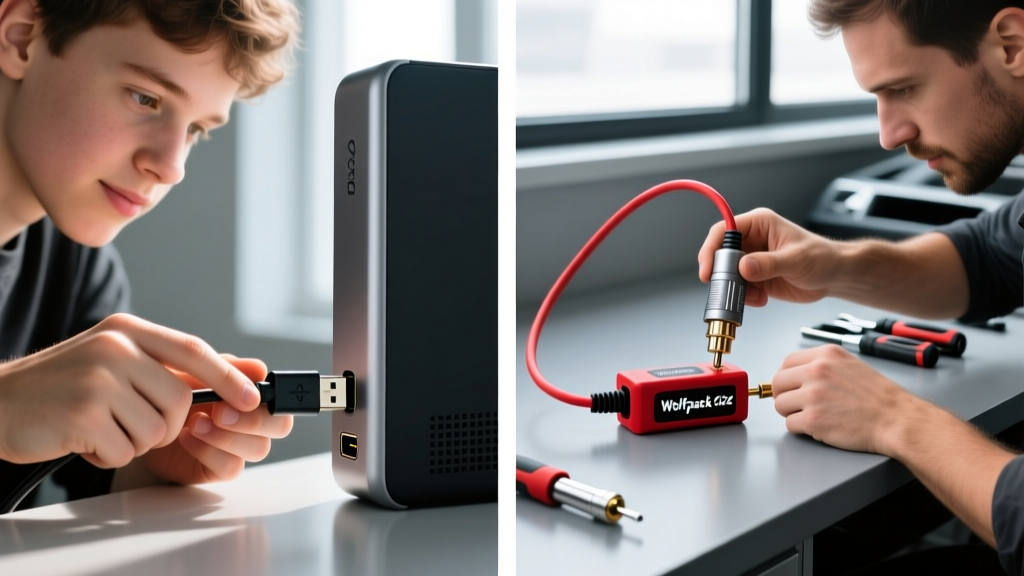
The shift from NMC (Nickel Manganese Cobalt) to LiFePO4 (Lithium Iron Phosphate) is the defining feature of modern premium portable power. According to extensive lifecycle testing documented by Battery University, LiFePO4 cells can endure 3,000+ charge cycles before degrading to 80% of their original capacity, compared to just 500-800 cycles for standard NMC power banks.
However, this chemistry requires specific maintenance habits that beginners often ignore:
- The 80% Daily Rule: For daily commuting or weekend trips, experts set the internal BMS (Battery Management System) to cap charging at 80%. This drastically reduces micro-stress on the cathode structure.
- Storage Voltage: Never store the Wolfpack Chipzz at 100% or 0% for extended periods. LiFePO4 cells prefer a 50% State of Charge (roughly 3.2V per cell) for long-term storage in a temperature-controlled environment.
- Thermal Boundaries: While LiFePO4 is thermally stable, charging the unit below freezing (0°C / 32°F) will cause lithium plating, permanently damaging the cells. The Chipzz features internal heating pads, but experts ensure the unit is kept above freezing during winter charging cycles.
Real-World Load Testing: The 48-Hour Drone & CPAP Matrix
To truly understand the gap between novice and expert usage, consider a 48-hour off-grid photography and camping trip. The load includes a 60W CPAP machine (8 hours/night), a 4-bay drone charging hub (60W peak), and two 16-inch laptops (90W each).
The Beginner Approach: Plugs the CPAP into the AC outlet, the laptops into AC bricks, and the drone hub into a standard USB-A port. The AC inverter runs continuously, generating heat and wasting 15% of the battery's capacity to DC-to-AC conversion. The unit dies halfway through the second night, and the cheap 60W solar panel fails to replenish it due to cloud cover and poor voltage matching.
The Expert Approach: The CPAP is powered via a 12V DC-to-DC converter plugged into the DC5521 port, bypassing the AC inverter entirely. Laptops are charged via USB-C PD 3.1 cables. The solar array is wired in series, pulling 140W even under partial cloud cover thanks to the MPPT algorithm. The power station maintains a 30% buffer throughout the entire 48-hour trip, proving that efficiency routing is just as critical as raw battery capacity.
Written by
Priya SharmaPriya Sharma holds a Ph.D. in Acoustical Engineering from the University of Southampton and a B.Tech in Electronics from IIT Delhi. She has spent 9 years as a consumer electronics journalist, with deep specialization in audio equipment, camera systems, and assistive technology. Priya is an active member of the Audio Engineering Society (AES) and has co-authored papers on spatial audio perception published in the Journal of the Acoustical Society of America. Her reviews of headphones, portable DACs, and studio monitors include objective measurements using Audio Precision analyzers alongside subjective listening tests. She also serves on the advisory board of the Global Accessibility Reporting Initiative (GARI), evaluating mobile devices for users with visual and hearing impairments.