Top Tech Gadgets Under $50: 7 Unique & Cool Finds for Men in 2026
Discover the top tech gadgets under $50 for men in 2026. From smart EDC tools to hidden audio gems, these cool unique finds deliver massive value.
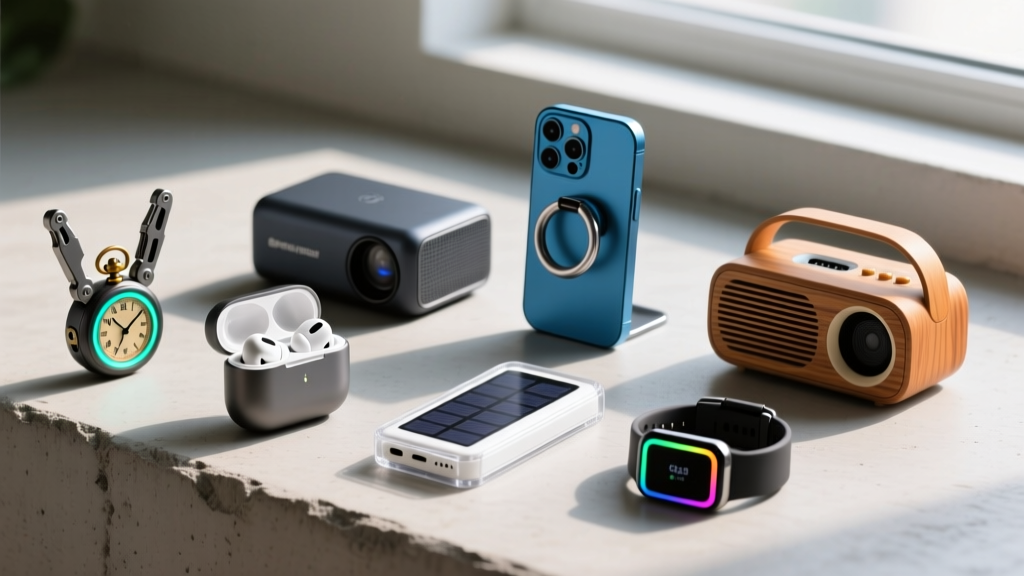
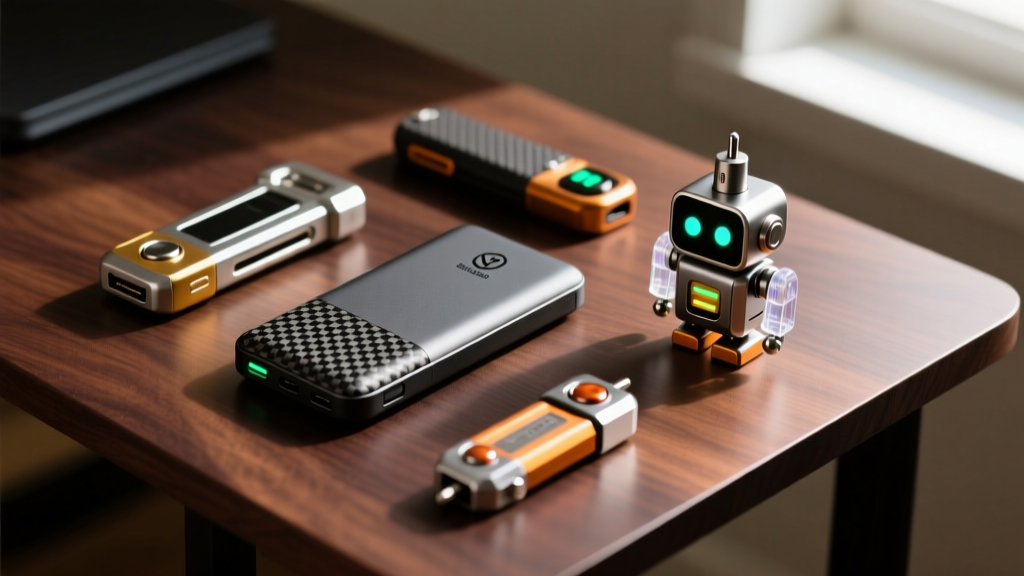
The sub-$50 tech sector is notoriously saturated with disposable e-waste, but the 2026 hardware landscape has shifted. Breakthroughs in Gallium Nitride (GaN) thermal efficiency, miniaturized carbon-fiber battery weaves, and USB-C DSP (Digital Signal Processing) audio have allowed boutique engineering to trickle down into budget tiers. Finding the top tech gadgets under $50 is no longer about accepting compromises; it is about identifying the specific models where flagship technology has outpaced its current market pricing.
Below is a curated teardown of seven highly specific, cool, and unique finds that punch significantly above their price class, categorized by their practical utility in a modern everyday carry (EDC) rotation.
The EDC Power Matrix: Weight-to-Capacity Ratios
Most budget power banks are dense, plastic bricks that add unnecessary bulk to a pocket. The two models below solve the weight-to-capacity ratio problem using advanced materials and integrated form factors.
1. Nitecore NB10000 Gen 3 Carbon Fiber (Approx. $45)
Nitecore’s NB10000 Gen 3 remains the undisputed king of ultralight EDC power. By utilizing a 3K carbon fiber composite shell instead of standard ABS plastic or aluminum, Nitecore achieved a 10,000mAh capacity in a package that weighs just 150 grams (5.29 oz).
- Capacity: 10,000mAh (36Wh)
- Max Output: 20W PD via USB-C
- Dimensions: 13.2 x 7.2 x 1.1 cm
- Weight: 150g
The 20W Power Delivery output is sufficient to fast-charge modern smartphones from 0 to 50% in roughly 30 minutes. According to CNET's power bank testing frameworks, carbon fiber shells also provide superior crush resistance compared to polycarbonate equivalents, making this ideal for tossing into a backpack without a protective case.
2. Anker Nano 30W with Built-in USB-C Cable (Approx. $25)
The bottleneck of EDC charging isn't usually the brick; it is forgetting the cable. Anker’s Nano 30W (Model A1636) integrates a braided USB-C cable directly into the chassis, which folds out to serve as both the charging tether and a carrying lanyard. It supports PPS (Programmable Power Supply), meaning it can dynamically adjust voltage to prevent thermal throttling on Samsung Galaxy devices, a feature rarely seen in sub-$30 chargers.
The Audiophile’s Backdoor: DSP and Dongle DACs
Bluetooth audio inherently compresses data. For men who want lossless audio on a budget without investing $300 into a dedicated Digital Audio Player (DAP), the solution lies in USB-C Dongle DACs and DSP-tuned In-Ear Monitors (IEMs). As noted by audio engineers at SoundGuys, bypassing a smartphone's internal, noisy DAC chip is the single most cost-effective audio upgrade available.
| Feature | FiiO JA11 ($20) | Moondrop Chu II DSP ($25) |
|---|---|---|
| Primary Function | Portable DAC/Amp | Wired IEMs with inline DAC |
| Key Tech | App-based Parametric EQ (PEQ) | Interchangeable Brass Nozzles |
| Output Power | 32mW @ 32Ω | N/A (Driven by source) |
| Best Use Case | Fixing EQ curves on any wired headset | Zero-latency gaming & lossless music |
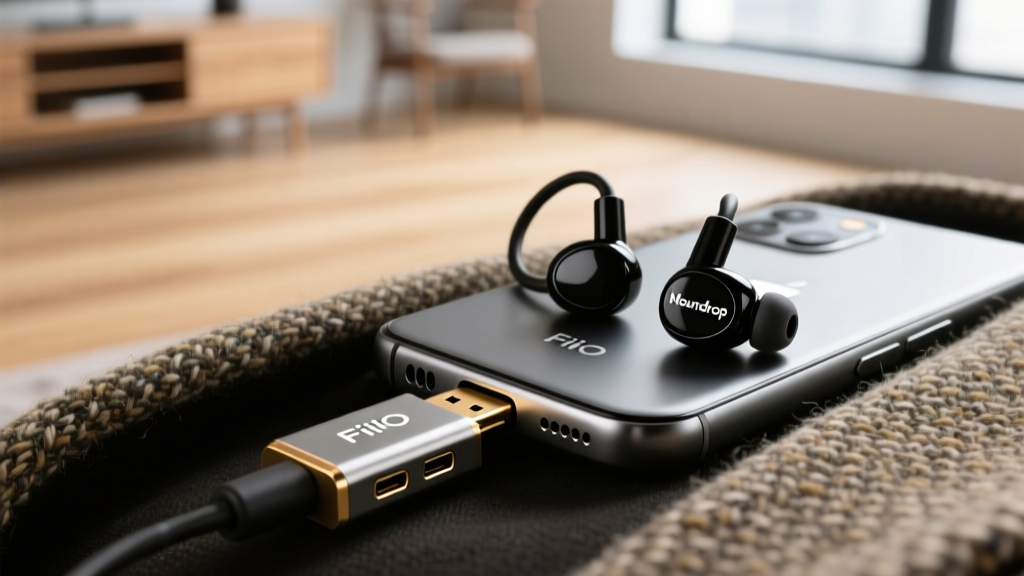
3. FiiO JA11 USB-C Dongle DAC
The FiiO JA11 is a $20 anomaly. Most dongles at this price offer a basic volume bump. The JA11, however, unlocks FiiO’s Control App, granting access to a Parametric Equalizer (PEQ). This allows users to target and adjust exact frequency bands (e.g., pulling down a harsh 4kHz treble peak by 2dB with a narrow Q-factor of 1.5). It effectively lets you 'tune' cheap earbuds to sound like premium sets.
4. Moondrop Chu II DSP
The Chu II DSP bypasses analog cable degradation by embedding a custom DSP chip directly inside the USB-C connector. This ensures the tuning curve Moondrop intended is applied digitally, regardless of the phone you plug it into. Furthermore, the inclusion of screw-in, replaceable brass nozzles means that if earwax clogs the filter, you simply unscrew and replace the nozzle rather than throwing away the IEMs.
Utility & Form Factor: Illumination and Thermals
True EDC utility requires tools that operate reliably in edge cases—extreme cold, total darkness, or confined spaces.
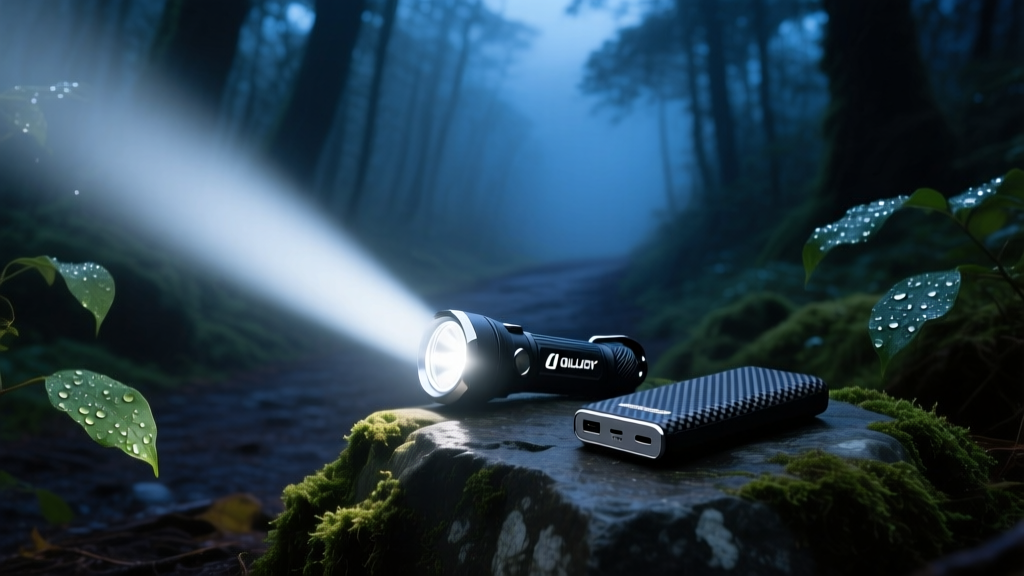
5. Olight I1R 2 Pro EOS Keychain Light (Approx. $35)
Keychain flashlights often fail due to proprietary charging cables or weak outputs. The Olight I1R 2 Pro EOS pushes 800 lumens from a form factor roughly the size of a Zippo lighter. The unique engineering feat here is the hidden USB-C port: twisting the bezel physically retracts the inner chassis, revealing the charging port while maintaining an IPX8 waterproof seal when closed. It utilizes a high-discharge lithium-polymer cell capable of sustaining its turbo mode longer than standard AAA alkaline alternatives.
6. Ugreen Nexode RG 30W GaN Robot Charger (Approx. $25)
Gallium Nitride (GaN) technology has revolutionized charger thermals by allowing electrons to flow faster with less resistance, meaning smaller chips can handle higher wattages without melting. As detailed in Tom's Guide's breakdown of GaN technology, this allows chargers to shrink by up to 40%. Ugreen took this thermal headroom and added a retro-futuristic aesthetic: the Nexode RG 30W features an LED matrix display with expressive 'robot eyes' that react to charging states. Beyond the novelty, the 30W PPS output is perfectly calibrated for the Steam Deck OLED and modern ultrabooks, making it a highly functional desk companion.
The Commuter’s Edge: Active Noise Cancellation
7. Baseus Bowie MA10 ANC Earbuds (Approx. $35)
Claiming -48dB of Active Noise Cancellation (ANC) at $35 is usually a marketing fabrication, but the Baseus Bowie MA10 actually delivers in specific environments. The feedforward and feedback microphone array excels at canceling low-frequency, continuous drones (airplane cabins, server rooms, train tracks).
Real-World Caveat: While the low-end ANC is superb for the price, the MA10 struggles with sudden, mid-frequency transients like human conversation or clattering dishes. Buy these for commuting and transit, not for open-office vocal isolation.
The standout metric is the battery: the buds hold 8 hours of playback, and the massive, ruggedized case holds an additional 92 hours, totaling a 100-hour lifecycle that outlasts almost any competitor in the sub-$100 bracket.
The Sub-$50 Buyer’s Decision Framework
To maximize your budget, apply this decision matrix before checking out:
- If your priority is ultralight travel: Pair the Nitecore NB10000 Gen 3 with the Anker Nano 30W. Total cost: ~$70 for a complete, cable-free fast-charging ecosystem that weighs under 250 grams.
- If your priority is audio fidelity: Buy the Moondrop Chu II DSP for immediate lossless listening. Add the FiiO JA11 later if you want to experiment with PEQ tuning on other wired headsets.
- If your priority is heavy transit commuting: The Baseus Bowie MA10 is mandatory for the low-frequency ANC and 100-hour battery case, entirely negating range anxiety.
Final Verdict on the 2026 Budget Tier
The era of accepting 'you get what you pay for' in budget tech is over. By targeting brands that leverage mature supply chains for premium materials (like carbon fiber and GaN) and software-defined hardware (like DSP tuning and app-based PEQ), you can assemble an EDC loadout that rivals $200+ flagship setups in pure functional utility.
Written by
Lena ChenLena Chen earned her M.S. in Human-Computer Interaction from Carnegie Mellon University and a B.S. in Electrical Engineering from the University of Washington. She has spent the past decade specializing in smart home architecture and IoT ecosystems, helping over 200 homeowners design fully connected living spaces. Lena is a certified Matter protocol consultant and has published peer-reviewed research on voice-first interface design in the ACM Digital Library. Her reviews of smart home products combine deep technical analysis with real-world usability testing, evaluating everything from Zigbee mesh stability to Alexa skill responsiveness. She regularly speaks at CEDIA Expo and CES smart home panels.