Essential Motorcycle Gadgets: Beginner vs Expert Tech
Discover the best motorcycle gadgets for every skill level. We compare beginner essentials with expert-tier tech for safety, navigation, and performance.
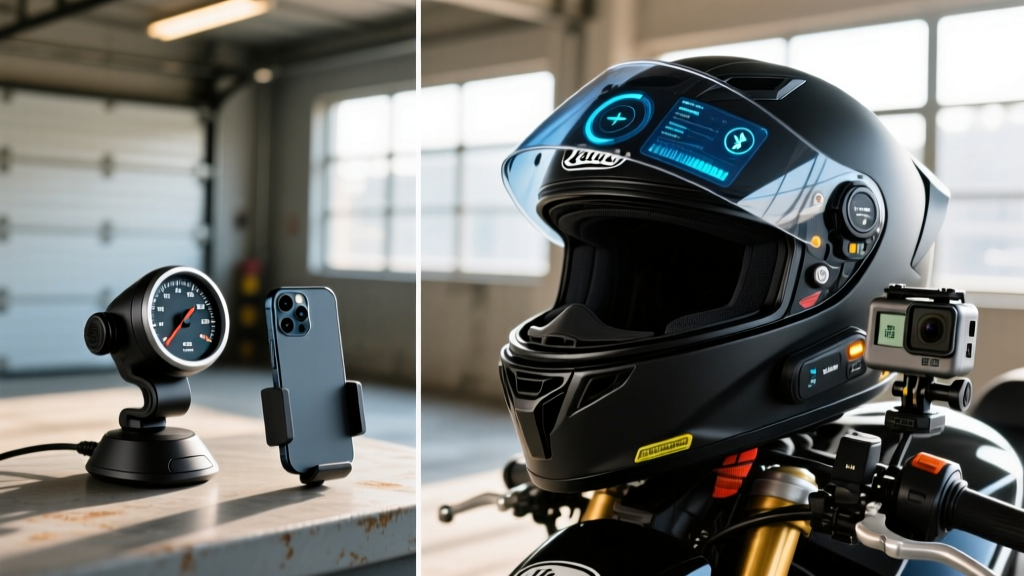
The Evolution of Two-Wheeled Tech: Where Do You Stand?
The landscape of motorcycle gadgets has evolved from simple handlebar-mounted compasses to sophisticated, mesh-networked communication arrays and ECU-level diagnostic tools. Whether you are logging your first 1,000 miles or preparing for a transcontinental expedition, equipping your bike with the right technology drastically alters your safety, comfort, and riding experience. However, the gap between a novice setup and a veteran's cockpit is vast—both in capability and cost.
In this guide, we break down the essential motorcycle gadgets across two distinct tiers: the foundational beginner loadout and the advanced expert arsenal. By understanding the specific edge cases, failure modes, and real-world benefits of each tier, you can build a decision framework that matches your current riding style without overspending on tech you aren't ready to utilize.
The Beginner's Arsenal: Foundation, Safety, and Budget
When you are new to riding, your cognitive load is entirely focused on clutch control, braking, and traffic awareness. Beginner gadgets should reduce distractions, not add to them. The goal here is high-impact utility with minimal installation complexity.
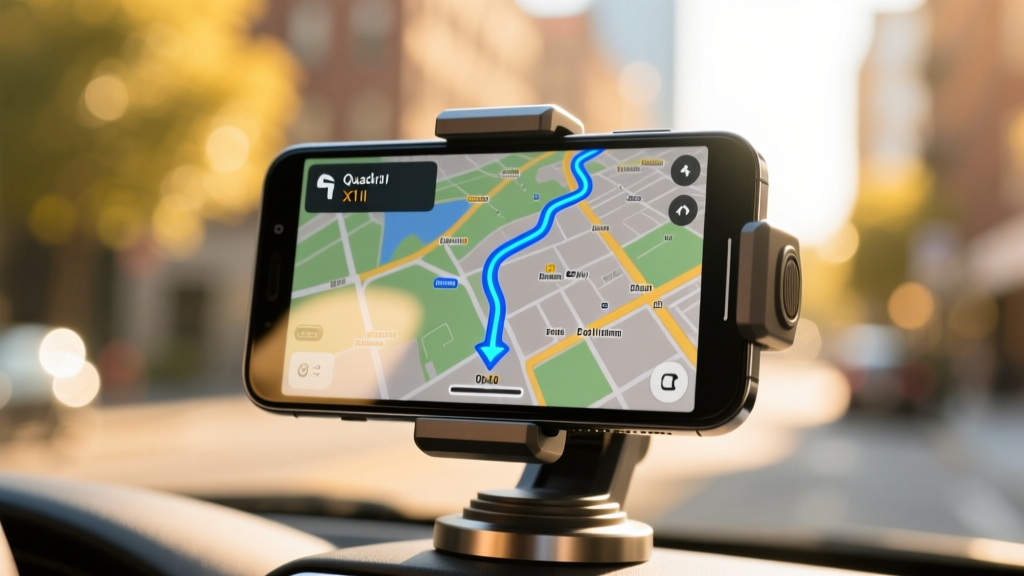
1. Smartphone Mounting: Quad Lock with Vibration Dampener
Using your phone for GPS is a rite of passage, but modern smartphone cameras are highly susceptible to high-frequency engine vibrations. The optical image stabilization (OIS) and closed-loop autofocus systems in flagship phones (like the iPhone 15/16 series or Samsung Galaxy S24/S25) can be permanently destroyed by the harmonic resonance of a motorcycle engine. The Quad Lock Motorcycle Mount Kit paired with the Vibration Dampener (approx. $135 total) is non-negotiable. The dampener utilizes silicone grommets to isolate the phone from high-RPM buzz, saving your $1,000+ device from a blurry-camera fate.
2. Communications: Cardo Freecom 2x
For the beginner, a full mesh network is overkill. The Cardo Freecom 2x (approx. $179) offers Bluetooth 5.2, JBL-tuned speakers, and a reliable 4-way intercom range of up to 500 meters. It features 'Natural Voice' activation, meaning you don't need to take your hands off the bars or memorize complex button sequences to answer a call or change a track. It's an accessible entry point into helmet audio that prioritizes ease of use over sprawling group networks.
3. Tire Safety: Nonda ZUS Smart Tire Safety Monitor
Beginners often neglect tire pressure, which drastically affects handling and braking distances. The Nonda ZUS TPMS (approx. $130) uses external valve-cap sensors that transmit real-time pressure and temperature data to your smartphone. If a tire drops below 28 PSI or exceeds 160°F, the app sends an audible alert, preventing catastrophic blowouts before they happen.
The Expert's Cockpit: Data, Diagnostics, and Advanced Comms
Expert riders demand redundancy, granular data, and seamless integration. At this level, gadgets are no longer just accessories; they are integrated components of the motorcycle's ecosystem, often requiring hardwiring and CANbus integration.
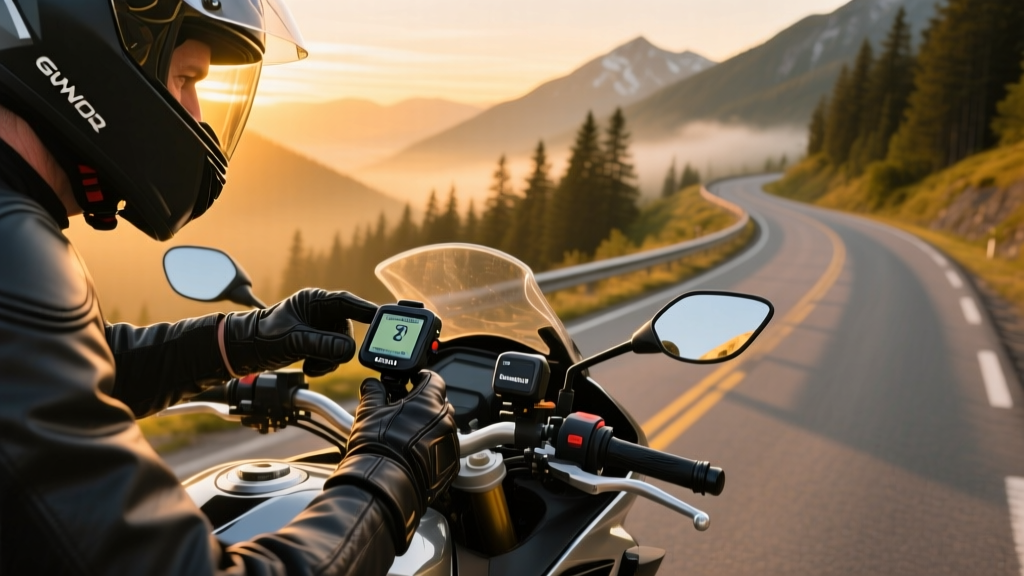
1. Navigation: Garmin Zumo XT2
While phones are great for city commuting, they fail in extreme weather, direct sunlight, and remote areas without cell service. The Garmin Zumo XT2 (approx. $599) is the gold standard for expert touring. It features a 6-inch sunlight-readable display, topographic mapping, and satellite imagery via BirdsEye. More importantly, its 'Group Ride' feature allows you to track the real-time location of your riding partners on the map without relying on cellular networks. It is rugged, glove-friendly, and IPX7 waterproof.
2. Communications: Cardo Packtalk Edge
When leading a group of 10+ riders through winding canyons, Bluetooth daisy-chains fail the moment one rider drops out of range. The Cardo Packtalk Edge (approx. $329) utilizes Dynamic Mesh 2.0 (DMC) technology. DMC creates a self-healing network where riders can drop out and seamlessly rejoin without breaking the chain for the rest of the group. The magnetic 'Air Mount' ensures the unit snaps on and off effortlessly, and the sound profile dynamically adjusts to ambient wind and engine noise.
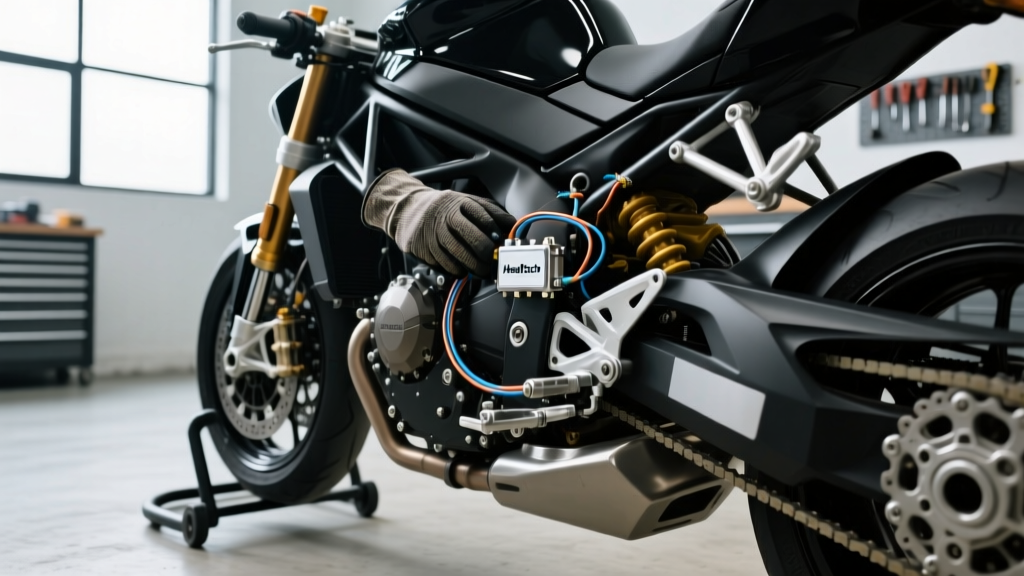
3. Performance: HealTech iQSE Quickshifter
For the sport and track-day expert, clutchless upshifts are essential for maintaining acceleration and keeping the bike settled. The HealTech iQSE Quickshifter (approx. $280) intercepts the ignition signal via a sensor installed on the shift rod. When upward pressure is detected, it cuts the spark for milliseconds, allowing the next gear to slide in smoothly. It requires precise tuning via the HealTech app to match your specific bike's engine characteristics and shift rod tension.
Head-to-Head Comparison Matrix
| Gadget Category | Beginner Choice | Expert Choice | Price Delta | Primary Expert Advantage |
|---|---|---|---|---|
| Navigation | Smartphone + Quad Lock | Garmin Zumo XT2 | +$465 | Offline topo maps, sunlight readability, Group Ride tracking. |
| Communications | Cardo Freecom 2x | Cardo Packtalk Edge | +$150 | Dynamic Mesh 2.0 self-healing networks for 15+ riders. |
| Tire Monitoring | Nonda ZUS TPMS | FOBO Bike 2 | +$40 | Direct Bluetooth to helmet comms; no phone required. |
| Power Management | USB-C Cigarette Adapter | Denali CANsmart Controller | +$230 | Staggered power distribution, CANbus fault prevention. |
Decision Framework: When to Upgrade Your Loadout
Upgrading your motorcycle gadgets shouldn't be dictated by marketing, but by riding milestones. Use this framework to determine when it's time to invest in expert-tier tech:
- The 5,000-Mile Mark (Group Riding): Once you start riding in groups of 4 or more, upgrade from Bluetooth to Mesh communications. The frustration of dropped Bluetooth connections will quickly ruin group cohesion.
- The Remote Boundary (Off-Grid Touring): If your routes take you more than 50 miles outside of reliable cellular coverage, a dedicated GPS like the Zumo XT2 transitions from a luxury to a critical survival and navigation tool.
- The Track/Performance Pivot: If you begin focusing on lap times or aggressive canyon carving, investing in performance gadgets like quickshifters and lap-timers (e.g., Solo DLG) will yield measurable improvements in your riding mechanics.
Installation & Power Management: The Hidden Variable
The most overlooked aspect of motorcycle gadgets is how they draw power. Beginners often rely on simple USB adapters plugged into the bike's accessory port. However, modern motorcycles (especially BMW, KTM, and Triumph) utilize complex CANbus systems. Drawing too much amperage from the accessory port can trigger a 'Bulb Out' or 'Accessory Fault' code, causing the bike's ECU to shut down the port entirely while riding.
The Beginner Solution: Install an SAE pigtail directly to the battery with an inline 10A fuse, bypassing the CANbus entirely. It's cheap ($15), reliable, and requires only basic wrench skills.
The Expert Solution: Devices like the Denali CANsmart Controller (approx. $299) plug directly into the bike's diagnostic port or CANbus wiring harness. They allow you to stagger the startup of your gadgets (preventing battery voltage drops during cranking), modulate auxiliary lights, and ensure the ECU recognizes the accessories as OEM equipment, completely eliminating fault codes.
Frequently Asked Questions
Do I really need a vibration dampener for my phone mount?
Yes. As of 2026, smartphone manufacturers have explicitly warned that high-amplitude, high-frequency vibrations from motorcycle engines will degrade the OIS (Optical Image Stabilization) hardware. A $45 dampener module is a fraction of the cost of a new flagship smartphone camera replacement.
Can I use my Apple Watch instead of a dedicated TPMS?
Not reliably. While some smartwatches can receive Bluetooth notifications from third-party apps, they lack the dedicated, always-on background processing required for critical safety alerts. A dedicated TPMS receiver or direct-to-helmet-comms integration (like the FOBO Bike 2) ensures you are alerted instantly, even if your phone is in your pocket and the screen is off.
Is the Garmin Zumo XT2 worth the premium over a rugged smartphone?
For casual commuters, no. But for expert tourers, the Zumo XT2's physical buttons (operable with heavy winter gloves), extreme thermal tolerance (phones will overheat and shut down in direct summer sun on a dashboard), and offline satellite routing make it an indispensable piece of expedition gear. For more insights on rugged tech, you can explore the RevZilla Tech Guide for community-tested reviews.
Written by
Marcus WebbMarcus Webb served as a U.S. Army logistics officer for 8 years, where he managed field equipment procurement and tactical gear evaluation across three combat deployments. After honorable discharge, he earned a certification from the Professional Knife Makers Association and became a certified Wilderness First Responder (WFR). Marcus has tested over 500 EDC products in extreme environments — from -40°F in Alaska to 120°F in the Mojave Desert — using military-spec testing protocols. His reviews of multi-tools, tactical flashlights, and survival gear are known for their rigorous methodology: controlled drop tests from 6 feet, 120-minute water submersion at 2 meters, and lateral torque testing at 45 Nm. He is a member of the Blade Show judging panel and contributes to OutdoorGearLab.