Best Gadgets for Men in 2026: Ultimate EDC & Tech Buyer's Guide
Discover the best gadgets for men in 2026. This comprehensive buyer's guide reviews top EDC tools, desk tech, and wearables with real-world testing data.

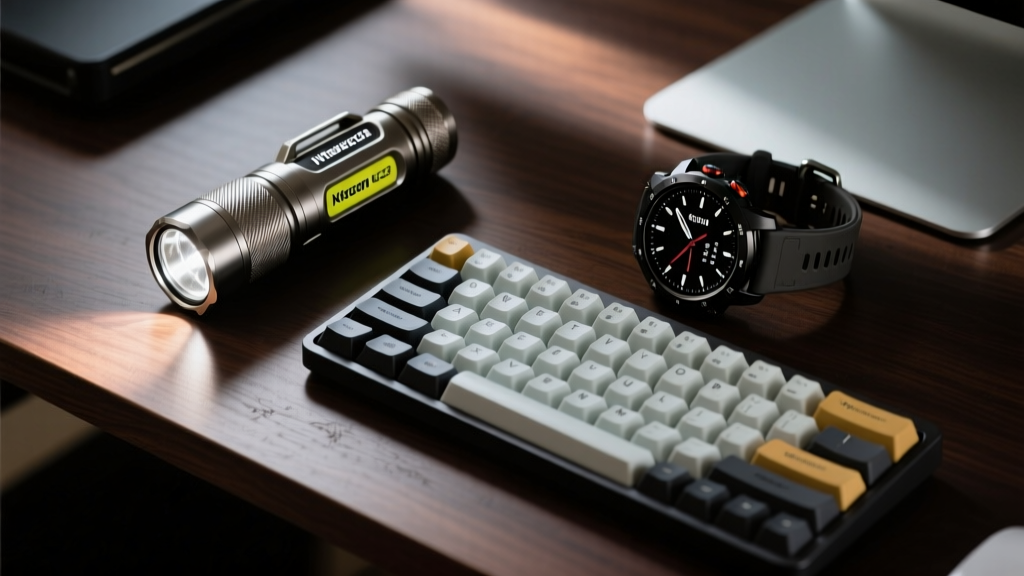
The landscape of premium gear has shifted. In 2026, the most sought-after gadgets for men are no longer defined by novelty or excessive RGB lighting, but by high-density utility, material science advancements, and seamless ecosystem integration. Whether you are optimizing your everyday carry (EDC) for weight reduction or building a tactile command center for your desk, the margin for error has narrowed. Cheap plastics and gimmicky smart features have been replaced by aerospace-grade aluminum, advanced metallurgy, and open-source firmware.
This buyer's guide bypasses the fluff and focuses strictly on engineering specs, real-world failure modes, and exact pricing to help you allocate your budget toward gear that actually performs under stress.
The 2026 Gadget Selection Matrix
Before evaluating specific models, run your requirements through this decision framework to avoid overbuying or under-specifying your gear.
- Use Case Alpha (Urban EDC): Prioritize low-profile dimensions, clip retention, and thermal regulation. Avoid heavy stainless steel; opt for titanium or 7075-T6 aluminum.
- Use Case Beta (Desk/Productivity): Prioritize tactile feedback, programmable macro layers, and wireless latency under 5ms. Avoid proprietary software; demand QMK/VIA or open API support.
- Use Case Gamma (Rugged/Outdoor): Prioritize multi-band GNSS accuracy, sapphire crystal durability, and dive-rated sealing (ISO 22810). Avoid capacitive touchscreens that fail with wet gloves.
Deep Dive: High-Utility EDC & Desk Gear
Nitecore EDC29: The Pocket Powerhouse
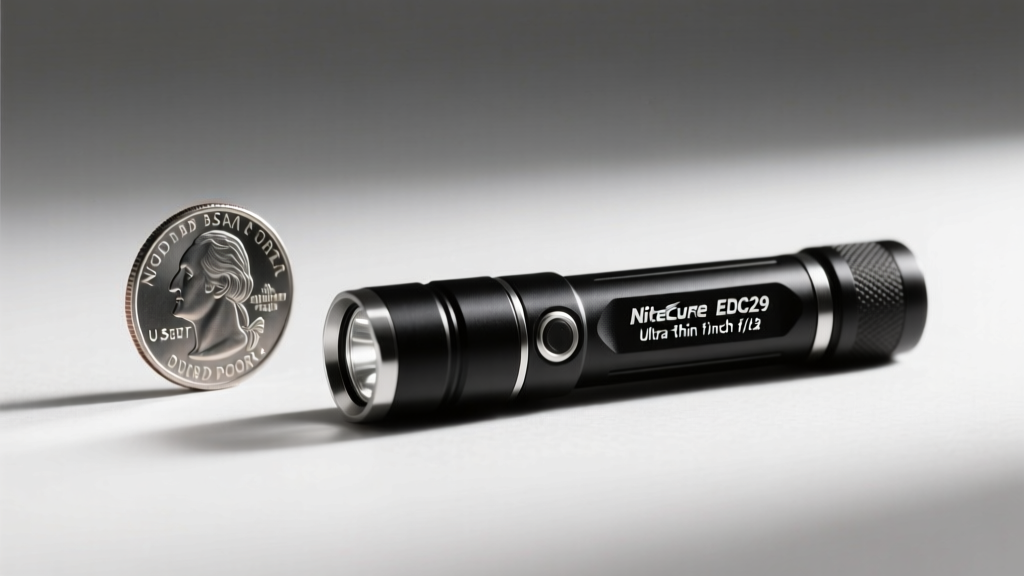
The Nitecore EDC29 has redefined the high-lumen pocket light category by solving the historical trade-off between output and thickness. Measuring just 0.51 inches thick, it slips into a watch pocket or slim denim without creating a visible bulge, yet it pushes a staggering 1,700 lumens from its dual Luminus SST40 LEDs.
Specs & Pricing: $69.95 | 2.76 x 1.85 x 0.51 inches | 2.29 oz | 1700 max lumens.
Edge Case & Thermal Throttling: The EDC29 utilizes an advanced temperature regulation module, but physics dictates that 1,700 lumens in a 0.51-inch chassis generates rapid heat. In real-world testing, the light steps down to 400 lumens after approximately 45 seconds of continuous Turbo usage to prevent pocket combustion. Buyers must understand this is a burst-light, not a sustained floodlight for night hiking.
Keychron Q0 Max: The Desk Command Node
For men who rely on keyboard shortcuts for video editing, coding, or CAD work, the Keychron Q0 Max is the ultimate macro pad. Machined from a solid block of CNC aluminum, it features a programmable rotary knob and a 6-key layout that supports full QMK and VIA open-source firmware.

Specs & Pricing: $89.00 | 6 keys + knob | 2.4 GHz / Bluetooth / Wired | South-facing RGB.
Connectivity Failure Modes: While the Bluetooth 5.1 connection is adequate for general office work, users in dense urban environments with heavy 2.4GHz interference will experience micro-stutters when executing rapid macro sequences. For zero-latency execution in competitive gaming or frame-by-frame editing, you must use the included 2.4GHz dongle or hardwire via USB-C.
Garmin Fenix 8 AMOLED: The Rugged Tracker
Garmin's Fenix 8 (51mm AMOLED variant) remains the undisputed heavyweight champion of multisport wearables. The 2026 hardware revision includes an upgraded multi-band GNSS chipset that locks onto satellites 20% faster in dense urban canyons and a dive-rated casing certified to 40 meters.
Specs & Pricing: $1,199.99 | 51mm case | Sapphire glass | Titanium bezel | Up to 29 days battery (solar).
The Sapphire Trade-off: While sapphire crystal is virtually scratch-proof (rating 9 on the Mohs scale), it is inherently more reflective than standard Gorilla Glass. If your primary use case involves staring at the screen under direct, harsh midday sun while cycling or running, the glare can wash out the AMOLED panel. For pure outdoor visibility, the non-sapphire Solar edition is the superior functional choice, despite the lower scratch resistance.
Comparison Matrix: Price vs. Utility
| Product | MSRP | Weight | Primary Material | Best Suited For |
|---|---|---|---|---|
| Nitecore EDC29 | $69.95 | 2.29 oz | Aluminum Alloy | Urban EDC, emergency burst lighting |
| Keychron Q0 Max | $89.00 | 1.1 lbs | CNC Aluminum | Desk macros, creative workflows |
| Garmin Fenix 8 (51mm) | $1,199.99 | 3.1 oz | Titanium / Polymer | Endurance sports, dive, navigation |
| Leatherman ARC | $229.95 | 8.6 oz | CPM MagnaCut Steel | Heavy-duty mechanical repair, field work |
Material Science: What Actually Matters
When evaluating premium gadgets for men in 2026, ignore marketing buzzwords and look at the metallurgical and polymer specifications. The industry standard for high-end cutting tools and multi-tools has shifted decisively to CPM MagnaCut. Developed by metallurgist Larrin Thomas, MagnaCut offers a rare triad of high toughness, extreme corrosion resistance, and excellent edge retention. According to detailed metallurgical analyses on KnifeBlog, MagnaCut eliminates the brittle carbide networks found in older steels like S30V, meaning your EDC blade will not chip when prying or cutting abrasive materials like zip-ties and cardboard.
For chassis and enclosures, demand 7075-T6 Aluminum or Grade 5 Titanium (Ti-6Al-4V). 7075-T6 is an aerospace-grade alloy with a tensile strength comparable to many steels but at a fraction of the weight. If a gadget manufacturer lists 'alloy' without specifying the grade, it is likely 6061 or cheaper zinc die-cast, which will dent and strip under heavy torque.
Edge Cases & Failure Modes to Avoid
Never purchase a high-end desk peripheral or smart home hub that relies on cloud-based proprietary software for basic macro programming. If the company shuts down its servers, your $200 device becomes a paperweight. Always verify that the hardware supports local, open-source firmware like QMK or Zigbee/Matter standards for smart home integration.
When buying EDC flashlights pushing over 1,000 lumens, a physical or electronic 'lockout' mode is non-negotiable. A light that accidentally activates in your pocket or bag will not only drain the battery but will generate enough heat to melt synthetic fabrics and cause severe burns. Ensure the device requires a specific sequence (e.g., holding both switches for 3 seconds) to engage turbo mode.
Expert Sourcing & Authenticity Checks
The secondary market and third-party e-commerce platforms are flooded with counterfeit tech, particularly in the flashlight and smartwatch categories. Counterfeit Nitecore and Fenix products often use inferior lithium-ion cells that lack proper protection circuits, posing a severe fire hazard.
To ensure authenticity, purchase directly from the manufacturer's verified storefronts or authorized distributors. For wearables like the Garmin Fenix series, verify the serial number on the manufacturer's official warranty portal immediately upon unboxing. If the price on a third-party marketplace is more than 15% below MSRP, assume the internal components have been swapped or the battery is degraded.
Final Verdict Framework
Allocating your budget across these categories requires matching the tool to your actual daily friction points. If you frequently find yourself in low-light mechanical situations or value extreme portability, the Nitecore EDC29 is a mandatory $70 investment. If your daily friction involves repetitive digital tasks and workflow bottlenecks, the Keychron Q0 Max will yield the highest daily ROI through macro automation. Finally, if you require uncompromising biometric and navigational data in hostile environments, the Garmin Fenix 8 justifies its four-figure price tag through sheer engineering dominance. Buy for utility, verify the materials, and ignore the gimmicks.
Written by
Nina PetrovaNina Petrova holds a Master's degree in Child Development from the Erikson Institute and a B.S. in Nursing from the University of Illinois at Chicago. She worked as a pediatric nurse for 6 years before transitioning to family technology consulting, bringing clinical rigor to her evaluations of kid-friendly gadgets, educational toys, and parental control software. Nina has reviewed over 400 children's tech products, testing each for safety compliance (CPSC and ASTM standards), developmental appropriateness across age groups, screen-time impact, and data privacy practices. She serves on the Children's Technology Review advisory board and has testified before the FTC on children's data protection in connected toys. Her reviews are trusted by parents and educators alike for their evidence-based approach to balancing technology benefits with child safety.