Spider Man Gadgets: Beginner vs Expert Tech Setup
Compare beginner and expert spider man gadgets. From basic web-shooters to pneumatic builds and FPV drones, find your perfect tech tier.
The Evolution of Spider-Man Tech in the Real World
Peter Parker’s workbench has always been the ultimate inspiration for tech enthusiasts, engineers, and makers. In 2026, the line between comic book fiction and real-world engineering is blurrier than ever. When we talk about spider man gadgets, we are no longer just referring to cheap plastic Halloween toys. Today’s market is split into two distinct tiers: accessible, off-the-shelf beginner gear, and highly customized, expert-level engineering projects that require coding, pneumatics, and advanced fabrication.
Whether you are looking to assemble your first everyday carry (EDC) web-shooter or you are a seasoned maker ready to integrate LiDAR into an FPV drone, this guide breaks down the exact hardware, costs, and technical requirements for both ends of the spectrum.
Web-Shooters: Spring-Loaded vs. Pneumatic Engineering
The most iconic of all spider man gadgets is the web-shooter. But how you approach building or buying one depends entirely on your engineering background and budget.
The Beginner Setup: Hasbro Pulse & Spring Mechanics
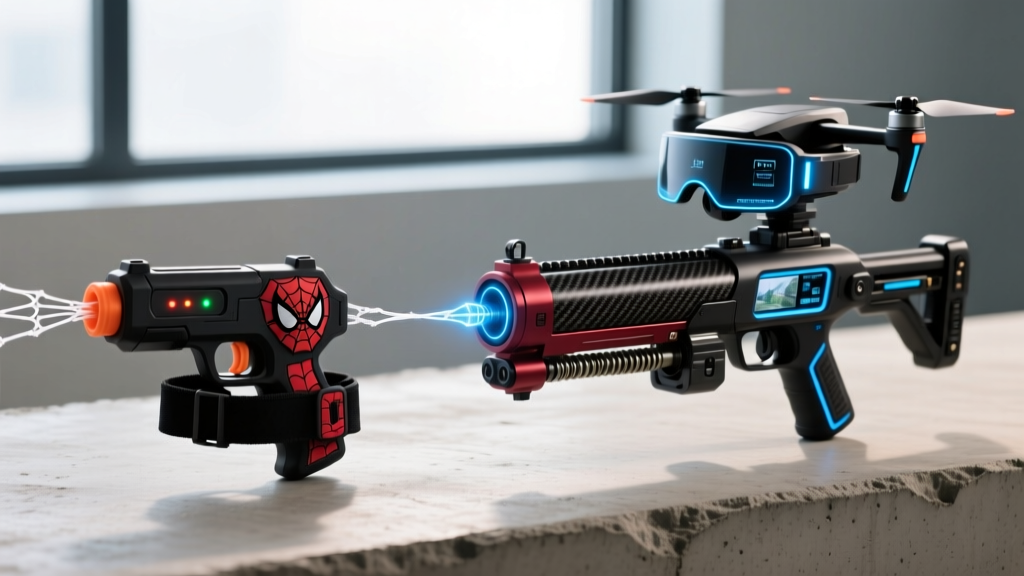
For beginners, the goal is aesthetic and safe roleplay. The Hasbro Pulse Web-Shooters (typically priced around $40) utilize a basic internal spring and dart mechanism. They are lightweight, require zero maintenance, and use proprietary foam darts or basic string capsules. The effective range is roughly 10 feet, and the trigger pull is mechanical. It’s a fantastic entry point for cosplayers who want something that looks good on the wrist without the risk of high-pressure gases.
The Expert Setup: Custom CO2 Pneumatic Builds
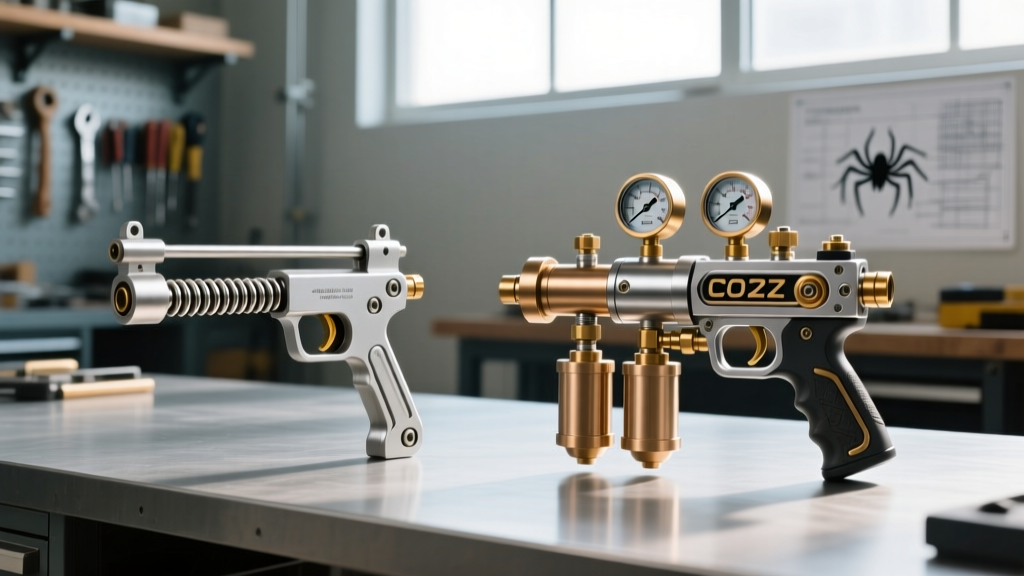
Expert makers ditch springs for fluid dynamics. High-end custom web-shooters utilize 12g CO2 cartridges (the same kind used in paintball and airsoft) regulated down to a safe 45-60 PSI. These builds require 3D printing with PETG or ABS plastics, polyurethane 4mm tubing, and brass solenoid valves triggered by micro-switches hidden in the palm. Instead of foam darts, experts shoot actual silly string or rapid-hardening nylon cord up to 30 feet. The cost for parts alone ranges from $400 to $800, not including the hundreds of hours spent tuning the airflow to prevent valve freezing.
| Feature | Beginner (Spring) | Expert (Pneumatic) |
|---|---|---|
| Power Source | Metal Coil Spring | 12g CO2 Cartridge |
| Effective Range | 10 - 15 Feet | 30 - 45 Feet |
| Build Material | Injection Molded ABS | Resin, PETG, Brass, Aluminum |
| Avg. Cost | $40 | $400 - $800+ |
Aerial Recon: Off-the-Shelf Drones vs. FPV Spider-Bots
Spider-Man relies on aerial awareness and the ability to scout from above. In the real world, this translates to drone technology.
Beginner: DJI Mini 4 Pro with APAS 5.0
For the enthusiast who wants 'Spider-Sense' obstacle avoidance without building a drone from scratch, the DJI Mini 4 Pro is the undisputed king. Priced at $759, it weighs under 249g (bypassing FAA registration requirements for hobbyists) and features omnidirectional obstacle sensing. You can fly it through dense tree lines or urban alleys with the AI actively preventing crashes. Add a custom vinyl spider-web skin, and you have a highly capable, 4K aerial recon gadget ready to fly out of the box.
Expert: Custom 3.5-inch Cinewhoop FPV
Experts don't rely on AI; they rely on reflexes and custom telemetry. An expert 'Spider-Bot' is a custom 3.5-inch FPV (First Person View) Cinewhoop drone. These are built using carbon fiber frames, brushless 2004 motors, and a Betaflight-tuned flight controller. To mimic Spider-Man’s agility, experts strap on DJI Goggles and fly in 'Acro Mode,' allowing for dives, flips, and gap-shooting that automated drones simply cannot perform. Adding a custom 3D-printed spider-carapace shell and a LiDAR mapping module pushes the price past $1,200 and requires a deep understanding of RF frequencies and soldering.
The 'Spider-Suit': Static Cosplay vs. Animatronic Wearables
A true gadget guide isn't complete without discussing the suit itself. The leap from beginner to expert here is defined by micro-electronics and wearable computing.
Beginner: EZCosplay and Basic LED Integration
Beginners typically start with high-quality spandex suits from vendors like EZCosplay ($120-$180). To add a 'tech' element, beginners might integrate basic EL (Electroluminescent) wire into the spider emblem, powered by a simple 9V battery pack hidden in the pocket. The lenses on the mask are usually static, cut from white mesh or reflective acrylic, offering zero articulation.
Expert: Arduino-Powered Animatronics & Haptics
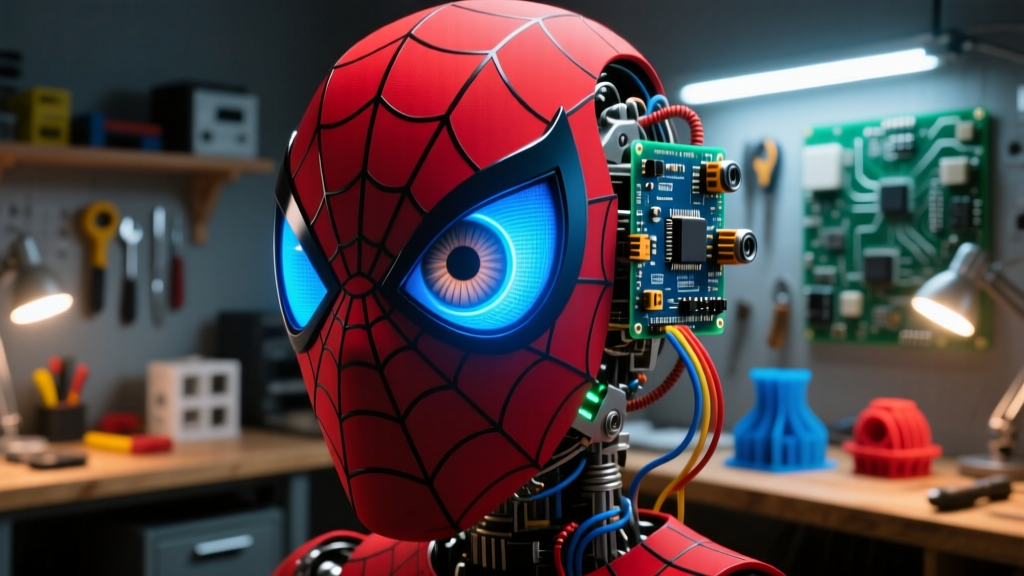
Expert suits are marvels of wearable engineering. The mask features articulating lenses driven by MG996R metal gear servos, controlled by an Arduino Nano microcontroller. A flex sensor in the jaw or a thumb-trigger on the suit dictates the aperture of the eyes, mimicking the comic book expressions. Power is supplied by a 7.4V 1000mAh LiPo battery. Furthermore, experts integrate haptic feedback vests to simulate the 'Spider-Sense,' vibrating specific nodes on the back when proximity sensors detect movement behind the wearer.
'The difference between a toy and a gadget is intent. A toy is meant to be played with; a gadget is meant to be engineered, modified, and pushed to its absolute physical limits.' — Anonymous Prop Maker
Virtual Spider-Sense: VR Gaming vs. Full Haptic Rigs
If physical building isn't your forte, the digital realm offers incredible spider man gadgets designed for immersion.
Beginner: Meta Quest 3 Standalone
The Meta Quest 3 ($499) features the Snapdragon XR2 Gen 2 chip, providing stunning mixed reality and VR capabilities. Playing Spider-Man VR titles or using mixed-reality apps that overlay web-swinging mechanics onto your actual living room provides an incredible, accessible baseline for digital gadgetry.
Expert: bHaptics & Omnidirectional Treadmills
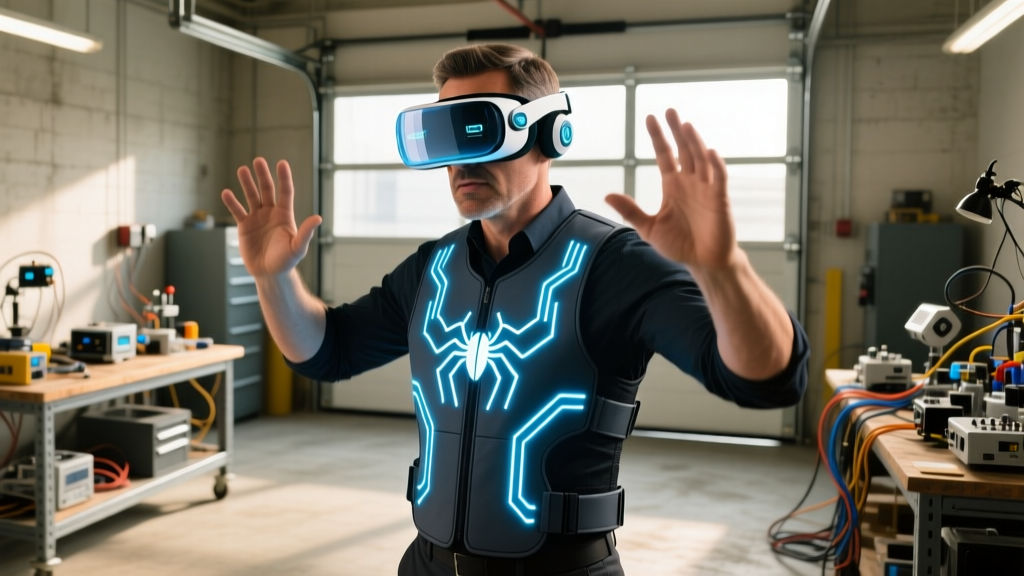
For the ultimate expert setup, visual VR isn't enough. Experts pair their headsets with the bHaptics TactSuit X40 ($499), a vest featuring 40 individual haptic feedback nodes. When a virtual enemy attacks from behind, or when you 'shoot' a web, the vest provides precise physical feedback. Pair this with an omnidirectional treadmill (like the KAT VR Mini, starting around $3,000), and you have a multi-thousand-dollar simulation rig that tricks your brain into feeling the physical strain of being a superhero.
Decision Matrix: Which Tier Are You?
- Choose Beginner If: You want immediate gratification, have a budget under $800, and prefer plug-and-play reliability over weekend-long soldering sessions.
- Choose Expert If: You own a 3D printer, know your way around a C++ IDE for Arduino, understand basic pneumatics, and view the 'gadget' as an ongoing engineering thesis rather than a simple purchase.
Frequently Asked Questions
Can pneumatic web-shooters actually support human weight?
No. Even the most advanced DIY pneumatic spider man gadgets use 12g CO2 cartridges generating around 45-60 PSI. This is enough to shoot a nylon cord 30 feet, but tensile strength, anchor deployment, and the physics of pendulum swinging remain purely fictional. Never attempt to swing or bear weight on DIY webbing.
Do I need an FAA license to fly a Spider-Bot FPV drone?
If your custom FPV drone weighs under 250 grams (0.55 lbs), you do not need to register it for recreational use in the US. However, if you add LiDAR modules, heavy action cameras, or 3D-printed carapace shells pushing it over 250g, FAA registration and the TRUST certificate are mandatory. Always check local 2026 airspace regulations before flying.
Where can I find blueprints for animatronic masks?
Expert makers frequently share STL files and Arduino wiring diagrams on platforms like Thingiverse, Printables, and specialized cosplay forums. Search for 'Arduino animatronic spider lens' to find open-source code and 3D models tailored for MG90S and MG996R servos.
Written by
David OkaforDavid Okafor is an ASE (Automotive Service Excellence) Master Certified Technician with 15 years of professional experience in vehicle diagnostics, aftermarket electronics installation, and fleet management. He holds an Associate Degree in Automotive Technology from Universal Technical Institute and certifications in mobile electronics (MECP Certified Installer). David has installed and reviewed over 800 car tech products — from OBD2 scanners and dash cams to full infotainment system retrofits — in vehicles ranging from economy compacts to luxury SUVs. His popular YouTube channel "AutoTech David" has over 150,000 subscribers and features detailed installation tutorials and product teardowns. He is a regular contributor to the SEMA Show's aftermarket technology showcase and advises two automotive tech startups on product development.