Hunting Gadgets for Men: Beginner vs Expert Loadouts 2026
Compare beginner and expert hunting gadgets for men. Discover 2026 loadouts, thermal optics, GPS trackers, and budget-friendly starter gear.
The Baseline: Defining the Technological Gap
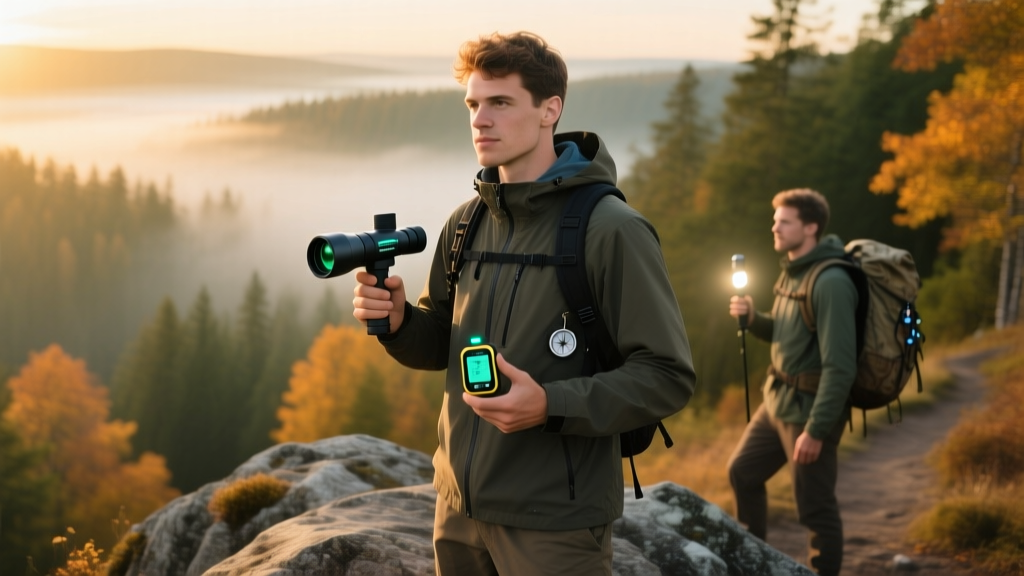
The gap between a novice and a seasoned hunter is rarely just about marksmanship; it is defined by the technological ecosystem deployed in the field. While a beginner relies on basic line-of-sight tools and smartphone apps that fail when cell service drops, an expert leverages multi-band GNSS navigation, applied ballistics computers, and thermal imaging to eliminate variables. In 2026, the market for hunting gadgets for men has bifurcated into high-ROI entry-level gear and ultra-precise professional loadouts. This guide dissects both tiers, providing a concrete decision framework for upgrading your kit.
Phase 1: The Beginner Loadout (Sub-$600 Tech Stack)
Novice hunters should prioritize reliability and ease of use over granular data. The goal at this stage is to build a safety net and establish baseline field awareness without draining your bank account.
Navigation & Communication
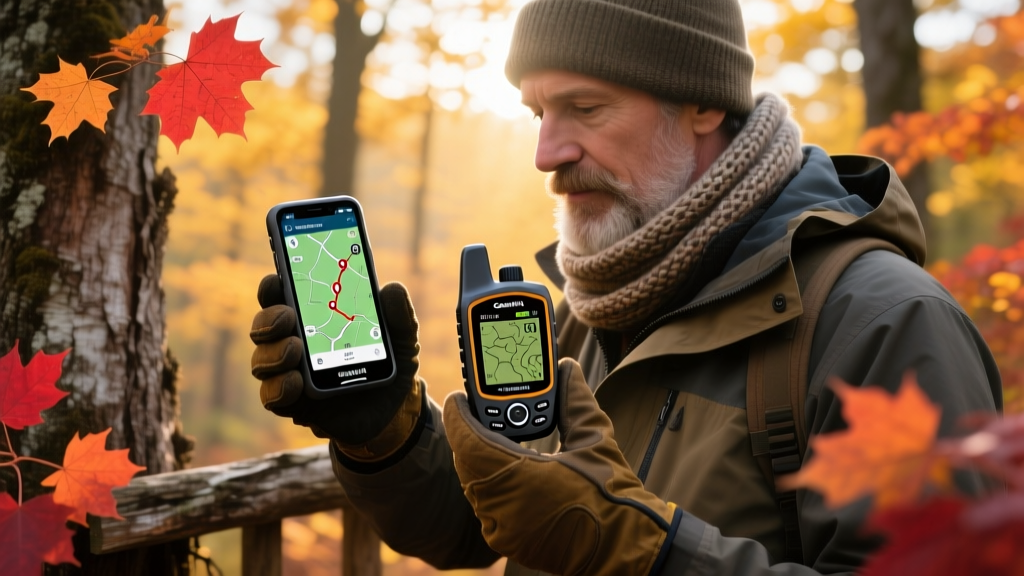
Smartphones are insufficient for backcountry navigation due to battery drain and fragile screens. The Garmin inReach Messenger (approx. $300) is the undisputed entry point. It provides two-way satellite messaging and an interactive SOS button. Unlike older models, the 2026 firmware updates allow for breadcrumb routing directly via the Garmin Messenger app on your phone, bridging the gap between a dedicated GPS and a communication device.
Optics & Rangefinding
For ranging, the Bushnell Prime 1700 (approx. $150) offers angle range compensation (ARC) out to 1,700 yards on reflective targets. While it lacks the Bluetooth connectivity and custom ballistic curves of premium models, its 905nm laser and 4x magnification provide the exact yardage needed for 95% of ethical hunting shots under 400 yards.

Phase 2: The Expert Arsenal ($2,500+ Precision Tech)
Expert loadouts shift the focus from basic data collection to predictive analytics and redundancy. At this level, gadgets are integrated into a cohesive network that calculates environmental variables in real-time.
Applied Ballistics & Environmental Metering
The Kestrel 5700 Elite with Hornady 4DOF (approx. $700) is the gold standard for long-range hunting. It does not just measure wind speed; it calculates density altitude, crosswind, and Coriolis effect. According to Kestrel Instruments, the 4DOF (Four Degree of Freedom) model accounts for the exact aerodynamic jump and drag of specific projectile profiles, not just standard ballistic coefficients. When paired via Bluetooth to a spotting scope or smart optic, it instantly updates elevation turrets for shots out to 1,000+ yards.
Premium Ranging & Optics
For experts who refuse to carry a separate wind meter and rangefinder, the Swarovski dS Gen II 10x42 (approx. $3,500) is a masterpiece of optical engineering. As detailed on the Swarovski Optik official portal, this rangefinding binocular integrates a ballistic compensation algorithm that reads range, temperature, and air pressure simultaneously, displaying the exact holdover point directly in the right lens within one second. The 102mm objective lens equivalent gathers enough light to identify antler tines in the last 15 minutes of legal shooting light.
Head-to-Head Gear Matrix
| Category | Beginner Pick | Expert Pick | Key Differentiator |
|---|---|---|---|
| Navigation | Garmin inReach Messenger ($300) | Garmin Alpha 200i + T20 ($900) | Multi-band GNSS, MURS dog tracking, topographical overlays |
| Rangefinding | Bushnell Prime 1700 ($150) | Swarovski dS Gen II ($3,500) | Integrated ballistic curves, premium low-light glass |
| Wind / Weather | Visual estimation / Wind flags | Kestrel 5700 Elite ($700) | 4DOF calculations, density altitude, crosswind reading |
| Night/Thermal | Standard LED headlamps | AGM Rattler TS50-256 ($2,800) | 384x288 thermal resolution, 50Hz refresh rate |

Critical Failure Modes: Where Budget Tech Breaks Down
Understanding why expert gear costs exponentially more requires looking at edge cases and failure modes that only manifest in harsh field conditions.
- GPS Drift Under Heavy Canopy: Beginner single-band GPS units (relying solely on L1 frequencies) suffer from 'multipath errors' when satellite signals bounce off wet leaves and dense timber. This can result in a 30-to-50-foot drift on your digital map. Expert multi-band GNSS receivers (like the Garmin GPSMAP 67i) utilize L1 and L5 frequencies to punch through canopy, maintaining sub-3-foot accuracy. For more on satellite navigation reliability, refer to Outdoor Life's comprehensive GPS testing guide.
- Thermal Refresh Rate Lag: Entry-level thermal monoculars often operate at 9Hz to comply with export regulations and save costs. At 9Hz, a moving hog or deer appears as a stuttering, pixelated blob, making target identification and tracking through brush nearly impossible. Expert thermal optics run at 50Hz or 60Hz, providing fluid, real-time motion that matches the human eye.
- Laser Divergence at Distance: Cheap rangefinders have a wide laser beam divergence (often 3x3 milliradians). At 800 yards, your laser 'dot' is actually a 7-foot wide oval. If you are ranging a mule deer on a ridge, a cheap unit might read the sagebrush 10 yards in front of the animal, resulting in a low impact. Expert units like the SIG Sauer Kilo5K use a tightly focused 1x1.5 milliradian beam to isolate the exact target.
The Upgrade Decision Framework
Do not upgrade your entire kit at once. Follow this sequential progression based on your hunting style:
Step 1: If you hunt exclusively on private land with clear sightlines under 300 yards, max out your beginner optics and invest the difference in a premium rifle barrel and custom ammunition.
Step 2: If you transition to public land or alpine environments where weather shifts rapidly, your first expert purchase must be the Kestrel 5700 Elite. Wind and density altitude kill more long-range hunts than poor glass.
Step 3: If you are tracking hounds, running hounds, or navigating unmapped backcountry bowls, upgrade to the Garmin Alpha 200i ecosystem. The satellite SOS and MURS radio integration are non-negotiable safety features in remote terrain.
Ultimately, the best hunting gadgets for men are the ones that disappear into the background of the hunt, providing critical data without distracting from the primal experience of the pursuit. Choose your loadout based on the specific friction points of your hunting environment, not just the spec sheet.
Written by
Emma LarssonEmma Larsson holds an M.A. in International Relations from Sciences Po Paris and a B.A. in Communications from Stockholm University. A digital nomad since 2017, she has worked from over 45 countries across six continents, building deep expertise in portable power solutions, travel routers, compact computing, and connectivity gadgets that survive international travel. Emma is a certified member of the Travel Technology Association and has advised three travel gear startups on product-market fit for remote workers. Her reviews evaluate products against real travel scenarios — TSA compliance, voltage compatibility across 200+ countries, durability through 50+ checked bag cycles, and battery life under airplane mode vs. active use. She has been featured in Condé Nast Traveler's "Tech-Savvy Traveler" series and speaks at Remote Work Summit events.