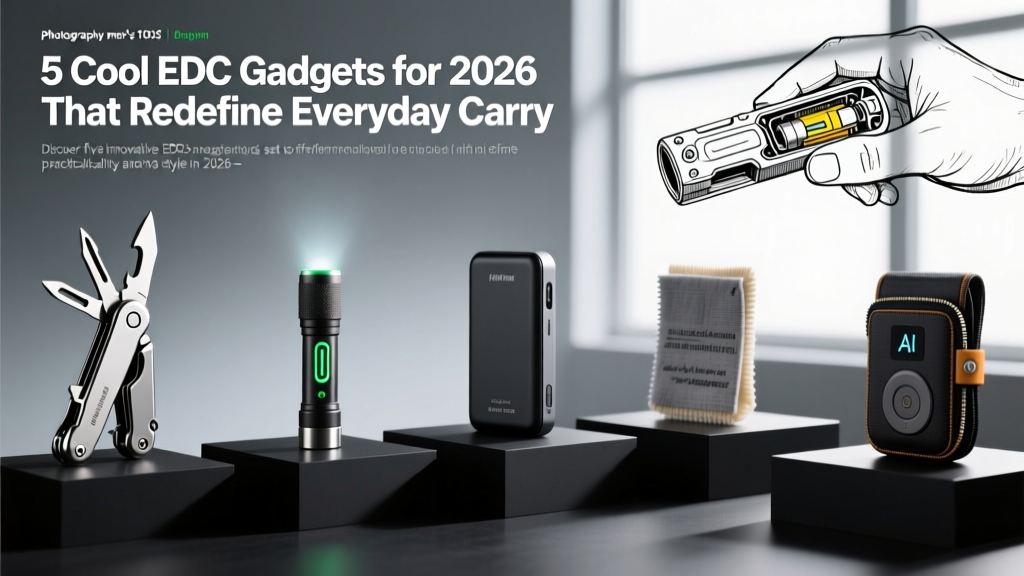
5 Cool EDC Gadgets for 2026 That Redefine Everyday Carry
Discover 5 cool EDC gadgets for 2026 that go beyond standard pocket knives. Explore titanium tools, UV flashlights, and micro-engineered everyday gear.
The Evolution of EDC: Why Standard Knives Aren't Enough
The everyday carry (EDC) landscape has fundamentally shifted. While a reliable folding knife and a leather bifold wallet remain foundational, the 2026 EDC market is defined by micro-engineering, advanced metallurgy, and hyper-specialized utility. Carrying a generic multi-tool often means hauling around 14 implements you will never use, adding unnecessary bulk to your pocket.
True utility in modern EDC comes from identifying specific daily friction points and solving them with purpose-built gear. Whether you are breaking down corrugated shipping boxes, verifying UV security features, or managing high-torque mechanical tasks, the right cool EDC gadgets eliminate inefficiency without weighing down your trousers. Below, we break down five highly specialized tools that redefine pocket utility, backed by material science and practical field testing.
5 Cool EDC Gadgets That Break the Mold
1. Nitecore EDC29: The Flat-Panel Lumen Monster
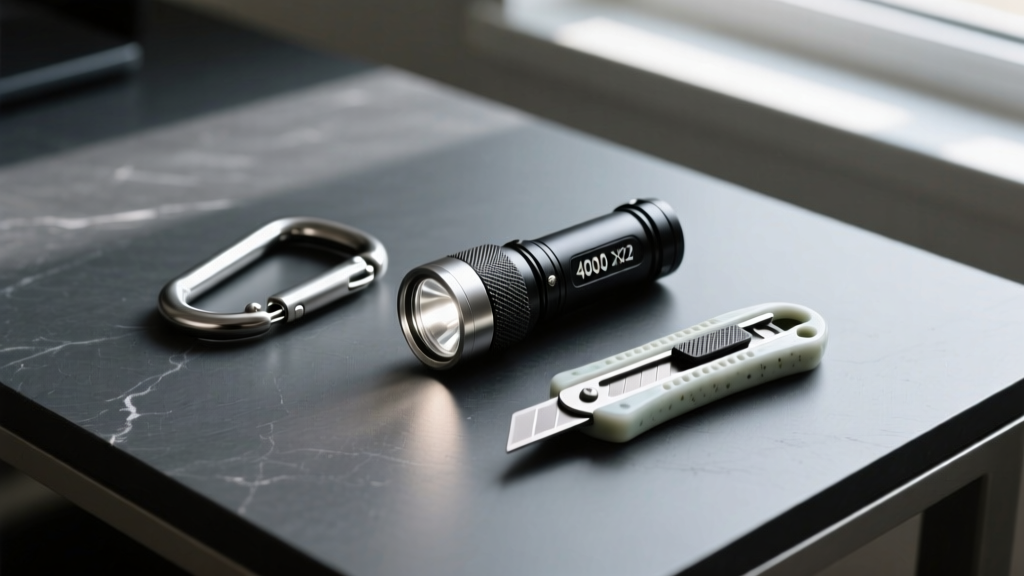
Traditional cylindrical flashlights roll off desks and occupy awkward pocket geometry. The Nitecore EDC29 abandons the tube form factor for a flat, rectangular chassis measuring just 0.83 inches thick. Despite its slim profile, it pushes an astonishing 4,000 lumens in burst mode, powered by dual high-performance LEDs.
Price: ~$65 | Weight: 3.35 oz
2. Craighill Toolcard Pro: Pocket-Sized Precision
Credit card multi-tools are notoriously flimsy, often bending under moderate torque. The Craighill Toolcard Pro solves this by utilizing heat-treated 420 stainless steel, maintaining rigidity at just 1.2 ounces. It features 22 distinct functions, including a 1/4-inch hex driver, a wire stripper, and a specialized bending slot for shaping sheet metal or heavy plastics.
Unlike stamped alternatives, the Toolcard Pro's edges are CNC-machined and chamfered, ensuring it won't shred your pocket lining or trigger TSA confiscation (it contains no blades). It is the ultimate backup tool for field technicians who need a hex driver or pry bar but lack the space for a Leatherman.
Price: ~$45 | Weight: 1.2 oz
3. RovyVon Aurora A8 Pro: Dual-Spectrum Illumination
White light flashlights are standard, but the RovyVon Aurora A8 Pro introduces a secondary UV-A (365nm) emitter. This specific wavelength is critical for non-destructive testing, detecting HVAC refrigerant leaks, curing UV resin, and verifying currency or passport security threads. The transparent polycarbonate body allows the internal circuitry to act as a visual diffuser.

Rated under the ANSI/PLASA FL1 standard, the white light emitter peaks at 1,100 lumens. The dual-switch tail cap allows instant toggling between the UV and white emitters without cycling through a complex menu.
Price: ~$70 | Weight: 2.1 oz
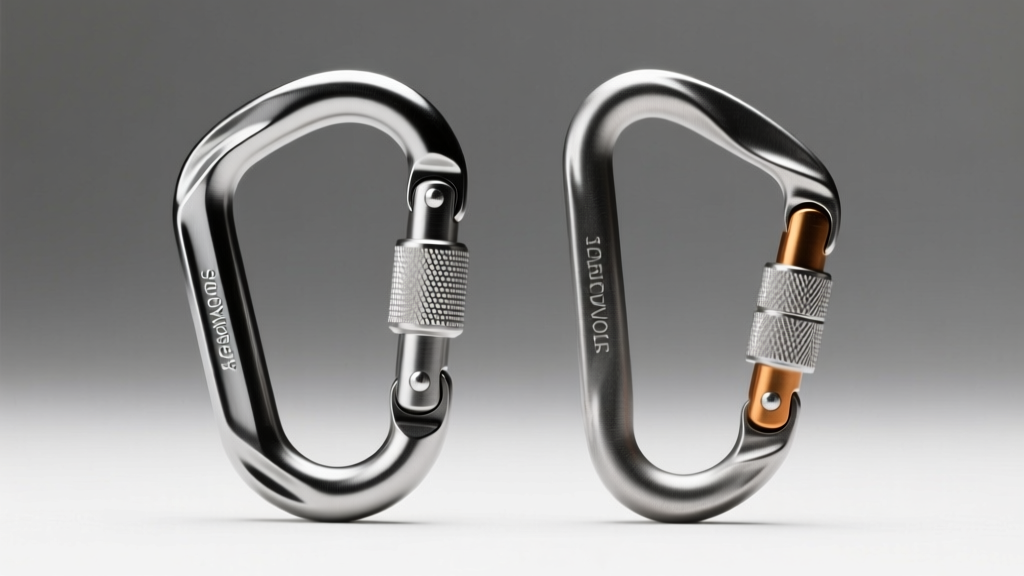
4. The James Brand Mehlville: Aerospace-Grade Carabiner
Most carabiners are stamped aluminum, prone to gate failure and wear at the clip point. The Mehlville is CNC-machined from a solid billet of Grade 5 Titanium (Ti-6Al-4V). It features a custom dual-axis lock mechanism that requires deliberate, two-step manipulation to open, preventing accidental unclipping from belt loops or bag straps.
The spine includes an integrated bottle opener and a flat-head screwdriver tip. Because Grade 5 titanium offers a vastly superior strength-to-weight ratio compared to 6061 aluminum, the Mehlville withstands over 2,500 lbs of tensile force while weighing just 1.3 ounces.
Price: ~$95 | Weight: 1.3 oz
5. Slice 10514 Smart-Cutter: The Ceramic Safety Blade
Steel pocket knives dull quickly when cutting abrasive materials like cardboard, Kevlar, or heavy-duty tape. The Slice 10514 utilizes a zirconium oxide ceramic blade that retains its edge up to 11 times longer than high-carbon steel. More importantly, the blade features a proprietary double-angle grind: it is sharp enough to slice fibrous materials but blunt enough to resist piercing human skin upon accidental contact.
Price: ~$25 | Weight: 0.8 oz
Material Science in Pocket Gear: Titanium vs. Zirconium vs. Steel
When evaluating cool EDC gadgets, the chassis material dictates longevity, weight, and cost. Understanding metallurgy prevents overpaying for marketing buzzwords.
| Material | Common Alloys | Pros | Cons |
|---|---|---|---|
| Grade 5 Titanium | Ti-6Al-4V | 44% stronger than pure Ti, highly corrosion-resistant, non-magnetic. | Expensive to machine, poor edge retention for blades. |
| CPM MagnaCut | Powder Metallurgy Steel | Eliminates carbide networks, balancing extreme toughness with high wear resistance. | Requires specialized sharpening equipment (diamond stones). |
| Zirconium Oxide | ZrO2 (Ceramic) | Extreme hardness, chemically inert, will not rust or transfer metallic tastes. | Highly brittle, catastrophic failure under lateral torque. |
According to metallurgical analysis by KnifeSteelNerds, the shift toward powder metallurgy steels like CPM MagnaCut has revolutionized cutting tools by offering the corrosion resistance of LC200N with the edge retention of CPM-4V. For non-cutting structural components like carabiners and pry bars, AZoM's materials database confirms that Grade 5 Titanium remains the undisputed king of strength-to-weight ratios, capable of enduring repetitive stress cycles that would permanently deform 6061-T6 aluminum.
The Physics of Pocket Real Estate
A common mistake in assembling an EDC loadout is ignoring the cumulative weight and center of gravity. Carrying more than 8 ounces of dense metal on one side of your body alters your natural gait and accelerates the wear on your trousers' pocket bags.
The 3-Point Anchor System
To distribute weight effectively, divide your gear across three distinct anchor points:
- Primary Pocket (Dominant Side): Your most frequently accessed tool (e.g., Nitecore EDC29). Keep this under 4 oz.
- Secondary Pocket (Non-Dominant Side): Backup utility or communication (e.g., smartphone, Craighill Toolcard).
- Clipped Anchor (Belt or Bag): Heavier, less frequently used items (e.g., Mehlville carabiner holding keys). Clipping removes the dead weight from the fabric tension of your pockets.
Decision Matrix: Which Gadget Fits Your Profile?
Not every tool belongs in every pocket. Use this framework to finalize your 2026 loadout:
- The Urban Commuter: Prioritize the Nitecore EDC29 and James Brand Mehlville. You need high-lumen output for transit safety and secure key management without the bulk of a traditional keychain.
- The Field Technician: Prioritize the Craighill Toolcard Pro and RovyVon A8 Pro. The hex drivers and UV leak detection solve immediate, on-site diagnostic problems.
- The Warehouse Manager: Prioritize the Slice 10514 Smart-Cutter. The ceramic blade drastically reduces the frequency of blade changes and mitigates workplace laceration liabilities.
Frequently Asked Questions
Will the UV light on the RovyVon A8 Pro damage my eyes?
Direct exposure to 365nm UV-A light can cause photochemical damage to the cornea and lens over time. Never shine the UV emitter directly into your eyes or at reflective surfaces that could bounce the beam back. Always wear UV-blocking safety glasses when using the tool for extended HVAC or resin-curing tasks.
Can I take the Craighill Toolcard Pro on an airplane?
Yes. Because the Toolcard Pro lacks a cutting edge, piercing implement, or explosive material, it is fully compliant with TSA carry-on regulations. It is designed specifically to bypass security checkpoints while providing mechanical utility.
How do I maintain a Grade 5 Titanium carabiner?
Titanium is virtually impervious to saltwater and sweat corrosion. Maintenance requires only occasional rinsing with fresh water and a drop of dry PTFE lubricant on the dual-axis lock mechanism to prevent grit from binding the moving parts. Avoid using wet petroleum-based oils, which attract pocket lint.
Written by
Priya SharmaPriya Sharma holds a Ph.D. in Acoustical Engineering from the University of Southampton and a B.Tech in Electronics from IIT Delhi. She has spent 9 years as a consumer electronics journalist, with deep specialization in audio equipment, camera systems, and assistive technology. Priya is an active member of the Audio Engineering Society (AES) and has co-authored papers on spatial audio perception published in the Journal of the Acoustical Society of America. Her reviews of headphones, portable DACs, and studio monitors include objective measurements using Audio Precision analyzers alongside subjective listening tests. She also serves on the advisory board of the Global Accessibility Reporting Initiative (GARI), evaluating mobile devices for users with visual and hearing impairments.