Problem-Solving American Made Kitchen Gadgets for Bakers
Fix baking failures with top American made kitchen gadgets. Expert picks for warp-free sheet pans, maple rolling pins, and indestructible measuring cups.
The Hidden Cost of Flimsy Bakeware
A collapsed soufflé, a warped macaron shell, or a tough pie crust rarely stems from poor technique alone. More often, these failures trace back to thermal inconsistencies and structural flex caused by substandard, mass-produced bakeware. As home bakers push the boundaries of artisan breads and precise French pastries, the demand for professional-grade, domestically manufactured tools has surged. According to data from the Reshoring Initiative, US manufacturing has seen a massive resurgence, driven by a consumer shift toward durability, material safety, and supply chain transparency.
When evaluating American made kitchen gadgets for baking, the focus must shift from aesthetic appeal to material science. The right tool solves a specific physical problem: heat conductivity, moisture retention, or structural rigidity. Below, we break down the exact metallurgy, wood density, and design mechanics of the best domestic baking tools that solve common pastry failures.
Solving the Warp: Aluminized Steel Sheet Pans
The most common failure in home ovens is the "pan warp"—the loud pop of a thin aluminum sheet bending under high heat, which immediately pools batter to the edges and causes uneven baking. Pure aluminum conducts heat beautifully but lacks structural memory. Carbon steel is rigid but prone to rust and hot spots.
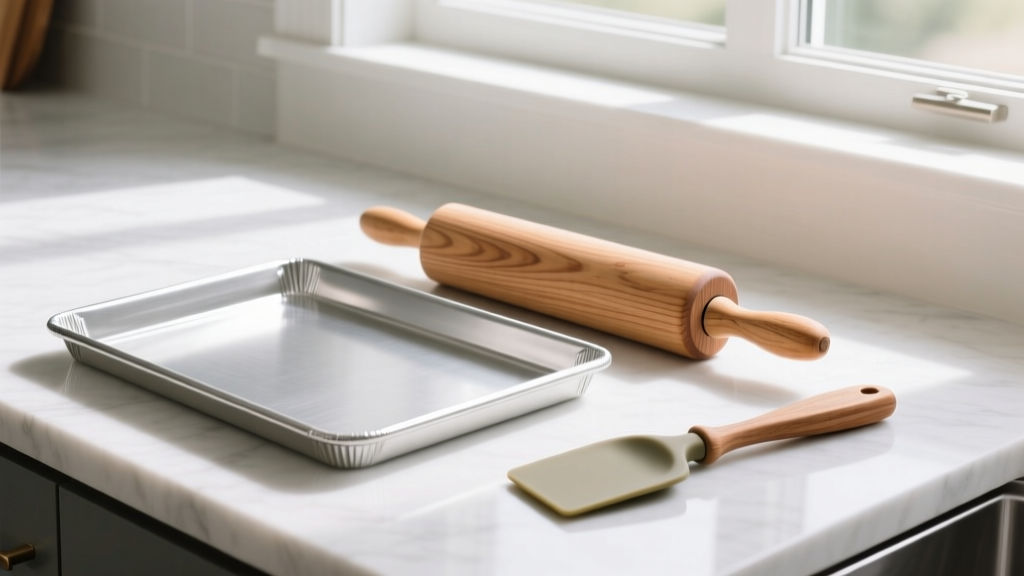
The solution is aluminized steel, a composite material where a carbon steel core is hot-dipped in an aluminum-silicon alloy. USA Pan, operating out of Pennsylvania, manufactures their Commercial Bakeware line using this exact process. The carbon steel core prevents warping at temperatures up to 450°F (232°C), while the aluminum exterior ensures rapid, edge-to-edge heat distribution.
The Corrugated Surface Advantage
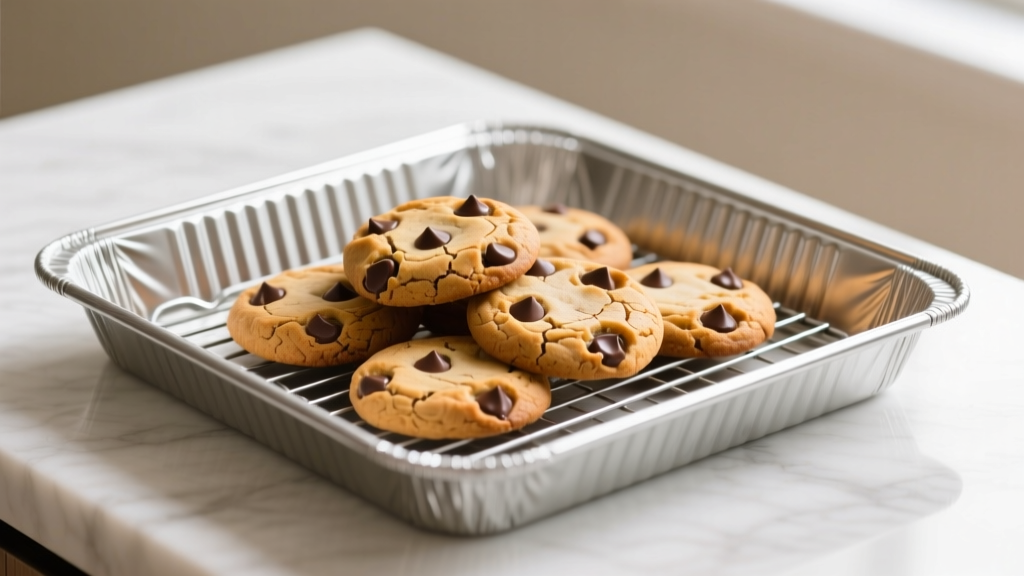
USA Pan’s patented corrugated surface is not just for grip; it creates a micro-channel for air circulation beneath the food. When baking high-sugar items like cookies or roasting vegetables, this airflow prevents the bottom from steaming in its own moisture, ensuring a crisp base. Furthermore, their Americoat non-stick coating is a PTFE, PFOA-free silicone release agent that complies with strict FDA Food Contact Substances regulations, preventing chemical off-gassing at high baking temperatures.
Pastry Temperature Control: The Maple Rolling Pin Advantage
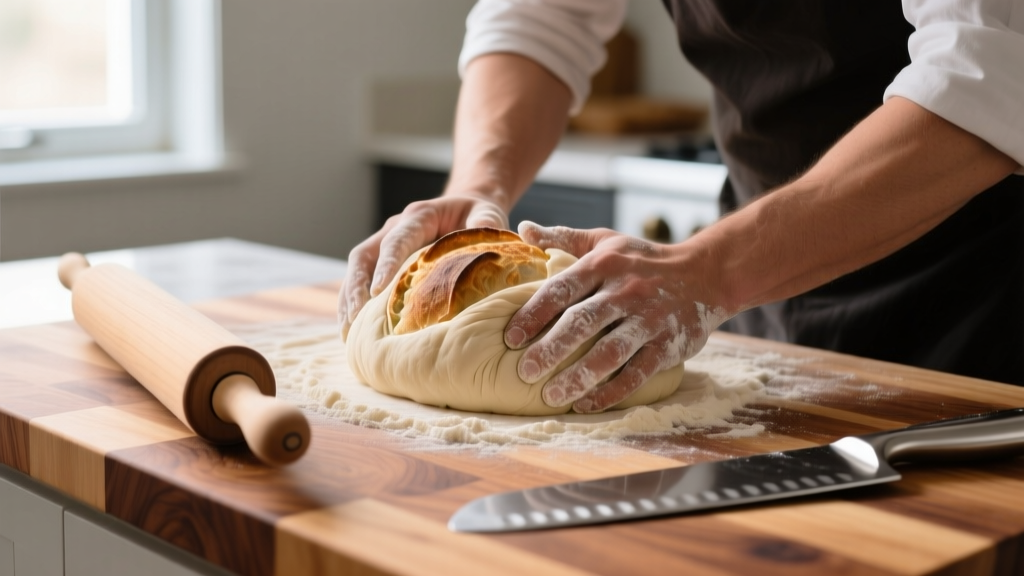
Temperature control is the single most critical variable in laminated doughs (croissants, puff pastry) and pie crusts. If the butter melts into the flour before hitting the oven, you lose your flaky layers. Marble rolling pins are often recommended for their cool surface, but they are excessively heavy, crushing the dough rather than stretching it, and are prone to cracking if dropped.
The superior choice is a solid hardwood French rolling pin, specifically crafted from Hard Rock Maple (Acer saccharum). J.K. Adams, based in Dorset, Vermont, turns their French rolling pins from sustainably harvested North American maple. Hard Rock Maple boasts a Janka hardness rating of 1,450 lbf, making it dense enough to resist deep scoring from knives or dough cutters, yet light enough to allow the baker to feel the exact thickness of the dough through their palms.
Friction and Dough Mechanics
Unlike silicone or stainless steel, raw maple provides the exact coefficient of friction required to grip and stretch gluten networks without tearing them. The tapered ends of the J.K. Adams French pin allow for localized pressure application, essential for evening out thick spots in pie dough without overworking the center. According to the USDA Food Safety and Inspection Service, dense hardwoods like maple possess natural capillary action that draws moisture and bacteria away from the surface, making them inherently sanitary for food prep when properly maintained.
Scooping Without Bending: Cast Aluminum Measurement
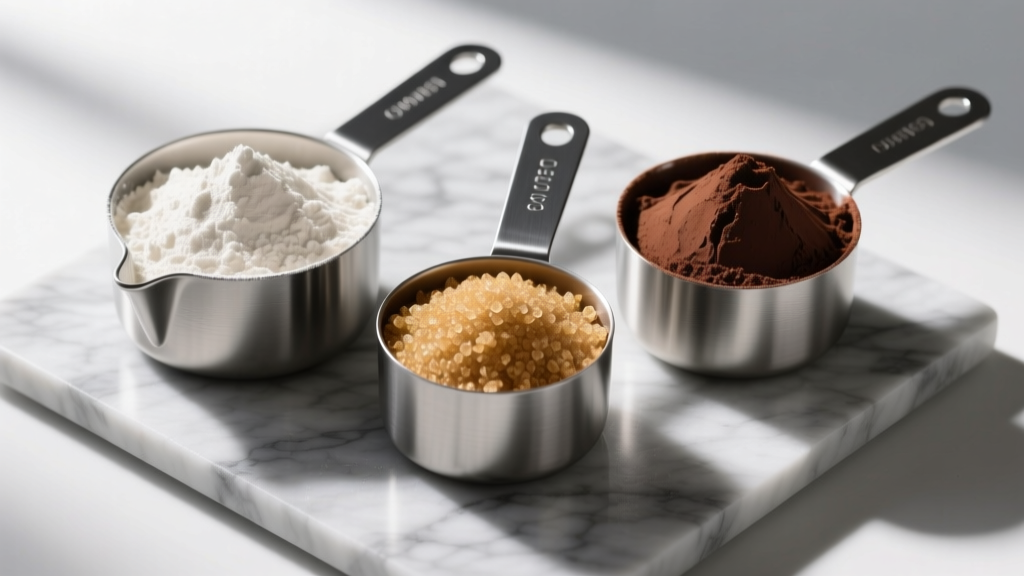
Stamped stainless steel measuring cups are ubiquitous, but they share a fatal flaw: the welded handle. When scooping densely packed brown sugar or hardened cocoa powder, the torque applied to the handle frequently snaps the weld or bends the cup, ruining the volumetric calibration. A bent 1-cup measure no longer holds exactly 236.5 milliliters, throwing off the baker's ratio.
Nordic Ware, manufacturing in Minneapolis, Minnesota, solves this with their Commercial Cast Aluminum Measuring Cups. Because they are cast as a single, solid piece of aluminum, there are no welds to snap. The heavy-gauge walls resist deformation under extreme lateral force.
| Material | Structural Failure Point | Thermal Conductivity | Best Use Case |
|---|---|---|---|
| Stamped Stainless Steel | Handle weld snaps under torque | Low (Poor heat transfer) | Light dry goods (flour, sugar) |
| Plastic / Resin | Cracks in dishwasher, retains odors | None | Budget/occasional baking |
| Cast Aluminum (Nordic Ware) | None (Single solid cast) | High (Melts butter if left in sun) | Hard-packed sugars, dense pastes |
The Dough Scraper: High-Carbon Edge Precision
A bench scraper is the baker's third hand, used for dividing dough, cleaning benches, and transferring chopped ingredients. Flimsy plastic scrapers bend and fail to cut through stiff sourdough, while cheap stainless steel rusts at the edges. Dexter-Russell, operating out of Massachusetts, produces the Sani-Safe Dough Scraper using high-carbon stainless steel. The blade maintains a rigid, sharp edge capable of cleanly portioning high-hydration doughs without dragging or tearing the gluten structure. The NSF-certified polypropylene handle is sealed to prevent flour and moisture ingress, a critical feature for preventing mold growth in humid bakery environments.
Troubleshooting Matrix: Gear vs. Baking Failures
Use this diagnostic matrix to identify if your baking failures are technique-based or tool-based.
🔍 Diagnostic Framework
- Symptom: Macarons have hollow shells or cracked tops.
Cause: Oven hot spots or pan warping altering the baking curve.
Fix: Switch to a USA Pan aluminized steel sheet pan and use an independent oven thermometer. - Symptom: Pie crust shrinks in the oven and becomes tough.
Cause: Overworking dough due to excessive downward pressure from a heavy, bearing-style rolling pin.
Fix: Use a tapered J.K. Adams maple French pin to stretch, rather than crush, the dough. - Symptom: Breads lack rise and taste overly dense.
Cause: Inaccurate flour measurement due to a bent measuring cup or scooping directly from the bag (compacting flour).
Fix: Use rigid Nordic Ware cast aluminum cups and employ the "spoon and level" method, or switch to a digital scale.
FAQ: Maintaining American-Made Baking Tools
How do I maintain the finish on a maple rolling pin?
Never submerge it in water. Wipe it down with a damp cloth after use. Once a month, or when the wood looks ash-gray, apply a generous coat of food-grade mineral oil. Let it absorb for 12 hours, then buff off the excess. Do not use vegetable or olive oils, as they will polymerize and turn rancid.
Can I use metal utensils on USA Pan’s non-stick coating?
No. While the aluminized steel core is indestructible, the Americoat silicone-based coating can be scored by sharp metal spatulas. Use high-heat silicone or flexible plastic turners to preserve the release properties.
Why invest in domestic bakeware over cheaper imports?
Beyond supporting local economies and ensuring stricter adherence to FDA material safety standards, domestic commercial-grade tools are engineered for thermal cycling. A $30 American-made sheet pan will outlast a $12 imported pan by a decade, ultimately saving money and preventing ruined ingredients.
Written by
Marcus WebbMarcus Webb served as a U.S. Army logistics officer for 8 years, where he managed field equipment procurement and tactical gear evaluation across three combat deployments. After honorable discharge, he earned a certification from the Professional Knife Makers Association and became a certified Wilderness First Responder (WFR). Marcus has tested over 500 EDC products in extreme environments — from -40°F in Alaska to 120°F in the Mojave Desert — using military-spec testing protocols. His reviews of multi-tools, tactical flashlights, and survival gear are known for their rigorous methodology: controlled drop tests from 6 feet, 120-minute water submersion at 2 meters, and lateral torque testing at 45 Nm. He is a member of the Blade Show judging panel and contributes to OutdoorGearLab.