Unique BBQ Kitchen Gadget Fruit Vegetable Grill Sets
Discover unique BBQ tool sets designed for produce. Our 2026 guide reviews the best kitchen gadget fruit vegetable grilling tools for perfect char.
The Plant-Forward Shift in Outdoor Cooking
For decades, the standard barbecue tool set has been unapologetically meat-centric: heavy-duty spatulas, serrated meat forks, and thick-pronged tongs designed for flipping porterhouses. But as plant-forward diets and high-heat produce cookery dominate culinary trends in 2026, the limitations of traditional BBQ kits are glaringly obvious. Trying to flip a delicate peach half with a standard meat fork results in structural collapse, and grilling diced bell peppers directly on the grates guarantees half your meal will be lost to the ash catcher.
This has driven a surge in demand for a specialized kitchen gadget fruit vegetable grilling set. These are not just novelties; they are engineered thermal solutions designed to manage the high moisture content, delicate cellular structures, and rapid sugar carbonization inherent in produce. Finding the right kitchen gadget fruit vegetable tool set requires looking past standard meat-centric BBQ kits and understanding the metallurgy and physics of plant-based grilling.
Anatomy of a Produce-First BBQ Tool Set
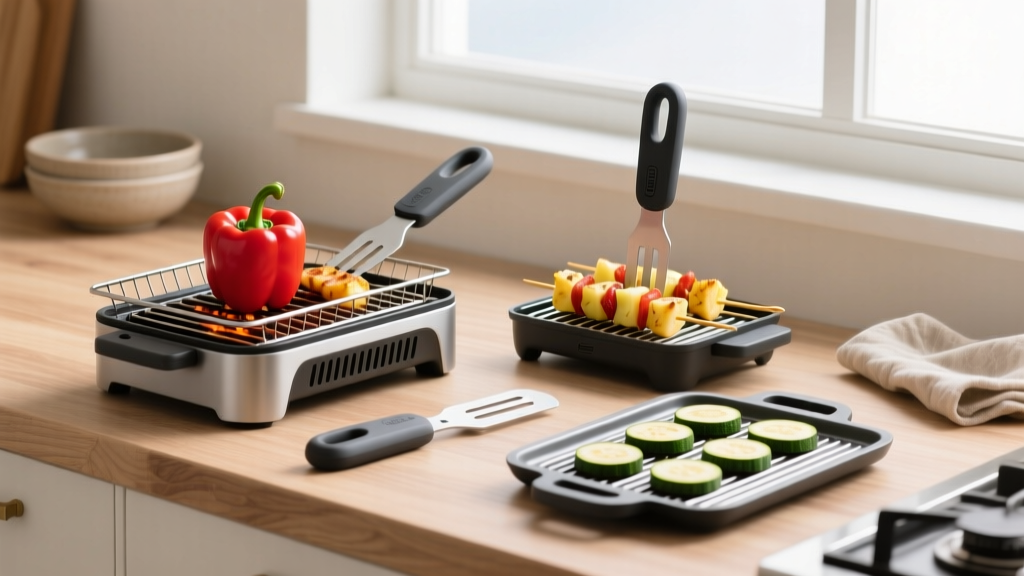
A premium produce grilling set abandons the wide, flat spatula in favor of precision instruments. The core components focus on containment, delicate manipulation, and rapid heat transfer.
Top 3 Configurations for Produce Grilling
When building or buying a dedicated produce kit, you will generally encounter three distinct tool configurations. Each solves a specific thermal challenge associated with outdoor cooking.
1. The Heavy-Duty Mesh & Mat System
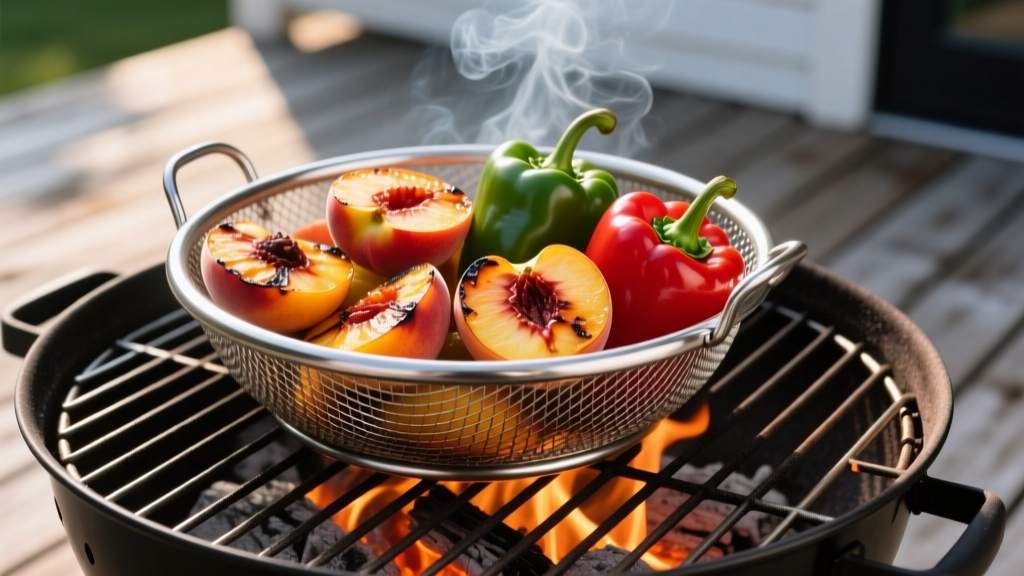
The cornerstone of any vegetable grilling kit is the hinged mesh basket. The best 2026 models, such as the Grillaholics Heavy Duty series, utilize a 1.2mm wire thickness with a 2mm x 2mm weave. This specific gauge is critical: anything thinner will warp under the 500°F+ temperatures required for a proper sear on watery vegetables like zucchini, while a wider weave will let diced onions and cherry tomatoes slip through. Pair this with a high-density PTFE-coated fiberglass grill mat for delicate items like sliced fennel or asparagus spears that might stick to bare metal.
2. The Flat-Skewer & Core Matrix
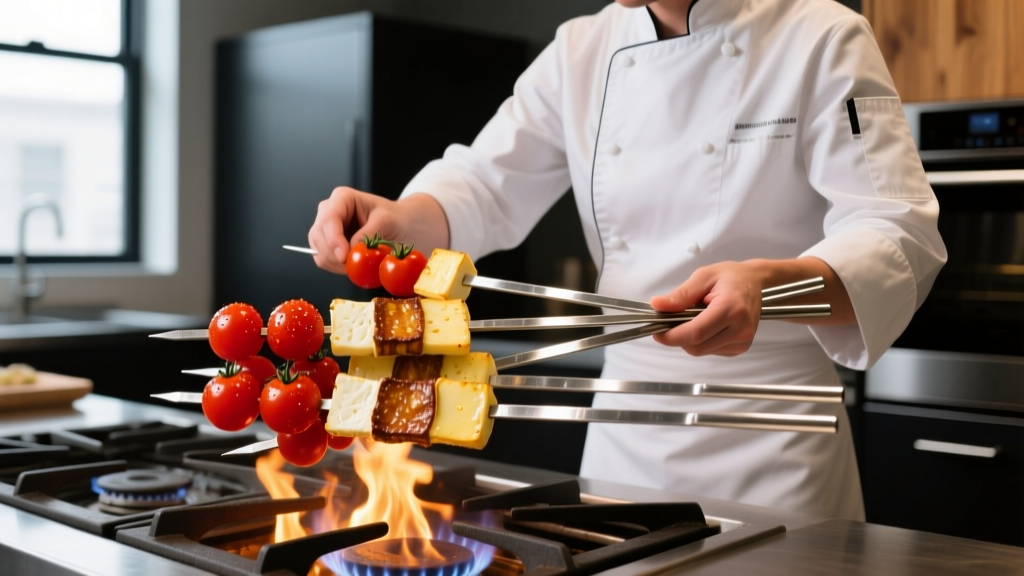
Round skewers are the enemy of grilled produce. When you thread a dense root vegetable or a slippery piece of fruit onto a round metal rod, it spins freely when you attempt to flip it, leading to uneven charring. A proper kitchen gadget fruit vegetable set includes flat, 1/4-inch wide stainless steel skewers. The flat profile locks the food in place, allowing for precise 90-degree rotations. Additionally, these sets often include a specialized corer—similar to an OXO Apple Corer but with a wider 1.5-inch barrel—designed to cleanly remove the cores of pineapples and large peppers without shattering the flesh.
3. The Cedar Plank & Infusion Kit
For delicate fruits that cannot withstand direct radiant heat, cedar plank kits are essential. Premium kits now include stainless steel infusion tubes that you fill with liquids (like bourbon or apple cider vinegar) and insert into the soaking plank. As the plank smolders on the grill, the tube releases aromatic steam, flavoring fruits like pears and figs while keeping them plump and preventing them from drying out.
Thermal Dynamics: Why Veggies and Fruits Fail on the Grill
Grilling produce is fundamentally different from grilling meat. Meat relies on the Maillard reaction (amino acids and reducing sugars browning at roughly 285°F to 330°F). Fruits and vegetables, however, are governed by pectin breakdown and fructose carbonization.
| Produce Type | Primary Challenge | Ideal Grill Zone | Target Internal Temp | Best Tool |
|---|---|---|---|---|
| Stone Fruits (Peaches, Plums) | Fructose burns before flesh softens | Direct High (450°F+) | 160°F (Pectin breakdown) | Silicone-tipped tongs |
| Dense Roots (Carrots, Potatoes) | Exterior chars before interior cooks | Indirect Medium (350°F) | 205°F (Starch gelatinization) | Cedar plank / Foil boat |
| High-Water Veg (Zucchini, Eggplant) | Turns mushy if steamed in its own juice | Direct High (500°F) | 185°F | 1.2mm Mesh Basket |
| Sugary Fruits (Pineapple, Mango) | Sticks aggressively to unseasoned grates | Direct Medium (375°F) | 145°F | Flat Skewers |
The Pectin Breakdown Threshold
Vegetables like bell peppers and carrots contain pectin, a structural carbohydrate that keeps cell walls rigid. Pectin does not begin to break down until it reaches approximately 185°F. If you pull a grilled carrot off the heat at 160°F because the outside looks nicely charred, the inside will be unpleasantly crunchy. This is why dense vegetables require a two-zone grilling approach: a hard sear over direct heat using your mesh basket, followed by a move to indirect heat (or into a cast-iron Dutch oven on the grill) to allow the internal temperature to reach the pectin breakdown threshold without burning the exterior.
Sugar Carbonization vs. Caramelization
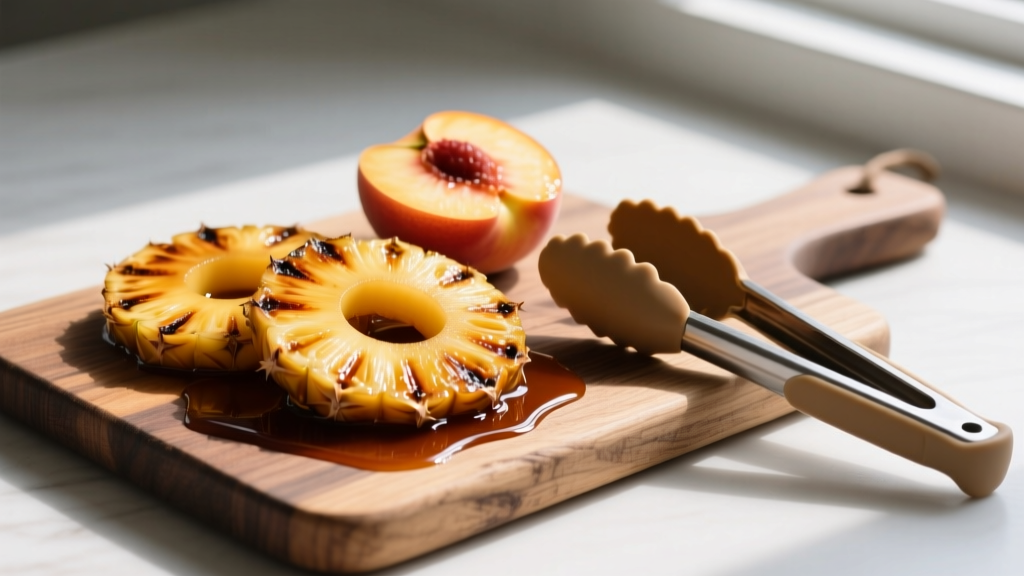
Fruits are loaded with fructose, which caramelizes beautifully but crosses the line into bitter carbonization much faster than glucose. When grilling peaches or pineapple, you must use a tool that allows for rapid extraction. Silicone-tipped, scalloped tongs (like the 2026 OXO Good Grips models) provide the grip strength to snatch fruit off the grates the second the grill marks form, usually within 120 to 180 seconds on a 450°F surface.
Cross-Contamination and Tool Maintenance
One of the most overlooked aspects of outdoor cooking is tool segregation. The USDA Food Safety and Inspection Service explicitly warns against using the same platters and utensils for raw meat and cooked or ready-to-eat foods. Because grilled fruits and vegetables are often served raw in the center (like a medium-rare grilled peach) or are highly porous (like eggplant), using a spatula that just handled raw chicken is a severe cross-contamination risk.
Investing in a dedicated, color-coded kitchen gadget fruit vegetable set (many premium brands now offer high-visibility green or orange silicone handles to distinguish them from meat tools) is a critical safety upgrade. The FDA's grilling safety guidelines reinforce the necessity of keeping produce prep entirely separate from raw protein handling.
Vegetable marinades often rely on high-acid ingredients like lemon juice, balsamic vinegar, or yogurt. If left to soak in a mesh basket or on a metal skewer for more than 30 minutes post-grill, these acids will etch into the microscopic pores of the steel, leading to permanent metallic off-flavors and accelerated rust. Always wash produce tools with warm, soapy water immediately after use.
Restoring Non-Stick Grill Mats
If you utilize PTFE grill mats for delicate fruits, never use metal tongs or wire brushes. Scratches in the PTFE coating not only compromise the non-stick properties but can cause the mat to degrade at high temperatures. Clean these mats using a soft sponge and a mild degreaser, and store them flat to prevent creasing, which creates weak points that will blister over the grill grates.
Final Verdict: Building Your 2026 Produce Arsenal
Upgrading your outdoor cooking setup with a specialized produce kit is one of the highest-ROI investments you can make for your culinary repertoire. By prioritizing 304-grade stainless steel mesh baskets, 1/4-inch flat skewers, and heat-resistant silicone manipulation tools, you eliminate the mechanical failures that ruin grilled produce. Understanding the thermal limits of pectin and fructose allows you to leverage these tools perfectly, transforming simple backyard barbecues into sophisticated, plant-forward culinary events.
Written by
Priya SharmaPriya Sharma holds a Ph.D. in Acoustical Engineering from the University of Southampton and a B.Tech in Electronics from IIT Delhi. She has spent 9 years as a consumer electronics journalist, with deep specialization in audio equipment, camera systems, and assistive technology. Priya is an active member of the Audio Engineering Society (AES) and has co-authored papers on spatial audio perception published in the Journal of the Acoustical Society of America. Her reviews of headphones, portable DACs, and studio monitors include objective measurements using Audio Precision analyzers alongside subjective listening tests. She also serves on the advisory board of the Global Accessibility Reporting Initiative (GARI), evaluating mobile devices for users with visual and hearing impairments.